
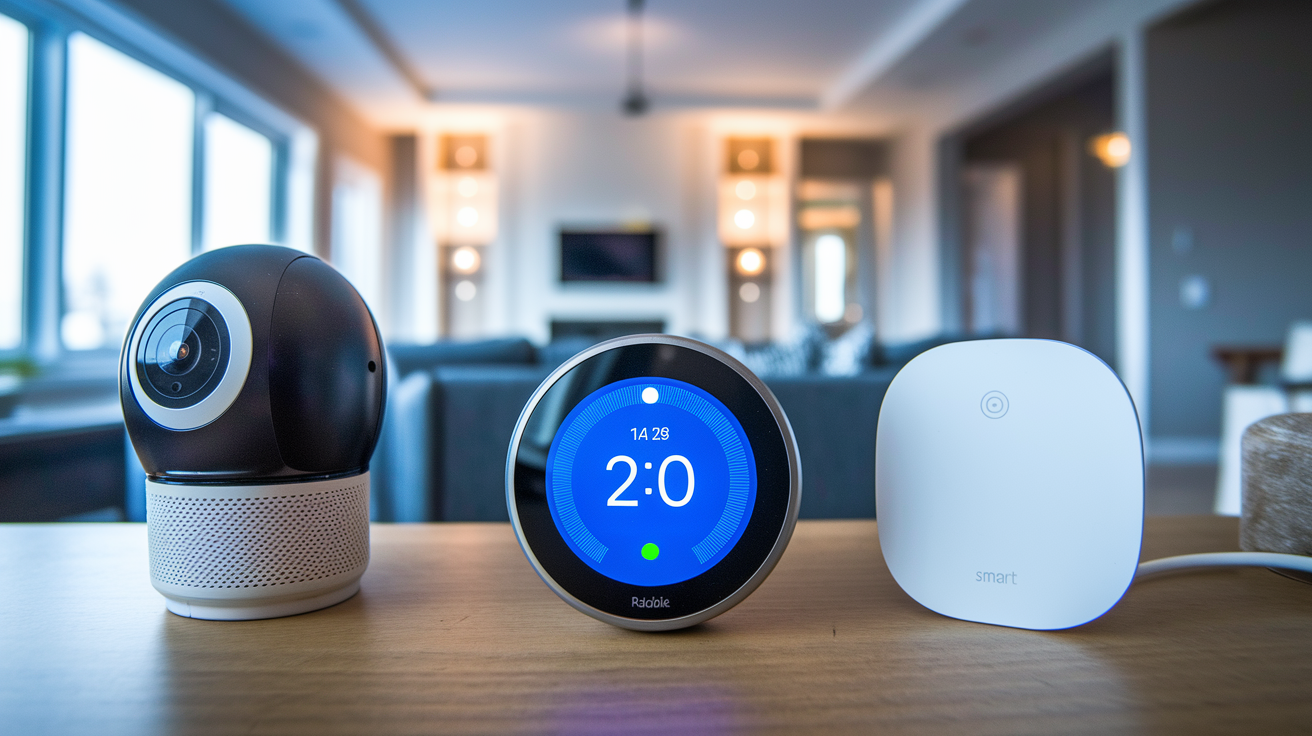


Think smart home gadgets are just flashy toys?
Think again.
The right devices can lower energy bills, cut useless alerts, and make daily routines simpler.
This guide names the top thermostat, lighting, camera, and voice hub for 2024, shows how they work together, lists expected costs, and flags which items need a hub.
Read on to match tech to your home, platform, and privacy preferences without the jargon.
Top Smart Home Device Recommendations Across Core Categories

The Ecobee SmartThermostat Premium is our top thermostat pick for 2024. You get accurate temperature control, a built-in air quality sensor, and a room sensor right in the box so comfort stays balanced across multiple spaces. For smart lighting, Philips Hue is still the gold standard. The system works reliably with Alexa, Google Assistant, and Apple Home, supports millions of colors, and lets you build scenes and schedules without fighting app bugs. On the security side, the Arlo Pro 5 offers sharp 2K video, an integrated spotlight and siren, plus a wide 160° field of view that captures driveways and porches clearly whether it’s noon or midnight. Amazon’s Echo Dot with Clock (5th Gen) delivers the best balance of price, sound quality, and Alexa’s deep smart home integration, making it the most versatile voice assistant hub you can grab for under $60.
Compatibility decides how smoothly your devices talk to each other. If you’re already using an iPhone and Apple TV, prioritize gear that works with Apple Home and Thread. Things like the Nanoleaf Essentials bulb or the Eve Energy plug let you control everything through Siri and the Home app without juggling platforms. Google Assistant fans should look for the “Works with Google” badge and lean toward Nest branded hardware, which gets features and updates first. Alexa users have the widest selection. But double check whether a device needs a separate hub (older Zigbee bulbs and sensors often do) or connects directly over Wi‑Fi.
Automation cuts daily friction and trims energy bills. A learning thermostat like the Nest or Ecobee drops heating and cooling costs by 10–15% on average. It learns when you’re home and dials back when you’re not. Smart lights prevent the “Did I leave the porch light on?” panic and let you set up motion triggered hallway lighting so you never fumble for a switch at 2 a.m. Security cameras send instant alerts when someone approaches your door, and the best models can tell the difference between a delivery driver, a stray cat, and an actual threat. That saves you from dozens of useless notifications every week.
The sections ahead break down feature differences, installation requirements, subscription costs, and real world tradeoffs so you can match devices to your home’s layout, your technical comfort level, and your privacy preferences.
Best Smart Thermostat – Ecobee SmartThermostat Premium (MSRP $249.99): included room sensor, air quality monitoring, works with Alexa/Google/HomeKit, and compatible with most HVAC systems including heat pumps.
Best Smart Lighting System – Philips Hue White and Color Ambiance Starter Kit (MSRP $199.99 for four bulbs and bridge): 16 million colors, rock solid app, Matter support coming, and voice control across all three major assistants.
Best Home Security Camera – Arlo Pro 5 (MSRP $249.99): wire free with rechargeable battery, 2K HDR video, 160° FOV, color night vision, built-in spotlight and siren, and optional Arlo Secure subscription for rich notifications and cloud storage.
Best Voice Assistant Hub – Amazon Echo Dot with Clock (5th Gen, MSRP $59.99): improved speaker over prior generations, LED time display, tap to snooze alarms, and seamless control of thousands of Alexa compatible devices.
Final Words
In the action we ran through top picks: Nest and Ecobee for thermostats, Philips Hue and LIFX for lighting, Arlo, Nest and Ring for cameras, and Alexa, Google Assistant and Siri for voice control.
Compatibility with Alexa, Google, and Apple Home matters most. So does automation, energy savings, and reliable security alerts. Those choices shape real daily value.
Use the deeper comparisons above to match features to your home and budget. Pick what fits your routine, and enjoy smarter, simpler living with the best smart home technology.
FAQ
Q: What is the best smart thermostat?
A: The best smart thermostat is the Nest Learning Thermostat or Ecobee SmartThermostat, both learn preferences, cut heating and cooling costs, and offer remote control; choose based on ecosystem and sensor support.
Q: What are the best smart lighting systems?
A: The best smart lighting systems are Philips Hue and LIFX, which offer scheduling, scenes, and wide color ranges; they work with major assistants—pick Hue for hub support, LIFX for bulb-only setups.
Q: What is the best home security camera?
A: The best home security cameras include Arlo Pro 5, Google Nest Cam, and Ring Spotlight Cam; they give motion alerts, two-way talk, and remote viewing, with optional cloud subscriptions for advanced features.
Q: Which voice assistant hub should I choose?
A: The best voice assistant hubs are Amazon Alexa, Google Assistant, and Apple Siri; Alexa has the widest device support, Assistant excels at search, and Siri fits best with Apple Home and privacy settings.
Q: How do I choose smart devices that work together?
A: To choose devices that work together, pick a primary ecosystem (Alexa, Google, or Apple), look for Matter support, and check hub, Zigbee/Z-Wave, and voice assistant integration before buying.
Q: Will a smart thermostat reduce my energy bills?
A: A smart thermostat can reduce energy bills by learning schedules, optimizing setpoints, and using sensors; typical savings are about 10–15%, though results vary by home and habits.
Q: Do smart security cameras require a subscription?
A: Smart security cameras often work without a subscription for live view, but cloud storage, advanced detection, and event history usually need a paid plan; local storage can be an alternative.
Q: Are smart lights worth the cost?
A: Smart lights are worth it if you value convenience, scene control, and scheduling; they cut bulb replacements and can improve home security, though initial costs are higher.
Q: How hard is installation for smart home devices?
A: Installation difficulty varies: bulbs and voice hubs are plug-and-play, thermostats may need wiring or pro help, and cameras require mounting and network setup—follow guides or hire help if unsure.