


Think California’s minimum auto insurance keeps you safe? Think again.
The state requires 15/30/5 liability—$15,000 per person, $30,000 per crash, $5,000 for property.
That sounds like protection, but it only pays others’ claims.
It won’t fix your car, cover your hospital bills, or protect you if the other driver is uninsured.
This post breaks down California’s minimum auto insurance requirements, shows the real gaps in everyday crash scenarios, and gives clear options to avoid getting stuck with steep bills.
California’s Minimum Auto Insurance Requirements Explained Clearly
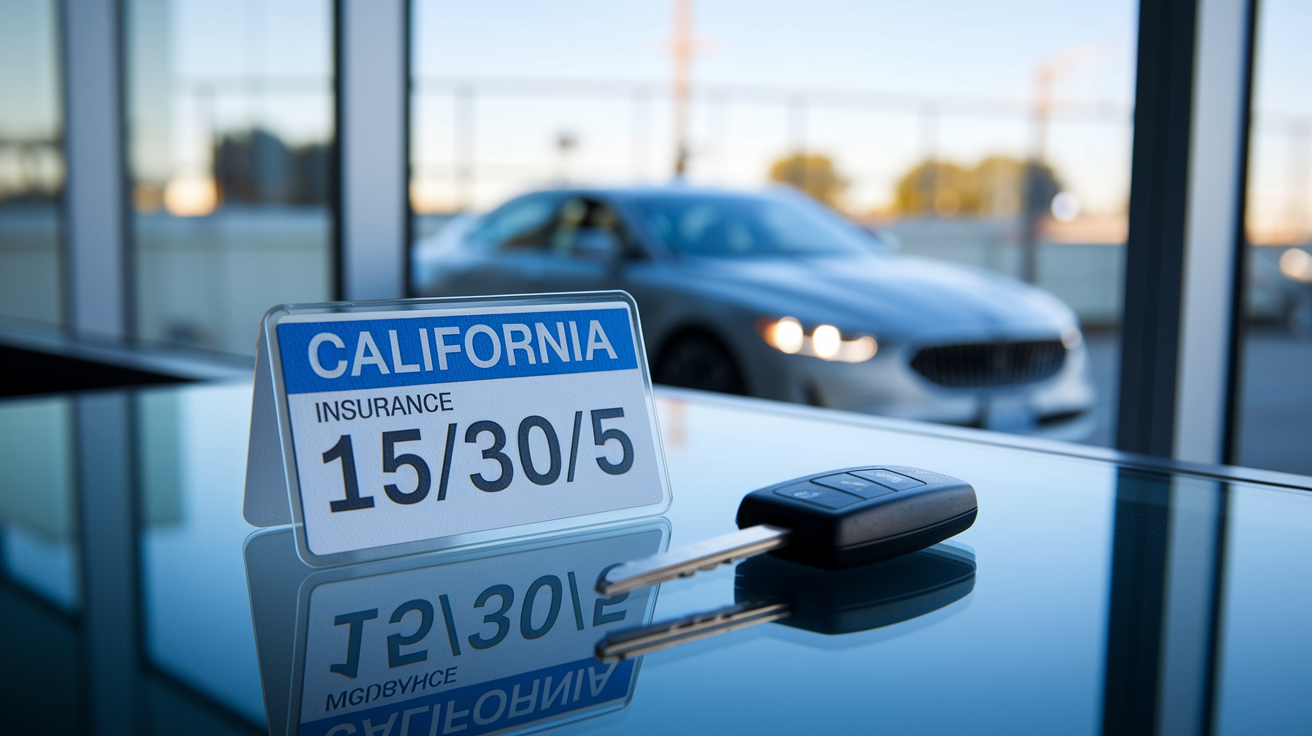
Every driver in California has to carry liability insurance or prove they can cover damages before getting behind the wheel. The state uses “15/30/5” shorthand: $15,000 for one person’s injuries, $30,000 total per crash, and $5,000 for property damage. Vehicle Code §16028 spells out the proof requirement, and both the DMV and police can check compliance when you register or get pulled over. You can show a paper card or pull it up on your phone.
But here’s the thing. Those 15/30/5 numbers? They’re the legal floor, not what anyone should actually rely on. These limits were written decades back when an ER visit didn’t cost what it does now and cars were simpler to fix. Today a fender bender can blow past $5,000 in property damage, and a trip to the hospital for a broken wrist can easily hit $20,000. Stick with the minimum and you’re personally on the hook for everything above those caps. We’re talking wage garnishment, liens, years of financial pain.
Breaking down what California’s minimum actually covers makes it clear where the gaps are:
Bodily injury per person ($15,000): Pays medical bills, lost pay, and pain and suffering for one injured person you hit. Stops at $15,000.
Bodily injury per accident ($30,000): The total your policy will pay for everyone hurt in one crash, no matter how many people that is.
Property damage ($5,000): Covers what you wreck that belongs to someone else. Their car, their fence, their mailbox. Caps at $5,000.
Nothing for you: Minimum liability gives you zero help with your own hospital bills, missed work, or car repairs. It only protects the people you hurt.
No uninsured motorist coverage: If someone without insurance hits you, or takes off, the minimum doesn’t help. You’d need to add that separately.
How California’s Minimum Coverage Pays Out in Real Accident Scenarios
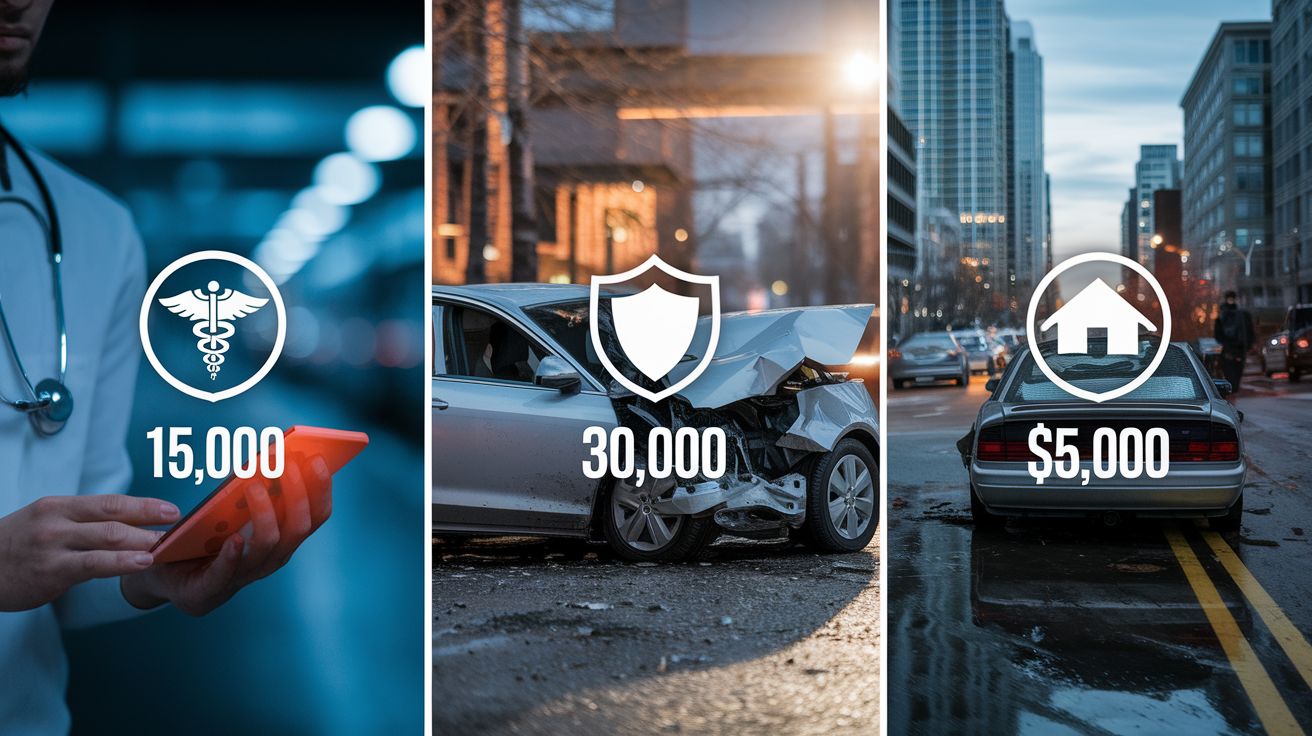
Liability limits stack in a specific order. The per-person cap applies first. Once someone’s claim hits $15,000, the insurer stops paying them even if there’s room left under the $30,000 total. Then the per-accident limit kicks in, capping what everyone combined can collect. Go over $30,000 total and you’re writing checks yourself. Injured people can sue you for the rest.
Property damage runs on its own track. Cause $8,000 in car damage and your $5,000 limit covers the first chunk. You owe the other $3,000. Modern vehicles blow through $5,000 fast, especially when airbags deploy or multiple cars get hit. Here’s how three typical crashes play out under 15/30/5.
| Scenario | Per Person Coverage | Per Accident Limit | Property Damage |
|---|---|---|---|
| One injured driver; $22,000 medical; $7,000 vehicle damage | Policy pays $15,000; you owe $7,000 medical | $15,000 used; $15,000 left | Policy pays $5,000; you owe $2,000 property |
| Two injured people; $18,000 each medical; $6,000 vehicle damage | Policy pays $15,000 to each | $30,000 total paid; you owe $6,000 excess medical | Policy pays $5,000; you owe $1,000 property |
| Three injured passengers; $12,000, $14,000, $20,000 medical; $9,000 property | Policy pays $12,000, $14,000, $15,000 (capped) | $30,000 gone; you owe $5,000 for third person’s medical | Policy pays $5,000; you owe $4,000 property |
Proof of Insurance Requirements for California Drivers
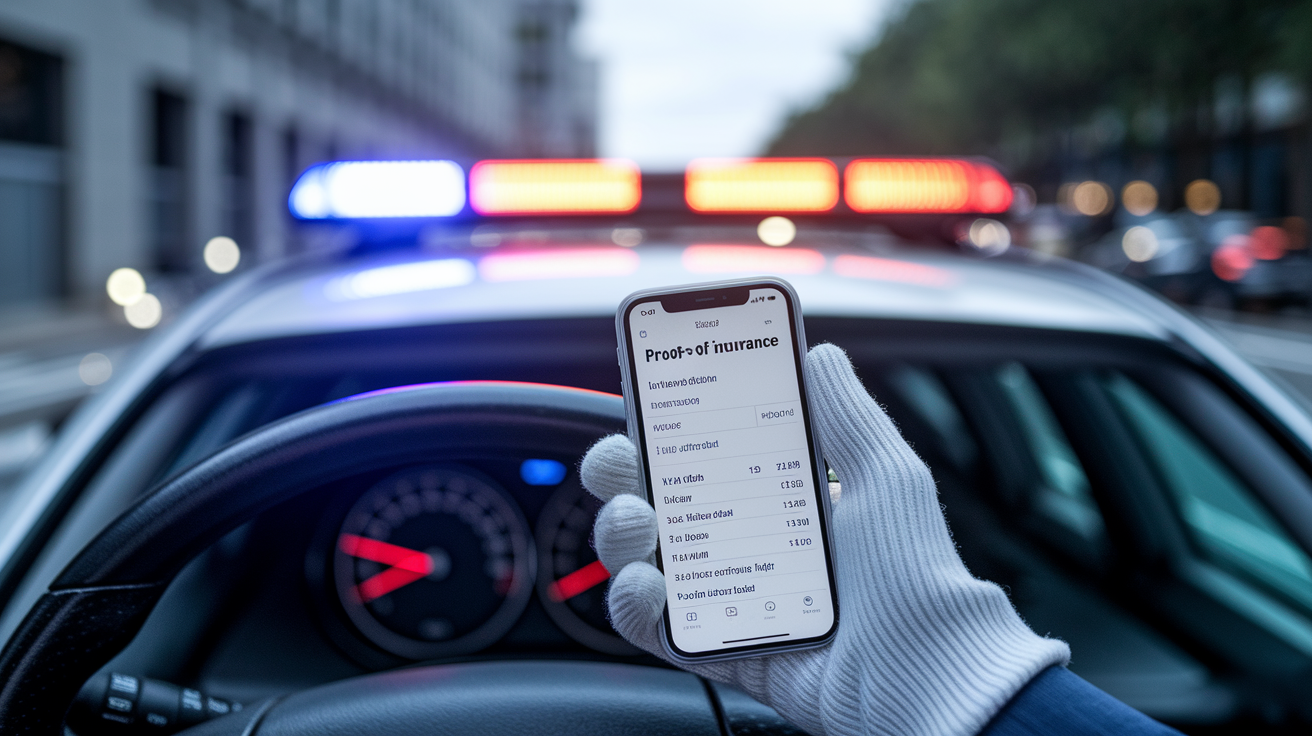
You need proof of insurance or financial responsibility any time you’re driving. The DMV checks during registration, renewal, and ownership transfers. Cops can ask for it during any stop or after a crash under Vehicle Code §16028. Don’t have it right then? You’re getting cited even if you actually have coverage.
California accepts a few different formats. An insurance card from your carrier works. So does your policy declarations page. You can also show it on your phone or tablet as long as the screen displays your policy number, dates, and coverage amounts. If you’re self-insured through the DMV, you’ll have a certificate for that. Same goes for surety bonds or cash deposits filed with the state. Whatever version you pick, keep it where you can grab it fast. Proving it later doesn’t undo the ticket or the mess that follows.
What counts as proof in California:
- Insurance ID card from a licensed California carrier
- Declarations page showing 15/30/5 liability or better
- Phone or tablet display with policy number, dates, and coverage amounts
- DMV certificate of self-insurance for approved drivers or entities
- Certificate of financial responsibility if you’ve posted a bond or deposit
Penalties for Not Meeting California’s Minimum Auto Insurance Requirements
Get caught without insurance during a stop or crash and you’re looking at fines that start in the hundreds and can cross a thousand depending on your history. The DMV gets notified electronically and may suspend your registration, making it illegal to drive until you file proof and pay reinstatement fees. Some jurisdictions tow the car on the spot. Now you’re paying impound and storage on top of everything else.
Fines are just the start. If you ignore DMV notices or cause a crash without coverage, your license gets suspended. Drive on a suspended license and you’re stacking new charges. Your premiums skyrocket once you get coverage back, and you might need an SR-22 certificate for years. Worst case? You injure someone or wreck their car and get sued. No policy means they’re coming after your wages, your bank account, your house. Those judgments can follow you for decades.
Repeat offenders and at-fault uninsured drivers face escalating punishment. Courts pile on bigger fines, longer suspensions, mandatory SR-22 filing. Between legal fees, reinstatement costs, SR-22 surcharges, and potential lawsuits, the total bill for going uninsured crushes what minimum coverage would’ve cost.
SR-22 Requirements
An SR-22 isn’t insurance. It’s a certificate your insurer files with the DMV proving you carry at least minimum liability. The DMV orders it after certain violations: no insurance, multiple crashes, DUI, license suspension. It shows you’re staying legal and usually has to stay active for three years, though courts or the DMV can extend that.
Insurers charge $25 to $50 to file it, but the real cost is the premium jump. You’re flagged high-risk. Let your coverage lapse during the SR-22 period and the insurer tells the DMV immediately. Your license gets suspended, the three-year clock resets, and you’re paying more reinstatement fees. Keep continuous coverage or start over.
Optional Coverages Beyond California’s Minimum Requirements

California’s minimum protects people you hurt, not you. It won’t pay your hospital bills, fix your car, or help when someone else has no insurance. Uninsured motorist and underinsured motorist coverage fill the biggest hole: they cover your medical costs, lost income, and repairs when the at-fault driver has nothing or carries limits too low to make you whole. Pros usually recommend buying UM/UIM equal to or higher than your own liability because nearly 17 percent of California drivers have zero insurance. Many more carry just 15/30/5.
Collision and comprehensive protect your car no matter who’s at fault. Collision handles crashes with other vehicles or objects. Comprehensive covers theft, vandalism, fire, floods, hail, hitting a deer. Both require a deductible, what you pay before the insurer chips in. Common deductibles run $250 to $1,000. Higher deductible drops your premium. Medical payments coverage (MedPay) reimburses your medical bills and your passengers’ up to the limit, regardless of fault. It pays fast without waiting for lawsuits or liability fights.
Other protections California drivers should think about:
Uninsured/underinsured motorist (UM/UIM): Covers your medical, lost wages, and car damage when you’re hit by someone with no insurance or not enough. Buy limits that match or beat your liability.
Collision: Fixes your car after crashes with vehicles or objects. Pick a deductible between $250 and $1,000 based on what you can afford out of pocket and how much you want to spend monthly.
Comprehensive: Handles theft, vandalism, weather damage, non-collision stuff. Deductibles usually $250 to $1,000.
Medical payments (MedPay): Pays medical bills for you and passengers no matter whose fault. Common limits are $1,000, $5,000, or $10,000 per person.
Rental reimbursement and roadside: Covers rental cars while yours is in the shop and gets you towing, fuel delivery, lockout help. Saves you from surprise expenses after a claim.
Costs of Meeting and Exceeding California’s Minimum Auto Insurance Requirements

Minimum 15/30/5 liability-only policies run anywhere from $300 to $1,200 a year statewide. That’s about $25 to $100 a month. Big cities like LA, San Francisco, Oakland cost more because of traffic, crashes, and theft. Rural counties usually see lower prices. Clean record and decent credit? You’ll land near the low end. Recent accidents, tickets, or lapses push you toward the top or higher.
Full coverage with collision, comprehensive, and better liability limits averages $1,600 to $2,400 annually across California. Young drivers, performance cars, or bad records can push that past $3,000. SR-22 filing adds $25 to $50 once, but the high-risk label can double or triple your premium for the entire SR-22 period. Shop around. Rates swing wildly between carriers even when coverage is identical.
What moves your California premium:
Driving record: Crashes, tickets, DUI, suspensions jack up your rate. Clean record gets you safe-driver discounts.
Location and where you park: Dense traffic, high theft or vandalism areas, wildfire or flood zones all raise costs.
Age, gender, marital status: Under 25, male, or unmarried statistically means more claims. Rates often drop after 25 or marriage.
Choosing the Right Level of Coverage in California

Minimum 15/30/5 keeps you legal. It doesn’t keep you safe. One ER visit for a broken bone or concussion can hit $20,000. Multi-car pileups with several injuries and totaled vehicles? Easily over $100,000. Carry just the minimum and anything above those caps comes straight out of your pocket. Lawsuits, wage garnishment, liens that stick around for years.
Insurance pros push 50/100 or 100/300 liability to cut your personal exposure. The extra premium is often $10 to $30 a month. Not much compared to financial ruin. Before you sign anything, double-check your declarations page lists at least 15/30/5 for bodily injury and property damage liability. Own a house, earn good money, or drive people around regularly? Look at 250/500 or higher plus a personal umbrella policy for extra liability protection.
| Coverage Level | Bodily Injury Limits | Property Damage Limit |
|---|---|---|
| California Minimum | 15/30 | 5 |
| Mid-Level Protection | 50/100 or 100/300 | 25 or 50 |
| High-Level Protection | 250/500 or 500/1,000 | 100 or more |
Final Words
You now know California’s minimums (the 15/30/5 shorthand), how payouts play out in real crashes, what proof to carry for the DMV or police, the penalties for lapses, and useful optional coverages and cost ranges.
Check your declarations page, consider higher limits like 50/100, and add uninsured motorist or collision if your car or savings couldn’t absorb a big loss.
Confirm the minimum auto insurance requirements california on your policy and review at renewal. Small steps now bring real peace of mind.
FAQ
Q: What are the minimum requirements for auto insurance in California?
A: The minimum requirements for auto insurance in California are liability limits of 15/30/5 — $15,000 bodily injury per person, $30,000 per accident, $5,000 property damage — plus proof of financial responsibility per Vehicle Code §16028.
Q: Is 30-60-25 good coverage?
A: 30-60-25 is higher than California’s old 15/30/5 minimum, but whether it’s good depends on your assets and risk; many drivers choose 50/100 or 100/300 for stronger protection.
Q: What is the lowest car insurance in CA?
A: The lowest car insurance in CA typically means liability-only policies running about $300–$1,200 per year ($25–$100/month); they’re cheapest but may leave you underinsured if medical or repair bills exceed limits.
Q: What is the new law for car insurance in California?
A: The new law for car insurance in California requires proof of financial responsibility under Vehicle Code §16028; drivers must carry paper or electronic proof and be ready to show it when requested.