



Think accounting is just spreadsheets and taxes? Think again.
Forensic accounting turns number-crunching into detective work to spot fraud, trace hidden money, and build evidence that holds up in court.
These specialists combine accounting skills, legal know-how, and digital tools to follow money trails that would confuse most people.
In this article we’ll show how forensic accountants find red flags, reconstruct financial timelines, and support legal claims, so you know when to call one and what to expect.
Core Overview of Forensic Accounting and Its Investigative Purpose
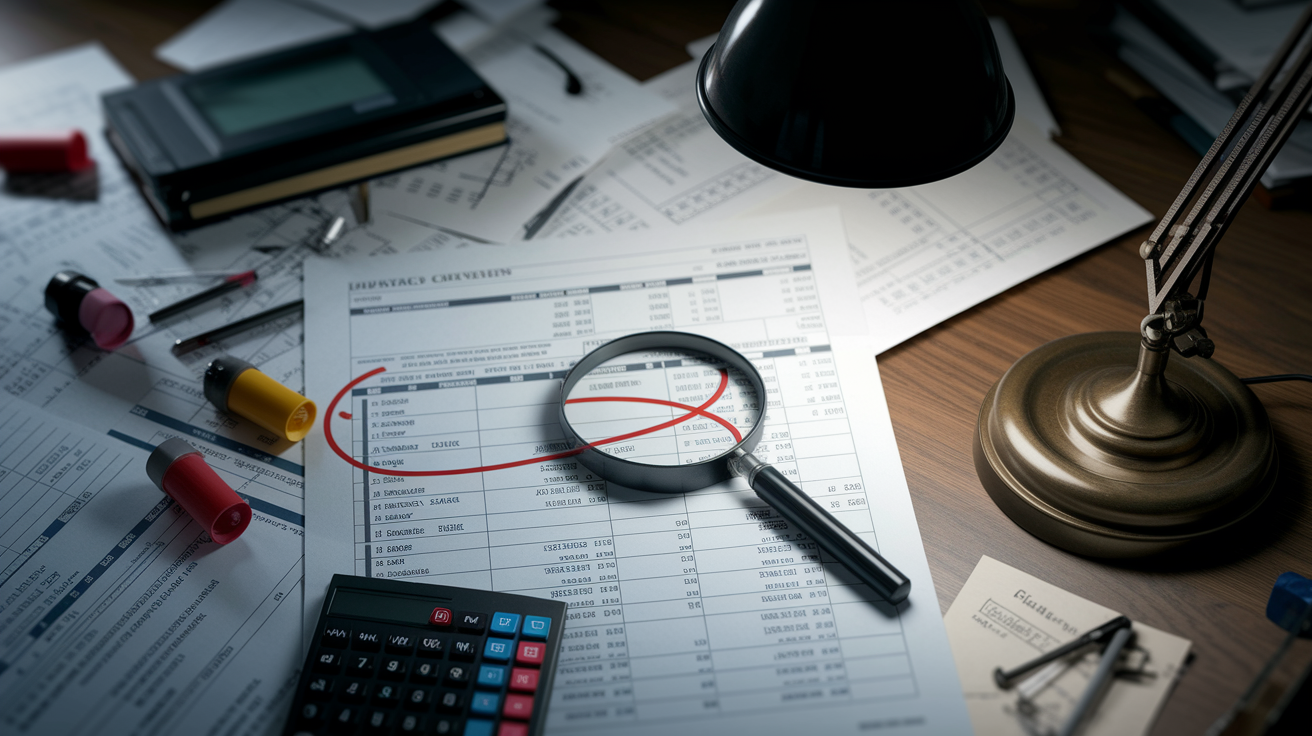
Forensic accounting is where certified public accountants blend accounting knowledge with detective work and legal understanding to dig through financial records, spot criminal activity, and build evidence that holds up in court. It’s not like regular accounting, where the job is tracking numbers and filing reports. Forensic accountants hunt for red flags. They trace hidden money, figure out if a crime actually happened, and assess whether someone acted with criminal intent. You’ll find them working in government agencies, corporate compliance departments, banks, law firms, and insurance companies, all trying to uncover schemes like identity theft, securities fraud, insurance scams, and other financial crimes designed to steal money or property without violence.
The forensic accounting process isn’t random. It follows four steps. First, they pull financial information from bank accounts, credit card statements, invoices, budgets, reports, earnings records, spending logs, and transaction ledgers. Second, they comb through it all looking for inconsistencies, missing paperwork, weird transfers, or patterns that scream fraud. Third, they compare what they’ve found against known benchmarks, timelines, and compliance rules to pinpoint discrepancies. Fourth, they write up detailed reports that meet legal standards so the evidence can be presented in court. The chain of custody has to be airtight, and everything needs to make sense to attorneys, juries, and judges who don’t speak accountant.
Common types of financial fraud they investigate:
- Identity theft and account takeover schemes
- Securities fraud involving insider trading or misleading disclosures
- Insurance fraud like false claims or inflated damages
- Embezzlement, bribery, and misappropriation of funds
Forensic Accounting Techniques Used in Modern Investigations

Forensic accountants use old-school audit methods alongside digital tools to analyze financial data and build cases. Traditional techniques include reconciling ledgers, tracing funds across multiple accounts, reviewing vendor invoices for inflated or duplicate charges, and comparing reported expenses to actual receipts. Fieldwork means conducting interviews with employees, executives, or witnesses, participating in search warrants, and reviewing physical documents like contracts, check stubs, or payroll records. Cases can drag on for months or years, especially when new information pops up and shifts the scope of the investigation.
Modern forensic accounting leans hard on specialized software and programming to process huge volumes of transactions, spot outliers, and reconstruct financial timelines. Common tools:
- Excel advanced functions like pivot tables, VLOOKUP, conditional formatting, and macros for pattern detection
- SQL for querying transaction databases and filtering records by date, vendor, amount, or account
- Python for automating data extraction, performing statistical analysis, and flagging anomalies across datasets
- ACL Analytics and IDEA for audit trail review, duplicate detection, and data visualization
- Network analysis software to map relationships between people, entities, and bank accounts
Digital Analysis Methods
Digital forensics is now central to financial investigations. Forensic accountants use SQL to pull transaction histories from enterprise systems, then apply Python scripts to identify irregular payment timing, unusual vendor activity, or shell companies created to hide funds. ACL and IDEA let investigators test entire populations of transactions instead of just sampling, which increases the odds of catching low-frequency fraud. Data visualization tools like Tableau or Power BI help forensic accountants present complex financial flows in charts, graphs, and timelines that legal teams and juries can actually understand. Raw data becomes persuasive evidence.
Litigation Support and Legal Applications of Forensic Accounting

Forensic accountants serve as expert witnesses and provide litigation support throughout civil and criminal cases. They prepare written reports that document methodology, evidence reviewed, analysis performed, and conclusions reached. Everything has to meet legal standards for admissibility in court. These reports often include reconstructed financial timelines, quantified damages, summaries of missing funds, and explanations of how fraudulent schemes were executed. Forensic accountants also support attorneys by identifying weaknesses in opposing financial claims, reviewing discovery materials for inconsistencies, and preparing exhibits that simplify complex accounting issues for judges and juries.
During depositions and trials, forensic accountants testify as expert witnesses to explain how they uncovered fraud, traced assets, or calculated economic damages. Their role is translating technical accounting evidence into clear, factual statements that non-specialists can follow. They collaborate closely with prosecutors, defense attorneys, and law enforcement to ensure that evidence maintains a clear chain of custody, that all documentation is properly authenticated, and that testimony aligns with investigative findings. This work requires strong communication skills and the ability to remain impartial while presenting objective financial analysis.
| Type of Legal Task | Purpose | Evidence Required |
|---|---|---|
| Expert Witness Testimony | Explain findings, methodology, and conclusions to the court | Detailed reports, source documents, audit trails |
| Documentary Evidence Examination | Authenticate and analyze financial records for fraud indicators | Bank statements, invoices, contracts, ledgers, digital records |
| Damages Calculation | Quantify losses from fraud, breach of contract, or business interruption | Historical financials, transaction logs, industry benchmarks |
Key Responsibilities and Daily Tasks of a Forensic Accountant

Forensic accountants conduct a wide range of investigative activities that require both technical accounting skills and the ability to think like a detective. A typical workday might include reviewing bank statements for unusual transactions, interviewing employees about missing documentation, analyzing vendor invoices for duplicate or inflated charges, and preparing summaries of findings for legal teams. Fieldwork often requires traveling to client sites, attending search warrant executions, collecting physical evidence, and coordinating with law enforcement to secure digital records like email archives, mobile device backups, or database logs.
Investigations rarely follow a straight line. New information often emerges during interviews or document reviews, prompting forensic accountants to expand their analysis, revisit earlier findings, or pursue additional lines of inquiry. Discovering a single unauthorized wire transfer might lead to uncovering a network of shell companies, multiple bank accounts, and years of hidden transactions. Forensic accountants must stay organized, maintain detailed notes, and document every step of their analysis to ensure that evidence remains admissible and that their conclusions can be defended under cross-examination.
Communication and reporting are critical. Forensic accountants prepare written reports that summarize their methodology, present evidence in a logical sequence, and explain conclusions in plain language. They also provide expert testimony in depositions and trials, where they explain complex financial concepts to judges, juries, and attorneys who may not have accounting backgrounds. Strong written and verbal communication skills allow forensic accountants to translate technical findings into persuasive legal evidence.
Common daily tasks:
- Conducting interviews with employees, vendors, executives, or witnesses to gather information and assess credibility
- Reviewing evidence like financial statements, tax returns, emails, and contracts to identify red flags or inconsistencies
- Assisting in search warrant executions to collect and preserve digital and physical financial records
- Analyzing transaction data using software tools to trace funds, detect patterns, and quantify losses
- Preparing detailed reports and exhibits for attorneys, law enforcement, or regulatory agencies
Fraud Detection, Red Flags, and Risk Assessment in Forensic Accounting

Forensic accountants look for specific patterns and anomalies that signal fraudulent activity. Fraud indicators often appear as inconsistencies between reported financial data and actual transactions, unexplained changes in spending patterns, missing documentation for key transactions, or suspicious relationships between employees and vendors. These red flags help forensic accountants identify areas that require deeper investigation, like tracing funds through multiple accounts, analyzing metadata from digital records, or interviewing individuals who may have knowledge of the scheme.
Asset tracing is a common forensic technique used in divorce cases, bankruptcy proceedings, corporate disputes, and money laundering investigations. Forensic accountants reconstruct financial flows by reviewing bank transfers, real estate purchases, vehicle registrations, and business ownership records to locate hidden assets or prove that funds were diverted for personal use. In money laundering cases, forensic accountants analyze transaction sequences, identify shell companies, and track funds across jurisdictions to demonstrate how illicit proceeds were disguised as legitimate income.
Six common red flags of financial fraud:
- Unexplained transactions or transfers, especially those that occur outside normal business hours or routing patterns
- Missing documentation like invoices, receipts, or contracts for large expenditures
- Inflated expenses or duplicate charges submitted by vendors or employees
- Suspicious vendor activity, including payments to entities with no clear business purpose or vendors that share addresses with employees
- Discrepancies in ledgers, such as mismatched totals, altered entries, or deleted transaction records
- Unusual account access patterns, including logins from unexpected locations or repeated access to financial systems by individuals with no job-related need
Education, Credentials, and Certification Pathways in Forensic Accounting

The typical path to becoming a forensic accountant starts with earning a bachelor’s or master’s degree in accounting, finance, forensic accounting, or a related field. Many programs include coursework in auditing, business law, fraud examination, business valuation, federal taxation, and interview techniques to provide the technical foundation needed for investigative work. Students are encouraged to complete internships or practicums during their studies, gaining one to two years of practical accounting experience in external audits, internal audits, or tax preparation before specializing in forensic accounting. This early exposure helps build analytical skills and familiarity with accounting systems that are essential for fraud detection. Additional information about entering the field is available at https://www.thiswaytocpa.com/why-cpa/articles/industries-specializations/getting-into-forensic-accounting/.
After completing a degree, aspiring forensic accountants typically pursue CPA licensure, which requires 150 semester credits compared to the standard 120 credits earned with a bachelor’s degree. The additional 30 credits are often completed through a master’s program or supplemental coursework. Once licensed, forensic accountants may pursue specialized credentials like the Certified Fraud Examiner (CFE) or Certified in Financial Forensics (CFF). The CFE credential, granted by the Association of Certified Fraud Examiners (ACFE), requires at least two years of fraud-related work experience and passing a 400-question exam divided into four two-hour parts covering fraud prevention, financial transactions, investigation techniques, and legal elements of fraud. Study materials include the Fraud Examiners Manual and fee-based prep courses.
The CFF credential, offered by the American Institute of Certified Public Accountants (AICPA), is specifically designed for CPAs and requires CPA licensure plus at least two years of professional experience in forensic accounting or a related field. The CFF exam is computer-based, multiple-choice, and divided into two parts, with two hours allotted for each section. Preparation includes the CFF Content Specification Outline and optional prep courses. Other useful credentials include the Accredited in Business Valuation (ABV) and Certified Management Accountant (CMA), which provide additional expertise in business valuation and management accounting that supports forensic engagements.
| Credential | Requirements | Exam Format | Granting Body |
|---|---|---|---|
| Certified Fraud Examiner (CFE) | Minimum 2 years fraud-related work experience | 400 multiple-choice questions; four two-hour parts | Association of Certified Fraud Examiners (ACFE) |
| Certified in Financial Forensics (CFF) | CPA licensure + 2 years professional experience | Computer-based; two parts, two hours each | American Institute of Certified Public Accountants (AICPA) |
| Certified Public Accountant (CPA) | 150 semester credits; pass CPA Exam | Four-part exam; varies by section | State boards of accountancy |
| Accredited in Business Valuation (ABV) | CPA licensure + business valuation experience | Exam and documentation of experience | American Institute of Certified Public Accountants (AICPA) |
Career Paths, Employers, and Work Settings in Forensic Accounting

Forensic accountants work across five primary employer types, each offering distinct roles and career trajectories. U.S. federal law enforcement and government agencies like the FBI, IRS, USPS, DEA, and ATF employ forensic accountants to support criminal investigations, identify financial leads, and trace illicit funds across jurisdictions. These roles often involve working closely with special agents, prosecutors, and intelligence analysts to build cases against individuals and organizations engaged in fraud, money laundering, or organized crime.
Large accounting and consulting firms maintain dedicated forensic accounting units that provide services like audits, digital forensics, fraud investigations, and litigation support for corporate clients and litigants. These roles typically involve working on multiple engagements simultaneously, conducting fieldwork at client sites, and collaborating with legal teams to prepare expert reports and testimony. Security and risk management teams within corporations, banks, and insurance companies hire forensic accountants to develop fraud prevention techniques, maintain compliance with regulations, and monitor financial security across the organization. These positions often focus on internal investigations, due diligence reviews, and ongoing risk assessment rather than external litigation.
Financial consulting agencies offer on-demand forensic services for organizations that don’t need full-time specialists. Consultants in this setting may work on short-term engagements involving insurance claims, business interruption analysis, or asset tracing in divorce or bankruptcy cases. Law firms hire forensic accountants to provide internal financial reviews, criminal audits, expert testimony, and litigation support. These roles require strong communication skills, as forensic accountants must explain complex financial issues to attorneys, judges, and juries in clear, persuasive language. Work settings vary widely, with forensic accountants splitting time between offices, client locations, courtrooms, and fieldwork sites depending on the nature of the engagement.
Five primary employer types:
- U.S. federal law enforcement and government agencies (FBI, IRS, USPS, DEA, ATF)
- Forensic accounting units within large accounting firms (Big Four and mid-tier firms)
- Security and risk management roles in corporations, banks, and insurance companies
- Financial consulting agencies providing on-demand forensic services
- Law firms requiring expert testimony, litigation support, and internal financial reviews
When Individuals or Businesses Should Use Forensic Accounting Services

Organizations and individuals typically hire forensic accountants when they suspect financial fraud, need to quantify economic damages, require expert testimony for litigation, or lack the internal capacity to conduct complex financial investigations. Corporations may engage forensic accountants to investigate whistleblower complaints, assess the financial impact of employee embezzlement, or perform due diligence during mergers and acquisitions to ensure that target companies have accurate financial statements and no hidden liabilities. Government agencies use forensic accounting services to support regulatory enforcement, tax audits, and criminal prosecutions involving financial crimes.
Insurers and law firms frequently retain forensic accountants to support insurance claims, calculate business interruption losses, assess damages in breach of contract disputes, or trace hidden assets in divorce and bankruptcy cases. Forensic accountants help establish the value of losses, reconstruct financial records when documentation is incomplete or altered, and provide independent assessments that support settlement negotiations or court proceedings. When internal finance teams lack specialized investigative training or the impartiality required for sensitive matters, outsourcing to a forensic accounting firm ensures that the investigation is conducted with professional rigor and that findings will withstand legal scrutiny.
Common scenarios for engaging forensic accountants:
- Fraud investigations triggered by whistleblower reports, audit findings, or suspicious transactions
- Litigation support for civil disputes involving breach of contract, partnership dissolution, or shareholder claims
- Insurance claims requiring business interruption analysis, loss quantification, or fraud assessment
- Forensic due diligence during mergers and acquisitions to verify financial statements and uncover hidden liabilities
Digital Forensics, Cryptocurrency Tracing, and Emerging Financial Crime Trends

Digital forensics has become essential in modern financial investigations as evidence increasingly exists in electronic form. Forensic accountants analyze email communications, metadata from documents, mobile device backups, network logs, and cloud storage to trace financial transactions, identify co-conspirators, and establish timelines of fraudulent activity. Metadata preservation ensures that digital evidence retains its integrity and admissibility in court, while chain of custody procedures document every step of evidence collection, analysis, and storage. Digital forensics tools allow investigators to recover deleted files, track user activity across systems, and analyze communication patterns that reveal coordination between individuals involved in fraud schemes.
Blockchain technology and cryptocurrency have introduced new challenges and opportunities for forensic accounting. Cryptocurrency transactions are recorded on public ledgers, but the identities of wallet owners are often pseudonymous, requiring specialized techniques to link digital wallets to real-world individuals or entities. Forensic accountants use blockchain analytics tools to trace the flow of cryptocurrency across wallets, exchanges, and mixers, identifying patterns that suggest money laundering, ransomware payments, or illicit transactions. Transaction histories, wallet addresses, and exchange records provide a detailed trail that can be used to freeze assets, identify suspects, or demonstrate the movement of stolen funds.
Emerging financial crime trends require forensic accountants to stay current with new technologies, regulatory changes, and criminal tactics. Cybercrime, including ransomware and business email compromise, has increased the need for forensic accountants who understand both accounting and information technology. Social engineering schemes, synthetic identity fraud, and cryptocurrency laundering require investigators to combine traditional forensic techniques with digital analysis and open-source intelligence gathering. Continuous professional education and collaboration with cybersecurity professionals allow forensic accountants to adapt their methodologies to evolving threats.
Cryptocurrency Examination Techniques
Cryptocurrency tracing involves analyzing blockchain transactions to identify wallet owners, trace fund flows, and demonstrate illicit activity. Forensic accountants use specialized blockchain analytics platforms like Chainalysis, Elliptic, or CipherTrace to visualize transaction networks, flag high-risk wallets, and link cryptocurrency addresses to known entities or exchanges. By following the flow of funds across multiple wallets and jurisdictions, forensic accountants can establish connections between suspects, quantify stolen amounts, and support asset recovery efforts. Metadata from exchange accounts, IP addresses, and transaction timestamps provide additional context that helps investigators build comprehensive cases.
Reporting Standards, Documentation, and Expert Output in Forensic Accounting
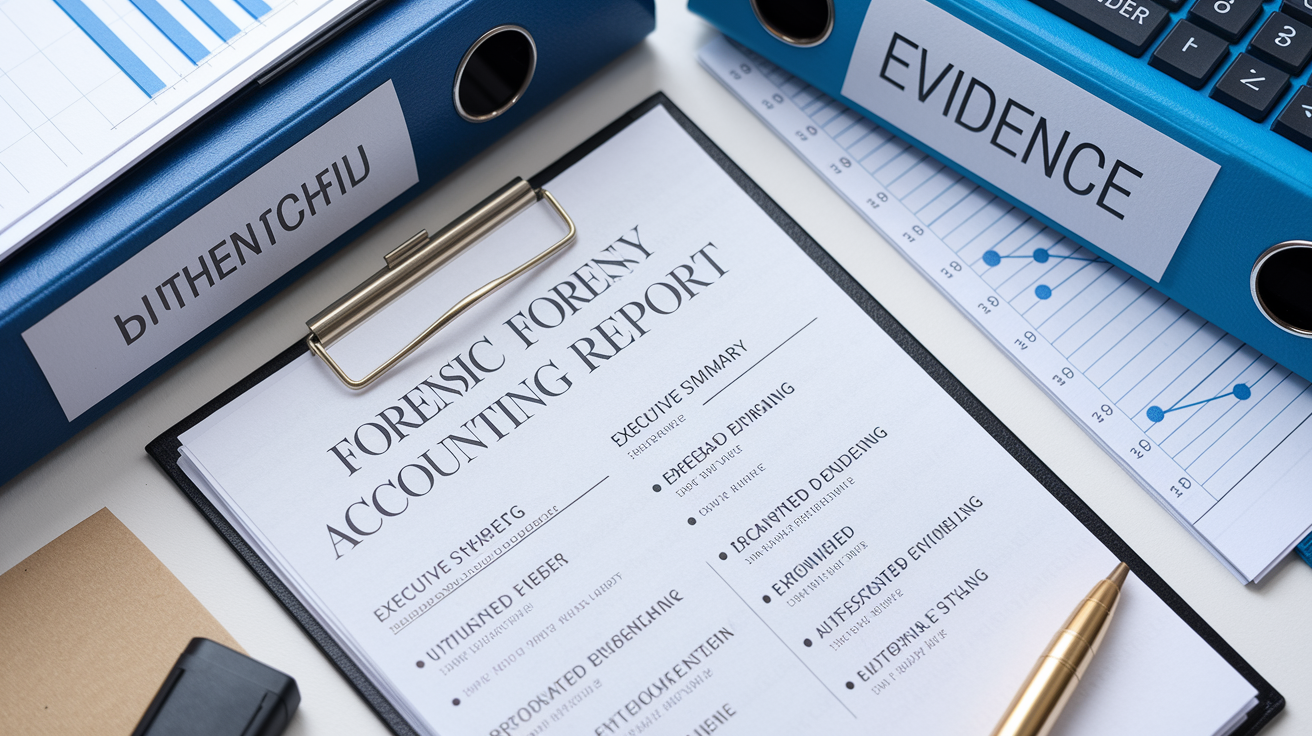
Forensic accountants produce detailed written reports that serve as the foundation for legal proceedings, regulatory actions, or internal decision-making. These reports document the scope of the investigation, the evidence reviewed, the analytical methods applied, and the conclusions reached. A well-structured forensic report includes an executive summary, a description of the engagement objectives, a timeline of events, an analysis of financial data, supporting exhibits like charts and transaction summaries, and a clear statement of findings. Reports must meet legal standards for admissibility, which means maintaining objective language, avoiding speculation, and ensuring that all evidence is properly authenticated and traceable.
Timeline reconstruction is critical. Forensic accountants organize financial transactions, communications, and events into a chronological sequence that helps attorneys, judges, and juries understand how fraud was executed, who was involved, and when key actions occurred. Timelines often incorporate data from multiple sources, including bank statements, emails, contracts, and witness interviews, to create a comprehensive picture of the scheme. Evidence preservation and storage procedures ensure that digital and physical records remain intact, unaltered, and accessible throughout the investigation and any subsequent legal proceedings.
Forensic accountants also prepare for depositions and testimony by reviewing their reports, anticipating opposing counsel’s questions, and practicing clear explanations of technical concepts. Case timelines can last months or years, particularly when new evidence emerges or when the investigation expands to include additional suspects or transactions. Ongoing documentation allows forensic accountants to track the evolution of the case, update their reports as needed, and maintain a clear record of their work for peer review or quality control purposes.
| Deliverable Type | Purpose | Required Documentation |
|---|---|---|
| Written Expert Report | Present findings, methodology, and conclusions for legal proceedings | Executive summary, evidence list, analysis, exhibits, chain of custody records |
| Reconstructed Timeline | Organize transactions and events chronologically to demonstrate fraud | Transaction logs, emails, contracts, witness statements, date-stamped records |
| Expert Testimony | Explain findings in depositions and trials | Expert report, supporting documents, visual aids, authenticated evidence |
Early-Career Development and Long-Term Growth in Forensic Accounting
Building a career in forensic accounting starts with gaining practical experience through internships, audit roles, or tax positions during or immediately after completing a bachelor’s degree. Early-career professionals should seek opportunities to work on audit teams, internal investigations, or compliance projects that develop analytical skills, attention to detail, and familiarity with financial systems. Networking through job fairs, LinkedIn, and professional associations like the Association of Certified Fraud Examiners or the National Association of Forensic Accountants helps emerging professionals connect with mentors, learn about job openings, and stay informed about industry trends.
Professional ethics and independence are foundational to forensic accounting work. Forensic accountants must remain impartial, disclose any conflicts of interest, and adhere to the ethical standards set by their credentialing bodies and employers. Ongoing professional education is required to maintain certifications like the CFE and CPA, with continuing education courses covering topics like fraud detection, regulatory changes, investigative techniques, and digital forensics. Peer review and quality control processes ensure that forensic engagements meet professional standards and that conclusions are supported by sound methodology and reliable evidence. Career and training insights are available at https://gradadmissions.scranton.edu/blog/articles/accounting/what-is-forensic-accounting.shtml.
Salary progression reflects the specialized nature of forensic accounting. Entry-level salaries align with general accounting medians, around $81,680 annually, with top earners in the field exceeding $141,420. Earning advanced degrees like a master’s in accounting or an MBA, obtaining multiple certifications, and gaining experience in high-profile cases or federal enforcement roles all contribute to increased earning potential. Long-term career growth often involves moving into leadership positions like engagement manager, forensic practice lead, or chief compliance officer, where professionals oversee teams, manage client relationships, and shape investigative strategy.
Four strategies for early-career development:
- Complete internships in audit, tax, or forensic accounting to build foundational skills and professional networks
- Pursue CPA licensure and specialized credentials like CFE or CFF to demonstrate expertise and commitment to the field
- Engage in continuing professional education through webinars, conferences, and courses in fraud detection, digital forensics, and legal testimony
- Join professional associations to access job boards, mentorship programs, and resources for career advancement
Final Words
We dug into what forensic accounting does, the investigative techniques, litigation support, daily tasks, common fraud red flags, certification paths, work settings, digital trends, and reporting standards. You now know the four-step method investigators use and where these skills matter.
Next, use the simple checks: spot red flags, verify credentials (CFE, CFF, CPA), and preserve records that could be evidence.
If you ever need clarity or a specialist, forensic accounting is a practical way to uncover the truth and help resolve disputes.
FAQ
Q: Do forensic accountants make a lot of money?
A: Forensic accountants’ pay varies by experience, employer, and location: median starting pay around $81,680, while seasoned specialists in firms or government roles can earn well over $141,000.
Q: Do I need a CPA to be a forensic accountant?
A: You don’t strictly need a CPA to become a forensic accountant, but many employers prefer or require a CPA plus specialized credentials like the CFE or CFF for advanced investigative and courtroom roles.
Q: What exactly does a forensic accountant do?
A: A forensic accountant investigates financial records, combines accounting, audit and legal methods to detect fraud, trace assets, assess intent, and prepare admissible reports and testimony to support litigation or regulatory cases.
Q: How many years does it take to become a forensic accountant?
A: Becoming a forensic accountant typically takes about five to seven years: four years for a bachelor’s degree plus one to two years of relevant accounting experience, then extra time for CPA and specialty exams.