


Think “basic” insurance will pay to fix your car after a hailstorm? It won’t.
Basic (liability) covers harm you cause to other people and their property; comprehensive protects your own car from theft, weather, vandalism, or animal strikes.
This post breaks down those differences with short examples and clear rules.
We’ll show when the extra cost is worth it, and by the end you’ll know which coverages to keep and which you can skip.
Core Differences Between Basic and Comprehensive Insurance Coverage
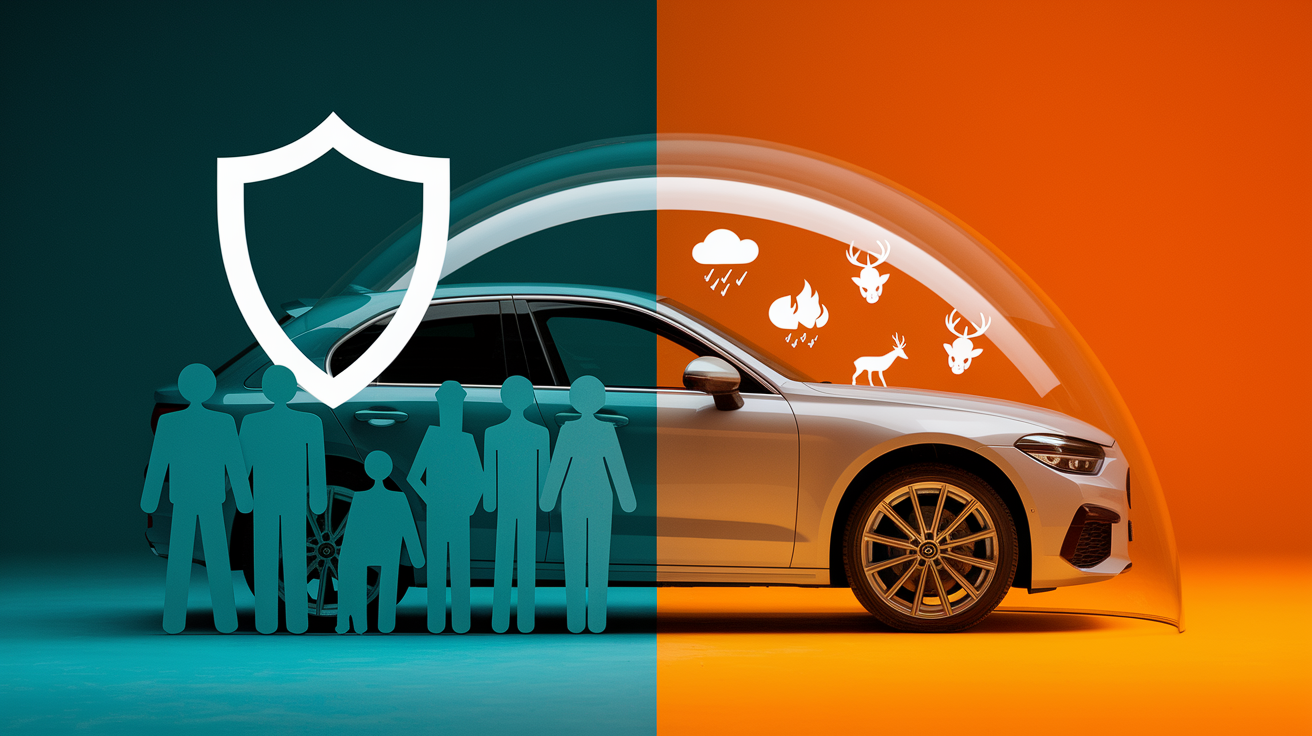
Basic insurance covers what you’re legally required to carry. Damage you cause to other people and their property when you’re at fault. Comprehensive insurance covers what happens to your own vehicle when it’s damaged by events outside of a collision. The key split is simple: basic (liability) protects others, comprehensive protects your car from non-crash perils.
Liability pays when you rear-end another driver and their car needs repair, or when you swerve into a fence and need to cover the property owner’s repair costs. It never pays to fix your own vehicle. Comprehensive steps in when a deer runs into your car on a rural highway, when hail dents your hood, or when someone steals your car from a parking lot. Events where no other driver is involved and no collision occurred.
Here’s how each coverage responds to different triggers:
Liability (basic): Pays medical bills and property damage for others when you’re at fault in an accident.
Comprehensive: Pays to repair or replace your vehicle after theft, vandalism, fire, falling objects, or animal strikes.
Liability: Required by law in every province. You can’t legally drive without it.
Comprehensive: Optional. You choose whether to add it based on your vehicle’s value and your risk tolerance.
Liability: Never covers your own vehicle’s damage, only third-party losses.
Comprehensive: Pays actual cash value if your car is totaled by a covered peril like a tree falling on it during a storm.
One common example: you hit a deer on a country road at night. Your bumper is crushed and your headlight is shattered. Liability won’t pay a cent because you didn’t damage anyone else’s property. Comprehensive will cover the repair, minus your deductible. If someone breaks your window and steals your stereo, comprehensive pays for both the glass and the stolen equipment. If you slide on ice and hit a guardrail, neither liability nor comprehensive pays. That’s a collision claim, which is a separate optional coverage altogether.
Simple Definitions of Basic Insurance and Comprehensive Insurance
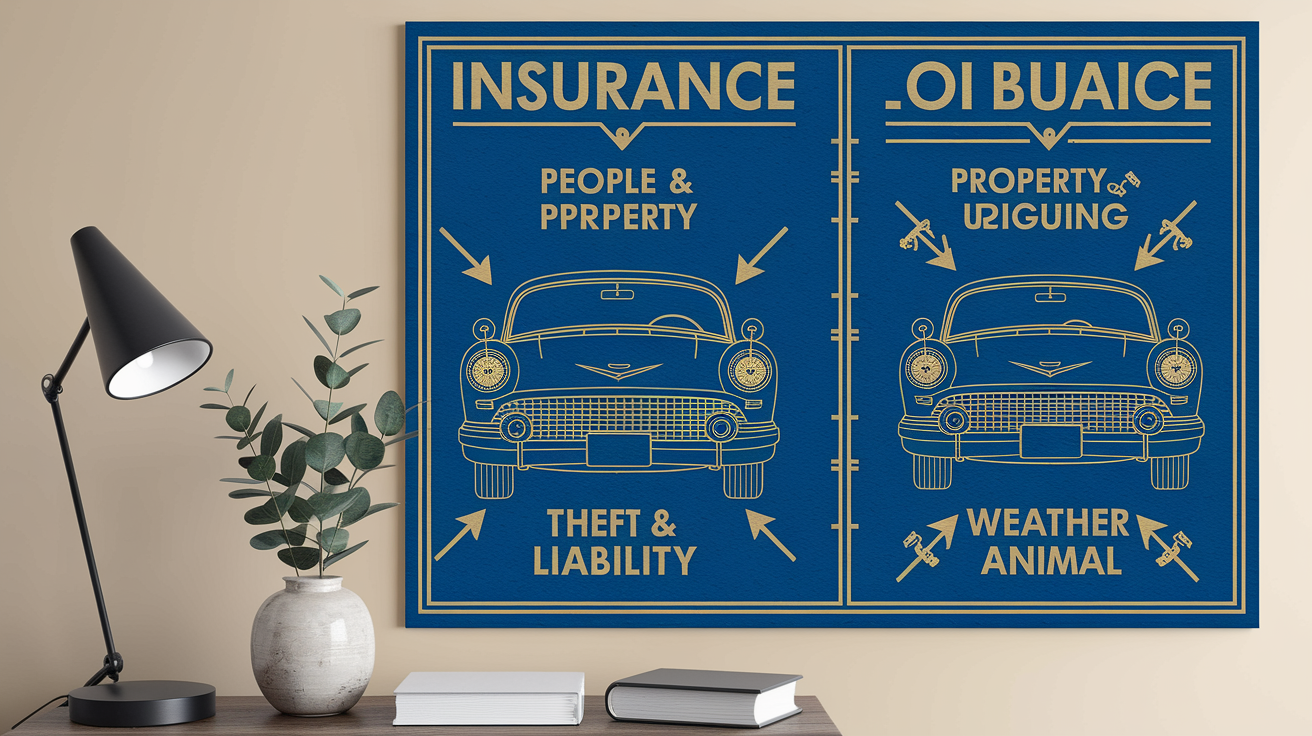
Basic insurance (liability or PLPD, Personal Liability and Property Damage) is the coverage that pays for harm you cause to other people or their belongings when you’re responsible for an accident. It includes two parts: bodily injury liability (medical bills, lost wages, legal fees if someone sues) and property damage liability (repairs to cars, fences, buildings, or other property you damage). Every province requires drivers to carry a minimum amount of liability coverage before they can register a vehicle.
Comprehensive insurance is optional protection that covers damage to your own vehicle caused by events other than collisions. It pays when your car is stolen, vandalized, damaged by weather (hail, wind, floods), hit by falling objects, or struck by an animal. Comprehensive also covers broken glass like a windshield shattered by a rock and fire damage. It doesn’t cover normal wear and tear, mechanical breakdowns, or damage from driving into another vehicle or object.
Technical Coverage Matrix: What Each Policy Category Includes
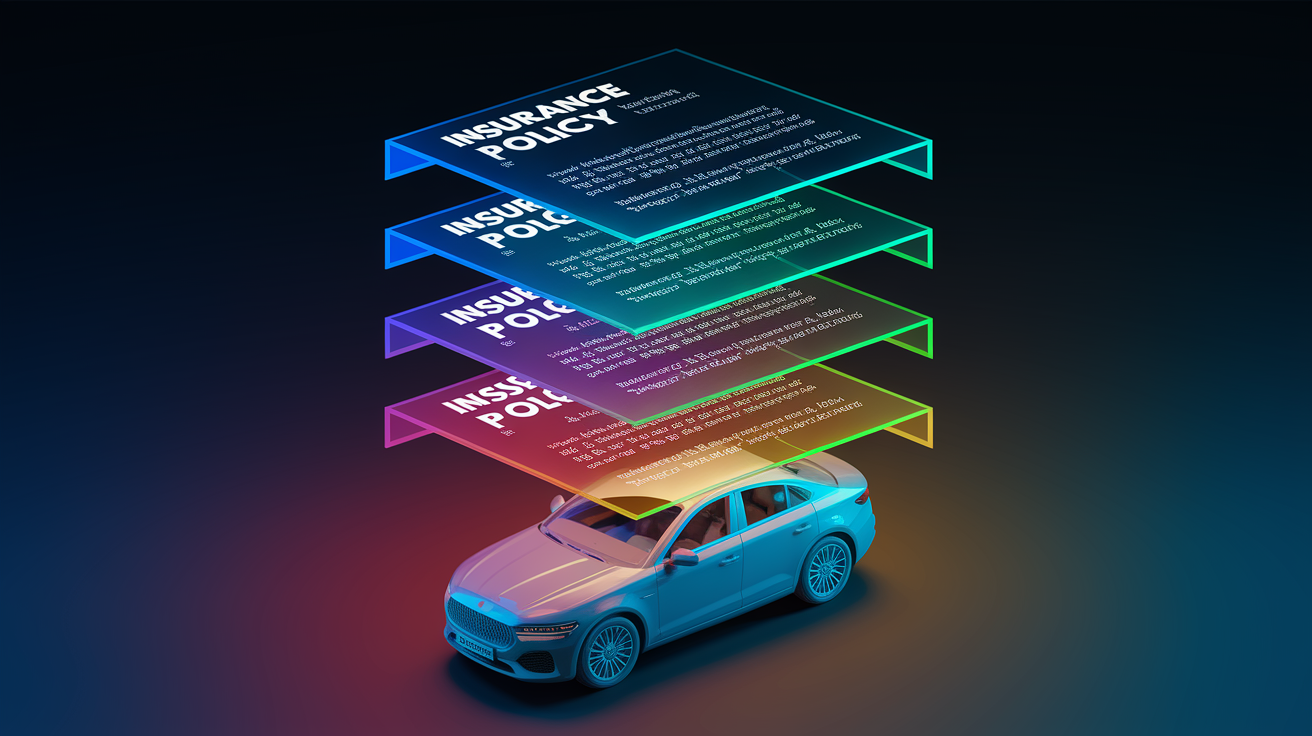
Insurance policies are built from distinct protection categories, each designed to respond to a specific set of risks. Basic liability coverage sits in the third-party protection category. It only activates when you’re legally responsible for someone else’s loss. Comprehensive and collision coverages belong to the first-party category, they protect your own asset, the vehicle you own or lease.
Neither comprehensive nor collision will pay for maintenance issues, engine failures, or worn brakes. Those fall outside the scope of accident and peril coverage. Liability, comprehensive, and collision work together in a full-coverage policy, but each answers a different question: “What did I break?” (liability), “Did I crash into something?” (collision), or “Did something happen to my car that wasn’t a crash?” (comprehensive).
| Coverage Type | What It Pays For | Examples |
|---|---|---|
| Basic (Liability) | Third-party bodily injury and property damage when you are at fault | Medical bills for another driver, repair costs for a fence you hit, legal defense if sued |
| Collision | Damage to your vehicle from crashes with other vehicles or objects | Hitting another car, backing into a pole, rolling into a ditch |
| Comprehensive | Damage to your vehicle from non-collision events | Theft, hail, vandalism, hitting a deer, tree branch falling on car, broken windshield from road debris |
Real-World Insurance Scenarios Highlighting Basic vs Comprehensive Differences

You’re driving home on a rainy evening and a deer jumps into the side of your car. Your front quarter panel is crumpled and the mirror is torn off. You call your insurer, and they confirm: comprehensive pays for the repair because an animal collision is a covered peril. Your liability coverage sits idle. You didn’t damage anyone else’s property, and no other driver was involved. After you pay your $500 deductible, comprehensive covers the remaining $2,800 repair bill.
A month later, a severe hailstorm moves through overnight and leaves dozens of dents across your hood and roof. You file a claim the next morning. Again, comprehensive responds. Weather damage is explicitly covered. Your liability policy never enters the picture. The insurer pays the actual repair cost, minus your deductible, and you’re back on the road within a week.
Now imagine you’re backing out of a parking space and misjudge the distance to a concrete pillar. You hear the crunch as your rear bumper folds. That’s a collision claim, not comprehensive. If you only carry liability, you pay the entire repair yourself. If you have collision coverage, you pay your deductible and the insurer covers the rest. Liability still doesn’t apply because you didn’t hit another person or their property.
Finally, you cause a multi-car accident by running a red light. Two other vehicles are damaged, and one driver goes to the hospital. Your liability coverage steps in immediately to pay the other drivers’ medical bills, vehicle repairs, and any legal costs if they sue. Comprehensive and collision coverage do nothing in this scenario unless you also want to repair your own car. Collision would handle that part, and comprehensive would remain uninvolved because the damage came from a crash, not a non-collision peril.
Cost Comparison: Premiums, Deductibles, and Out-of-Pocket Differences

Comprehensive insurance costs more than liability-only coverage because it protects against a wider set of risks. A basic liability policy might run $800 per year, while adding comprehensive and collision can push the total to $1,800 or higher, depending on your vehicle and location. The difference reflects the insurer’s exposure. They’re now on the hook for theft, vandalism, hail, fire, and a dozen other perils, not just your mistakes behind the wheel.
Deductibles directly control how much you pay out of pocket before coverage kicks in, and they also adjust your premium. If you choose a $500 deductible for comprehensive, you’ll pay a higher monthly premium than if you choose $1,000. The trade-off is straightforward: lower deductible means less financial shock at claim time but higher ongoing cost. Higher deductible cuts your premium but increases the amount you’ll need to cover yourself if something happens. Common deductible options are $500, $1,000, and sometimes $250 or $2,000, depending on the insurer and your vehicle’s value.
Several factors push premiums up or down, independent of deductible choice:
Vehicle value: Higher replacement cost means higher premiums, because the insurer’s potential payout increases.
Driving history: At-fault accidents and traffic violations raise your rates, signaling higher risk.
Location: High-theft neighborhoods or regions prone to severe weather (hailstorms, floods) result in higher comprehensive premiums.
Vehicle age: Older cars often cost less to insure under comprehensive because their actual cash value is lower.
Claims history: Frequent claims, even small ones, can increase premiums at renewal.
Pros and Cons of Basic vs Comprehensive Insurance Coverage

Basic liability coverage meets the legal minimum, costs less, and keeps you on the road legally without paying for protection you might never use. It works well when your vehicle has minimal resale value and you’re comfortable covering repair or replacement costs yourself if something goes wrong. Many drivers with older cars, models worth less than $3,000, choose to drop comprehensive and collision entirely, pocketing the premium savings and accepting the risk of out-of-pocket expenses.
Comprehensive coverage adds a safety net for non-collision perils, which can be financially devastating without insurance. A stolen car, a hailstorm, or a deer strike can easily cost $5,000 to $15,000 to fix or replace. Comprehensive ensures you’re not left scrambling for that cash after an unexpected event. It’s especially valuable if you live in an area with high theft rates, frequent severe weather, or abundant wildlife near highways.
Basic (Liability) Pros:
Lowest possible premium while staying legal
No deductible to manage for your own vehicle (because it doesn’t cover your vehicle)
Simple coverage with fewer claim scenarios to track
Comprehensive Coverage Pros:
Protects against theft, vandalism, and weather damage
Covers animal strikes and falling-object damage
Often required by lenders for financed or leased vehicles, so it protects your financial interest and satisfies contract terms
How to Choose Between Basic and Comprehensive Insurance Coverage

Start by checking whether anyone else has a say in your coverage decision. If your car is financed or leased, the lender almost always requires both comprehensive and collision until the loan is paid off. That requirement protects their collateral, your vehicle, and you won’t be able to drop coverage without breaching your contract. If you own the car outright, the choice is yours to make based on risk, value, and budget.
Next, assess your vehicle’s current market value. Look up its actual cash value using online valuation tools or ask your insurer. If the car is worth less than ten times your annual comprehensive premium, the math starts to favor dropping the coverage. For example, if your car is worth $2,500 and comprehensive costs $400 per year, one claim pays back less than you’d spend over a few years of premiums, especially after the deductible. But if your car is worth $15,000, comprehensive coverage at $600 per year makes more sense because a single theft or hail event could erase years of premium savings.
Consider your local risk environment and personal financial cushion. Do you live in an area with frequent severe weather, high vehicle theft rates, or rural roads where animal strikes are common? Comprehensive coverage becomes more valuable when the likelihood of a covered event increases. At the same time, ask yourself whether you could comfortably pay $10,000 out of pocket tomorrow if your car were stolen or totaled by a storm. If that amount would strain your finances or wipe out your emergency fund, comprehensive coverage buys peace of mind and financial stability.
Here are the core decision factors to weigh:
- Vehicle age and value: Newer, higher-value vehicles justify comprehensive. Older, low-value cars often don’t.
- Financing or lease requirements: Lenders typically mandate both comprehensive and collision until the loan is paid.
- Local risk factors: High-theft areas, regions with severe weather, or wildlife-heavy zones increase the value of comprehensive.
- Personal risk tolerance: If you’re comfortable self-insuring and covering replacement costs, basic may suffice.
- Budget and deductible capacity: Ensure you can afford both the premium and the deductible if you file a claim. If not, adjust coverage or deductible to fit.
Claims Process: How Basic vs Comprehensive Insurance Responds After an Incident

When you file a liability claim, the process focuses on the other party’s damages. You report the accident, provide a statement, and the insurer investigates to confirm fault. If you’re found at fault, your liability coverage pays the other driver’s repair bills and medical expenses directly. You don’t receive a check. Your insurer handles all payments to third parties. The process can take weeks if injury claims are involved, and your premium will likely increase at renewal.
Comprehensive claims run differently because they involve your own vehicle. After a covered event, say, your car is stolen or damaged by hail, you file a claim with your insurer, provide documentation (police report for theft, photos of hail damage), and schedule an inspection or estimate. The insurer assesses the damage and either authorizes repairs or, if the vehicle is totaled, pays you the actual cash value minus your deductible. If your car is stolen and not recovered, comprehensive pays the replacement value based on pre-theft market data. You choose the repair shop in most cases, and the claim closes once repairs are finished or the payout is issued.
Documentation you’ll typically need when filing a claim:
Police report: Required for theft, hit-and-run, or vandalism claims.
Photos of damage: Clear images showing the extent and location of the damage.
Repair estimates: Quotes from repair shops, or the insurer may send an adjuster to inspect directly.
Proof of ownership: Vehicle registration and title, especially important for total-loss or theft claims.
Additional Coverage Considerations: Riders, Add-Ons, and Optional Protections
Comprehensive policies often allow or include add-ons that extend protection beyond the base coverage. Roadside assistance is a common rider that covers towing, flat tire changes, lockout service, and jump-starts. Useful add-ons that aren’t tied to accident or peril coverage but offer convenience when you’re stranded. Glass coverage endorsements sometimes waive the deductible for windshield repairs, lowering out-of-pocket costs when a rock cracks your glass.
Other optional protections include coverage for custom parts and aftermarket accessories. Items like upgraded stereos, custom wheels, or off-road equipment that aren’t covered under standard comprehensive limits. If you’ve invested in modifications, an endorsement ensures those additions are protected. Rental car reimbursement is another popular add-on. It pays for a rental vehicle while yours is in the shop after a covered loss, bridging the gap so you’re not without transportation.
Common add-ons and riders to consider:
Roadside assistance: Covers towing, lockouts, fuel delivery, and minor on-site repairs.
Glass coverage endorsement: Waives deductible for windshield repair or replacement.
Custom parts and equipment coverage: Protects aftermarket modifications and accessories.
Rental car reimbursement: Pays daily rental costs while your vehicle is being repaired after a covered claim.
Basic vs Comprehensive Insurance FAQs and Common Misconceptions

Is liability insurance the same as basic insurance? Yes, “basic insurance” and “liability insurance” refer to the same thing in most contexts. The legally required coverage that pays for damage you cause to others.
Does comprehensive cover collisions? No. Comprehensive covers non-collision events like theft, vandalism, weather, and animal strikes. Collision coverage is separate and pays for crash-related damage.
Can I drop comprehensive if I own my car outright? Yes. Once there’s no lender requirement, you can choose to carry only liability or add collision and comprehensive based on your own assessment of risk and value.
Will comprehensive pay if my engine fails? No. Comprehensive excludes mechanical breakdowns and normal wear and tear. It only covers damage from external perils like theft, weather, or vandalism.
Do I need both comprehensive and collision? Many drivers choose both to fully protect their vehicle, but it’s not required by law. Only liability is mandatory. Lenders often require both if the vehicle is financed or leased.
Does a higher deductible always save money? In premium cost, yes. Higher deductibles lower monthly payments. But you’ll pay more out of pocket when you file a claim, so balance the savings against your ability to cover that deductible if something happens.
Final Words
You’ve seen the core split: basic liability pays for harm you cause others and is often required by law. Comprehensive covers non-collision losses like theft, hail, and deer strikes, and pays to repair or replace your car after the deductible.
We compared payouts, common scenarios, and how premiums and deductibles change costs. That helps you match coverage to vehicle value and local risks.
If you’re still asking what is the difference between basic and comprehensive insurance, remember: basic protects other people; comprehensive protects your vehicle from non-collision perils. Choose what fits your risk and budget—you’ll be better prepared.
FAQ
Q: Is osteoporosis covered by insurance?
A: Osteoporosis is usually covered by health insurance. Coverage typically includes diagnosis tests, doctor visits, and prescription treatments, but plans differ—check prior authorization rules, copays, and how often bone‑density scans are allowed.
Q: Do I need comprehensive insurance for my car?
A: You need comprehensive insurance for your car if it’s financed or leased, because lenders require it. Otherwise it’s optional—worth it for higher‑value cars or areas with theft or severe weather; older low‑value cars often skip it.
Q: Can I drive any car on comprehensive insurance?
A: You can drive any car on comprehensive insurance only if that car is listed on your policy or your policy specifically extends coverage to borrowed or rental cars; otherwise the vehicle itself needs its own comprehensive policy.
Q: Why does Progressive recommend no comprehensive coverage?
A: Progressive recommends no comprehensive coverage when they calculate the car’s value is low compared with premiums and deductible. That saves money short term but leaves you to pay full repair or replacement costs after a covered loss.