



Do college students really need renters insurance, or is it just another expense?
Short answer: most do, and the right amount depends more on your gear and living situation than on price.
This post explains clear coverage ranges for dorms and apartments, usually $10,000 to $30,000 for personal property and at least $100,000 for liability, how deductibles change cost, and a simple inventory method so you pick a limit that actually replaces your stuff if it disappears overnight.
Recommended Renters Insurance Coverage Amounts for College Students
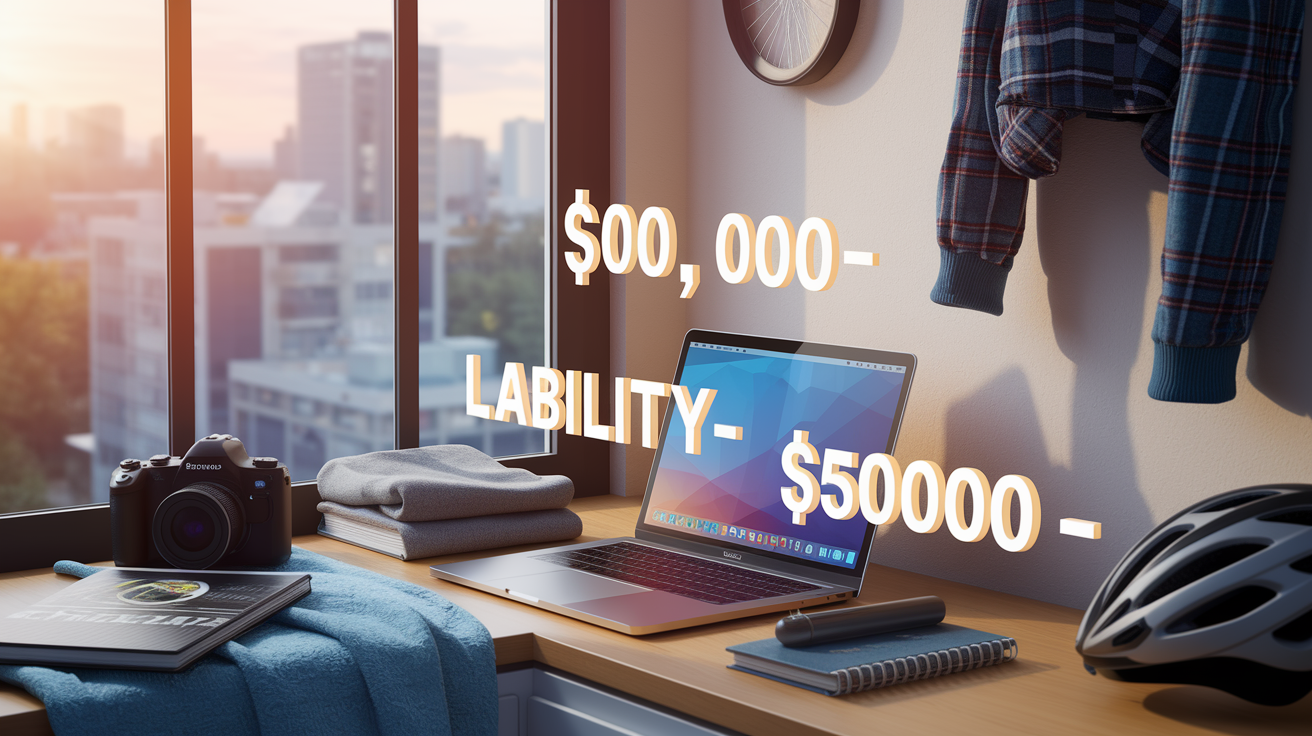
Most college students need somewhere between $10,000 and $30,000 in personal property coverage. If you’ve got minimal stuff (basic furniture, one laptop, a phone, textbooks, everyday clothes), you can start closer to the lower end. But if you’re hauling multiple laptops, gaming consoles, a nice camera, musical instruments, or an expensive bike, you’re looking at $25,000 to $30,000 or more. The right number? It’s whatever you’d actually need to replace if your room got emptied out overnight.
Liability coverage should hit at least $100,000, which is pretty standard. Think about bumping that to $300,000 or $500,000 if you host people regularly, park a car near the property, or just face more third-party risk. Liability kicks in if someone gets hurt in your space or you accidentally trash someone else’s property.
Deductibles usually fall between $250 and $1,000. That’s what you pay out of pocket before the insurer covers the rest. A $500 deductible is the sweet spot for most students because it keeps premiums manageable without sticking you with a huge upfront bill if something goes wrong. Monthly premiums for students run about $10 to $25, or roughly $120 to $300 per year. Depends on your coverage amount, deductible, location, and who you’re insuring with.
Sample Student Profiles and Coverage Amounts
Minimal dorm student: $10,000 personal property, $100,000 liability, $500 deductible. You’re probably looking at $8 to $15 per month.
Standard off-campus student: $20,000 personal property, $100,000 liability, $500 deductible. Estimated $12 to $20 per month.
Tech-heavy student (multiple laptops, camera gear, instruments): $25,000 to $30,000 personal property, $300,000 liability, $250 to $500 deductible. Estimated $15 to $35 per month.
Shared apartment with higher liability risk: $20,000 personal property, $300,000 to $500,000 liability, $500 deductible. Estimated $18 to $30 per month.
Estimating Personal Property Coverage Needs for College Students

Figuring out your needed coverage starts with listing every item you’re bringing to school and estimating what it’d cost to replace each one new. Add up your laptop, phone, bike, clothing, textbooks, small furniture, gaming consoles, kitchen stuff, accessories, and anything else you’d miss if it vanished. Then tack on a 10 to 20 percent buffer for taxes, shipping, and the things you’ll inevitably forget.
Let’s say you’ve got a laptop worth $1,200, a phone worth $800, a bike worth $600, textbooks and course materials worth $400, clothing and shoes totaling $1,500, and small furniture or décor worth $1,000. That’s $5,500. Round up to at least $10,000 so you’re not cutting it close. If you own expensive instruments, designer stuff, or multiple electronics, your total can easily push past $20,000.
Step-by-Step Inventory Process
Walk through your room and list every item category: electronics, clothing, shoes, textbooks, furniture, sports equipment, jewelry, kitchen items, accessories.
Estimate the replacement cost for each item. What would it cost to buy it new today, not what you paid or what it’s worth used.
Add up all category totals to get your baseline replacement value.
Multiply the total by 1.1 or 1.2 to add a 10 to 20 percent buffer for overlooked items and incidentals.
Round to the nearest $5,000 or $10,000 increment to pick your personal property coverage limit.
Review and update your inventory at the start of each semester or after major purchases like a new laptop or camera.
Creating a Simple Dorm Inventory
Start by photographing or recording video of your room and belongings as soon as you move in. Capture serial numbers, model numbers, and any identifying details on electronics, bikes, and high-value items. Save copies of receipts and purchase confirmations in a cloud storage folder or email account you can access from anywhere. Update your inventory whenever you buy something expensive or get a gift worth more than a couple hundred bucks. Store one copy of your photos and spreadsheet on your phone and another in a secure cloud service so you can prove what you owned even if your laptop gets stolen.
Personal Property vs. Liability Coverage for Student Renters

Personal property coverage reimburses you for your belongings if they’re stolen, damaged in a fire, or destroyed by a covered event. Liability coverage protects you financially if someone gets injured in your space or if you accidentally damage someone else’s property. They serve completely different purposes. You need both.
Liability limits start at $100,000 on most policies, which covers legal defense costs and damages if a guest slips on a wet floor in your apartment or if you accidentally start a small fire that spreads to a neighbor’s unit. If you host frequent gatherings, live in a shared house, or have guests over regularly, think about raising liability to $300,000 or $500,000. The added premium is usually modest (often just a few dollars per month) and the extra protection can matter if someone files a lawsuit.
Most renters policies also toss in a small amount of medical payments coverage, typically $1,000 to $5,000. That pays for minor injuries to guests without triggering a liability claim. If a friend twists an ankle on your stairs and needs an urgent care visit, medical payments coverage can handle the bill quickly without forcing anyone to file a formal claim or involve lawyers.
Deductible Choices and How They Affect Students’ Renters Insurance Costs

Your deductible is the amount you pay out of pocket before the insurance company covers the rest of a claim. Common deductible options for students are $250, $500, and $1,000. A higher deductible lowers your monthly premium, usually by 10 to 25 percent depending on the insurer, but it also increases the amount you’ll pay if you file a claim.
Say $5,000 worth of your belongings are stolen and you’ve got a $500 deductible. The insurer pays you $4,500. If you chose a $1,000 deductible to save a few dollars per month, you’d receive $4,000 instead. The $500 deductible is the most common choice for students because it balances affordable premiums with manageable out-of-pocket risk. A $250 deductible keeps your claim costs very low but raises the monthly premium. A $1,000 deductible saves money each month but only makes sense if you can cover that amount in cash if something happens.
Deductible Tier Summary
$250 deductible: Lowest out-of-pocket risk, highest monthly premium. Good for students who want minimal surprise costs and can afford slightly higher monthly payments.
$500 deductible: Middle ground and most popular. Affordable premium with reasonable claim costs, suitable for most student budgets.
$1,000 deductible: Lowest monthly premium, highest claim risk. Best for students with savings who rarely file claims and want to minimize monthly expenses.
Average Cost of Renters Insurance for College Students

The average renters insurance premium for college students is about $10 to $25 per month, or roughly $120 to $300 per year. Students in low-cost regions or with minimal coverage and higher deductibles can find policies for as little as $8 to $12 per month. Students in expensive cities or with higher coverage limits and lower deductibles may pay $20 to $30 per month or more.
Several things drive the cost. Your ZIP code and the type of rental property affect the base rate. The amount of personal property coverage you choose, your deductible, your credit score, and your claims history all influence the premium. Bundling renters insurance with an auto policy or linking it to a parent’s homeowners policy often unlocks discounts that reduce the monthly cost by 10 to 25 percent.
| Coverage Level | Typical Premium (per month) |
|---|---|
| Low coverage ($10,000 property, $100k liability, $500 deductible) | $8–$15 |
| Medium coverage ($20,000 property, $100k liability, $500 deductible) | $12–$22 |
| High coverage ($30,000 property, $300k liability, $250 deductible) | $18–$35 |
Renters Insurance Needs for Dorms vs. Off‑Campus Housing
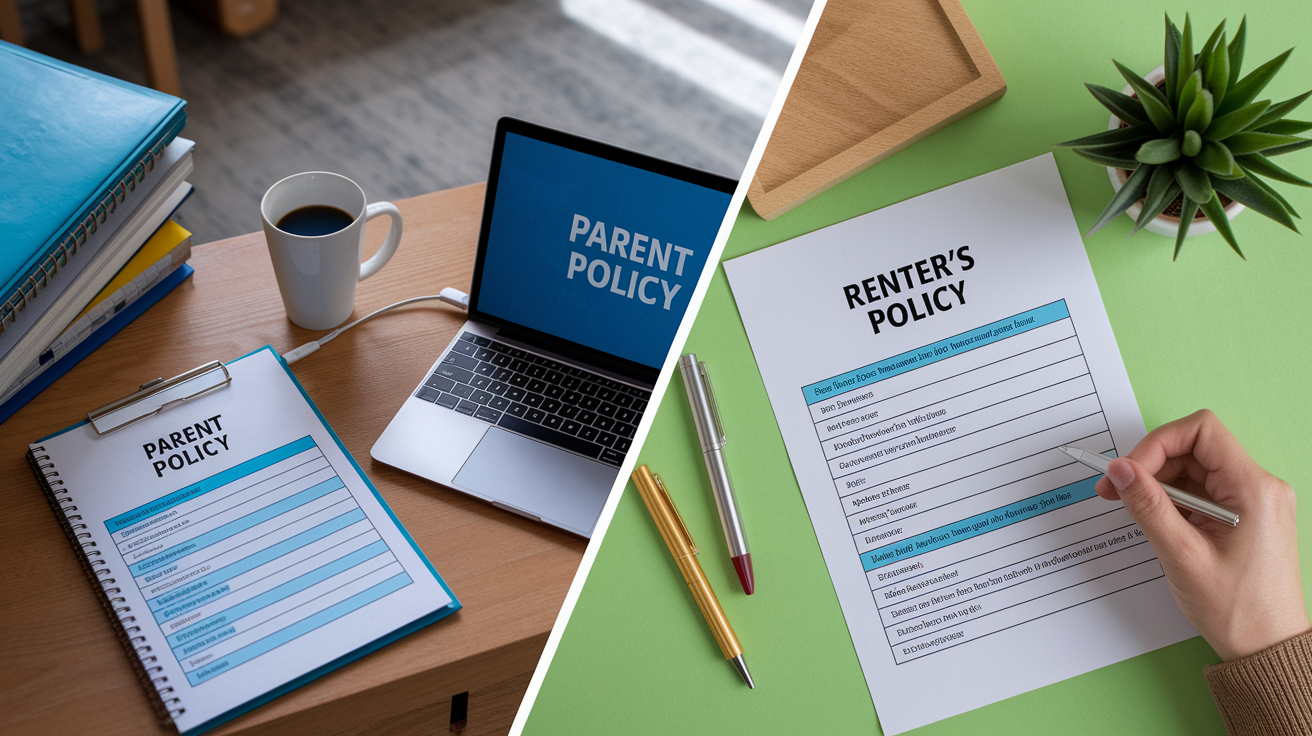
Students living in on-campus dorms may already have some coverage through a parent’s homeowners or renters policy, which often extends limited protection to belongings kept away from home. That coverage is typically capped at a small percentage of the parent policy’s personal property limit, sometimes 10 percent or a flat dollar amount like $5,000 or $10,000. If your belongings are worth more than that limit, or if you want replacement cost coverage instead of actual cash value, you’ll need your own policy.
Off-campus apartments almost always require renters insurance, and many landlords demand proof of coverage before they’ll hand over keys. Off-campus housing also increases your liability exposure because you’re renting a full unit, often with roommates, guests, and shared common areas. A separate renters policy gives you control over your coverage limits, deductible, and endorsements, and it protects you if the parent policy doesn’t extend to off-campus housing or if you live in a different state than your parents.
Major Differences Between Dorm and Off-Campus Coverage
Coverage limits: Parent policies may offer only a few thousand dollars for dorm items. Off-campus policies can be tailored to $20,000 or more.
Landlord requirements: Off-campus leases frequently require proof of renters insurance. Dorms typically don’t.
Liability scenarios: Off-campus units expose you to guest injuries, property damage, and neighbor disputes that increase liability risk.
Theft and vandalism risk: Off-campus housing often faces higher rates of break-ins and property crime, making dedicated coverage more valuable.
When a Parent’s Homeowners Policy Covers a College Student

Many homeowners policies automatically extend a portion of the personal property coverage to a dependent child living away at college. The extension is usually a percentage of the home’s total personal property limit, commonly 10 percent. So if the parent policy includes $100,000 in personal property coverage, the student might have up to $10,000 in coverage while living in a dorm.
That coverage sounds convenient, but it’s got limits. The parent policy may use actual cash value instead of replacement cost, meaning payouts are reduced by depreciation. High-value items like laptops, jewelry, or bikes may be subject to sublimits or excluded entirely unless they’re specifically scheduled on the parent policy. Some policies only extend off-premises coverage to students living in on-campus housing, not off-campus apartments.
Always verify the exact dollar limit, the valuation method, and whether the coverage follows the student to off-campus housing or out-of-state schools. If the parent policy doesn’t provide enough protection or if the student needs liability coverage independent of the parent, a separate renters policy is the safer choice.
Common Pitfalls with Parent Policy Coverage
One of the biggest mistakes is assuming the parent policy covers everything without checking the actual limit. A $10,000 cap might sound adequate until you add up a laptop, phone, bike, textbooks, and furniture and realize you’re already close to that number. Another pitfall is not understanding that the parent policy’s deductible applies to the student’s claim, which can be $1,000 or higher on a homeowners policy. That’s much steeper than a typical $500 renters policy deductible. High-value items are often excluded or capped, so if your DSLR camera or electric bike is stolen, the parent policy may only reimburse a fraction of its value. Some parent policies exclude liability coverage for off-premises dependents or limit it in ways that don’t protect the student if a guest is injured in the dorm or apartment.
High-Value Electronics, Bikes, and Personal Items: When Students Need Extra Coverage

Most renters policies include sublimits for high-value categories like jewelry, watches, cameras, bicycles, and collectibles. Those sublimits are often around $1,000 to $2,000 per category, which means if your $2,500 mountain bike is stolen, the policy might only pay $1,500 unless you’ve scheduled it separately. Scheduled personal property endorsements, also called floaters, let you add specific items to the policy with their own agreed-upon values and no sublimit.
Students who own expensive electronics, instruments, or gear should ask about scheduling those items. Say you have a MacBook Pro worth $2,500, a DSLR camera worth $2,000, and an electric bike worth $1,500. You can schedule each one individually. The insurer will ask for proof of value (usually a receipt or appraisal) and charge a small additional premium, often a few dollars per month per item. In return, you get guaranteed coverage with no depreciation and often broader protection, including accidental damage or mysterious disappearance, depending on the policy.
Common Items That Often Need Endorsements
Laptops, tablets, and high-end computers over $1,500
DSLR cameras, lenses, and photography equipment
Musical instruments (guitars, violins, keyboards, brass instruments)
Electric bikes, road bikes, and mountain bikes over $1,000
Jewelry, watches, and designer accessories
Replacement Cost vs. Actual Cash Value for Student Renters
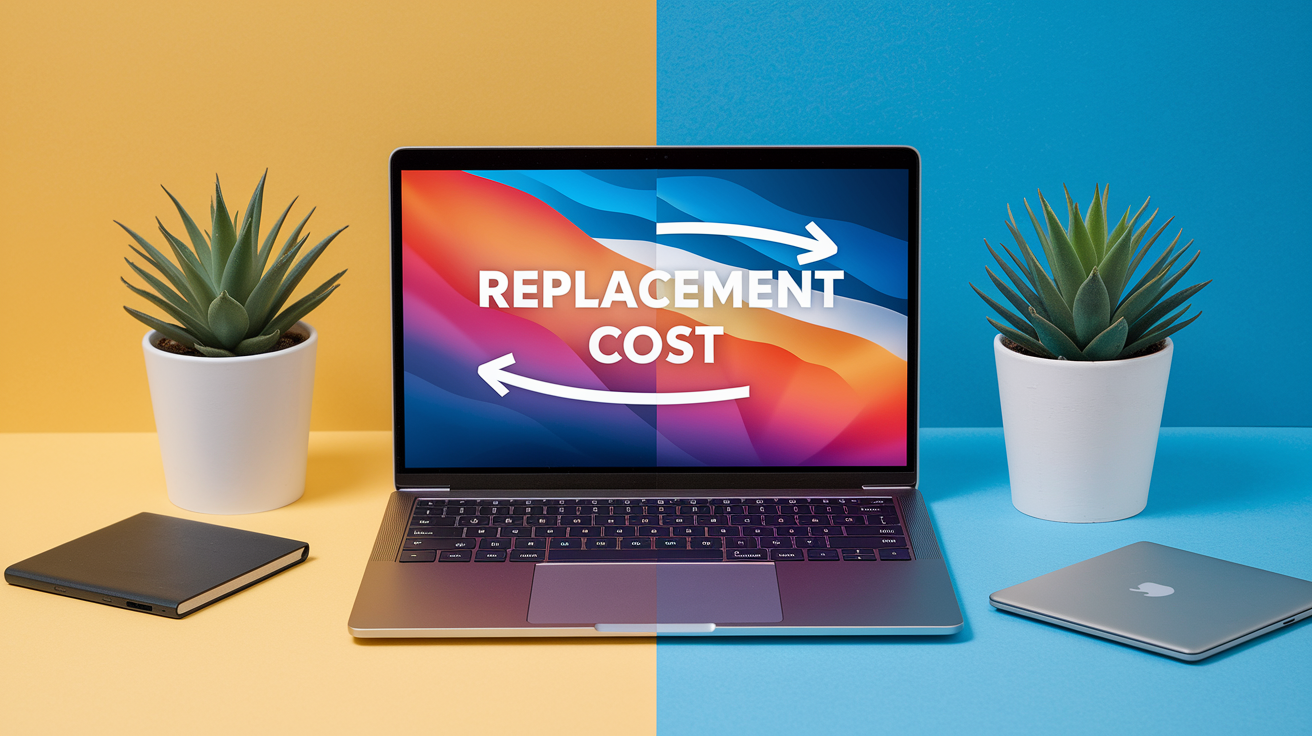
Replacement cost coverage pays to replace your belongings at today’s prices, with no deduction for age or wear. Actual cash value coverage reimburses you for the depreciated value of an item at the time it was lost or damaged. For students, the difference matters most for electronics, which lose value quickly.
If your two-year-old laptop originally cost $1,200 and is stolen, replacement cost coverage pays you enough to buy a comparable new laptop today, likely $1,200 or close to it. Actual cash value coverage might pay only $600 or $700 because the insurer deducts for depreciation. The premium difference between the two is usually a few dollars per month, but the payout gap can be hundreds or even thousands of dollars depending on what you lose. Most student policies default to actual cash value unless you specifically upgrade to replacement cost, so check the policy details before you buy.
Additional Living Expenses and Other Coverages Students Should Know
Additional living expenses coverage, sometimes called loss of use, pays for temporary housing, meals, and related costs if your rental becomes uninhabitable due to a covered event like a fire or major water leak. If your apartment building catches fire and you can’t live there for two weeks, ALE covers hotel bills, restaurant meals, and laundry expenses above what you’d normally spend.
ALE limits vary by policy. Some policies cap it as a percentage of your personal property coverage, often 20 to 30 percent. Others set a separate dollar limit or time limit, such as up to $5,000 or six months of coverage. Students living off-campus should confirm the ALE limit and duration, especially if you’re in an area with severe weather or older buildings.
Some insurers also offer optional endorsements for identity theft protection, which can cover costs related to restoring your identity, legal fees, and lost wages if your personal information is stolen. Not essential for everyone, but worth considering if you store financial documents, tax records, or sensitive files in your apartment and want an extra layer of protection.
Common Exclusions and Limitations in Student Renters Insurance
Renters insurance doesn’t cover flood damage or earthquake damage. Those perils require separate policies or endorsements. If you live in a flood zone or earthquake-prone area, ask your insurer about add-on coverage or a separate flood insurance policy through the National Flood Insurance Program.
Most policies also limit theft coverage in certain situations. If you leave a laptop in your car and it’s stolen, the policy may not cover it, or coverage may be subject to a lower sublimit. Cash, gift cards, and prepaid cards are usually capped at very low limits, often just a few hundred dollars. Don’t rely on renters insurance to cover large amounts of cash.
Major Exclusions to Watch For
Flood and earthquake damage (excluded by default, requires separate coverage)
Intentional damage, wear and tear, or neglect (not covered)
Roommate belongings (each person needs their own policy unless specifically named on a joint policy)
Roommates, Shared Apartments, and How Coverage Works
Renters insurance typically covers only the named policyholder’s belongings. If you share an apartment with roommates, each person needs their own policy unless you all agree to be named on a single joint policy. A joint policy splits the personal property coverage and liability coverage among all named individuals, which can complicate claims and payouts.
If one roommate files a claim, it can affect everyone’s premiums on a joint policy. If one roommate moves out, the policy has to be rewritten. Most students find it simpler and clearer to carry individual policies, even if that means each person pays separately. Individual policies also protect you from disputes over whose laptop was stolen or whose guest caused damage.
When Joint Policies Make Sense
Joint policies can work if roommates are family members, long-term partners, or close friends who trust each other completely and want to save a few dollars by sharing one policy. The premium on a joint policy is usually slightly lower than the combined cost of two individual policies, but the trade-off is shared claims history and shared liability. If you choose a joint policy, make sure all roommates agree on the coverage limits, deductible, and what happens if someone moves out mid-lease. Most insurers allow you to add or remove named individuals with proper notice, but it requires coordination and paperwork.
Filing a Renters Insurance Claim as a College Student
Filing a claim starts with documenting the loss. Take photos of the damage or the empty space where items were stolen. If theft is involved, file a police report immediately and get a copy of the report number. Contact your insurance company as soon as possible. Most insurers have 24-hour claims lines or mobile apps that let you start the process right away.
You’ll need to provide a list of the items lost or damaged, along with proof of ownership and value. Receipts, photos, serial numbers, and purchase records all help speed up the claim. The insurer will assign an adjuster who reviews your claim, verifies coverage, and calculates the payout. Simple claims, like a stolen laptop with a clear receipt, can be settled in a few days. More complex claims involving fire or water damage may take a few weeks while the adjuster inspects the property and confirms the cause.
Inventory what was lost or damaged and gather any available documentation (photos, receipts, serial numbers).
File a police report if the loss involved theft, vandalism, or a break-in.
Contact your insurer to start the claim, either by phone, online portal, or mobile app.
Submit a completed claim form, itemized list, and supporting documents as requested.
Cooperate with the adjuster’s inspection or questions and provide additional evidence if needed.
Receive the claim decision and payout, minus your deductible, once the insurer approves the claim.
Student Discounts, Savings, and Ways to Lower Renters Insurance Premiums
Many insurers offer discounts specifically for students or young renters. Bundling renters insurance with an auto policy or linking it to a parent’s homeowners policy can reduce the premium by 10 to 25 percent. Some insurers discount premiums for good credit scores, automatic payment enrollment, or installing safety devices like smoke detectors or deadbolt locks.
Raising your deductible from $250 to $500 or from $500 to $1,000 lowers the monthly premium, though it increases your out-of-pocket cost if you file a claim. Shopping around and comparing quotes from at least three insurers can uncover significant price differences for the same coverage. Some companies specialize in student renters and offer lower base rates or flexible payment options.
Maintaining a clean claims history also keeps premiums low. If you file multiple small claims, your rates may rise at renewal or the insurer may choose not to renew your policy. For small losses that are only slightly above your deductible, it’s often smarter to pay out of pocket and save your coverage for larger, unexpected events.
Actionable Tips to Lower Your Premium
Bundle with auto insurance or link to a parent policy for multi-policy discounts.
Choose a $500 or $1,000 deductible if you can afford the out-of-pocket cost in a claim.
Maintain good credit and pay bills on time to qualify for credit-based discounts.
Ask about student discounts, good-grades discounts, or safety-device discounts and provide documentation if required.
How to Compare and Choose the Best Renters Insurance Policy as a Student
Start by deciding your personal property coverage amount and preferred deductible. Request quotes from at least three insurers, and compare not just the premium but the details of what’s covered. Check whether the policy uses replacement cost or actual cash value for personal property. Confirm the liability limit, ALE coverage, and any sublimits for high-value categories like jewelry or bikes.
Review the insurer’s reputation for customer service and claims handling. Read recent customer reviews and check the company’s financial strength rating to ensure it can pay claims. Ask about discounts, payment options, and whether the insurer offers a mobile app for managing your policy and filing claims.
Policy Comparison Checklist
Personal property coverage limit and whether it uses replacement cost or actual cash value
Liability coverage limit and whether it includes legal defense costs
Deductible amount and how it affects the premium
Sublimits for jewelry, electronics, bikes, and other high-value items
Additional living expenses coverage limit and duration
Available discounts (bundling, student, safety devices, automatic payment)
Proof of Insurance for Leases
Most off-campus landlords require proof of renters insurance before move-in or within the first 30 days of the lease. Proof of insurance is a simple document, often called a certificate of insurance or declarations page, that shows your name, the property address, coverage limits, and policy effective dates. Your insurer can generate this document instantly once you purchase the policy. Some landlords require that they be listed as an “interested party” on the policy, which means they’ll receive notifications if the policy is canceled or lapses. Adding an interested party doesn’t increase your premium and doesn’t give the landlord any control over your coverage. It’s simply a courtesy notification.
Final Words
In short, most students will be fine with $10,000-$30,000 in personal property coverage. Liability should be at least $100,000. Consider $300,000 to $500,000 if you host guests. Deductibles commonly run $250 to $1,000.
This post showed how to total your belongings, when a parent’s policy helps, when to add endorsements for expensive gear, what additional living expenses covers, and how to file a claim. It also covered typical costs and ways to save.
If you’re asking how much renters insurance do college students need, start with these ranges, make a simple inventory, and compare quotes, and you’ll be ready to protect your stuff without overspending.
FAQ
Q: Is renters insurance worth it for college students?
A: Renters insurance is worth it for college students because it replaces belongings and covers liability; it often costs $10–$25/month. Most students need $10,000–$30,000 personal property and at least $100,000 liability.
Q: Is $50,000 enough for renters insurance?
A: A $50,000 personal property limit is usually more than enough for most renters, covering electronics and furniture; raise limits or add endorsements if you own lots of expensive gear like pro cameras or multiple instruments.
Q: Is $100,000 a lot for renters insurance?
A: A $100,000 limit usually refers to liability and is a common minimum; it’s enough for many renters, but hosts or higher-risk situations should consider $300k–$500k liability instead.
Q: Is $10,000 enough for renters insurance?
A: A $10,000 personal property limit may be enough for a minimal dorm setup, but it’s low if you have a laptop, bike, or instruments; many students choose $10k–$30k to be safer.