



Think your mortgage is the only big monthly cost?
Starter homeowners insurance can add $75 to $200 a month — about $900 to $2,400 a year, with a 2024 national average near $1,400.
Where you buy, the home’s age, and your credit and claims history can swing that number a lot.
This post shows what first-time buyers typically pay, why regional and property factors matter, and practical ways to lower starter homeowners insurance cost without giving up the protection you need.
Average Home Insurance Cost for Starter Homes (National & Regional Ranges)
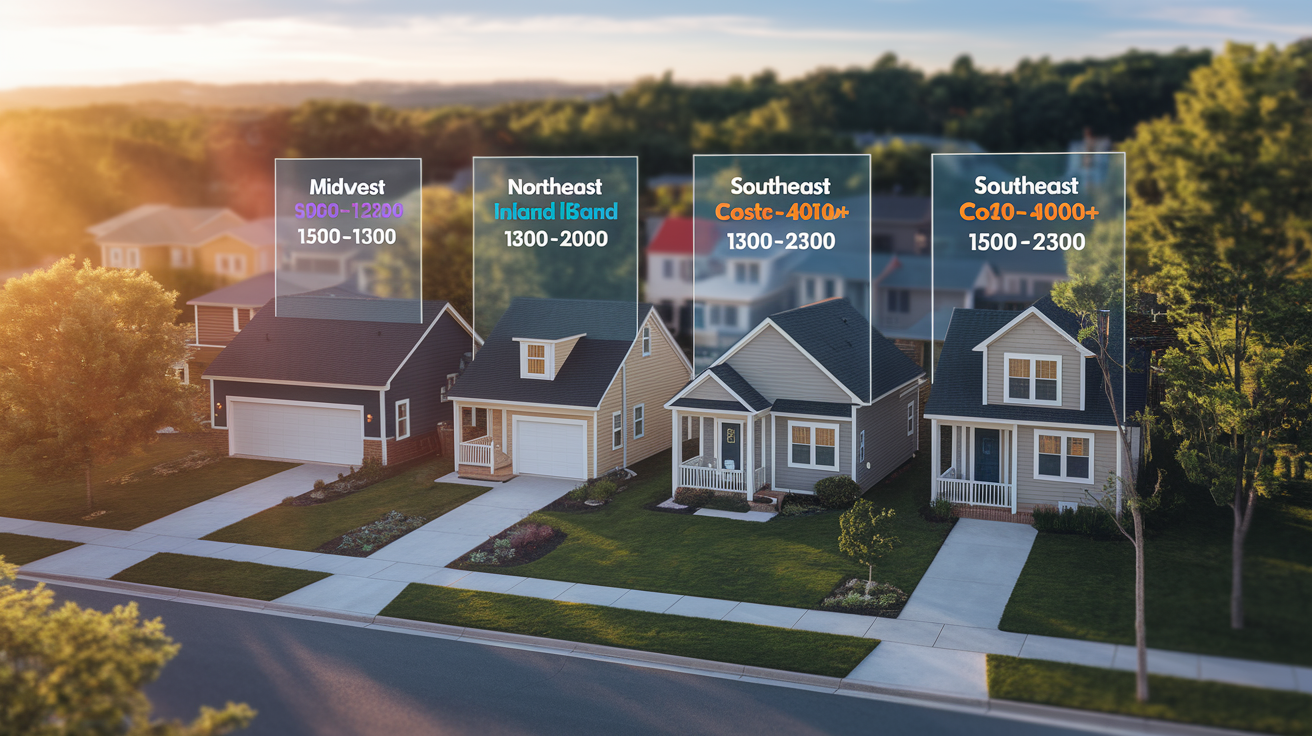
Most first-time buyers pay somewhere between $900 and $2,400 a year for homeowners insurance on a starter home. That’s about $75 to $200 per month. The 2024 national average hovers around $1,400 annually for modest single-family properties, but your actual premium can swing wildly depending on where you’re buying and what you’re protecting.
Newer starter homes usually cost less to insure than older ones, even when the market values match. A brand-new 1,200-square-foot ranch with impact-resistant shingles and updated wiring might run you $1,100 a year, while a similar-sized 1970s bungalow with an old roof and sketchy electrical could hit $1,800 or more. Insurers charge more for aging systems because pipes burst, roofs leak, and outdated wiring starts fires. They’ve written plenty of checks for those claims already.
Regional differences explain why your neighbor three states over pays half what you do. Coastal areas deal with hurricane surge and wind damage. The Southeast gets hammered by tornadoes and hail. The West faces wildfire exposure. Even the “safe” Midwest sees brutal thunderstorms and occasional flooding. Each risk adds cost, and insurers adjust rates based on decades of local claims history.
| Region | Typical Annual Premium | Risk Factors | Notes |
|---|---|---|---|
| Midwest (low-risk) | $900–$1,300 | Tornado, hail, winter storms | Older homes in smaller towns may see $1,200+; newer construction often stays below $1,100 |
| Northeast | $1,200–$2,000 | Coastal storms, snow load, aging housing stock | Historic or pre-1950 homes can push premiums higher; suburban areas trend toward the lower end |
| Southeast (inland) | $1,300–$2,200 | Hail, wind, thunderstorms, occasional flooding | Proximity to flood zones or wind-prone corridors raises rates; mitigation credits help |
| Southeast (coastal) | $2,000–$4,000+ | Hurricanes, wind, coastal flooding | Separate wind/hail and flood policies often required; older roofs can double premiums |
| West (wildfire zones) | $1,500–$3,500 | Wildfire, earthquake (CA), drought-driven risks | Defensible space, fire-resistant materials, and roof upgrades lower costs; some high-risk areas face non-renewal |
Key Factors That Influence Starter Home Insurance Premiums

Your home’s physical traits drive a big chunk of your premium. Insurers look at construction type (frame, brick, concrete block), roof age and material (asphalt shingle, metal, tile), square footage, and the condition of major systems like plumbing, electrical, and HVAC. A starter home with a 25-year-old roof will cost more to insure than an identical property that got a roof replacement last year. Older roofs fail during storms. Insurers know they’ll be writing checks for wind or hail damage. Same logic applies to outdated plumbing. Galvanized pipes corrode and burst, triggering water-damage claims that can hit tens of thousands of dollars.
Location risks layer on top of property risks. Your ZIP code tells the insurer how often homes nearby have filed claims for fire, theft, weather damage, and liability incidents. High crime rates push premiums up because stolen electronics and vandalism generate claims. Proximity to a fire station or hydrant can lower costs a bit, while sitting in a flood zone or within a mile of wildfire-prone brush adds surcharges or requires separate policies. Coastal properties face wind and storm-surge exposure that can triple baseline premiums. Earthquake zones in California or the Pacific Northwest often need separate earthquake coverage that starter buyers have to budget for on top of standard homeowners insurance.
Your personal profile matters more than most first-time buyers expect. Insurers in most states use credit-based insurance scores to predict claim likelihood. Better credit typically earns you a 10 to 25 percent discount compared to poor credit. Your claims history from renters insurance or a previous home follows you. One or two claims in the past three to five years can raise your premium by 20 to 40 percent or more. Some insurers won’t quote you at all if you’ve filed multiple claims recently, forcing you into higher-cost assigned-risk or specialty markets.
Coverage choices let you control cost, but only if you understand the trade-offs. Choosing a $2,500 deductible instead of $500 can cut your annual premium by 20 to 30 percent. But you’ll need that $2,500 in cash the day disaster strikes. Opting for replacement-cost coverage on your personal property instead of actual-cash-value adds roughly 10 to 20 percent to your premium, yet it means the insurer will reimburse you for a new couch rather than the depreciated value of your ten-year-old one. Raising your liability limit from $100,000 to $300,000 often costs only $30 to $60 per year, and that extra protection can shield your savings if someone sues after slipping on your front steps.
Policy Types First‑Time Buyers Should Compare
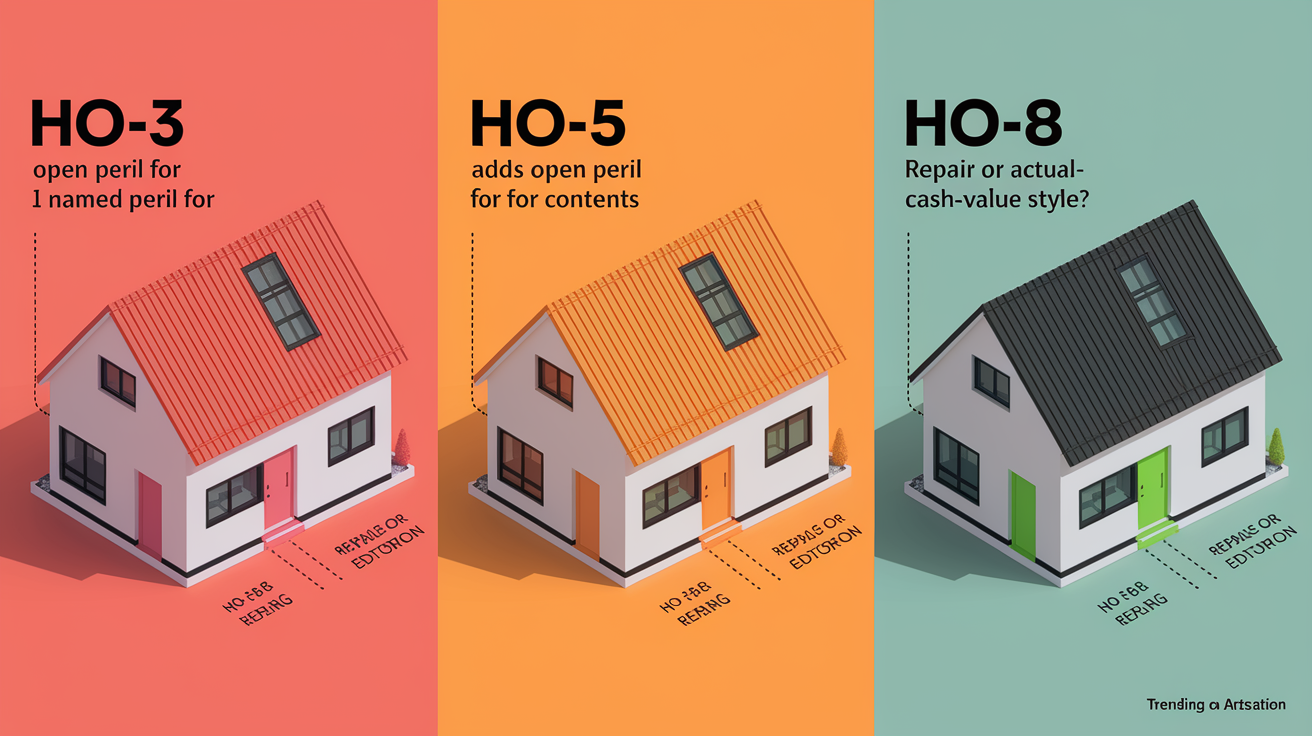
HO-3 policies dominate the starter-home market because they balance broad coverage with manageable premiums. An HO-3 insures your dwelling on an “open peril” basis, meaning all causes of loss are covered unless explicitly excluded. Think fire, wind, hail, vandalism, and dozens of other scenarios. Your personal property gets “named peril” coverage, protecting contents only against the specific risks listed in the policy (fire, theft, windstorm, and a handful of others). Most first-time buyers find this split works well. The structure itself enjoys wide protection, while belongings are covered for the most common threats without paying for an exhaustive list of unlikely events.
HO-5 policies step up to “open peril” coverage for both dwelling and personal property, closing gaps that trip up some HO-3 owners. If your laptop disappears during a move or your custom furniture gets damaged in a way not listed in the HO-3 named-peril section, an HO-5 typically pays the claim. The trade-off is cost. HO-5 premiums often run 10 to 30 percent higher than HO-3. Starter buyers with high-value electronics, jewelry, or collectibles sometimes choose HO-5 for the peace of mind, but many decide the extra premium outweighs the marginal coverage gains and stick with HO-3 plus targeted endorsements for specific items.
HO-8 policies appear occasionally for older starter homes where full replacement cost far exceeds market value. An HO-8 reimburses on a “repair or actual cash value” basis rather than full replacement, keeping premiums lower but leaving you underinsured if the home burns down. This policy type makes sense only in narrow situations (historic homes in declining neighborhoods, for example), and most lenders won’t accept HO-8 because it doesn’t guarantee enough coverage to pay off the mortgage after a total loss.
Key policy-scope differences to check before you buy:
- Dwelling perils: HO-3 and HO-5 cover nearly all risks to the structure; HO-8 covers fewer and may exclude wind or hail in some markets.
- Personal property perils: HO-3 lists about 16 named perils for contents; HO-5 covers all perils except exclusions; HO-8 mirrors HO-3 but may cap reimbursement.
- Exclusions: All three exclude flood, earthquake, and routine maintenance; HO-3 and HO-8 exclude some personal-property perils that HO-5 covers.
- Replacement cost vs. actual cash value: HO-3 and HO-5 typically offer replacement-cost dwelling coverage (and optional replacement-cost contents); HO-8 often defaults to actual cash value for both, reducing payouts.
Budgeting for Home Insurance as a New Homeowner

Monthly payment plans let you spread the cost across twelve installments instead of writing one large check at closing. Many insurers add a small processing fee (often $3 to $10 per month) for the convenience, while others roll the fee into the total and bill you a flat monthly amount. If your $1,500 annual premium becomes $130 per month with fees, you’ll pay $1,560 over the year. That’s a trade-off that makes sense when cash flow is tight during the first year of homeownership.
Escrow accounts bundle your insurance premium and property taxes into your monthly mortgage payment, and your lender pays both bills when they come due. Most lenders require escrow for the first few years, especially if your down payment is under 20 percent. Your monthly housing cost becomes principal, interest, insurance, and taxes, often abbreviated as PITI. Escrow simplifies budgeting. You never forget to pay insurance or taxes. But it also means you’re prepaying into a reserve account, so your lender holds a few months of cushion at any given time. Review your escrow statement annually to confirm the insurance portion matches your actual premium. Lenders sometimes over-collect, and you can request a refund of excess reserves.
A rough budgeting guideline allocates about 0.3 to 0.6 percent of your home’s value per year for insurance alone. A $250,000 starter home would cost roughly $750 to $1,500 annually, or $60 to $125 per month. Add another 1.0 to 1.5 percent of home value for property taxes, and you’re looking at a combined monthly escrow burden of around $300 to $450 for insurance and taxes on that $250,000 property. Build a separate emergency fund equal to at least your deductible (commonly $1,000 to $2,500) so you can pay out-of-pocket when a claim happens without draining your general savings.
Practical Ways to Reduce Starter Home Insurance Costs
Bundling your home and auto policies with the same insurer typically shaves 10 to 20 percent off your homeowners premium and often delivers a smaller discount on your auto side as well. A $1,400 annual home policy paired with a $1,200 auto policy might drop to $1,260 for home and $1,080 for auto after bundling, saving you around $260 per year. Some insurers throw in additional perks like a single deductible if the same event damages both your car and your house, which occasionally happens during hailstorms or garage fires.
Shopping quotes from at least three insurers uncovers price differences that can exceed 30 percent for identical coverage. One company might specialize in coastal risks and offer competitive rates near the ocean, while another excels in inland markets and charges less for Midwest properties. Regional and national carriers often price the same home differently because their claims experience and risk models vary, so the lowest quote in your neighbor’s situation may not be the lowest for you.
Security and safety device discounts: Installing monitored burglar alarms, smoke detectors, carbon monoxide detectors, fire extinguishers, and deadbolt locks can earn you 5 to 15 percent off, depending on the insurer and the device. Some carriers require professional monitoring for the alarm discount to apply.
Roof and home improvement credits: Replacing an aging roof or upgrading to impact-resistant shingles often qualifies for a 5 to 20 percent discount in wind or hail-prone regions. Insurers reward newer roofs because they fail less often, and fortified shingles reduce claim severity when storms hit.
Higher deductibles: Raising your deductible from $500 to $1,000 cuts your premium by roughly 10 to 15 percent. Jumping to $2,500 can save 20 to 30 percent or more. Make sure you have enough savings to cover the higher out-of-pocket cost before you commit.
Claims-free and loyalty discounts: Many insurers reduce your premium by 5 to 10 percent after three to five years without a claim, and some offer a small loyalty discount (another 5 percent) if you stay with them for multiple policy terms. Avoiding small claims preserves these discounts and keeps your rates stable.
Credit score improvements: In states that allow credit-based insurance scoring, raising your score from fair to good or good to excellent can lower your premium by 10 to 25 percent over time. Pay down high-balance credit cards, correct errors on your credit report, and avoid new hard inquiries before shopping for insurance.
Group or professional-association discounts: Some insurers offer 5 to 10 percent discounts to members of alumni associations, professional groups, or employer-sponsored programs. Check whether your employer, union, or college has a partnership agreement with major carriers.
Final Words
in the action, we laid out national and regional averages for starter homes, showed how older versus newer builds change premiums, and gave a clear table to compare typical costs by region.
We covered what drives rates, how HO-3 and HO-5 differ, budgeting tips like escrow and monthly payments, and practical ways to lower premiums.
If you’re estimating starter homeowners insurance cost, use the regional ranges and the checklist above to get a realistic number. Small changes can make protection affordable and clear.
FAQ
Q: How much is homeowners insurance on a $500,000 house?
A: The homeowners insurance on a $500,000 house typically costs between $1,200 and $3,500 per year, depending on region, construction, deductible, and coverage choices.
Q: How much does basic homeowners insurance cost?
A: Basic homeowners insurance typically costs about $1,200 to $2,000 per year nationally for an HO-3 policy with standard limits; prices vary by location, home age, and deductible.
Q: Is $3000 a year a lot for homeowners insurance?
A: A $3,000 yearly homeowners premium is higher than the national average but not unusual in high-risk areas; compare coverage, limits, and discounts to see if it’s reasonable for your situation.
Q: What is the 80% rule for homeowners insurance?
A: The 80% rule for homeowners insurance means you should insure your dwelling for at least 80% of its replacement cost or you may receive a proportional penalty on partial-loss claims.