



Think renters insurance is a luxury you can skip?
Many first-time renters do—until a small accident leaves them with big bills.
Starter renters insurance cost is usually lower than you think: expect about $15 to $30 a month for basic replacement and liability (liability covers harm to others).
In this post we’ll explain what those numbers mean, which factors drive your premium, and practical ways to keep quality coverage affordable.
By the end you’ll know how to pick a starter plan that protects your stuff without breaking your budget.
National Snapshot of Starter Renters Insurance Cost

First-time renters in 2026 can expect to pay somewhere between $15 and $30 a month for renters insurance. That works out to roughly $180 to $360 per year if you’re getting basic replacement cost coverage and standard liability limits. The national average sits around $23 per month according to recent industry data, though median rates across ZIP codes for sample policies show closer to $13 per month. That’s for a standardized 30 year old tenant with good credit, $30,000 in personal property coverage, and a $500 deductible.
Some digital insurers advertise starter plans beginning as low as $5 per month. But these ultra low rates depend heavily on individual risk factors, state regulations, and minimal coverage limits. Most first-time renters should expect their actual quoted cost to fall in the $15–$30 range once they select realistic coverage amounts and factor in their location’s claim frequency and local crime rates.
Where you live plays a major role in starter pricing. Houston renters may see average starter costs around $20 per month due to higher weather and theft risks. Seattle residents often quote closer to $11 per month. At the state level, Louisiana averages $22 per month, Mississippi $19 per month, while Alaska and Vermont sit near $8 to $9 per month. Coverage tiers generally break down like this:
Starter/basic plans: $8–$25/month ($96–$300/year) for $10,000–$30,000 personal property, $100,000 liability, and deductibles between $250 and $1,000.
Standard plans: $15–$35/month ($180–$420/year) for $30,000–$50,000 personal property and $100,000–$300,000 liability.
Comprehensive plans: $30–$60+/month ($360–$720+/year) for $50,000+ personal property, $300,000+ liability, and broader endorsements.
Low advertised promo pricing: Some insurers quote as low as $5/month for minimal coverage in low risk states and ZIP codes with excellent individual credit and claim history.
Factors That Shape Starter Renters Insurance Cost

Your starter renters insurance premium reflects how insurers assess the likelihood and cost of covering your belongings, liability exposure, and temporary housing. Six primary factors drive that assessment. Understanding each one helps you predict where your quote will land before you request it.
Location stands as the single largest driver. Insurers analyze crime statistics, local claim frequency, proximity to fire departments, and exposure to natural disasters by ZIP code. An apartment in a high crime urban neighborhood or a coastal hurricane zone will cost substantially more than a similar unit in a low crime suburban area far from wildfire or flood risks.
Location and ZIP code risk: Local crime rates, disaster exposure (wildfire, tornado, hurricane), and claim history in your neighborhood directly influence your premium.
Deductible selection: Choosing a $250 deductible raises your monthly cost compared to a $500 or $1,000 deductible, but it lowers what you pay out of pocket when you file a claim.
Claims history: Prior claims, especially theft claims within the past three to five years, raise premiums by an average of about 18 percent as insurers view you as higher risk.
Credit history: Renters with poor credit pay roughly 71 percent more on average than those with good credit, except in California, Maryland, and Massachusetts where credit based pricing is restricted.
Coverage limits: Increasing personal property coverage from $10,000 to $50,000 or boosting liability from $100,000 to $300,000 raises the premium proportionally. Adding $200,000 of liability typically costs about $1 more per month.
Insurer underwriting differences: Companies weigh these factors differently and offer varying discounts, claim service quality, and policy features, so quotes for identical coverage can differ significantly.
Deductible Choice and Its Price Impact
Choosing a higher deductible reduces your monthly premium because you agree to shoulder more of the financial burden when filing a claim. If you select a $1,000 deductible instead of $250, you might save 10 to 30 percent on your premium depending on your insurer and location. The trade-off is simple. Lower monthly cost now means a larger out of pocket payment if your laptop gets stolen or a kitchen fire damages your furniture.
Here’s an example. If someone steals your $1,000 watch and you carry a $250 deductible, the insurer pays $750. With a $1,000 deductible, the entire loss falls on you since it equals the deductible. First-time renters should choose a deductible they can comfortably pay in an emergency and then balance that amount against the premium savings over a year.
Coverage Levels for Starter Renters Insurance Cost
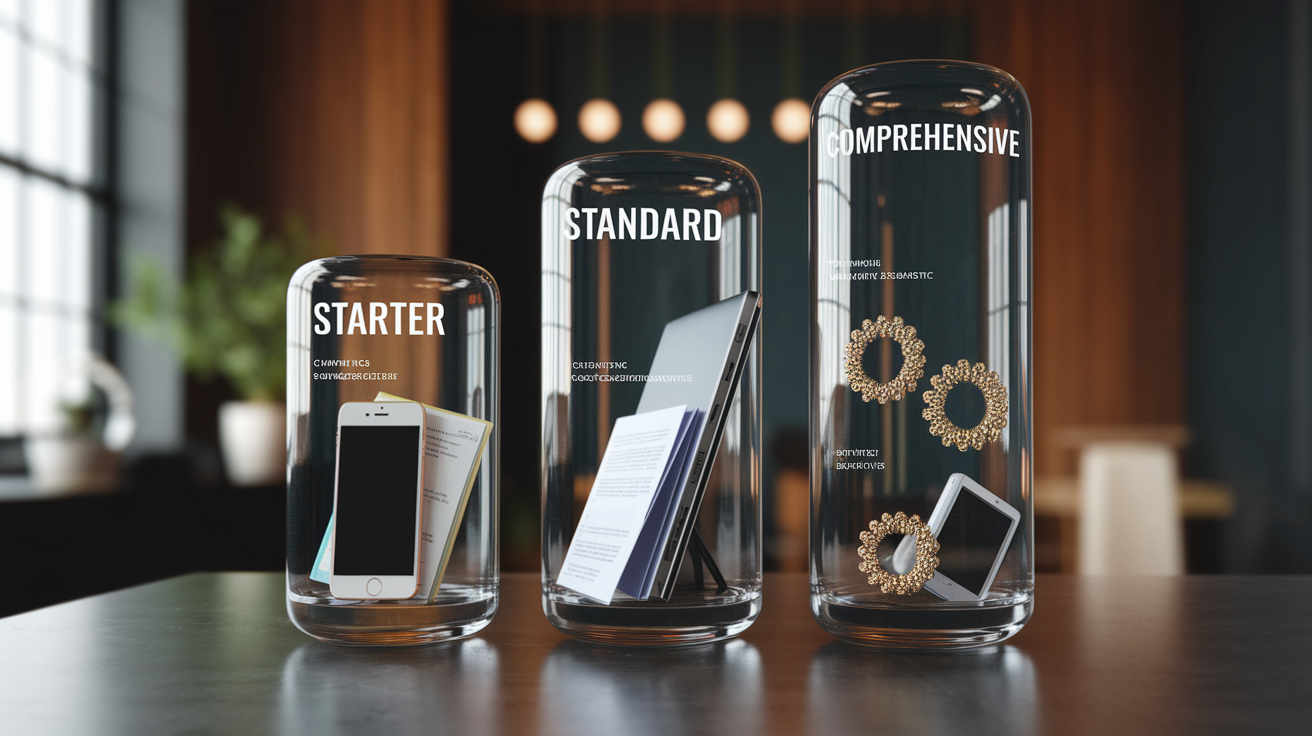
Starter renters insurance policies typically begin with personal property coverage around $10,000. You’ll see it sold in $10,000 increments so you can choose $10,000, $20,000, $30,000, and upward depending on the total replacement value of your belongings. A one bedroom apartment usually requires $15,000 to $30,000 in coverage, while a two bedroom often needs $30,000 to $50,000. If your belongings total $18,000, choose the $20,000 tier to ensure full replacement.
Liability coverage in starter plans commonly defaults to $100,000, which protects you if a guest is injured in your apartment or you accidentally cause damage to the building. Increasing liability to $300,000 or $500,000 adds only a small monthly cost. Roughly $1 per month per additional $200,000. So many first-time renters upgrade to $300,000 for broader protection without significant budget impact.
Choosing replacement cost coverage instead of actual cash value increases your premium by about 11 percent on average, but it pays the full cost to replace your damaged or stolen items at today’s prices rather than subtracting depreciation. Actual cash value policies reimburse only what your three year old couch or laptop is worth on the used market, which can leave you short when shopping for replacements. Loss of use coverage (temporary living expenses) and medical payments to others round out the standard policy, with typical limits of $10,000 and $1,000 respectively in starter plans.
| Coverage Type | Typical Starter Limit | Cost Effect |
|---|---|---|
| Personal Property | $10,000–$30,000 | Base premium driver; higher limits raise cost proportionally |
| Liability | $100,000 | +$1/month per additional $200,000 liability |
| Loss of Use (ALE) | $10,000 | Minor impact; usually included in base premium |
| Medical Payments | $1,000 | Minimal cost; covers guest injuries without liability claim |
Comparing Starter Renters Insurance Cost vs Comprehensive Plans
Starter plans keep monthly costs low by offering minimal personal property limits and basic liability. They’re suitable for renters with modest belongings and no high value items. Standard plans increase coverage amounts and may add endorsements for specific needs, while comprehensive policies provide substantial limits, scheduled high value items, and broader protection for renters with expensive electronics, jewelry, musical instruments, or significant liability exposure.
The price jump between tiers reflects both higher coverage limits and additional policy features. A starter plan costing $15 per month might cover $20,000 in personal property and $100,000 in liability. A comprehensive plan at $45 per month could include $75,000 in personal property, $500,000 in liability, scheduled coverage for a $5,000 camera and $3,000 engagement ring, and replacement cost valuation across all categories. High value items such as jewelry, cameras, instruments, or collectibles often trigger scheduling thresholds around $1,000 to $2,000 per item. Anything worth more than that limit requires a separate endorsement to receive full replacement value.
Starter/basic ($8–$25/month): $10,000–$30,000 personal property, $100,000 liability, actual cash value or basic replacement cost, no scheduled items. Suitable for minimal belongings.
Standard ($15–$35/month): $30,000–$50,000 personal property, $100,000–$300,000 liability, replacement cost, one or two scheduled items. Fits typical renters with moderate belongings.
Comprehensive ($30–$60+/month): $50,000–$100,000+ personal property, $300,000–$500,000+ liability, full replacement cost, multiple scheduled items, broader endorsements for business equipment or special collections.
When to upgrade: If your electronics alone exceed $10,000, you own valuable jewelry or instruments, you run a side business from home, or your lease requires higher liability limits.
Cost of scheduling items: Adding a scheduled endorsement for a $3,000 ring or $4,000 camera typically raises your premium by a few dollars per month per item but eliminates per item sublimits and deductibles for those pieces.
How to Lower Your Starter Renters Insurance Cost

Reducing your renters insurance premium without sacrificing coverage requires a combination of smart policy choices and taking advantage of available discounts. Most first-time renters leave money on the table by not asking about bundling, security features, or claim free history incentives.
The fastest way to cut cost is bundling your renters policy with auto or other insurance from the same company. This typically delivers 10 to 25 percent savings on both policies. If you already carry car insurance, request a renters quote from that insurer and compare the bundled price against standalone competitors. Installing or documenting existing security devices (burglar alarms, smoke detectors, deadbolts, or sprinkler systems) can earn you another 5 to 15 percent discount since these features reduce the insurer’s risk of paying theft or fire claims.
Raise your deductible: Moving from a $250 to a $1,000 deductible can reduce your premium by 10 to 30 percent. Just make sure you can afford the higher out of pocket cost if you file a claim.
Bundle with auto or other policies: Multi policy discounts typically save 10 to 25 percent on renters insurance and often reduce your auto premium as well.
Install or declare security devices: Burglar alarms, smoke detectors, deadbolts, and sprinkler systems qualify for discounts of 5 to 15 percent at most insurers.
Maintain a claim free history: Avoid filing small claims when possible and keep your record clean for three to five years to stay in lower premium tiers.
Sign up for paperless billing and autopay: Administrative discounts for electronic documents and automatic payments can shave a few dollars off your monthly cost.
Shop annually and compare at least three insurers: Rates change, new discounts appear, and switching providers after a year can uncover better pricing for identical coverage.
Bundling Opportunities
Bundling renters insurance with your car insurance is the most common and straightforward multi policy discount. Many insurers also allow bundling with pet insurance, motorcycle coverage, or umbrella liability policies. Each stacks additional percentage savings. Digital insurers and traditional carriers alike offer bundling, so request a full multi policy quote and compare the combined cost against buying each policy separately from different companies. In some cases, the bundled price beats standalone quotes by 20 percent or more, easily covering the cost of renters insurance entirely through the auto policy discount alone.
Practical Steps to Estimate and Quote Your Starter Renters Insurance Cost

Getting an accurate renters insurance quote requires about 15 minutes of preparation and a clear understanding of what you own, where you live, and how much risk you’re comfortable absorbing through a deductible. Start by walking through your apartment and inventorying your belongings. Use your phone to photograph each room and major items while estimating their replacement cost.
Inventory your belongings and estimate replacement value: Walk through each room, list furniture, electronics, clothing, and appliances, then calculate total replacement cost. A quick rule of thumb is $20 to $50 per square foot of living space.
Decide on personal property and liability limits: For a starter policy, choose $10,000 to $30,000 in personal property coverage based on your inventory, and select $100,000 to $300,000 in liability depending on your lease requirements and comfort level.
Select your deductible: Choose between $250, $500, or $1,000 based on what you can pay out of pocket in an emergency, knowing higher deductibles lower your monthly premium by 10 to 30 percent.
Gather building and personal details: Note your exact address and ZIP code, building age and type (apartment complex, condo, single family home), number of bedrooms, any security features (alarms, deadbolts, sprinklers), and whether you have pets or roommates.
Check your credit and claims history: Most states allow insurers to use credit scores in pricing, and any prior renters or homeowners claims in the past three to five years will appear in your insurance report and affect your quote.
Run quotes with at least three insurers and comparison sites: Use each insurer’s online quote tool or a multi carrier comparison platform, entering identical coverage limits and deductibles so you can compare apples to apples.
Ask about all available discounts: Confirm bundling options with auto or other policies, security device discounts, claim free history incentives, student discounts, senior discounts, and paperless or autopay savings before finalizing your purchase.
Using Online Calculators
Online renters insurance calculators let you adjust coverage limits, deductibles, and add ons in real time and immediately see how each change affects your monthly or annual premium. Most insurer websites and independent comparison tools allow you to toggle personal property coverage between $10,000 and $100,000 in $10,000 increments, switch deductibles from $250 to $1,000, and add scheduled items or extra liability. All while watching the price update instantly. This interactive approach helps first-time renters find the sweet spot between affordable monthly cost and adequate protection without needing to call an agent or wait for email quotes.
State Availability and Cost Variation for Starter Renters Insurance
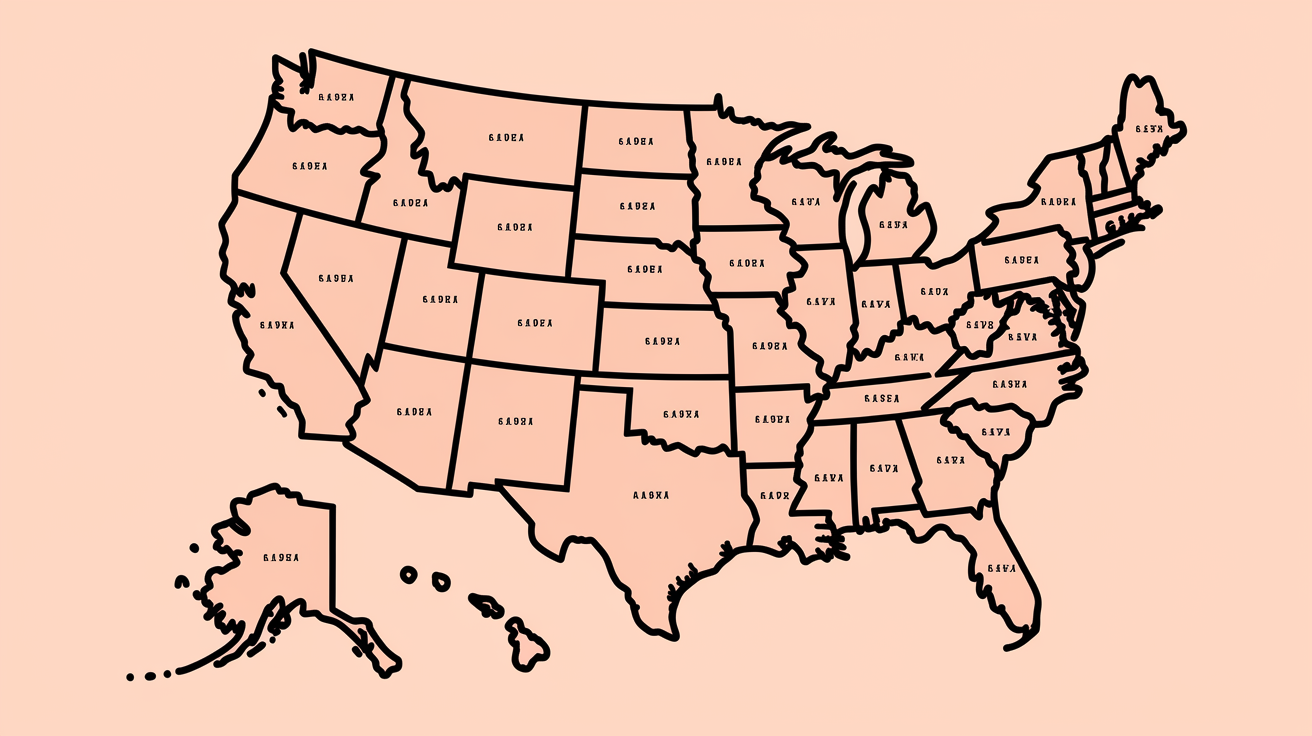
Where you live shapes renters insurance pricing more than almost any other factor because insurers analyze local crime rates, weather risks, claim frequency, and proximity to emergency services by ZIP code. State level averages show dramatic cost differences. Louisiana renters pay an average of $22 per month due to high hurricane, flood, and storm exposure, while Alaska renters average just $8 per month in regions with low crime and minimal natural disaster risk.
City level variation can be just as extreme within the same state. Houston renters face average starter costs around $20 per month because of hurricane exposure, high humidity that drives mold and water damage claims, and elevated property crime in certain neighborhoods. Seattle renters, by contrast, often quote near $11 per month due to lower crime rates, earthquake risk factored separately, and fewer severe weather events. Some states restrict how insurers use credit scores. California, Maryland, and Massachusetts prohibit or limit credit based pricing, which narrows the premium spread between renters with excellent and poor credit in those markets.
| Location | Typical Monthly Cost | Key Risk Factor |
|---|---|---|
| Louisiana | $22/month | Hurricane, flood, high storm frequency |
| Houston, TX | $20/month | Hurricane exposure, property crime, humidity-related claims |
| Seattle, WA | $11/month | Lower crime, moderate weather risks, earthquake separate |
| Alaska | $8/month | Low crime, minimal natural disaster exposure |
Final Words
Expect starter renters insurance to run about $15–$30 a month for most basic plans, with a national average near $23/month. This article gave a clear snapshot, the main cost drivers, coverage tiers, how starter and comprehensive plans differ, plus practical ways to lower costs and get quotes.
Do a quick inventory, choose a deductible that matches your budget, and compare at least three insurers for your address.
Understanding starter renters insurance cost helps you pick sensible protection that fits your finances and gives real peace of mind.
FAQ
Q: Is $20 a month for renters insurance good?
A: A $20-per-month renters insurance policy is a typical, solid starter price. It’s close to the national average (~$23/month) and fits the $15–$30 starter range, but check limits and deductible.
Q: How much is $100,000 renters insurance a month? / How much is a $500,000 renters insurance policy?
A: A $100,000 renters policy usually costs about the starter premium range ($15–$30/month) since $100k liability is common. A $500,000 limit typically raises premiums modestly—roughly $2–$5 extra per month, insurer-dependent.
Q: What’s the cheapest renters insurance?
A: The cheapest renters insurance plans can start as low as $5–$8/month from digital insurers or low-cost states, but they often carry low coverage limits or higher deductibles—read limits and exclusions before buying.