



Think the state’s minimum insurance will protect you after a crash?
Many first-time buyers assume that’s enough, only to face big bills, lawsuits, or a car loan still unpaid.
Liability covers others; collision, comprehensive, uninsured/underinsured motorist, gap, and add-ons protect you in different ways.
This guide breaks down which coverages first-time car buyers need, why each matters, and simple steps to pick limits and deductibles so you don’t overpay or risk being underinsured.
Essential Insurance Coverage First-Time Car Buyers Must Have
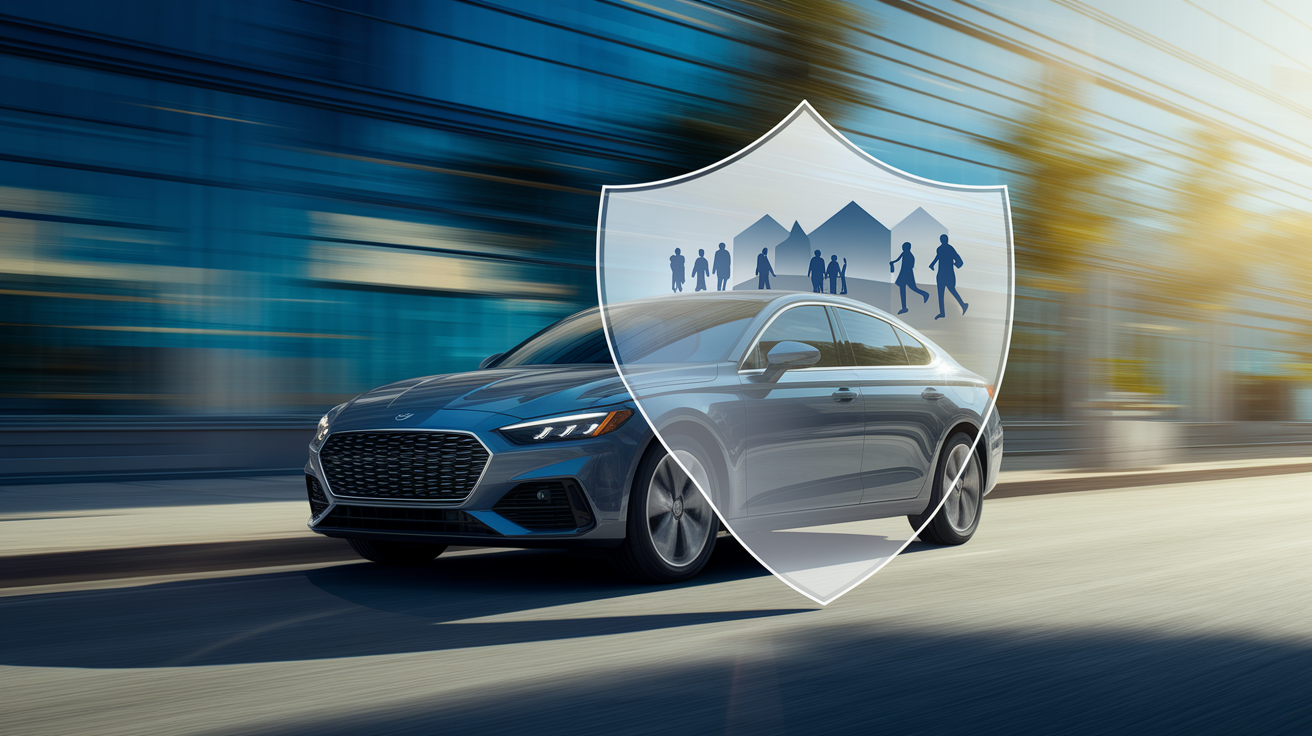
Nearly every state requires you to carry auto liability insurance before you drive off the lot. Liability coverage pays for other people’s injuries and property damage when you’re legally at fault for an accident. It doesn’t cover your own medical bills or vehicle damage. That’s what other coverage types are for. If you get caught driving without the minimum required coverage, you’re looking at fines, license suspension, or even impounded plates.
State minimum liability limits use a three-number shorthand, like 25/50/25. The first number ($25,000) is the maximum your insurer will pay for one person’s bodily injury in a single accident. The second number ($50,000) is the total bodily injury limit per accident, covering all injured people combined. The third number ($25,000) is the property damage limit per accident. Before I bought my first car, I thought 25/50/25 looked like a random locker combination. Then I realized it meant my insurance would only pay up to $25,000 if I injured someone.
Some states operate under no-fault insurance laws, meaning each driver’s own policy covers their medical expenses regardless of who caused the crash. In those states, you’ve got to carry Personal Injury Protection (PIP) or Medical Payments coverage, with limits often starting between $2,500 and $10,000. PIP usually covers lost wages and essential services in addition to medical bills. Medical Payments coverage only reimburses healthcare expenses. Check your state’s specific rules, because a state minimum in Florida looks very different from one in California.
Most common mandatory coverage components:
Bodily injury liability pays for others’ medical costs, lost wages, and pain and suffering when you’re at fault. Property damage liability covers repairs to vehicles, fences, buildings, or other property you damage in an accident. You’ll need proof of financial responsibility, which is documentation (insurance card, SR-22 in some cases) showing you meet your state’s minimum coverage. PIP or Medical Payments is required in no-fault and some tort states to cover your own and passengers’ medical bills. Uninsured/Underinsured Motorist coverage is mandatory in several states because roughly 10 to 15% of drivers may carry no insurance or inadequate limits.
Understanding Recommended Coverage Types for First-Time Buyers

Collision and comprehensive coverages are technically optional under the law. But most lenders and leasing companies won’t let you skip them. Collision coverage pays to repair or replace your car after a crash, regardless of who was at fault. If you rear-end another vehicle or flip your car on a curve, collision handles the damage to your own vehicle, minus your deductible. Comprehensive coverage protects against everything else. Theft, hail, vandalism, hitting a deer, or a tree falling on your hood. Both types only reimburse up to your vehicle’s Actual Cash Value (ACV), and you’ve got to pay your chosen deductible first. If your car is financed or leased, the lender usually requires collision and comprehensive with a deductible cap (often $1,000 or less) because the car is collateral for the loan.
Uninsured/Underinsured Motorist coverage is crucial even though it’s not always required. UM coverage pays for your injuries and property damage when you’re hit by a driver who has no insurance. UIM coverage kicks in when the at-fault driver’s liability limits are too low to cover your medical bills and lost wages. In states where 10 to 15% of drivers operate without insurance, carrying UM/UIM limits that match your own liability limits is a practical way to protect yourself. Think of it as insurance against other people’s lack of insurance.
| Coverage Type | What It Protects | Typical Deductible/Limit |
|---|---|---|
| Collision | Damage to your car from crashes, regardless of fault | $250, $500, or $1,000 deductible |
| Comprehensive | Theft, weather, vandalism, animal strikes, glass damage | $250, $500, or $1,000 deductible |
| Uninsured Motorist (UM) | Your injuries and car damage when the at-fault driver has no insurance | Limits match your liability (e.g., 50/100 or 100/300) |
| Underinsured Motorist (UIM) | Your expenses when the at-fault driver’s limits are too low | Limits match your liability (e.g., 50/100 or 100/300) |
Coverage Add-Ons First-Time Car Buyers Should Consider

Gap insurance covers the difference between what your lender says you owe and what your car is actually worth at the time of a total loss. New cars can lose 20% or more of their value in the first year. So if your new $25,000 sedan is totaled nine months later and the insurer values it at $20,000, you still owe the bank the full loan balance. Gap insurance pays that $5,000 shortfall so you’re not stuck making payments on a car you can’t drive. When added to your auto policy, gap coverage typically costs about $20 to $60 per year. If you buy it from the dealership as a one-time add-on, expect to pay $400 to $700 upfront. Your lender may require gap insurance if you financed with a low down payment or chose a long loan term, because those scenarios increase the risk of owing more than the car’s worth.
Roadside assistance is often available through your insurer for about $5 to $15 per month, or roughly $50 to $150 per year. It covers towing, battery jumps, flat tire changes, lockout service, and fuel delivery when you run out of gas a mile from the station. First-time car buyers who are still learning maintenance schedules or who drive older used vehicles with higher breakdown risk benefit most. If you already have roadside coverage through a credit card, auto club membership, or the manufacturer’s warranty, check the details before paying for duplicate service.
Rental reimbursement coverage pays for a rental car while yours is being repaired after a covered claim. Typical costs run about $5 to $15 per month. If your car gets rear-ended and the body shop needs two weeks to replace the bumper and rear hatch, rental reimbursement covers the cost of a loaner so you can still get to work or school. This add-on is especially helpful if you don’t have a backup vehicle, live far from public transit, or can’t afford to miss work while waiting for repairs. Without it, you’re either paying out of pocket for the rental or scrambling for rides.
How Coverage Limits and Deductibles Work for First-Time Buyers
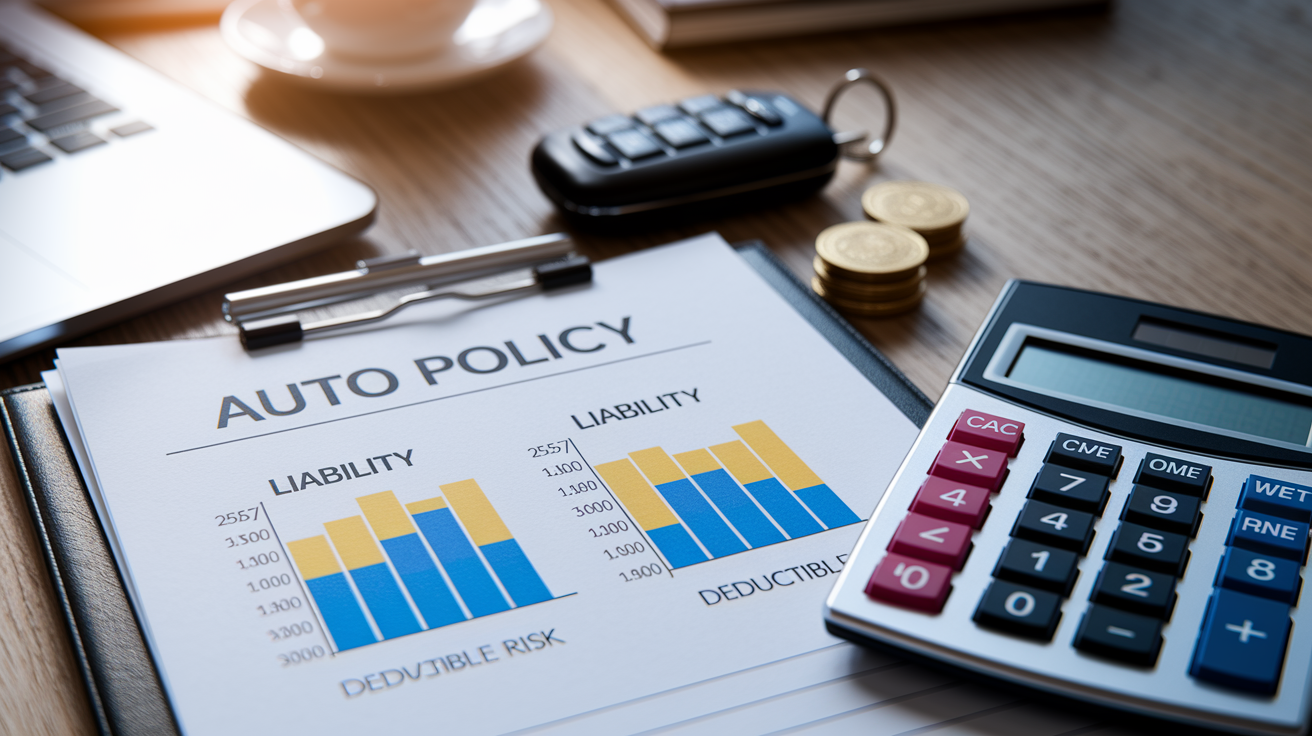
Liability limits control how much your insurer will pay on your behalf when you cause an accident. A 25/50/25 policy means the company will pay up to $25,000 for one person’s bodily injury, $50,000 total for all injured people in one accident, and $25,000 for property damage per accident. If you injure someone badly and their medical bills hit $60,000, you’re personally responsible for the $35,000 gap above your $25,000 per-person limit. A 100/300/100 policy raises your protection to $100,000 per person, $300,000 per accident for injuries, and $100,000 for property damage. That covers far more real-world scenarios without putting your savings or future wages at risk.
First-time buyers should seriously consider buying higher limits than the state minimum. Medical costs, lost wages, and pain-and-suffering awards add up quickly. A multi-car accident on a highway or a crash that injures a high-earning professional can generate six-figure claims. If you have any assets worth protecting (a savings account, a future inheritance, or a college fund), those assets are vulnerable to lawsuits when your liability limits run out. Upgrading from 25/50/25 to 50/100/50 typically increases premiums by about 10 to 30%, depending on your insurer and driver profile. That extra $10 or $20 per month can save you from financial disaster.
Deductibles control how much you pay out of pocket before your collision or comprehensive coverage kicks in. Common choices are $250, $500, and $1,000. If you choose a $500 deductible and file a claim for $3,000 in damage, you pay the first $500 and the insurer pays the remaining $2,500. Raising your deductible from $500 to $1,000 can reduce your collision and comprehensive premiums by roughly 10 to 25%, saving you money every month. The trade-off is simple. Lower monthly cost now, higher out-of-pocket cost later if you have a claim.
The practical rule for choosing a deductible is this: pick the highest amount you can comfortably pay from your emergency fund without stress. If you only have $300 in savings, a $1,000 deductible is risky because one fender-bender could leave you unable to afford the repair. Keep enough cash on hand to cover your deductible at least once, ideally twice in case you have back-to-back claims in the same year.
Four quick rules for choosing limits and deductibles:
Set liability limits high enough to cover your assets and future earnings, not just the state minimum. Match your UM/UIM limits to your liability limits for consistent protection. Choose a deductible you can afford to pay immediately without borrowing or skipping the repair. Revisit your limits and deductibles at every renewal, especially after major life changes like buying a home or getting a raise.
What Factors Affect How Much Coverage a New Buyer Truly Needs

Driver factors start with age and experience. Younger drivers, especially those in their teens and twenties, statistically have more accidents, so insurers charge higher premiums and you may want higher liability limits to protect against costlier mistakes. Your driving record also matters. One at-fault accident or speeding ticket can raise your rates and signal the need for better coverage in case a second incident occurs. If you’ve completed a defensive driving course or maintained a clean record for years, you may qualify for discounts and feel comfortable with moderate coverage. But if you’re still learning or live in a high-traffic area, buying extra protection makes sense.
Vehicle factors include the make, model, year, and value of your car. A brand-new sedan or a high-performance sports car costs more to repair or replace, which drives up collision and comprehensive premiums and makes those coverages more important. Older used cars with low actual cash value (under $3,000 to $5,000) may not justify paying for collision and comprehensive, because the payout after a total loss might barely exceed your deductible. Also consider repair costs. Luxury brands and electric vehicles often have expensive parts and specialized labor, so even minor damage can generate big bills that you’ll want coverage to handle.
Location and lifestyle factors round out the picture. If you park on the street in a neighborhood with high theft rates, comprehensive coverage becomes essential. If you commute 50 miles each way to work, you’re on the road more often, increasing accident risk and the value of rental reimbursement coverage. Rural drivers with long distances to the nearest tow truck benefit from roadside assistance. Urban drivers in congested areas face higher collision risk and may want lower deductibles for frequent minor claims. Your ZIP code alone can swing your premium by hundreds of dollars per year, based on local accident rates, weather patterns, and crime statistics.
Sample Coverage Packages for First-Time Car Buyers
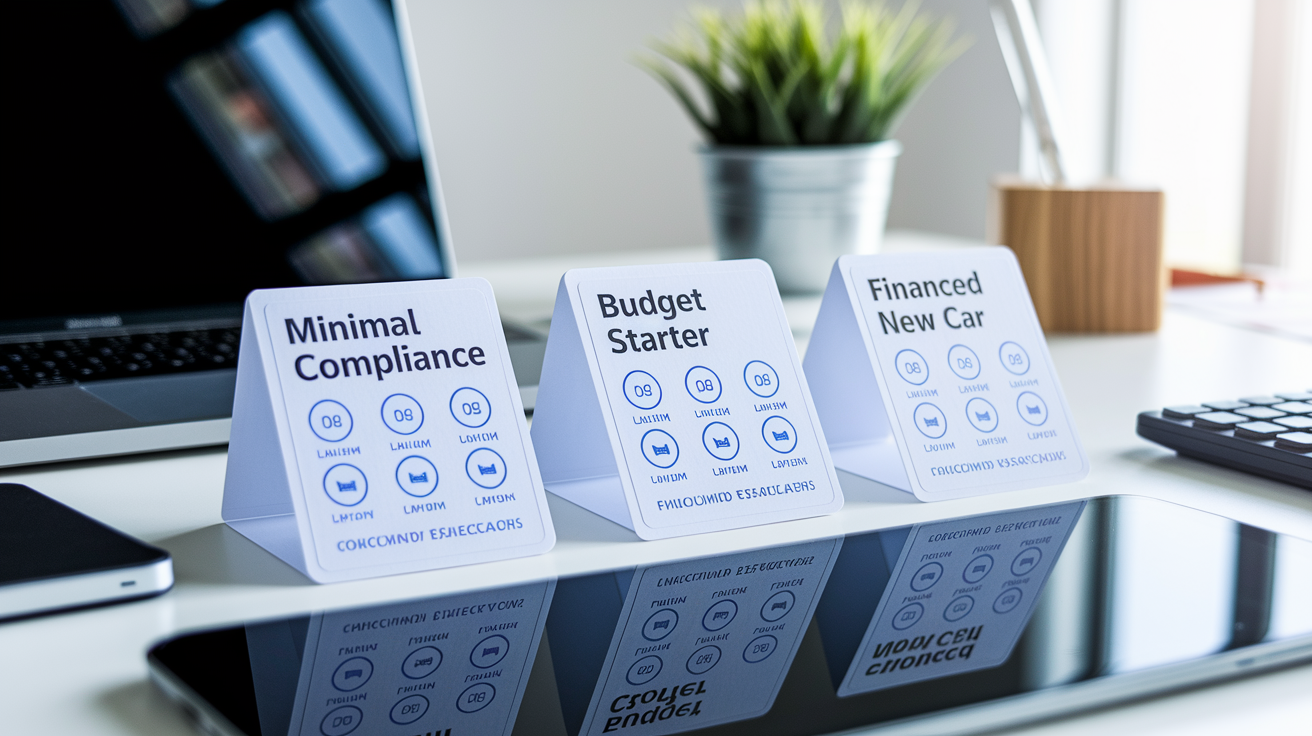
A minimal legal compliance package meets your state’s requirements and nothing more. In many states, that means 25/50/25 liability and possibly PIP or UM/UIM if mandated. This package is the cheapest option, but it leaves you exposed. If you cause a serious accident, the low liability limits could force you to pay tens of thousands out of pocket. You get no collision or comprehensive coverage, so any damage to your own car is your problem. This package only makes sense if you drive an old, low-value car you can afford to replace and you have very few assets at risk. Even then, it’s risky.
A budget-friendly but safer option raises liability limits to 50/100/50 and adds UM/UIM coverage at matching limits. If you keep collision and comprehensive, use a $1,000 deductible to lower your premium. This package offers real protection without breaking the bank. You’re covered if an uninsured driver hits you, and your liability limits are high enough to handle most common accidents without personal financial exposure. The $1,000 deductible means you’ll pay more out of pocket for a claim, but it also keeps your monthly cost manageable. This is a solid starting point for first-time buyers with reliable used cars and modest savings.
A financed or new car package is built around lender requirements and higher risk. Start with 100/300/100 liability to protect your assets and future income. Add collision and comprehensive with a $500 deductible, since the lender will require both and a lower deductible makes repairs more affordable. Include gap insurance to cover the loan balance if the car is totaled early in the loan term. Add rental reimbursement so you have a car to drive while yours is in the shop, and consider roadside assistance if the vehicle is new and you’re unfamiliar with maintenance. This package costs more, but it matches the financial exposure of owning a newer, higher-value vehicle that you’re still paying off.
Quick comparison between package types:
Minimal compliance means lowest cost, highest personal financial risk, no coverage for your own vehicle. Budget starter offers moderate cost, reasonable protection, and balances savings with real-world accident scenarios. Financed/new car brings higher cost, comprehensive protection, required by lenders and appropriate for high-value vehicles. Custom fit means always adjusting limits, deductibles, and add-ons based on your actual vehicle value, loan status, and emergency savings.
Step-by-Step Checklist for First-Time Buyers Choosing Insurance

Before you start shopping, know what you’re required to carry and what you actually need to protect yourself.
Confirm your state’s minimum liability limits. Look up the required bodily injury and property damage coverage on your state insurance department’s website so you know the legal baseline. Check your lender or lease requirements. If you’re financing or leasing, ask the lender what coverages, limits, and maximum deductibles they require before you buy the car. Decide on your liability limits. Choose limits that protect your assets and future income, not just the state minimum. 50/100/50 or 100/300/100 are common safer choices. Choose whether to carry collision and comprehensive. If your car is worth more than $3,000 to $5,000 or if it’s financed, add both coverages. Otherwise, consider dropping them.
Select a deductible you can afford. Pick the highest deductible you can pay from savings without stress, balancing monthly premium savings against out-of-pocket risk. Add UM/UIM coverage to match your liability limits. This protects you when the other driver has no insurance or not enough, which happens more often than most people expect. Compare at least three quotes. Get quotes from different insurers or work with an independent agent who can show you multiple options side by side. Ask about every available discount. Inquire about bundling, good student discounts, defensive driving courses, low mileage, safe vehicle features, and auto-pay discounts before you finalize the policy.
Quick Ways First-Time Car Buyers Can Reduce Premium Costs
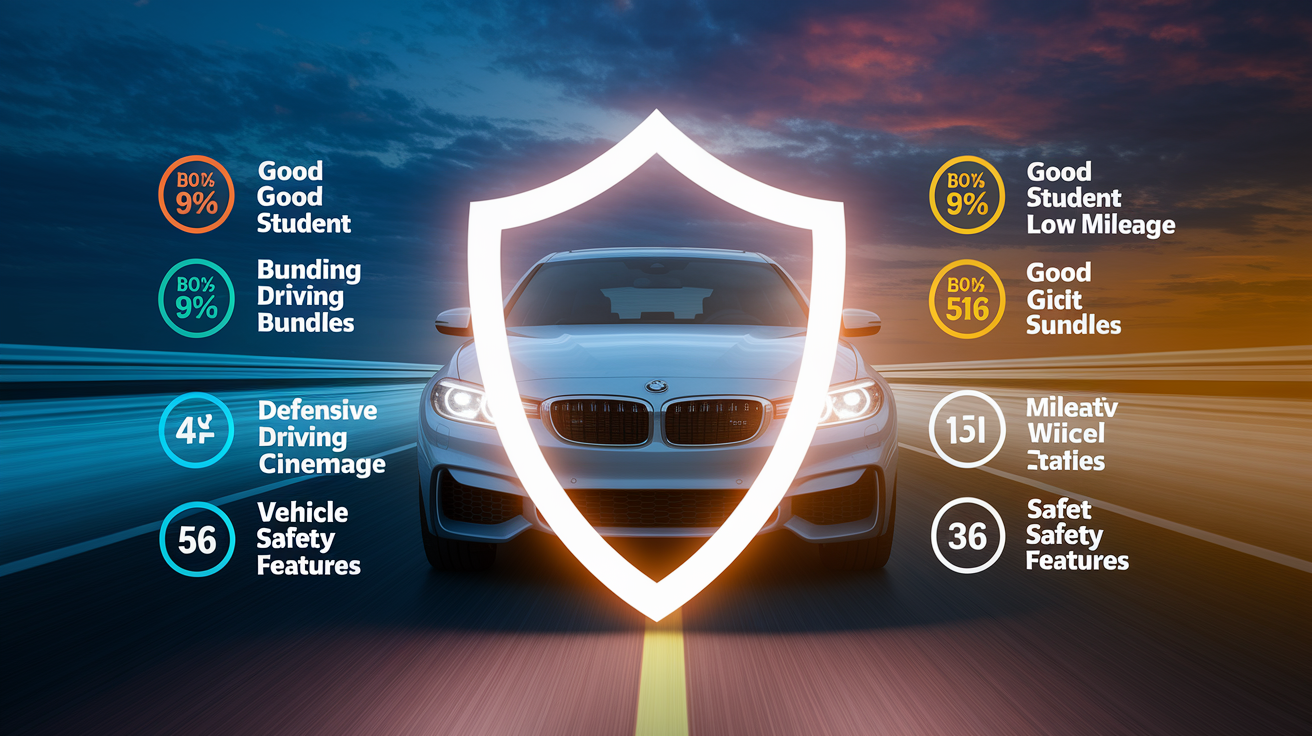
Raising your deductible from $500 to $1,000 can cut your collision and comprehensive premiums by roughly 10 to 25%, depending on your insurer and vehicle. That change alone might save you $100 to $300 per year, which adds up over the life of the policy. Bundling your auto insurance with renters or homeowners coverage at the same company often unlocks a discount of 5 to 25%. If you’re renting an apartment, adding a renters policy for $15 or $20 per month can actually lower your combined insurance bill because of the multi-policy discount.
Safe driving and good student discounts can reduce premiums for younger buyers by 10 to 25%. If you’re in school and maintain a B average or higher, ask your insurer for the good student discount and provide a transcript or report card. Completing a defensive driving course shows the insurer you’re serious about safety and can lower your rate, especially if you’re a new driver. Some companies also offer usage-based or telematics programs that track your driving habits through a smartphone app or plug-in device. If you drive safely and avoid hard braking or late-night trips, you may earn additional discounts.
Five quick discount opportunities to check:
Bundling means combining auto with renters, homeowners, or life insurance for a multi-policy discount of 5 to 25%. Good student requires maintaining a B average or higher to save 10 to 25% if you’re under 25 and in school. Defensive driving means completing an approved course to show safer driving skills and reduce your rate. Low mileage applies when you drive fewer than 7,500 or 10,000 miles per year to qualify for a low-mileage discount. Vehicle safety features like anti-lock brakes, airbags, anti-theft systems, and daytime running lights can each trigger small discounts that add up.
Final Words
You now know required coverages. We explained liability, how to read limits like 25/50/25, and when PIP or MedPay apply.
We covered recommended protections: collision, comprehensive, UM/UIM, plus add-ons like gap, roadside, and rental reimbursement. Use the sample packages and checklist to match coverage to your car, budget, and lender.
If you still wonder what coverage do first time car buyers need, start with state minimums, add UM/UIM, and include collision and comprehensive on new or financed cars. You’ll be more protected and confident on the road.
FAQ
Q: Is it better to have a $500 deductible or $1000?
A: Choosing between a $500 deductible and a $1,000 deductible depends on your budget and emergency savings. A $500 costs more each month but lowers out-of-pocket after a claim; $1,000 cuts premiums but raises your claim cost.
Q: What is the biggest mistake that first-time car buyers make?
A: The biggest mistake first-time car buyers make is focusing only on the monthly payment and skipping insurance, total ownership costs, and lender coverage requirements. Check those before you sign.
Q: Should I get full coverage on my first car?
A: Deciding whether to get full coverage on your first car depends on the car’s value and whether it’s financed. Get collision and comprehensive for new, financed, or high-value cars; consider minimums for older, low-value cars.
Q: What does a first-time buyer need to buy a car?
A: A first-time buyer needs a valid driver’s license, proof of insurance, proof of income or financing pre-approval, a down payment, and a vehicle history or inspection before completing the purchase.