



Relying on your state’s bare minimum liability insurance is a gamble that can wipe out your savings.
Most states set a legal floor for liability coverage to pay others’ medical bills and property damage when you’re at fault.
But those numeric limits, like 25/50/25, can run out fast in a serious crash.
This article breaks down what minimum liability actually covers, how state rules differ, and the real financial risks if damages exceed your limits.
By the end you’ll know whether state minimums protect you or only check a box and how to decide if you should raise your limits.
Defining Minimum Liability Coverage and How It Works
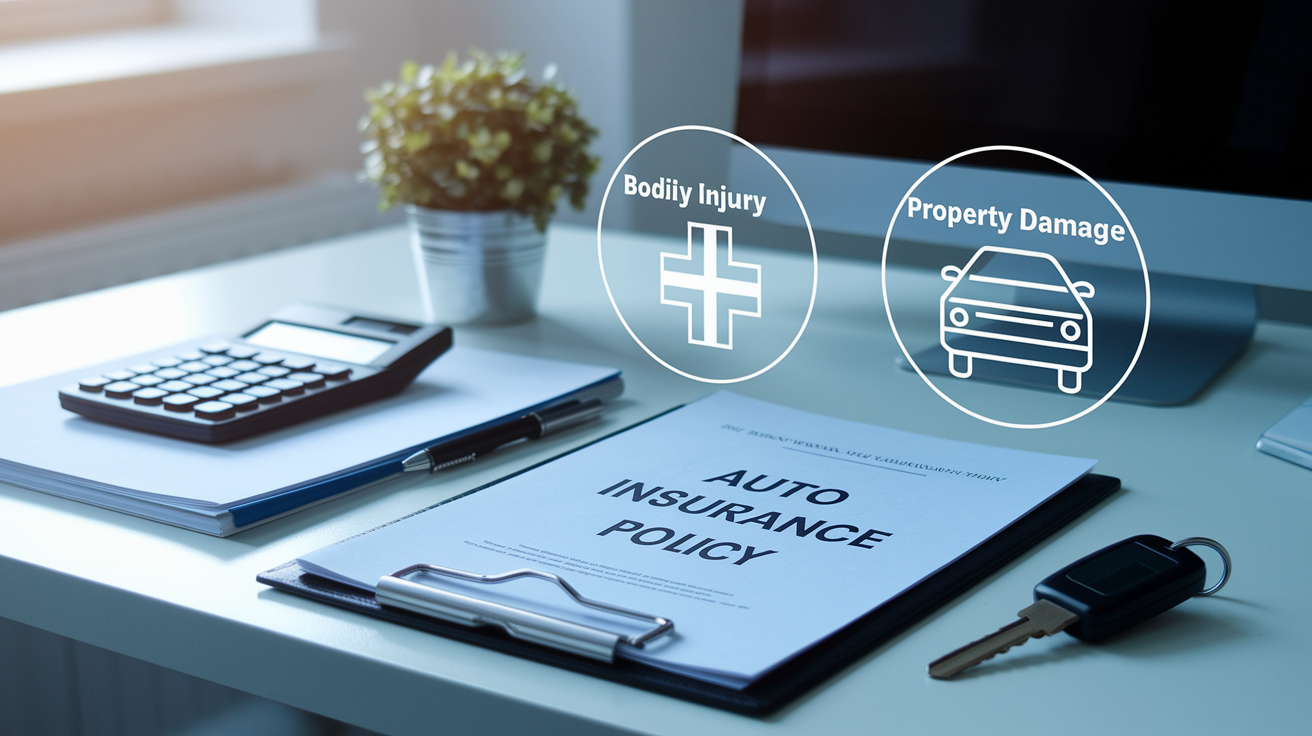
Minimum liability coverage is the legal floor of auto insurance most states require. It’s there to pay for harm you cause to others when you’re at fault. You’re looking at two core pieces: bodily injury liability and property damage liability. Bodily injury liability covers medical bills, lost wages, rehab costs, and legal fees for people you injure. Property damage liability pays to fix or replace someone else’s car, fence, building, or whatever else you wreck in a crash.
Insurers write liability limits as three numbers with slashes, like 25/50/25 or 15/30/10. The first number is the bodily injury limit per person hurt in one accident. The second is the total bodily injury cap for everyone injured in that same crash combined. The third is the property damage limit per accident. So a 25/50/25 policy means the insurer pays up to $25,000 for any one person’s injuries, a max of $50,000 total for all injuries in that wreck, and up to $25,000 for property damage from the same incident.
Your liability coverage typically handles:
- Medical bills, surgery, hospital stays, and ER visits for people you injure.
- Lost income and disability benefits if they can’t work while recovering.
- Legal defense costs and settlements or judgments when you get sued after the accident.
- Repair or replacement costs for vehicles, homes, storefronts, or personal property you damage.
Understanding these caps matters because they’re the absolute maximum your insurer pays on your behalf. If actual damages run higher than your policy limits, you’re personally on the hook for the rest. That can mean wage garnishment, liens on your assets, and financial trouble that drags on for years.
Advanced Behavior of Liability Limits in Real Crashes

When multiple people get hurt in a single accident, the per person and per accident caps interact in ways that leave some claimants short. Say you’ve got a 15/30/10 policy and you injure three passengers, each with $15,000 in medical bills. Your insurer pays the first claimant the full $15,000, then splits the remaining $15,000 per accident cap between the other two. Each of them gets only $7,500, even though their damages are higher. If you cause property damage that exceeds your $10,000 property limit, say $18,000 to replace a totaled car, you owe the extra $8,000 yourself.
States set different numeric structures based on local court costs, average repair bills, and claim history. Common limit formats you’ll see in state minimum requirements include:
• 15/30/10, seen where coverage floors are relatively low
• 25/50/25, a widely used baseline that roughly doubles per person protection
• 30/60/15, a mid range option balancing bodily injury and property damage
• 50/100/50, increasingly common where median vehicle values and medical costs run higher
• 100/300/100, occasionally found as a statutory minimum in pricier regions
Insurers allocate payments on a first come, first settled basis or may split available dollars among claimants when total damages exceed the per accident cap. In crashes with serious injuries, modest state minimums run dry fast, leaving injured parties to go after your personal assets, future earnings, or file uninsured motorist claims through their own policies.
State Minimum Liability Requirements and Common Coverage Patterns
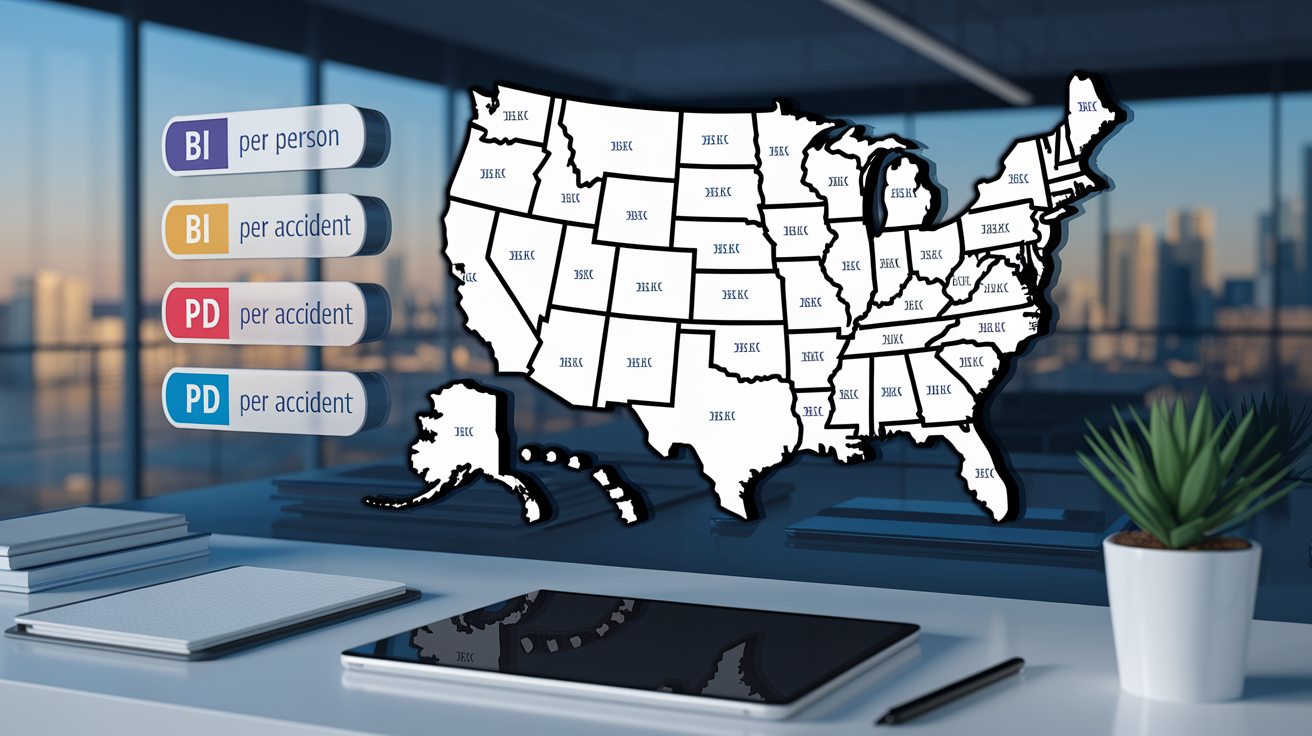
States set minimum liability thresholds so drivers can cover basic damages without forcing every injured person into court. These minimums vary because legislatures weigh local economic conditions, average repair costs, medical expenses, and politics when drafting insurance laws. Some states also require uninsured motorist coverage, personal injury protection, or medical payments alongside basic liability to protect drivers when the at fault party can’t pay.
The table below shows representative state minimum structures. Actual requirements change through legislation, so confirm current mandates with your state DMV.
| State | BI Per Person | BI Per Accident | PD Per Accident | UM/UIM Required? | PIP/MedPay Required? |
|---|---|---|---|---|---|
| Pennsylvania | $15,000 | $30,000 | $5,000 | Yes (UM only) | No |
| California | $15,000 | $30,000 | $5,000 | UM optional | No |
| Texas | $30,000 | $60,000 | $25,000 | UM optional | No |
| Florida | $10,000 | $20,000 | $10,000 | UM optional | Yes (PIP $10,000) |
| Maine | $50,000 | $100,000 | $25,000 | UM/UIM required | Yes (MedPay $2,000) |
| New York | $25,000 | $50,000 | $10,000 | UM/UIM required | Yes (PIP $50,000) |
New Hampshire stands apart by letting drivers prove financial responsibility through bonds, certificates of deposit, or cash reserves instead of buying a policy. Very remote parts of Alaska may not require vehicle registration at all, effectively exempting residents from standard insurance mandates. These exceptions are narrow and generally apply only to drivers who can prove ability to pay damages out of pocket.
What Minimum Liability Coverage Does Not Cover
Liability insurance protects others, not you. It won’t pay to repair your own car after you cause an accident, even if the damage runs into thousands. It won’t cover your hospital bills, rehab, or lost income when you’re injured in a crash you caused. If you’re hit by a driver who has no insurance or carries limits lower than your medical bills, your liability policy offers zero help.
Four common gaps in minimum liability only coverage:
• Your own vehicle repairs or replacement after an at fault collision
• Your medical bills, surgery costs, or rehab when you cause the crash
• Damages when an uninsured driver injures you or totals your car
• Legal fees or settlement costs if you’re sued for amounts above your policy limits
Uninsured motorist coverage and underinsured motorist coverage fill the gap created by other drivers who carry no insurance or not enough. UM bodily injury pays your medical expenses and lost wages when an uninsured driver is at fault. UM property damage covers your vehicle repair or replacement. UIM coverage kicks in when the at fault driver’s liability limits are exhausted but your damages exceed that amount. Many states require UM/UIM limits that mirror your own liability limits, like $25,000/$50,000 or $30,000/$60,000, ensuring you’re protected to the same degree you protect others.
Legal Consequences and Financial Risks of Carrying Only Minimum Limits

Driving without required minimum insurance or letting your policy lapse triggers administrative and civil penalties in most states. You may face fines from a few hundred dollars to over a thousand for a first offense. Your license and registration can be suspended until you file proof of insurance and pay reinstatement fees. If you’re in an at fault crash while uninsured, the state may require an SR-22 certificate for three years or longer. That’s a filing your insurer sends to the DMV confirming continuous coverage. Any lapse during the SR-22 period resets the clock and can lead to longer suspension.
Even when you carry minimum liability, inadequate limits expose you to severe financial harm. If a judgment against you exceeds your policy cap, creditors can garnish wages, place liens on your home, and seize bank accounts or other assets. Legal defense costs alone can drain savings before a settlement is reached. Unlike medical or credit card debt, civil judgments for auto accident injuries rarely disappear in bankruptcy, leaving you liable for years.
Common legal and financial risks:
- Personal liability for damages above your policy limit, enforced through wage garnishment or asset seizure.
- Fines and fees that pile up quickly when driving uninsured or underinsured.
- License or registration suspension, preventing legal operation of a vehicle until compliance is restored.
- Mandatory SR-22 filing for three or more years, often with higher premiums.
- Court judgments that remain collectible for a decade or longer, affecting credit and future earnings.
Carrying only state minimum coverage may satisfy legal requirements but leaves you vulnerable to catastrophic out of pocket costs if you injure multiple people, cause significant property damage, or are sued by an injured party with high medical expenses and lost income.
Minimum vs. Recommended Liability Coverage Levels

State minimums were often set decades ago and rarely keep pace with rising medical costs, vehicle repair expenses, and jury awards. A single ER visit and follow up treatment can exceed $15,000. Replacing a damaged mid range sedan often costs $25,000 or more. If you injure multiple passengers or cause a multi vehicle pileup, a 15/30/10 or even 25/50/25 policy runs dry almost immediately, leaving you personally liable for the rest.
Insurance professionals commonly recommend liability limits well above statutory floors. A baseline upgrade to 100/300/100 provides substantially more protection for a modest premium increase, often adding only $10 to $30 per month depending on your driving record, location, and vehicle. If budget constraints make that tough, aim for at least 50/100/50 rather than bare minimums.
| Coverage Type | State Minimum | Recommended | High Asset Strategy |
|---|---|---|---|
| BI per person | $15,000–$50,000 | $100,000 | $250,000+ |
| BI per accident | $30,000–$100,000 | $300,000 | $500,000+ |
| PD per accident | $5,000–$25,000 | $100,000 | $100,000+ |
An umbrella policy extends your liability protection beyond your auto policy limits and typically costs $200 to $400 per year for a $1,000,000 layer. Umbrella coverage activates after your underlying auto policy pays its maximum, covering legal judgments, settlements, and defense costs that would otherwise fall on you. If you own a home, have significant savings, or earn a high income, an umbrella policy protects those assets from being seized to satisfy a large verdict. Most insurers require you to carry 100/300 or 250/500 auto liability before they’ll issue an umbrella, ensuring a solid foundation of coverage before the umbrella kicks in.
How Minimum Liability Affects Premiums and What Influences Cost

Choosing minimum liability coverage produces the lowest base premium, but the actual dollar amount you pay depends on factors beyond the coverage limits you select. Insurers evaluate your risk profile by looking at where you live, how often you drive, your age, your driving record, and your credit based insurance score. A 35 year old driver with no moving violations, good credit, and a modest commute in a low theft ZIP code will pay substantially less for the same 15/30/10 policy than a 20 year old driver with a recent speeding ticket and poor credit in a high accident urban area.
Rating methodology varies by carrier, but most use a base rate calculated from statewide loss data and then apply individual multipliers. For example, insurers average rates for 35 year old men and women across all ZIP codes in a state, apply a good driving discount, factor in a good credit based insurance score, and assume no moving violations. That baseline rate is then adjusted upward for younger drivers, drivers with violations, or those in high claim areas, and adjusted downward for multi policy discounts, defensive driving courses, or vehicle safety features.
Five primary factors that drive liability premium changes:
• ZIP code and garaging location, reflecting local accident frequency, repair costs, and litigation trends
• Driver age and years of licensed experience, with higher rates for drivers under 25 and over 70
• Driving record, including at fault accidents, speeding tickets, and DUI convictions
• Credit based insurance score, used in most states to predict claim likelihood
• Vehicle type and use, including annual mileage, commute distance, and whether the car is used for business
Raising your liability limits from 15/30/10 to 100/300/100 often adds only 10 to 20 percent to your premium because the insurer’s administrative cost, underwriting expense, and profit margin remain relatively fixed. The incremental cost of higher limits is small compared to the financial risk you shed by carrying adequate coverage.
Real World Accident Scenarios to Show How Minimum Limits Pay Out
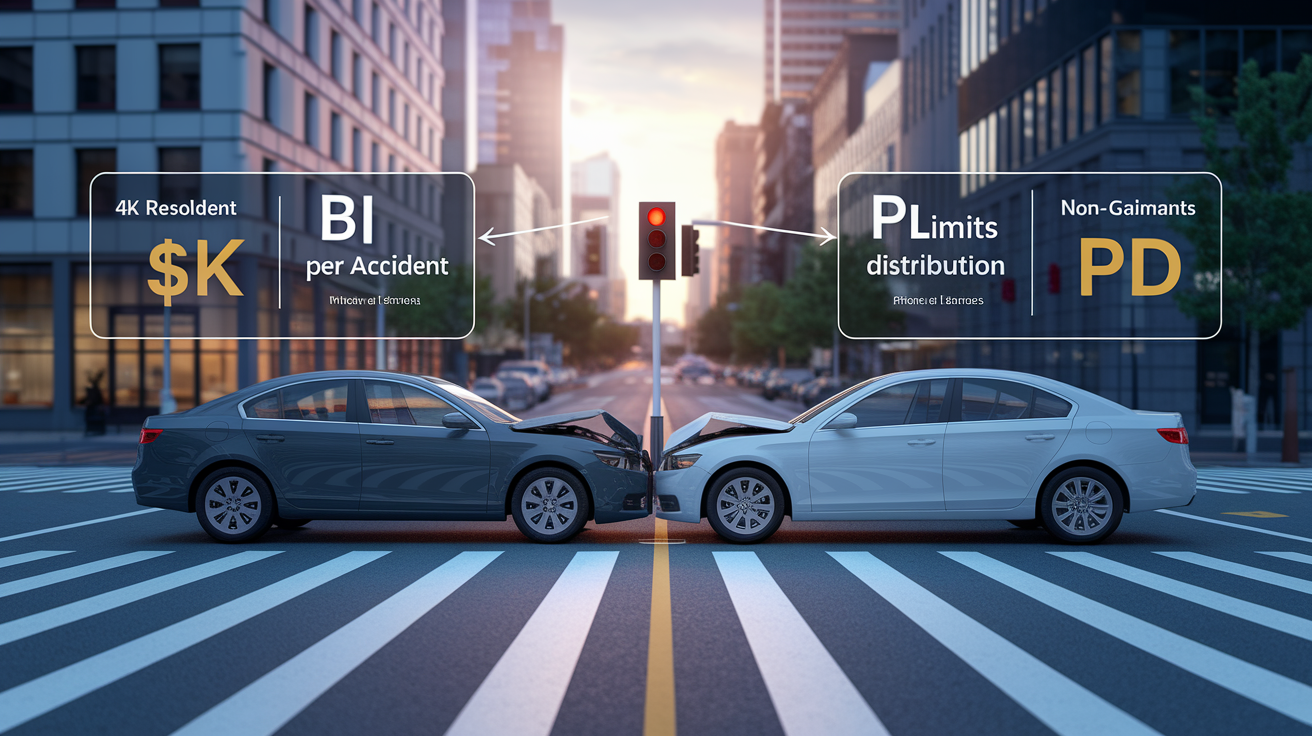
A rear end collision at a traffic light shows how quickly minimum property damage coverage falls short. You strike the car ahead, causing $25,000 in structural damage to their newer sedan. Your policy carries the Pennsylvania minimum of $5,000 property damage. Your insurer pays the first $5,000, and you owe the remaining $20,000 out of pocket. If the other driver also claims neck pain requiring $8,000 in medical treatment, your $15,000 bodily injury per person limit covers that expense, but any additional claimants in their vehicle would share your remaining $15,000 per accident cap.
In a multi injury crash, payouts get more complex. You run a red light and T-bone a minivan carrying three passengers. Each passenger sustains $20,000 in medical bills, physical therapy, and lost wages, $60,000 total. Your policy limits are 25/50/25. The insurer pays the driver $25,000 under the per person cap, then distributes the remaining $25,000 per accident cap among the three passengers, giving each passenger approximately $8,333. Each claimant is still owed $11,667, which they can pursue through a lawsuit, wage garnishment, or their own underinsured motorist coverage.
Three common payout scenarios with minimum limits:
- Single injury, high damage crash. $15,000 BI per person covers initial treatment, but long term rehab and lost income exceed the cap. Victim sues for the $40,000 balance.
- Multi vehicle pileup. $30,000 BI per accident is split among five injured parties. Each receives $6,000 while actual damages range from $15,000 to $50,000 per person.
- Property only accident. $10,000 PD limit pays for one totaled economy car, but the second vehicle involved is a luxury SUV with $45,000 in damage. You owe $35,000 personally.
Higher limits reduce personal exposure by ensuring the insurer absorbs most or all of the financial impact. A driver carrying 100/300/100 in the multi injury minivan crash would see the insurer pay the full $60,000 in medical bills with room to spare, eliminating the risk of a judgment and protecting wages and assets from seizure.
Additional Coverages Often Required Beyond Minimum Liability

Many drivers discover that minimum liability alone doesn’t satisfy all legal and contractual obligations. If you lease or finance a vehicle, the lender or leasing company typically requires comprehensive and collision coverage on top of state minimum liability. Comprehensive pays for damage from weather, flood, hail, theft, vandalism, and falling objects. Collision covers repairs or replacement when you strike another vehicle, a guardrail, a tree, or any fixed object. Without these coverages, the lender remains at risk of losing collateral value, so the finance agreement makes them mandatory until the loan is paid off.
Certain states mandate medical payments coverage or personal injury protection as part of minimum compliance. Maine requires drivers to carry at least $2,000 in medical payments coverage. New Hampshire requires medical payments but allows drivers to opt out of traditional liability insurance by posting a bond. Personal injury protection, common in no fault states, covers your medical expenses, lost wages, and rehab regardless of who caused the crash, with typical mandated limits ranging from $10,000 to $50,000.
Optional protections many drivers add to minimum liability:
• Rental reimbursement, which pays for a rental car while your vehicle is being repaired after a covered loss
• Roadside assistance, covering towing, jump starts, flat tire changes, lockout service, and fuel delivery
• Full glass coverage, eliminating the deductible for windshield and window repairs or replacement
• Gap insurance, paying the difference between your vehicle’s actual cash value and the remaining loan balance if the car is totaled
Lenders and lessors enforce these requirements by checking proof of insurance at signing and periodically throughout the loan term. If your policy lapses or you drop required coverages, the lender will purchase force placed insurance at your expense, often costing two to three times the premium of a standard policy and providing only the minimum protection the lender needs, not the coverage you need.
Final Words
You now know how minimum liability coverage works: it pays others’ medical bills and property damage up to three numeric limits, and why numbers like 25/50/25 matter.
We showed how insurers split payouts in multi-injury crashes, how state minimums vary, and why uninsured drivers and out-of-pocket risk can leave you exposed.
If you’re still asking what is minimum liability coverage, check your limits, compare higher options or an umbrella, and adjust for your assets. Small changes now can prevent big financial headaches later.
FAQ
Q: What is the minimum liability coverage?
A: The minimum liability coverage is the state-required policy that pays others’ medical bills and property damage when you’re at fault. It lists bodily injury per person, bodily injury per accident, and property damage limits.
Q: Is it better to have a $500 deductible or $1000?
A: Choosing a $500 deductible versus $1,000 depends on your budget and risk. $500 costs more monthly but saves money on small claims; $1,000 lowers premiums but raises your out-of-pocket if you file a claim.
Q: How much does a $1,000,000 general liability insurance cost?
A: The cost of a $1,000,000 general liability policy varies widely by industry, revenue, and claims history—often from a few hundred to several thousand dollars per year. Get quotes and compare coverage details.
Q: What does $100 k /$ 300k /$ 100k mean?
A: The $100k/$300k/$100k format means $100,000 bodily injury per person, $300,000 total bodily injury per accident, and $100,000 property damage per accident—those caps limit what the insurer will pay to others.