



Think life insurance always costs a fortune?
For many 30-year-olds, a $250,000 term policy can be under $25 a month.
But monthly prices rise quickly with age, and whole life policies often run many times higher.
This post lays out real monthly premium examples by age and policy type, explains the main drivers like health and tobacco use, and shows how to match coverage to your needs so you pay for the right protection, not more than you should.
Monthly Life Insurance Costs by Age and Policy Type

A healthy 30 year old shopping for a $250,000 term policy typically pays around $15–$25 per month. By age 40, that same coverage costs $20–$40 monthly, and at 50, the price climbs to $45–$90. Whole life insurance delivers lifelong coverage and cash value, but the trade off is a much steeper monthly bill, often $150–$300 or more for similar face amounts, depending on age and health.
The table below shows real world monthly premium samples for common ages, policy types, and coverage levels. These figures reflect non smoker, standard to preferred health ratings as of mid 2024.
| Age | Policy Type | Coverage Amount | Monthly Cost |
|---|---|---|---|
| 30 | 20-year term | $250,000 | $10–$18 |
| 30 | Whole life | $250,000 | $200–$500 |
| 40 | 20-year term | $500,000 | $40–$70 |
| 40 | Whole life | $500,000 | $500–$1,200 |
| 50 | 20-year term | $500,000 | $150–$300 |
| 50 | Whole life | $500,000 | $1,400–$3,500 |
| 60 | 10-year term | $250,000 | $125–$250 |
| 60 | Whole life | $250,000 | $2,000–$4,500 |
Age drives the single largest premium jump. Each decade adds exponentially higher risk, so insurers raise monthly rates to match. Policy type matters just as much. Term products price pure death protection over a fixed window, while whole life bundles guaranteed lifetime coverage with a savings component, producing monthly bills that can run five to fifteen times higher for the same face amount. Those two levers, how old you are when you apply and whether you choose temporary or permanent coverage, account for the bulk of the price spread in the table above.
Key Factors That Influence Monthly Life Insurance Pricing

Underwriters assign you to a risk class by scoring your age, health history, tobacco use, occupation, hobbies, and family medical background. A 35 year old marathon runner with clean bloodwork lands in Preferred Plus and pays the lowest rate. A 35 year old with controlled high blood pressure, a desk job, and no smoking history might slot into Standard and pay 30–60% more for identical coverage. A 35 year old who smokes a pack a day can expect to pay double or triple a non smoker’s premium, regardless of other health markers.
Insurers pull data from your medical exam (blood pressure, cholesterol, glucose, nicotine metabolites), your prescription drug history (with your consent), and your physician’s records. They also weigh family history. If your parents or siblings had early onset heart disease, cancer, or stroke, you may see a rating surcharge even when your own health is currently normal. Occupation and lifestyle round out the assessment: commercial pilots, underground miners, and weekend skydivers face higher premiums or coverage limits because actuarial tables show elevated mortality risk.
The major pricing factors boil down to:
Age at application. Premiums double or triple every ten to fifteen years as mortality risk climbs.
Tobacco and nicotine use. Cigarettes, cigars, chewing tobacco, vaping, and even nicotine replacement therapy can trigger smoker rates (200–300% of non smoker pricing).
Health and medical history. Conditions like diabetes, hypertension, sleep apnea, high cholesterol, and past cancer treatments push you into higher rate classes or add table ratings.
Occupation and hobbies. Hazardous jobs (firefighting, deep sea diving, logging) and risky pastimes (motor racing, mountain climbing) increase premiums or require exclusion riders.
Family medical history. Early deaths from congenital heart disease, melanoma, or hereditary cancers can raise your rate even if you’re healthy today.
Term vs. Whole Life: Cost Comparison

Term life policies cover you for a set number of years, 10, 20, or 30, and pay nothing if you outlive the term. Because the insurer only accepts risk during that window, monthly premiums stay low. Whole life locks in coverage for your entire lifespan and includes a cash value account that grows tax deferred. Those guarantees mean the insurer prices for decades of claims risk and investment obligations, so the monthly bill is substantially higher from day one.
A 40 year old non smoker might pay $50 per month for a $500,000 twenty year term policy but $1,200 per month for a $500,000 whole life policy. The term product is roughly twenty four times cheaper because it expires in two decades and builds no cash value. Whole life never expires, accumulates cash you can borrow against, and guarantees a payout whenever you die. Features that justify the price gap for buyers who want permanent protection or see the policy as a forced savings vehicle.
| Policy Type | Key Features | Typical Monthly Range |
|---|---|---|
| 10-year term | Lowest-cost protection; expires after 10 years | $10–$80 |
| 20-year term | Level premium for 20 years; most popular term length | $15–$300 |
| 30-year term | Longest standard term; higher premium than 20-year | $25–$450 |
| Whole life | Lifetime coverage; guaranteed cash value; fixed premium | $200–$3,500+ |
Cost Differences by Coverage Amount and Term Length

Doubling your coverage from $250,000 to $500,000 usually raises your monthly premium by 50–70%, not a full 100%, because per dollar pricing improves at higher face amounts. A policy that costs $20 per month for $250,000 might cost $32 per month for $500,000. You’re paying roughly 60% more for twice the death benefit. Jumping to $1,000,000 often costs 1.8 to 2.2 times the $500,000 rate rather than a straight doubling, thanks to volume pricing bands built into many term products.
Term length has a similar stepwise effect. A 10 year term is the cheapest per month because the insurer only covers your lowest risk decade. A 20 year term costs about 20–40% more monthly than a 10 year term at the same issue age, and a 30 year term can run 10–50% higher than a 20 year term. The longer the guarantee, the more years of aging and health decline the insurer must price in up front.
Typical cost increases when adjusting coverage or term:
$250k to $500k. Expect a 50–70% monthly increase.
$500k to $1 million. Expect an 80–120% monthly increase (less than double).
10 year to 20 year term. Premiums rise 20–40% for the same face amount.
20 year to 30 year term. Premiums rise another 10–50%, with larger jumps at older issue ages.
How Health Classes Affect What You Pay

Underwriters sort applicants into rate classes: Preferred Plus, Preferred, Standard, and Substandard (table rated). The criteria includes bloodwork, blood pressure, body mass index, medical records, and family history. Preferred Plus is the top tier. No smoking, normal weight, excellent cholesterol and glucose, clean driving record, and no family history of early cardiac disease or cancer. Applicants in this class receive the lowest published rates, often 15–30% below Standard pricing.
Standard class covers healthy individuals who have minor issues. Slightly elevated cholesterol managed with statins, well controlled hypertension, or a BMI just above the ideal range. Monthly premiums in Standard run 30–60% higher than Preferred Plus for the same policy. If your condition is more serious, uncontrolled diabetes, a history of heart attack, or multiple comorbidities, you land in a table rated or substandard class, where premiums can double, triple, or climb even higher depending on how many rating steps the insurer adds.
Moving from Preferred to Standard might mean paying $40 instead of $28 per month for a $500,000 twenty year term at age 35. A table rating of +100% (two steps) would push that $28 to $56. Severe ratings or recent major health events can result in a decline or premiums so high that simplified issue or guaranteed issue policies become the only options. And those products cost significantly more than fully underwritten coverage for the same face amount.
Smoker vs. Non‑Smoker Monthly Premium Comparison
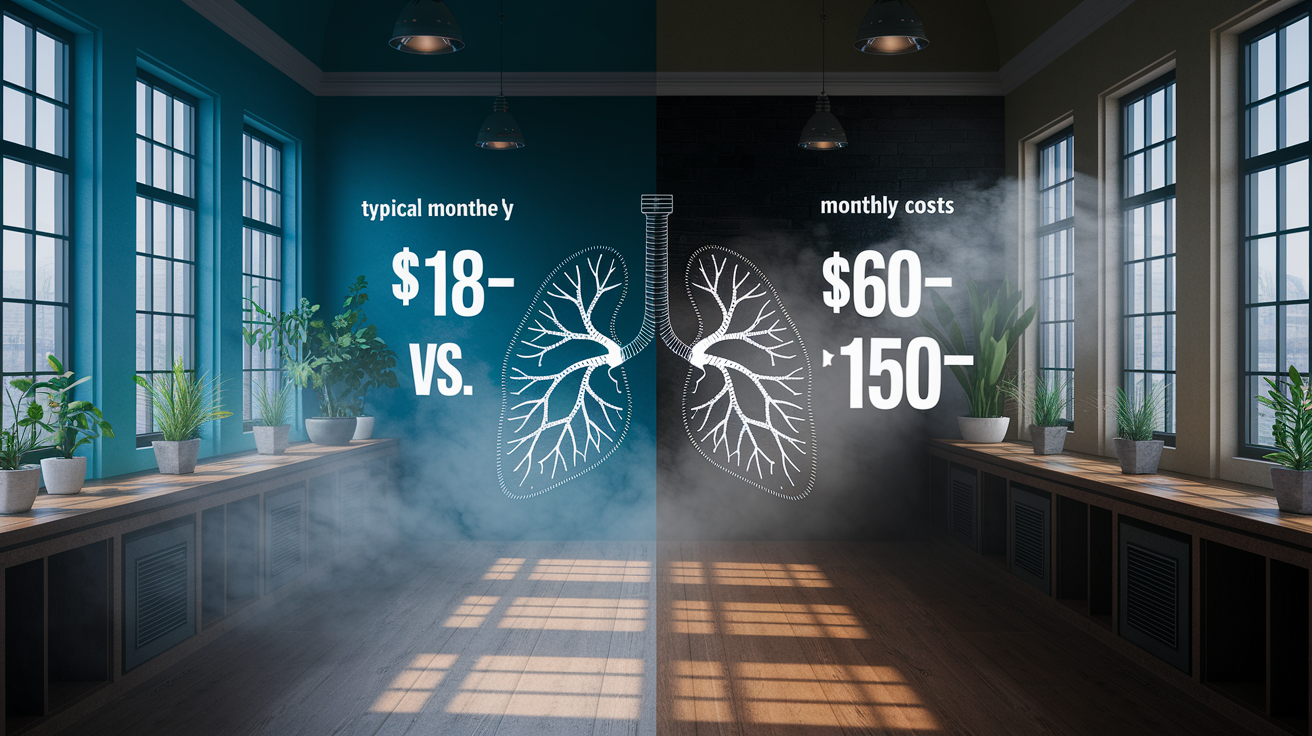
Insurers define tobacco use broadly: cigarettes, cigars, pipes, chewing tobacco, vaping, nicotine patches, and nicotine gum all count. If you’ve used any nicotine product in the past twelve months, most carriers classify you as a smoker and apply smoker rates. A 30 year old non smoker paying $18 per month for a $500,000 twenty year term might pay $60–$150 per month as a smoker. A jump of 200–300% or more. At age 45, the gap widens: a non smoker’s $70 monthly premium can become $200–$500 for a smoker.
Some insurers treat occasional cigar smokers or marijuana users differently, offering “preferred tobacco” or “marijuana user” classes that sit between full smoker and non smoker rates. E cigarette and vaping users are generally grouped with traditional smokers, though a handful of carriers have introduced separate vape user tiers with slightly lower rates. Quitting nicotine for twelve consecutive months before you apply can move you into non smoker pricing, cutting your monthly cost by half or more.
| Category | Typical Monthly Cost Difference |
|---|---|
| Non-smoker (any age) | Baseline rate |
| Smoker (any age) | 200–300% of non-smoker rate |
Male vs. Female Life Insurance Rates

Women pay less for life insurance because actuarial data show they live longer on average. A 30 year old woman buying a $500,000 twenty year term might pay $14–$24 per month, while a 30 year old man with identical health and lifestyle pays $18–$30 per month. A difference of roughly 15–30%. The gap narrows with age. By the mid fifties, gender based pricing differences often shrink to 5–15% because mortality risk rises steeply for both sexes.
Insurers price gender separately for each product and age band, so the exact discount varies by carrier and underwriting class. In Preferred Plus classes, women sometimes see discounts at the higher end of that 15–30% range, while Standard rated women might see smaller savings. State regulations in a few jurisdictions restrict or ban gender based pricing, but in most U.S. states, gender remains a standard rating factor alongside age, health, and tobacco use.
How to Reduce Your Monthly Life Insurance Costs

Improving modifiable health markers before you apply can shift you into a better rate class and cut your monthly premium by 20–50% or more. Losing weight to bring your body mass index below 30, lowering blood pressure through diet and exercise, and quitting smoking for at least twelve months are the three changes that produce the largest documented savings.
Practical strategies to lower your monthly cost:
Apply younger. Premiums roughly double every ten to fifteen years, so buying at 30 instead of 40 can cut your rate in half for the same term and coverage.
Choose term over whole life. Term products cost 70–90% less monthly for equivalent death benefits during the coverage window.
Quit tobacco and nicotine. Twelve months of verified abstinence can move you from smoker to non smoker rates, saving 50–80% monthly.
Improve health metrics. Reduce BMI, control blood pressure and cholesterol, and manage diabetes or other chronic conditions to qualify for Preferred or Standard instead of table rated pricing.
Right size coverage and term. Match the face amount and policy length to your actual income replacement or debt coverage need rather than over insuring.
Compare multiple carriers. The same applicant profile can generate quotes that vary by 30–100% between insurers, especially for older applicants or those with medical histories.
Getting Personalized Monthly Life Insurance Quotes

Online quote tools ask for your age, gender, tobacco status, desired coverage amount, term length, and a few health questions to generate an estimated monthly range. Those instant estimates are useful for budgeting, but they assume you’ll qualify for Standard or Preferred underwriting. Your actual premium is determined after the insurer reviews your full medical records, prescription history, blood and urine test results, and sometimes a paramedical exam that measures height, weight, blood pressure, and cholesterol.
When you request a formal quote, expect to answer detailed questions about existing diagnoses, medications, family history, occupation, hobbies, driving record, and any past insurance declines. Fully underwritten policies take two to eight weeks from application to approval because the insurer verifies every disclosure. Simplified issue or no exam policies skip the medical exam and approve coverage in days, but they charge 25–100% higher premiums and cap face amounts at lower levels. Trade offs that make sense only if you need coverage immediately or have health issues that would trigger a decline or heavy rating under full underwriting.
Final Words
You saw clear monthly cost ranges and sample numbers by age and policy type, plus how term vs whole life, coverage amount, and term length shift those rates. We also explained how health class, smoking, and gender typically change what insurers charge.
We gave practical tips to lower premiums and steps for getting personalized quotes so you can compare real offers.
If you’re wondering how much does life insurance cost per month, use those numbers as a starting point and get a tailored quote — you’ll be closer to a smart, affordable choice.
FAQ
Q: Can I get life insurance with HPV?
A: You can usually get life insurance with HPV. Insurers often treat HPV as low risk; they may ask about symptoms or treatment, but it rarely blocks approval or large rate increases.
Q: Can a person with dementia get life insurance?
A: A person with dementia may have difficulty getting new life insurance after diagnosis. Many insurers decline or offer guaranteed-issue plans with high premiums and low limits; check employer or group options and apply early if possible.
Q: What is a monthly payment for $500,000 life insurance? How much is a $100,000 life insurance policy a month?
A: Monthly payments for $100,000 and $500,000 life insurance depend on age, health, and policy type. Typical term ranges: $100K — about $6–$25/month; $500K — about $25–$150/month for healthy adults.