



Think you’re safe until you hire five workers? Think again.
Most states require workers comp once you have at least one employee, and rules vary wildly by state.
This guide breaks down the minimum workers comp requirements by state, shows who counts as an employee, flags industry carve-outs like construction and agriculture, and explains what happens if you get it wrong.
Read on to find your state’s trigger, common exemptions, and a simple checklist to stay compliant and avoid fines or lawsuits.
Nationwide Overview of Workers’ Compensation Requirements
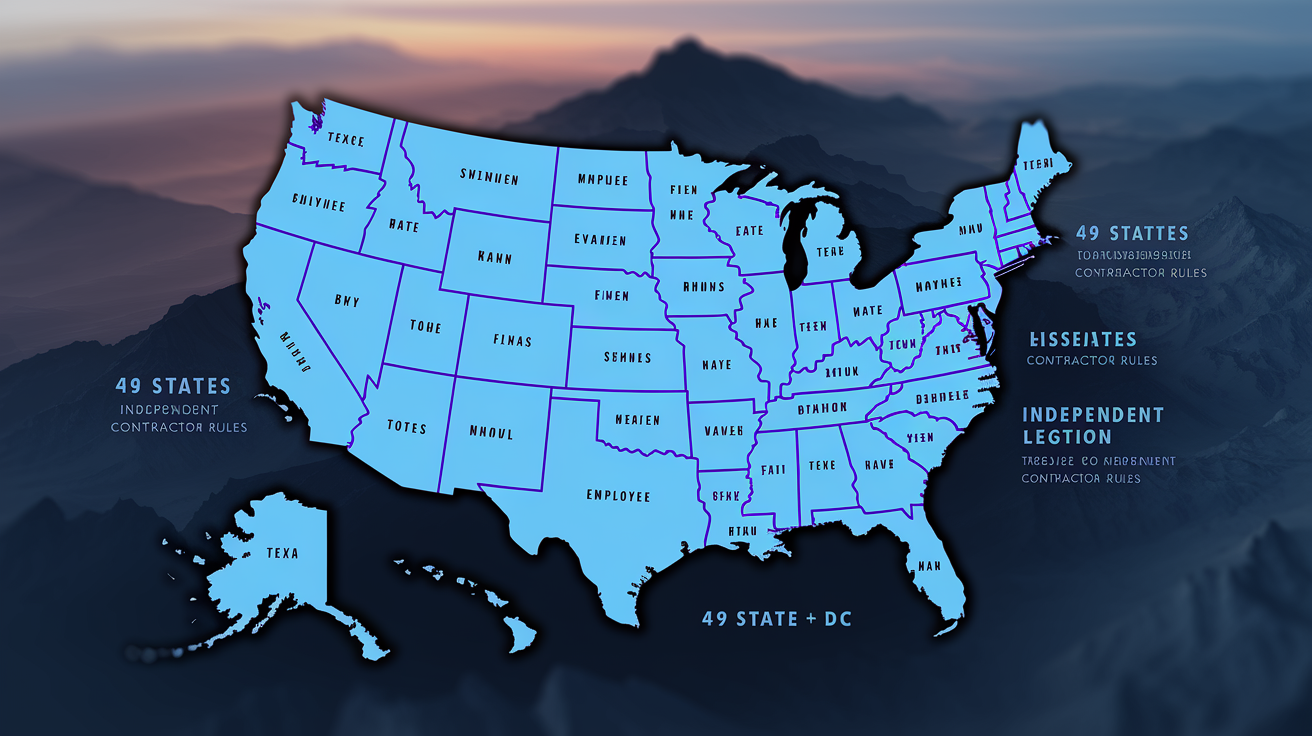
Workers’ comp is mandatory in 49 states plus D.C. Texas is the lone holdout.
The system started back in 1884 as Worker’s Accident insurance. The idea was simple: protect employees who got hurt on the job, keep employers from getting sued into oblivion. Each state runs its own version, which means the rules about who needs coverage, what it costs, and what happens when you don’t buy it? All over the map.
Most states flip the switch at one employee. Hire your first worker and you’re on the hook for a policy. A few states set the bar higher, three to five employees, but high-risk industries like construction or roofing often get pulled in sooner. Some workers don’t count: farm laborers, domestic help, corporate officers who own enough of the company, independent contractors (if they’re actually independent). Texas lets most private employers skip it entirely, though you give up serious legal cover if you do. North Dakota, Ohio, Washington, and Wyoming force you to buy through the state fund. No private insurers allowed.
Get this wrong and you’re looking at fines, stop-work orders, criminal charges, personal liability for medical bills and lost wages.
One-employee threshold states: Alaska, Arizona, California, Colorado, Connecticut, Delaware, Hawaii, Idaho, Kentucky, Louisiana, Maine, Maryland, Massachusetts, Montana, Nebraska, Nevada, New Hampshire, Ohio, Oregon, Pennsylvania, Rhode Island, Utah, Vermont, Washington.
Higher thresholds: Alabama, Mississippi, Missouri, Tennessee need five employees. Arkansas, Georgia, Michigan, New Mexico, North Carolina, West Virginia, Wisconsin need three. Florida and South Carolina need four. Virginia needs two.
Industry-specific rules: Construction, roofing, trucking get stricter treatment. California and Illinois require sole proprietors in certain trades to carry coverage even before they hire anyone.
Public vs. private employers: Most states cover both, though small government entities or volunteer fire departments sometimes get carved out.
Independent contractor classification: States use their own tests (IRS common-law, ABC test, state-specific factors) to decide if your 1099 worker is actually an employee for comp purposes.
Penalties for noncompliance: Start at $100, climb past $10,000. Some states charge daily fines per employee. Criminal prosecution is on the table in several jurisdictions.
Medical-only coverage: Rare. Most states require full wage replacement and disability benefits.
The Texas exception: Private employers can decline coverage, but then you’re wide open to lawsuits and you lose common-law defenses.
Quick Compliance Checklist for Employers

Miss a step here and you risk a stop-work order the day a state auditor or injured worker flags the gap.
- Count your employees accurately: Full-time, part-time, seasonal all count. Exclude bona fide independent contractors, federal employees, volunteers.
- Verify your state’s employee threshold: One, two, three, four, or five? Check for industry carve-outs.
- Identify industry-specific rules: Construction, agriculture, domestic work, real estate sometimes trigger different thresholds or zero-employee requirements.
- Review corporate officer and owner exemptions: Can you, your partners, or officers who own a significant stake exclude yourselves? Should you opt in anyway?
- Classify contractors correctly: Apply your state’s test to each 1099 worker. Misclassify and you’ll pay back premiums plus fines.
- Request coverage quotes: Contact at least two carriers or your state fund. Provide accurate payroll estimates and class codes.
- Secure a certificate of insurance: You’ll need proof of coverage for general contractors, clients, or licensing boards.
- Understand your state’s penalty structure: Daily fine amount, stop-work orders, criminal offense status.
- Set up policy renewal reminders: Policies run 12 months. Lapse and fines kick in immediately.
- Post required workplace notices: State-mandated poster, claim forms, insurer contact info where employees can see it.
State-by-State Workers’ Compensation Requirements (A–M)

Use this to spot your state’s trigger and cross-check any exemptions.
| State | Minimum Employee Threshold | Notable Exemptions | Penalties for Noncompliance |
|---|---|---|---|
| Alabama | 5 employees | Independent contractors, casual labor | Up to $1,000/employee/day, business closure |
| Alaska | 1 employee | Sole proprietors may self-insure | Up to $10,000 fine, $1,000/employee/day, jail time |
| Arizona | 1 employee | Sole proprietors eligible to self-insure, certain casual labor | Stop-work order, fines, liability for injuries |
| Arkansas | 3 employees | Agricultural, domestic, casual labor | Loss of Commission protection, penalties imposed |
| California | 1 employee (roofers: 0) | None for roofers, limited exemptions for others | Criminal offense, jail time, closure, fines $10,000+ |
| Colorado | 1 employee | Officers/LLC members owning 10%+ may opt out | Cease-and-desist, $250–$500/employee/day |
| Connecticut | 1 employee | Employees working ≤26 hrs/week | $300/employee/day, stop-work until premium paid |
| Delaware | 1 employee | Up to 8 corporate officers or 4 LLC members may exclude | 3× annual premium amount |
| Florida | 4 employees (construction: 1) | Corporate officers may exclude with election | Stop-work, 2× annual premium for two years |
| Georgia | 3 employees (agriculture: 6) | Agricultural, domestic, casual labor | 10% penalty on medical/wages/legal, $2/employee/day or $25/day (whichever greater) |
| Hawaii | 1 employee | Officers owning 50%+ excluded but may opt in | Fines, stop-work, liability for injuries |
| Idaho | 1 employee | Sole proprietors, partners, officers 10%+, LLC members auto-excluded, may opt in | Fines, stop-work, liability |
| Illinois | 1 employee (hazardous: 0) | None for construction/trucking sole proprietors | Fines, stop-work, criminal prosecution |
State-by-State Workers’ Compensation Requirements (N–Z)

North Dakota, Ohio, Washington, Wyoming: state fund only. You can’t buy private insurance.
| State | Minimum Employee Threshold | Notable Exemptions | Penalties for Noncompliance |
|---|---|---|---|
| Nebraska | 1 employee | Officers owning 25%+ may exempt | Fines, stop-work, liability |
| Nevada | 1 employee | Licensed contractors/subcontractors must carry coverage | $15,000 + premium penalties, stop-work, liability |
| New Hampshire | 1 employee | Up to 3 executive officers, construction officers cannot exempt | $2,500 one-time + $100/employee/day, stop-work |
| New Jersey | 1 employee | Limited exemptions | Fines, stop-work, criminal prosecution |
| New Mexico | 3 employees | Officers/LLC members owning 10%+ may exclude | State-mandated shutdown |
| New York | 1 employee | Sole proprietors, partners, 1–2 person corporations | Criminal charges, fines, stop-work |
| North Carolina | 3 employees (agriculture: 10 full-time non-seasonal) | Truck drivers may be required even if 1099 | $1/employee/day ($50 min, $100 max), liability for benefits + defense fees |
| North Dakota | 1 employee (state fund only) | Limited exemptions | $10,000 + $100/day |
| Ohio | 1 employee (state fund only) | Limited exemptions | Stop-work, fines, criminal prosecution |
| Oklahoma | 1 employee (family ≤5: exempt) | Officers/members owning 10%+ excluded, may elect in | $1,000/day, stop-work, liability for lawsuits |
| Oregon | 1 employee | 30+ exemptions in state law | $1,000–2× premium, up to 7 years prison |
| Pennsylvania | 1 employee | Limited exemptions | $250 + $1,000/day, up to 2 years prison, $10,000 fine |
| Rhode Island | 1 employee | Limited exemptions | $2,500–$15,000, up to 7 years prison |
| South Carolina | 4 employees | Casual, agricultural, domestic labor | Fines, stop-work, liability |
| South Dakota | No mandate (voluntary) | N/A | N/A |
| Tennessee | 5 employees | Owners may request exemption | $10,000+ plus 25% penalty to injured workers |
| Texas | No mandate for most private employers | Optional coverage, employers lose legal defenses if uninsured | Administrative penalties if voluntarily covered and noncompliant |
| Utah | 1 employee | Officers/LLC members may exclude with ownership stake | Fines, stop-work, liability |
| Vermont | 1 employee | Limited exemptions | $100/day up to $5,000, stop-work |
| Virginia | 2 employees | Executive officers may reject with notice | $250/day per uninsured day, max $50,000 |
| Washington | 1 employee (state fund only) | Limited exemptions | $250/day per uninsured day, max $50,000 |
| West Virginia | 1 employee | LLCs may exclude up to 4 managers/officers/members | Fines, stop-work, liability |
| Wisconsin | 3 employees | Agricultural, domestic, casual labor | Fines, stop-work, liability |
| Wyoming | 1 employee (state fund only) | Limited exemptions | Fines, stop-work, jail time, liability |
Common Exemptions Across States

Most states use a one-employee threshold but carve out entire categories of workers who either don’t count or are explicitly excluded. These exemptions exist to avoid forcing coverage on workers who already have other protections, who work in low-risk settings, or who own enough of the business that they can decide for themselves whether to buy in.
Agricultural workers: Many states exempt farm laborers, though thresholds differ. Some require coverage only if you employ a minimum number of full-time, non-seasonal farmhands.
Domestic workers: Housekeepers, nannies, in-home caregivers are often excluded, especially if they work fewer than a set number of hours per week.
Corporate officers and LLC members: States frequently allow officers who own 10 percent, 25 percent, or even 50 percent of the company to exclude themselves, though they must file formal election paperwork.
Real estate agents: Licensed agents working on commission are typically classified as independent contractors and excluded.
Volunteer workers: Unpaid volunteers, including volunteer firefighters and nonprofit board members, are usually exempt, though some states allow nonprofits to cover them electively.
Independent contractors: True 1099 contractors are excluded, but states apply different tests (ABC test, IRS common-law test, state-specific factors) to determine who qualifies. Misclassify and you’ll owe back premiums, fines, and retroactive coverage.
Penalties and Enforcement Mechanisms

Operating without required workers’ comp isn’t a paperwork oversight. It’s a legal violation most states treat as seriously as payroll tax fraud.
Enforcement typically starts with a complaint from an injured worker, a tip to the state labor department, or a routine audit of contractors on a job site. Once discovered, penalties stack fast.
Financial penalties are the most common consequence. Many states impose daily fines that accrue per employee. A business with ten uninsured workers can rack up thousands of dollars in fines within weeks. Amounts range from $100 per day to $1,000 or more per employee per day in strict jurisdictions like California, Kentucky, and Alaska. Some states calculate the fine as a multiple of the annual premium you should have paid. Delaware charges three times the annual premium. Florida charges double the annual premium for two years.
Stop-work orders are another enforcement tool. A state agency can shut down your business immediately, barring you from operating until you secure coverage and pay outstanding fines. Construction sites are particularly vulnerable because general contractors, licensing boards, and public agencies routinely verify coverage before issuing permits or approving contracts.
Criminal prosecution is less common but real. States including California, New York, Oregon, Rhode Island, and Pennsylvania classify willful noncompliance as a misdemeanor or felony, with potential jail sentences ranging from one to seven years.
Beyond state penalties, uninsured employers lose the legal protections that workers’ comp provides. Injured employees can sue directly for medical bills, lost wages, pain and suffering, and punitive damages. You can’t raise traditional common-law defenses like contributory negligence or assumption of risk.
Minimum Coverage Standards and Policy Requirements

Workers’ comp policies are built around four core benefits: medical expenses, wage replacement, disability benefits, and death benefits. Every state mandates that policies include at least these components, though the specific dollar limits, waiting periods, and benefit formulas vary.
Medical benefits cover all necessary treatment for a work-related injury or illness: emergency care, surgery, physical therapy, prescription drugs, ongoing follow-up visits. Most states require unlimited medical coverage with no caps. The insurer pays until the employee reaches maximum medical improvement.
Wage replacement kicks in after a short waiting period, typically three to seven days, and pays a percentage of the employee’s average weekly wage while they recover. The standard replacement rate is two-thirds of pre-injury wages, subject to a state-set maximum.
Disability benefits extend wage replacement for employees who suffer permanent partial or total disability, often calculated as a percentage of impairment multiplied by a weekly benefit rate.
Death benefits provide a lump sum or ongoing payments to dependents if an employee dies from a work-related injury, plus coverage for funeral expenses up to a statutory limit.
Beyond the four core benefits, many states require employers to carry employer liability coverage as part of the policy. This coverage, often called Part Two or Coverage B, protects the employer if an injured worker or their family sues outside the workers’ comp system, for example, claiming a third party caused the injury or that the employer’s negligence was intentional. Some states set minimum employer liability limits above the default $100,000 per accident / $500,000 policy limit / $100,000 per employee for disease, so confirm your state’s requirements with your insurer.
Once coverage is active, your obligations include posting a notice of coverage in a visible workplace location, providing claim forms to injured employees within a set number of days, reporting injuries to your insurer promptly, and maintaining accurate payroll records for annual audits. Lapses in coverage, even for a single day, can restart penalty clocks and leave you liable for any injuries that occur during the gap.
Final Words
in the action, we covered national mandates, how employee thresholds work, state exemptions, and special cases like Texas and monopolistic states.
You also got a quick compliance checklist, A–Z state breakdowns, common exemptions, penalties, and minimum policy features so you can spot gaps and next steps.
Use the minimum workers comp requirements by state as your reference when deciding whether to buy coverage, check contractor status, or update policies at renewal. Small steps now can avoid fines and protect workers. You’re set to make clearer, calmer choices.
FAQ
Q: What states do not require workers’ comp?
A: The only state that generally does not require most private employers to carry workers’ compensation is Texas. All other states mandate coverage based on state thresholds, industry rules, and specific exemptions.
Q: Is plantar fasciitis a work-related injury?
A: Plantar fasciitis can be a work-related injury if job duties—like prolonged standing or repetitive strain—materially caused or worsened it; you’ll need medical documentation and a clear link to work activities.
Q: What is the minimum number of employees for workers compensation?
A: The minimum number of employees varies by state; most require coverage for employers with just one employee, while a few set higher thresholds (for example Alabama: five, Florida: four).
Q: What are the 4 monopolistic states?
A: The four monopolistic workers’ compensation states are Ohio, Washington, Wyoming, and North Dakota; in these states employers must purchase coverage through the state fund rather than from private insurers.