


Think your personal car policy will cover a work van?
Think again.
Starter commercial auto insurance is the basic policy that protects vehicles your business uses every day—vans, trucks, pickups—and the people who drive them.
It bundles required state liability with common covers like collision, comprehensive, medical payments, and uninsured/underinsured motorist so a crash, theft, or uninsured driver doesn’t sink your small business.
Read on to see what a starter policy usually covers, the common exclusions to watch for, and simple choices to close coverage gaps.
Core Components of a Starter Commercial Auto Insurance Policy

Starter commercial auto insurance protects business vehicles and the people driving them from the kind of financial hits that can sink a small operation. It bundles several coverages into one policy and acts as the baseline protection for most businesses running company vehicles. Think delivery vans, service trucks, contractor pickups used daily for work.
These policies include what your state requires by law, plus a few add-ons you pick based on what you’re driving and what could go wrong. The whole point? Cover accidents your drivers cause, damage to your vehicles, and medical bills from crashes. Personal auto policies won’t cut it here. Commercial coverage is built for business use: hauling gear, making stops all day, covering employees who drive on the clock.
Everything works together to respond when things go sideways on the road. Your driver causes a wreck, your van gets stolen overnight, an uninsured driver totals your truck. Starter commercial auto insurance handles the claims that show up most often. Here’s what’s inside:
Liability coverage pays medical bills, repairs, and legal costs when your driver’s at fault.
Collision coverage fixes or replaces your vehicle after it hits another car, a pole, or flips over.
Comprehensive coverage steps in for theft, vandalism, fire, hail, and other damage that isn’t a collision.
Medical payments or Personal Injury Protection (PIP) covers medical expenses for people in your vehicle, no matter who caused the crash.
Uninsured/Underinsured Motorist (UM/UIM) coverage pays when the other driver has no insurance or not enough to cover what you’re owed.
Liability Coverage in Commercial Auto Policies
Liability coverage is the backbone of any commercial auto policy. It pays for injuries and property damage you or your drivers cause to someone else while operating a business vehicle. Your plumber rear-ends another car at a stoplight? Liability handles the other driver’s medical bills, their car repairs, and legal fees if they sue. Without this coverage, your business is on the hook for every dollar.
Most policies break liability into two buckets: bodily injury and property damage. Bodily injury covers medical expenses, lost wages, pain and suffering, funeral costs for people hurt in an accident your driver caused. Property damage covers the cost to fix or replace the other party’s vehicle, fence, building, whatever your driver hit. Both include legal defense, which can cost tens of thousands even before you get to a settlement.
Here’s what liability coverage protects:
Bodily injury liability pays medical costs, rehab, lost income, and legal settlements for people injured by your driver.
Property damage liability covers repair or replacement of vehicles, structures, and personal property damaged in the accident.
Legal defense costs cover attorney fees, court costs, and settlements or judgments against your business.
State-mandated minimum limits exist in every state, usually expressed as split limits like 25/50/25 ($25,000 per person bodily injury, $50,000 per accident bodily injury, $25,000 property damage).
Physical Damage Coverage: Collision and Comprehensive
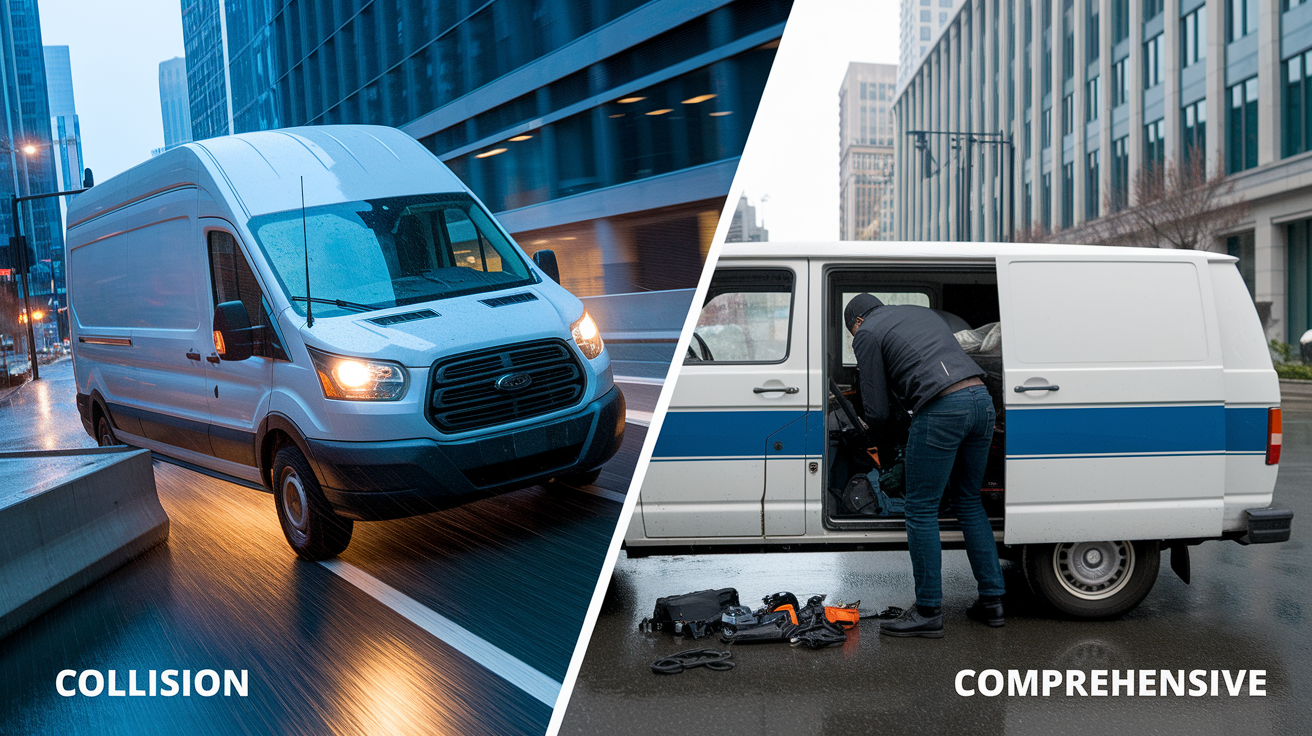
Physical damage coverage protects your business vehicles, not the other guy’s property. This splits into two parts: collision and comprehensive. Both are optional unless you’re financing or leasing the vehicle, in which case the lender requires them. Collision pays for repairs after your vehicle hits something or rolls over. Comprehensive covers almost everything else that can wreck or damage a vehicle.
Collision kicks in when your driver crashes into another vehicle, a guardrail, a building, anything solid. It also covers single-vehicle accidents like sliding off the road in snow or flipping the truck on gravel. You pay your deductible first (commonly $500, $1,000, or $2,500), then the insurer covers the rest up to the vehicle’s actual cash value. If repairs cost more than the vehicle’s worth, the insurer totals it and pays you the depreciated value minus your deductible.
Comprehensive handles losses that don’t involve a collision. Your van gets stolen overnight? Comprehensive pays to replace it. Tree branch falls on your truck during a storm, someone keys your vehicle in a lot, comprehensive steps in. This also applies to fire, flood, hail, animal strikes, broken windshields. Like collision, you pick a deductible and the insurer covers the rest.
| Coverage Type | What It Covers |
|---|---|
| Collision | Damage from hitting another vehicle, object, or rollover |
| Comprehensive | Theft, vandalism, fire, weather, falling objects, animal strikes |
| Collision | Single-vehicle accidents (sliding off road, backing into a pole) |
| Comprehensive | Glass damage (windshield cracks, broken windows) |
| Both | Subject to deductible; payout capped at actual cash value |
Medical Payments and Uninsured Motorist Coverage
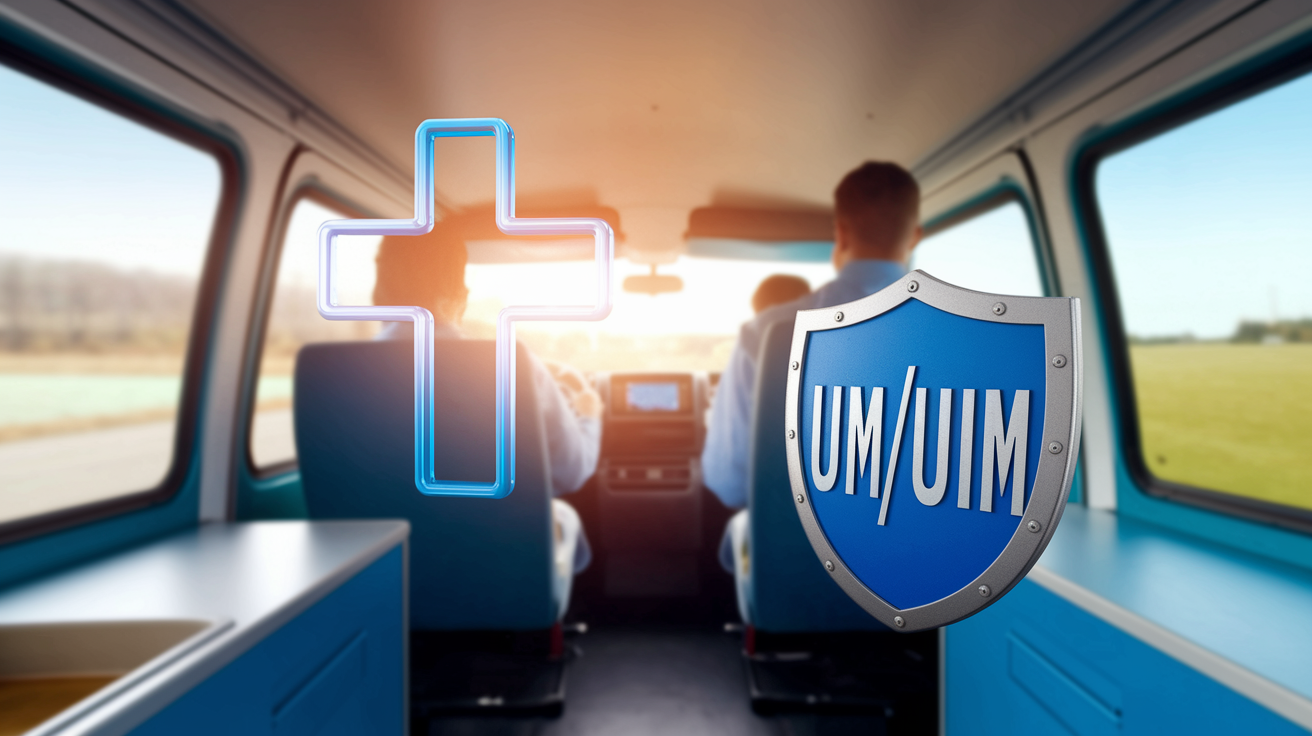
Medical payments coverage, sometimes called MedPay, takes care of medical bills for anyone injured in your vehicle, whether your driver caused the accident or not. This includes the driver, passengers, sometimes even people hurt while getting in or out. It’s no-fault coverage, meaning the insurer pays up to the policy limit without figuring out who was responsible. Typical limits run from $1,000 to $10,000 per person. Covers ambulance fees, hospital stays, surgery, X-rays, follow-up care.
Uninsured and underinsured motorist coverage protects your business when the other driver’s at fault but has no insurance or too little to cover your losses. UM pays for injuries to your driver and passengers, and in some states it also covers vehicle damage. UIM kicks in when the at-fault driver’s liability limit falls short of your actual expenses. Your driver racks up $80,000 in medical bills and the other driver only carries $25,000 in bodily injury coverage? UIM makes up the $55,000 gap up to your policy’s limit. Many states require these coverages. Even where they’re optional, you should consider them. Roughly one in eight drivers nationwide has no insurance.
Common Exclusions in Starter Commercial Auto Insurance

Starter commercial auto policies are built for typical business driving, so they exclude high-risk activities and non-business uses. Understanding what’s not covered helps you avoid claim denials and tells you when you need extra endorsements or specialized policies. Most exclusions are spelled out in the policy, but they’re easy to miss until you file a claim.
Personal use exclusions vary by insurer. Some commercial policies allow incidental personal use, like driving home from a job site. Others exclude any personal errands. If a driver uses the company van for weekend errands and has an accident, the insurer may deny the claim. Always check how the policy defines business use and whether occasional personal use is allowed.
Common exclusions in starter commercial auto insurance:
Intentional damage – any deliberate act to damage the vehicle or cause injury is never covered.
Racing or speed contests – using the vehicle in any competitive event voids coverage.
Transporting passengers for hire – ride-share, taxi, shuttle, limo services require specialized commercial policies.
Hauling hazardous materials – unless specifically endorsed, policies exclude coverage for transporting explosives, chemicals, or regulated hazardous cargo.
Wear and tear or mechanical breakdown – routine maintenance issues, engine failure, breakdowns from age or lack of upkeep are excluded. Only sudden, covered events like fire or collision damage get paid.
How Commercial Auto Insurance Differs from Personal Auto Policies
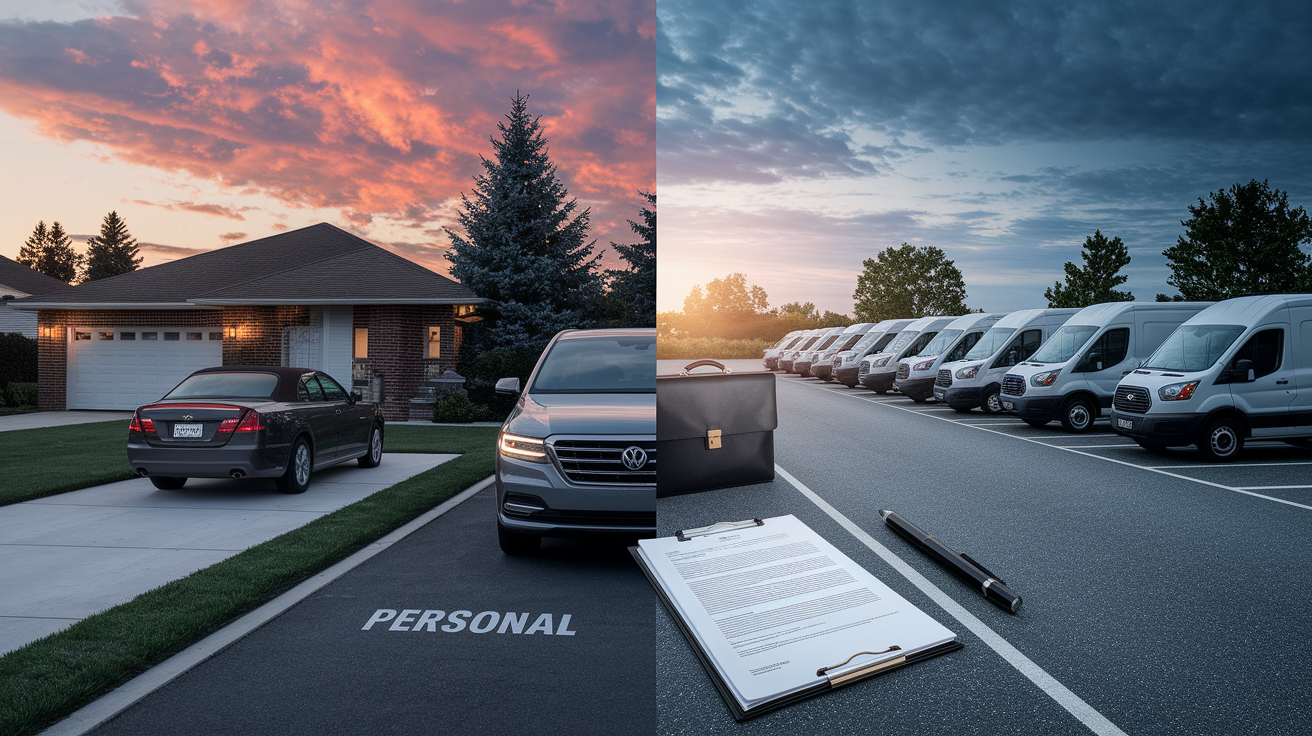
Commercial auto insurance is underwritten and priced for business exposures that personal policies don’t cover. Personal auto policies typically exclude business use beyond commuting, so driving a van full of plumbing supplies or making deliveries all day is a claim denial waiting to happen. Commercial policies are designed to handle those activities and the higher liability risks that come with them.
Coverage limits are another big difference. Personal policies often cap at $100,000 to $500,000 in liability. Commercial policies commonly start at $300,000 and go up to several million dollars. The number of drivers and vehicles also differs. Personal policies usually cover household members and a few cars, while commercial policies can list 10, 15, or more drivers and vehicles on a single policy. Claims on a commercial policy affect your business insurance record, not your personal driving history, which keeps your personal rates separate.
Key differences between commercial and personal auto insurance:
Business use is covered – commercial policies are rated for delivering goods, hauling tools, transporting clients, and other work-related driving that personal policies exclude.
Higher liability limits are standard – commercial policies commonly offer $500,000 to $1,000,000 in liability coverage, while many personal policies max out lower.
Multiple drivers and vehicles – commercial policies can cover large teams of drivers and fleets without the restrictions typical of personal auto insurance.
Hired and non-owned auto protections – commercial policies can include coverage for rented vehicles and employees’ personal cars used for work, which personal policies rarely offer.
Real-World Examples of Coverage in Action
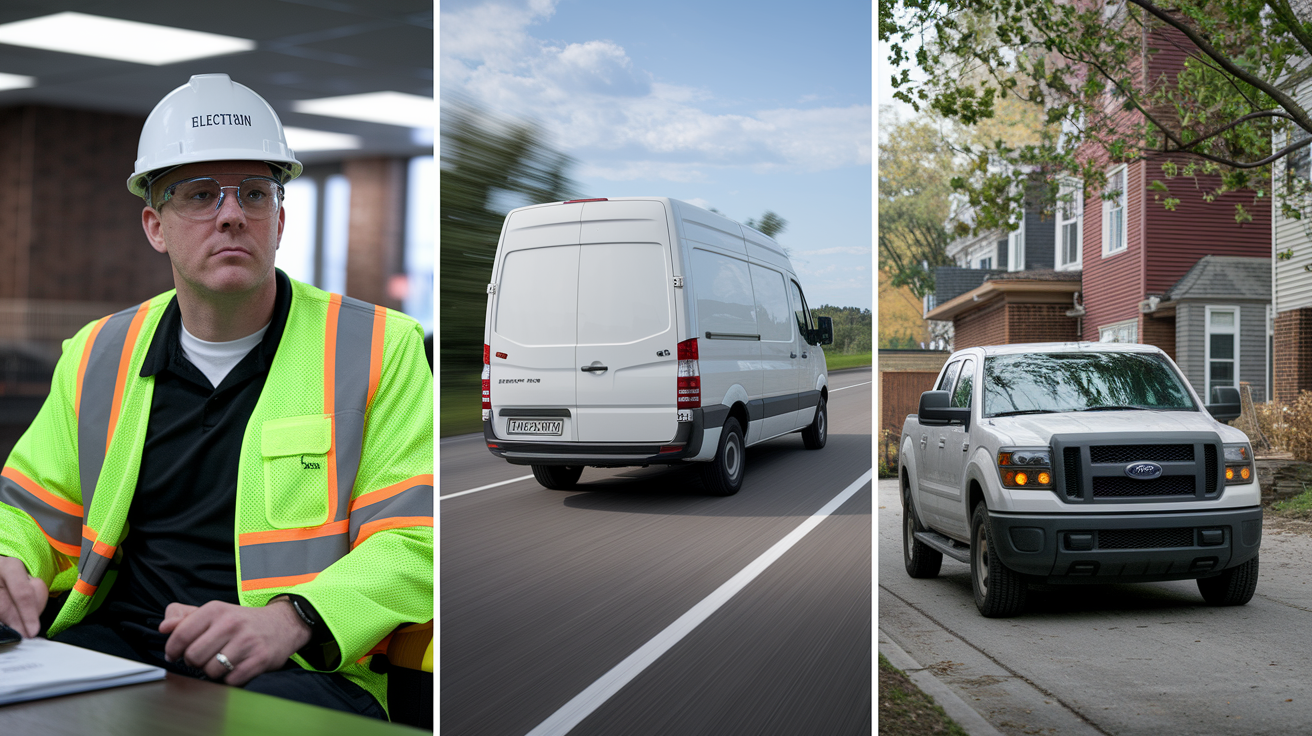
Your electrician is driving to a commercial job site when another driver runs a red light and T-bones the work van. The crash sends your employee to the hospital with a broken arm and totals the van, which was carrying $8,000 worth of wire and tools. Your commercial auto policy’s uninsured motorist coverage pays your employee’s medical bills because the other driver had no insurance. Comprehensive coverage reimburses you for the destroyed tools up to any cargo limit in your policy. Collision coverage would cover the van’s damage if you carry it, but since the other driver was uninsured, you file under your own collision with your deductible applying.
A delivery driver for your catering business backs the company vehicle into a parked car while unloading trays at an event. The impact dents the car’s bumper and cracks a taillight. Your commercial auto liability coverage pays for the other vehicle’s repairs and any diminished value claim, up to your property damage limit. If your policy includes collision coverage, it also pays to fix the dent on your van after you pay the deductible. Without commercial coverage, your business would pay out-of-pocket for both vehicles and any legal costs if the other owner sued.
Your landscape crew parks a pickup truck overnight at a job site, and someone breaks in, stealing a chainsaw, mower, and two expensive trimmers from the bed. Comprehensive coverage responds to the break-in, covering the broken window and the stolen equipment only if you added a tools and equipment endorsement or inland marine coverage. Many starter commercial auto policies exclude tools and cargo unless specifically endorsed. This scenario shows why you need to confirm exactly what your physical damage coverage includes beyond the vehicle itself.
Cost Factors for Starter Commercial Auto Insurance

Premium costs for starter commercial auto insurance vary widely based on the risks your vehicles and drivers present. Insurers evaluate how you use the vehicle, where you drive, who’s behind the wheel, and what could go wrong. A florist delivering arrangements locally in a small van will pay far less than a contractor hauling heavy equipment across state lines in a large truck.
Vehicle type and business use are two of the biggest pricing factors. A compact car used for sales calls costs less to insure than a box truck used for furniture deliveries. Transporting passengers or high-value cargo pushes premiums higher. Driving history matters too. Each driver’s record is underwritten individually, and one driver with multiple speeding tickets or an at-fault accident can increase the entire policy’s cost. Higher coverage limits and lower deductibles also raise premiums, as does operating in areas with high accident rates or vehicle theft.
The six main factors influencing starter commercial auto insurance costs:
Vehicle type and value – larger, newer, or specialized vehicles cost more to repair and replace, leading to higher premiums.
Annual mileage and radius of operation – more miles driven and wider operating areas increase accident exposure and cost.
Driver records – accidents, violations, and claims history directly affect underwriting and rates.
Coverage limits and deductibles – higher liability limits and lower deductibles increase premium. Choosing $1,000,000 liability costs more than $300,000.
Business type and cargo – hauling passengers, heavy loads, or valuable goods raises risk and premium compared to light service use.
Location and garaging – urban areas with higher crime and accident rates, and vehicles parked on the street versus in a locked garage, impact pricing.
State Minimum Requirements for Commercial Auto Insurance
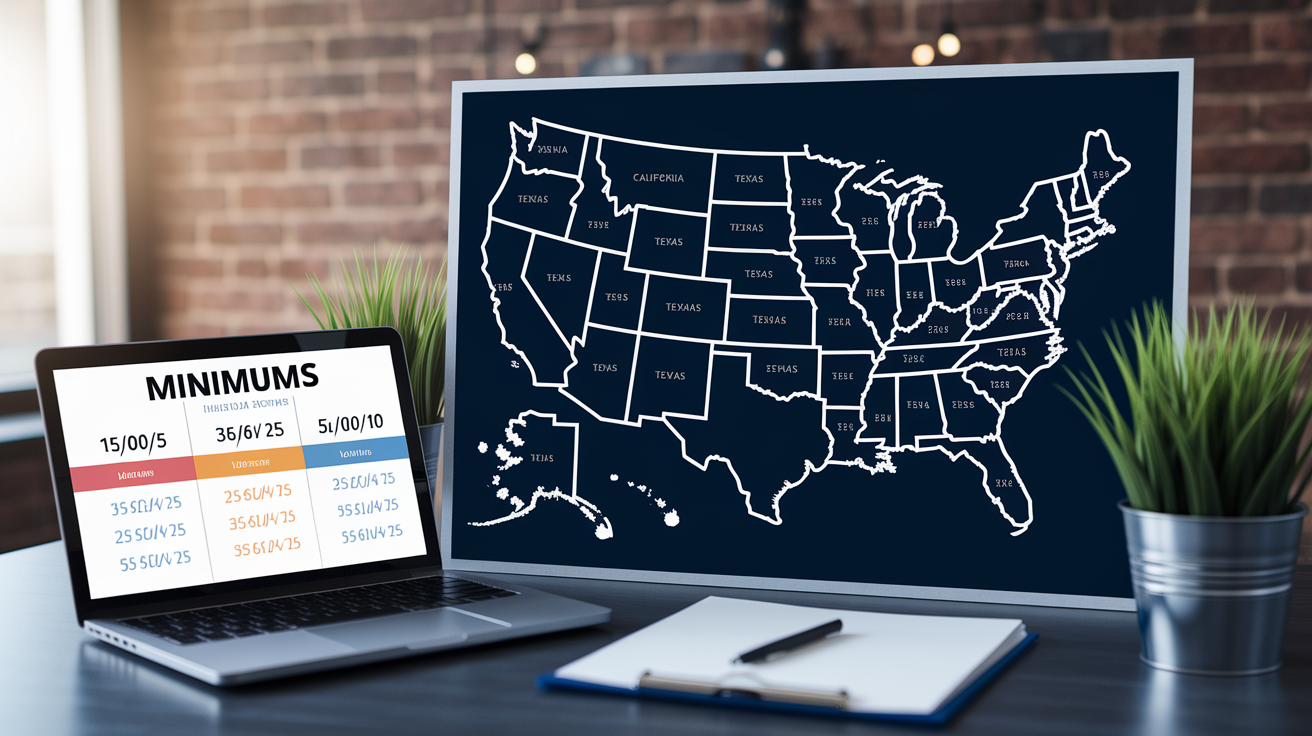
Every state sets minimum liability insurance requirements for vehicles operating on public roads, and commercial vehicles must meet or exceed those minimums. State minimums are often expressed in split-limit format, such as 25/50/25, which translates to $25,000 per person for bodily injury, $50,000 per accident for bodily injury, and $25,000 for property damage. Some states use combined single limits instead, like $50,000 per accident covering all bodily injury and property damage combined.
These minimums are just the legal floor, and they often leave businesses exposed. A single serious accident can easily exceed state minimums, putting your business assets at risk if you’re sued for the difference. Many states also require uninsured motorist coverage, and some mandate personal injury protection or medical payments depending on whether the state follows a no-fault insurance system. If your vehicles cross state lines or operate in multiple jurisdictions, you need to confirm your policy meets the highest minimum required in any state where you drive.
| State Example | Minimum Liability Requirement |
|---|---|
| California | 15/30/5 ($15,000 per person BI / $30,000 per accident BI / $5,000 PD) |
| Texas | 30/60/25 ($30,000 per person BI / $60,000 per accident BI / $25,000 PD) |
| New York | 25/50/10 plus $50,000 injury/death per person (no-fault PIP required) |
Final Words
in the action, we covered what a starter commercial auto insurance policy includes: liability, collision, comprehensive, medical payments, and uninsured/underinsured motorist protection. We also noted common exclusions, cost drivers, and state minimums.
Quick takeaway: liability pays for others’ injuries and property damage; collision and comprehensive protect your vehicle; medical and uninsured cover gaps.
If you’re asking what does starter commercial auto insurance include, it’s those core coverages plus business-specific add-ons. Check limits and state rules, and you’ll be in a much safer place.
FAQ
Q: What is covered under commercial auto insurance?
A: Commercial auto insurance covers liability for bodily injury and property damage, collision and comprehensive physical damage to your vehicle, medical payments for occupants, and uninsured/underinsured motorist protection; optional add‑ons depend on state and insurer.
Q: What is not covered in a commercial package policy?
A: A commercial package policy typically excludes intentional damage, racing, personal use in some policies, and undisclosed hired‑transport operations; check endorsements and exclusions for any industry‑specific gaps.
Q: How much does a $1,000,000 liability insurance policy cost?
A: A $1,000,000 liability policy typically costs between $800 and $4,000+ annually depending on business type, vehicle, driving records, location, and claims history; get quotes for an accurate price.
Q: What are the four most common types of commercial insurance?
A: The four most common commercial insurance types are general liability, commercial auto, property insurance, and workers’ compensation — each protects different business risks like lawsuits, vehicle losses, buildings, and employee injuries.