


Think all auto insurance quotes are the same? Think again.
A quick side-by-side auto insurance quotes comparison can save you real money and stop costly surprises.
This post shows how instant comparison tools pull dozens of offers, how to line up limits and deductibles so you compare apples to apples, and which small add-ons quietly change the price.
You’ll learn what details to have ready, the main rate drivers, and a simple step-by-step way to choose a better rate for your situation.
Instant Side‑by‑Side Auto Insurance Quote Comparison Tools

Comparing auto insurance quotes side by side is the clearest way to see which combination of price and coverage actually fits your situation. Online comparison tools pull quotes from dozens of insurers at once, and you can review annual premiums, deductibles, liability limits, and included features on a single screen. Instead of filling out the same form ten times on ten different websites, these platforms feed your information to multiple carriers and display the results in matching formats, so you can spot the differences that matter.
Most tools work by asking for a few core details and then matching you to policies in real time. You enter your ZIP code (must be 5 digits), vehicle information, driver details, and current coverage preferences, and the engine queries its network of insurers. The process takes a few minutes. You’ll get back quotes based on the same limits and deductibles you specified, so you know you’re comparing apples to apples.
Platforms that aggregate quotes typically reach 30+ insurers, and they can show average reported savings in the range of $1,007 per year for drivers who switched during recent twelve‑month periods. Many also help with the switching process by coordinating with your new insurer to cancel your old policy and request any pro‑rated refund. Keep in mind that quotes aren’t available for risks in Alaska, Florida, Hawaii, or Louisiana, and in California certain products must be obtained through a local independent agent.
| Tool Name | Number of Insurers | Quote Speed | Data Required |
|---|---|---|---|
| QuickQuote Engine | 30+ | 3–5 minutes | ZIP, VIN, driver license numbers, 5-year history |
| RateMatch Wizard | 25+ | 4–6 minutes | ZIP, vehicle details, current policy, DOB, mileage |
| InstaCoverage Pro | 35+ | 2–4 minutes | ZIP, driver history, vehicle ownership status, limits |
| CarrierConnect Hub | 28+ | 5–7 minutes | ZIP, VIN, registered owners, parking address |
| PolicyCompass Plus | 32+ | 3–5 minutes | ZIP, current coverage, driver details, vehicle make/model |
Key Factors Behind Auto Insurance Rate Differences
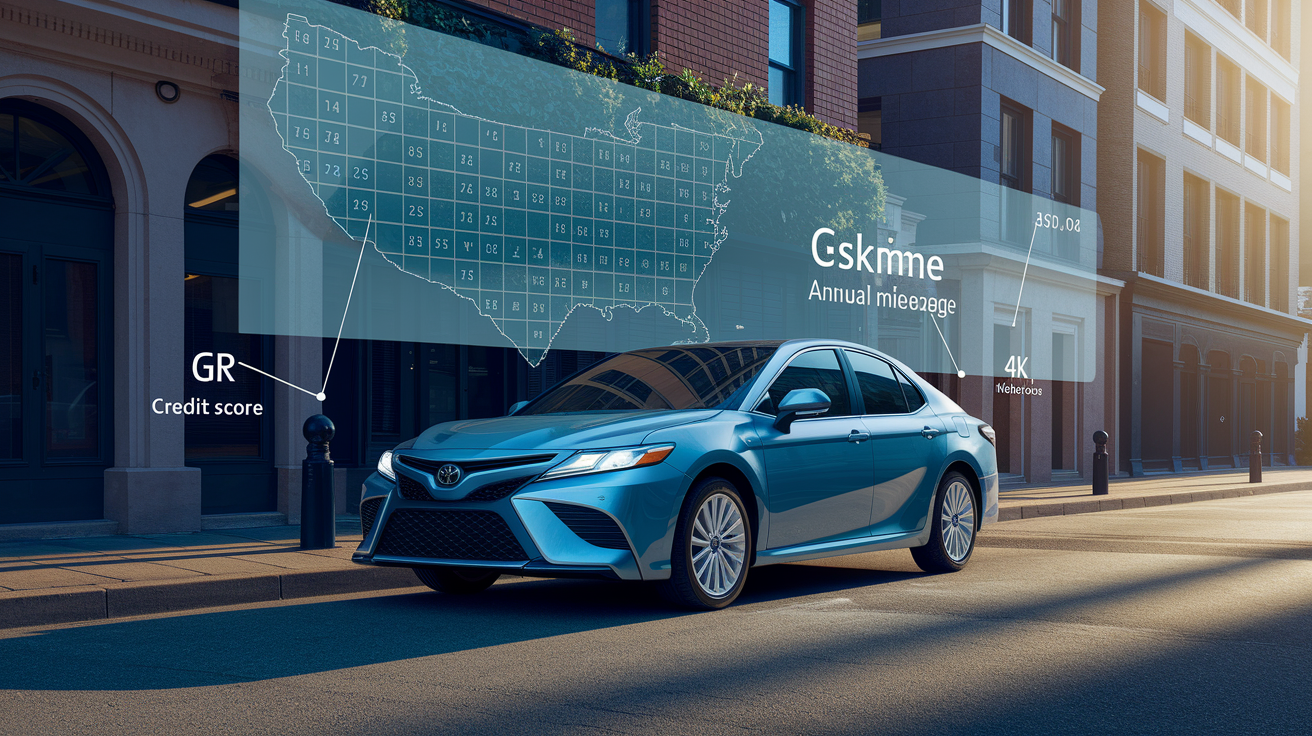
Vehicle characteristics are a major rate driver. The year, make, model, and safety features influence how much insurers expect to pay in claims. A 2023 Toyota Camry LE will cost less to insure than a high‑performance sports coupe because the repair bills and theft rates differ. Insurers price based on historical data for each vehicle type, so cars with expensive parts or low crash‑test scores can push premiums higher.
Location shapes your rate more than many people expect. Your five‑digit ZIP code determines your rating territory, and insurers factor in local accident frequency, theft rates, and repair costs. Analysis of 34,482 ZIP codes shows that in 43% of those areas the cheapest company for a 20‑year‑old driver is different from the cheapest for a 35‑year‑old. In 24%, the cheapest for a 70‑year‑old differs from the cheapest for a 35‑year‑old. Quotes also depend on where your vehicle is parked overnight. Street parking in a high‑density area carries different risk than a locked garage.
Personal rating factors include your driving history, credit‑related scores (where allowed by state law), annual mileage, and age. Insurers review up to five years of claims and violations, and a clean record earns lower rates. In 48% of U.S. ZIP codes the cheapest insurer for drivers with poor credit differs from the cheapest for drivers with good credit, though California, Hawaii, and Massachusetts prohibit using credit in pricing. Younger drivers generally pay more. For example, a 20‑year‑old may see annual full‑coverage costs around $4,734, while a 40‑year‑old with the same vehicle and record might pay $2,254 per year.
Your chosen deductible directly impacts your premium and out‑of‑pocket cost. Selecting a higher deductible (say, $1,000 instead of $500) typically lowers your monthly or annual premium because you’re taking on more of the initial loss in a claim. Conversely, a lower deductible reduces the cash you pay after an accident but increases the recurring cost of coverage. If you’re a safe driver who rarely files claims, the higher‑deductible option can save hundreds of dollars over time.
What You Need Ready Before Comparing Auto Insurance Quotes

Accurate quotes require a handful of vehicle and driver details that you probably have on hand. Start with your vehicle identification number (VIN), which locks in the exact year, make, model, body style, and safety features. You’ll also need the current mileage, annual mileage estimate, and the names of all registered owners. If your car is financed or leased, note that, because lenders usually require comprehensive and collision coverage.
On the driver side, gather the full name, date of birth, marital status, driver’s license number, and home and parking addresses for every household member who will be listed on the policy. Insurers also ask for up to five years of accident and violation history. Include dates, descriptions (at‑fault crash, speeding ticket, DUI), and any claim amounts. Having your current policy’s declarations page speeds this up. The declarations page shows your insured name, address, policy period, policy limits, deductibles, and existing coverages, so you can match those inputs when requesting new quotes.
Before you start:
VIN for each vehicle
Year, make, model, body style, and current mileage
Ownership status (financed, leased, or owned outright)
Driver’s license number for all household drivers
Full names, dates of birth, and marital status for each driver
Annual mileage estimate and primary use (commute, pleasure, business)
Parking address (if different from home address)
Five‑year accident and violation history, including dates, types, and outcomes
Coverage Types to Compare in Auto Insurance Quotes

Liability Coverage
Liability coverage pays for damage or injury you cause to others in an at‑fault accident. It splits into bodily injury (BI) and property damage (PD). Many states express minimums in shorthand like “25/50/15.” That means $25,000 bodily injury per person, $50,000 bodily injury per crash, and $15,000 property damage per crash. When comparing quotes, make sure the BI and PD limits match across carriers, because higher limits cost more but protect your assets if the crash is severe.
Collision Coverage
Collision coverage repairs or replaces your vehicle after a crash with another car or object, regardless of fault. You’ll pay a deductible before the insurance kicks in. When comparing quotes, confirm that all proposals use the same collision deductible ($500, $1,000, or another amount), so you can see true premium differences. Lenders and lessors almost always require collision coverage until the loan or lease is paid off.
Comprehensive Coverage
Comprehensive coverage handles non‑collision damage: theft, fire, vandalism, hail, animal strikes, and flooding. Like collision, it carries a deductible. A comprehensive claim doesn’t count as an at‑fault accident, but it does go on your claims history. Verify that all quotes list the same comprehensive deductible so you’re not accidentally comparing a $250 deductible policy against a $1,000 deductible policy.
Uninsured/Underinsured Motorist
Uninsured motorist (UM) and underinsured motorist (UIM) coverages protect you if you’re hit by someone with no insurance or not enough insurance to cover your losses. UM/UIM limits should match or stay close to your own liability limits. Some states require this coverage. Others make it optional. When comparing quotes, check that the UM/UIM limits are identical across proposals, because those limits affect the premium.
Medical Payments/PIP
Medical Payments (MedPay) and Personal Injury Protection (PIP) pay your medical bills and, in some states, lost wages or essential services after an accident, no matter who caused it. PIP is mandatory in no‑fault states. MedPay is optional elsewhere. Compare PIP or MedPay limits and per‑person caps across quotes. Higher limits mean higher premiums but more coverage if you’re injured.
Add‑Ons (Roadside, Rental)
Roadside assistance covers towing, flat tires, lockouts, and jump‑starts. Rental reimbursement pays a daily allowance while your car is in the shop after a covered claim. Both are inexpensive add‑ons, often $10 to $30 per year combined. When reviewing quotes, note which companies include these features automatically and which charge extra, because that small line item can shift your total annual cost.
How to Compare Auto Insurance Quotes Correctly

Start by confirming that every quote uses identical deductibles, liability limits, and coverage types. If Quote A offers $1,000 comprehensive and collision deductibles while Quote B offers $500, the premiums will differ for that reason alone, not because one carrier is cheaper. Align the numbers first. Same bodily injury limits, same property damage limits, same UM/UIM, same comp and collision deductibles. That way you’re measuring real price differences, not apples‑to‑oranges coverage gaps.
Next, look beyond the annual premium at the details that can change your out‑of‑pocket costs or coverage gaps. Check whether roadside assistance, rental reimbursement, or accident forgiveness are included or cost extra. Read the exclusions section to see what each policy does not cover. Aftermarket equipment, rideshare use, or business deliveries may require endorsements. Also review customer‑complaint ratios and financial‑strength ratings. A low premium from a carrier with poor claims service can cost you time and stress when you need help most.
Finally, consider bundling trade‑offs and discount eligibility. Some insurers offer steep multi‑policy discounts if you combine home and auto, but you may get a lower total by keeping each policy with the cheapest standalone provider. Request quotes both ways and compare the final numbers.
When comparing:
Match all coverage limits and deductible amounts first
Verify that optional add‑ons (roadside, rental, accident forgiveness) are either included or excluded consistently
Check exclusions and policy‑specific restrictions (rideshare, business use, custom parts)
Review complaint indexes and financial‑strength ratings from state regulators and AM Best
Ask about all available discounts before finalizing
Compare bundled‑policy totals against separate best‑in‑class quotes
| Feature | Quote A | Quote B | Quote C |
|---|---|---|---|
| Annual Premium | $2,000 | $2,025 | $2,250 |
| Comp/Collision Deductible | $1,000 | $1,000 | $1,000 |
| Liability Limits | 100/300/100 | 100/300/100 | 100/300/100 |
| Add-Ons | None | Decreasing deductible | Decreasing deductible + accident forgiveness |
Sample Auto Insurance Quote Examples and Driver Scenarios

Real‑world rates depend on age, driving record, vehicle type, and ZIP code. A clean‑record, 35‑year‑old driver with a 2023 Toyota Camry LE, 12,000 annual miles, good credit, and 100/300/100 liability limits might see annual full‑coverage premiums around $1,665 with one large national carrier and $4,007 with another. That shows just how much variation exists across companies. Some drivers report monthly rates as low as $40, though those typically reflect state‑minimum coverage or very favorable profiles.
Age shifts premiums substantially. A 20‑year‑old with the same vehicle and coverage may pay an average of $4,734 per year for full coverage and $1,314 per year for minimum liability‑only coverage. By age 40 that drops to $2,254 per year full coverage and $609 per year minimum. A 60‑year‑old often sees even lower rates, around $2,004 per year full coverage and $567 per year minimum, because insurers view mature, experienced drivers as lower risk.
Claims and violations push rates higher, and switching carriers often offers the only way to avoid steep surcharges. An at‑fault crash with $10,000 in property damage can raise the same 35‑year‑old’s annual full‑coverage cost to $3,443. A DUI pushes it to $4,375, and a speeding ticket 16 mph over the limit raises it to $2,981. Analysis shows that comparing quotes after these events saves money 29% of the time following a speeding ticket, 41% of the time after an at‑fault crash, and may require switching insurers in 61% of DUI cases to find the cheapest available rate.
Credit also matters where allowed. In nearly half of all U.S. ZIP codes, the cheapest company for a driver with poor credit is different from the cheapest for a driver with good credit. California, Hawaii, and Massachusetts prohibit credit‑based pricing, but in other states improving your credit score or shopping around can unlock lower premiums.
Sample scenario comparisons:
20‑year‑old, clean record, minimum coverage: average $1,314/year; full coverage average $4,734/year
35‑year‑old, clean record, good credit, full coverage: average $1,665–$4,007/year depending on insurer
40‑year‑old, clean record, minimum coverage: average $609/year; full coverage average $2,254/year
35‑year‑old, one at‑fault crash, full coverage: average $3,443/year
35‑year‑old, one DUI, full coverage: average $4,375/year; cheapest rate often requires switching carriers
Auto Insurance Discounts That Lower Quotes

Bundling home and auto policies with the same carrier is one of the most common ways to cut premiums, often saving 10% to 25% on both policies. Multi‑car discounts apply when you insure more than one vehicle under a single policy, and they can stack with bundling. Good‑student discounts reward full‑time students with a B average or better, typically reducing rates by 10% to 15% until age 25. Safe‑driver discounts recognize claim‑free periods, usually three to five years. Telematics programs (“Pay How You Drive”) track mileage, braking, and speed through a mobile app or plug‑in device, offering discounts for low‑risk behavior.
Additional discounts include anti‑theft device credits for factory or aftermarket alarms, low‑mileage discounts if you drive fewer than 7,500 or 10,000 miles per year, and defensive‑driving course credits in states that allow them. Some insurers also offer affinity or membership discounts through employers, alumni associations, or professional groups. When comparing quotes, ask each carrier to apply every discount you qualify for before finalizing the numbers. A quote that looks expensive may drop into competitive range once all credits are applied.
Common discount categories:
Bundling (home + auto): 10%–25% off both policies
Multi‑car: 10%–20% when insuring two or more vehicles
Good student: 10%–15% for students with B average or higher
Safe driver: 15%–30% for three to five claim‑free years
Telematics/Pay How You Drive: up to 30% based on monitored driving behavior
Anti‑theft device: 5%–15% for factory or aftermarket alarms
Low annual mileage: 5%–15% if under 7,500 or 10,000 miles per year
Beyond the Premium: Claims Reputation and Financial Strength in Quote Comparison

Price matters, but so does what happens when you file a claim. Insurers vary widely in how quickly they respond, how fairly they settle, and how often policyholders complain to state regulators. One common rating methodology weighs financial strength at 30%, consumer complaints at 30%, ease of use at 20%, and affordability at 20%, giving equal importance to service quality and cost. J.D. Power satisfaction surveys also measure claims settlement speed, adjuster responsiveness, and overall policyholder experience, and those scores can help you choose between two similarly priced quotes.
The NAIC complaint index aggregates complaints filed with state insurance departments from 2021 through 2023, weighted by each carrier’s market share. A complaint ratio above 1.0 means the insurer received more complaints than expected for its size. Below 1.0 means fewer. When comparing quotes, look up each carrier’s complaint index and AM Best financial‑strength rating to confirm the company can pay claims and treats customers fairly.
A few hundred dollars in annual savings won’t feel like a win if your claim drags on for months or the insurer disputes coverage on a technicality. Balance the premium against reputation, especially if your vehicle is financed, leased, or represents a significant portion of your net worth. You’re buying peace of mind as much as a contract.
Where to Get Auto Insurance Quotes: Agents, Comparison Sites, or Direct Insurers?

Direct Insurers
Calling or visiting an insurer’s website lets you customize every detail and ask questions in real time. You control the conversation, and many carriers offer online calculators that show how adjusting your deductible or coverage limits changes the premium instantly. The downside is repetitive data entry if you want quotes from five or six companies. Some insurers sell only through agents, so you can’t access them directly.
Comparison Sites
Online comparison platforms save time by feeding your information to multiple insurers at once and displaying results side by side. You fill out one form instead of ten, and you can filter by price, coverage, or customer rating. The trade‑off is that these sites may share your contact information with insurers, leading to follow‑up calls or emails. Not every carrier participates in every comparison engine, so you might miss regional or specialty insurers that offer better rates for your profile. Final pricing sometimes requires clicking through to the insurer’s own site to complete underwriting.
Independent Agents
Independent agents and brokers represent multiple companies and can quote regional carriers that don’t appear on national comparison sites. They offer personalized advice and handle paperwork, renewals, and claims on your behalf. Some agents charge fees. Others earn commissions from the insurers. The limitation is that each agent works with a specific roster of companies, so you may need to contact two or three agents to cover the full market. In California certain products must be obtained through a local independent agent, and quotes for risks in Alaska, Florida, Hawaii, and Louisiana are generally unavailable through online platforms.
How Often to Compare Auto Insurance Quotes and When to Switch

Shopping for quotes at least once per year makes sure you’re not overpaying as rates change. Insurers adjust pricing frequently based on claims trends, repair costs, and competitive pressure. A carrier that was cheapest last year may no longer hold that spot. Analysis shows that drivers who don’t compare could overpay by an average of $4,914 per year, so an annual review is worth the time even if you’ve been happy with your current insurer.
Major life events are also triggers to re‑shop. Adding a teen driver, buying a new or different vehicle, getting married, moving to a new ZIP code, or experiencing a claim or violation all shift your risk profile and can change which carrier offers the best rate. Quotes are estimates until the insurer finalizes underwriting and collects additional data, so get fresh quotes after any of these changes to confirm you’re still in the right place.
Re‑shop when:
Annual renewal approaches
You add or remove a driver (teen, spouse, household member)
You purchase, lease, or sell a vehicle
You move to a new address or ZIP code
You file a claim or receive a ticket or violation
Your credit score improves significantly (in states that allow credit‑based pricing)
Final Words
Match coverages and deductibles across quotes, use instant side-by-side tools, and check claims reputation before you pick a policy.
Gather your VIN, driver details, and the declarations page so comparisons are accurate. Choose comparison sites, direct insurer portals, or an independent agent depending on how much help you want.
A careful auto insurance quotes comparison turns confusing numbers into clear choices. Do this once a year or after major changes—and you’ll likely find a better fit and real savings.
FAQ
Q: What is the best site to compare car insurance quotes?
A: The best site to compare car insurance quotes is one that matches you with 30+ insurers, shows side-by-side coverages and identical deductibles, uses your 5-digit ZIP, and helps you switch for a better price.
Q: Who generally has the cheapest auto insurance?
A: Cheapest auto insurance generally goes to low-risk drivers: clean driving records, older age ranges, low annual mileage, higher deductibles, and living in low-cost ZIP codes; the cheapest carrier varies by location and age.
Q: How to get the best quote for auto insurance?
A: To get the best quote for auto insurance, gather your VIN and declarations, request identical limits and deductibles across quotes, use a multi-carrier comparison tool, ask about discounts, and compare yearly.