


You might be wasting money on full coverage if your car is nearly worthless.
If you’re leasing or financing, your lender will require comprehensive and collision.
If you own the car and it’s worth under about $3,000–$5,000, starter (liability-only) often makes more sense.
A simple rule: if full coverage costs more than roughly 10% of your car’s value each year, consider starter and save the difference for repairs.
So: financed or high value = comprehensive; low value and a solid emergency fund = starter.
Choosing Between Starter and Comprehensive Insurance: Your Direct Answer
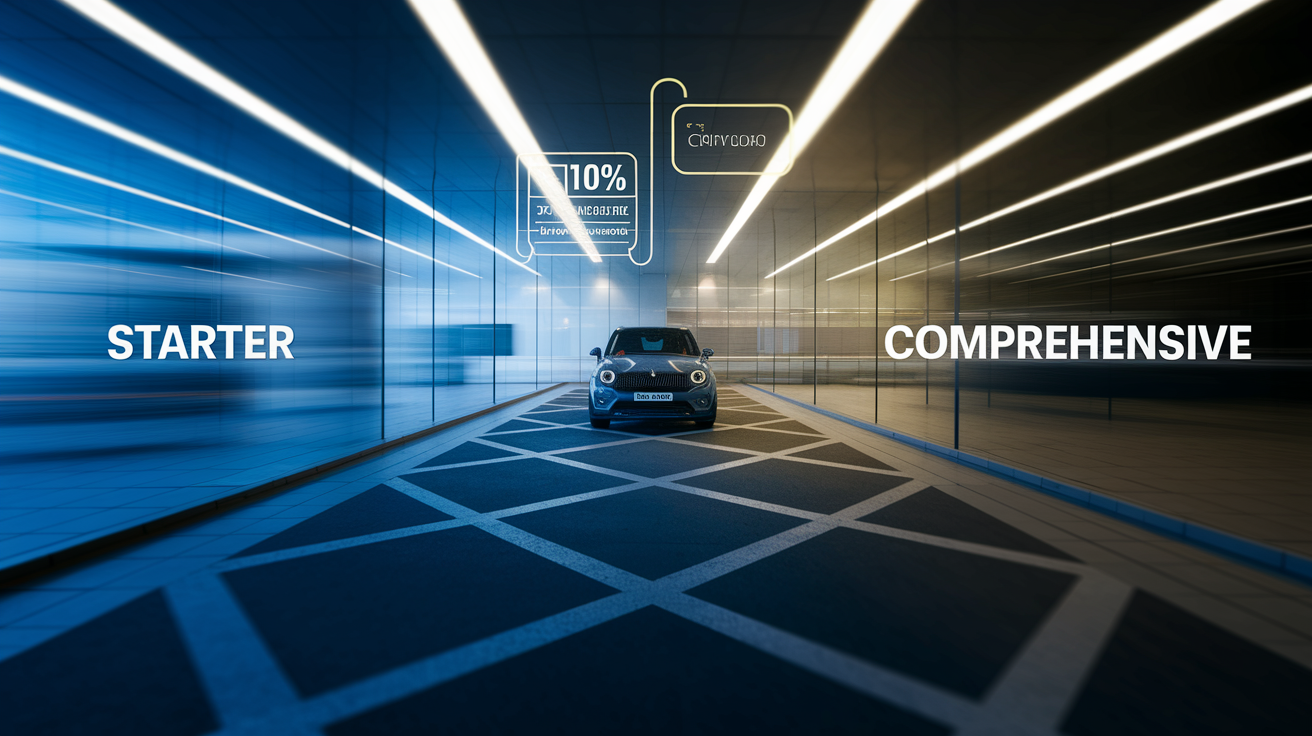
If you’re financing or leasing, you need comprehensive insurance plus collision. Your lender won’t let you skip it. If you own your car outright and it’s worth under $3,000 to $5,000, starter insurance (just liability) usually makes more sense. The big question is whether what you’re paying annually for comprehensive and collision adds up to more than about 10% of what your car’s actually worth. Cross that 10% line and most people do better with starter coverage, then just sock away savings for repairs or replacement.
The cost gap is real. Tacking comprehensive and collision onto a liability policy typically bumps your annual premium $400 to $1,200 or more, depending on your car, where you live, and your driving record. Got a $7,500 car and full coverage runs you $900 a year? That’s past the 10% threshold ($750), so starter coverage starts looking smart. But a newer $30,000 financed ride with a $1,600 annual premium? That protects the lender’s collateral and your equity, so comprehensive is essential.
Quick cues to sort this out:
- Financed or leased: comprehensive and collision aren’t optional.
- Car value under $3,000: starter insurance almost always wins.
- Car value $3,000 to $5,000: run the 10% math and check your emergency fund.
- Car value above $15,000: keep comprehensive unless you can cover replacement without blinking.
- Emergency fund equals replacement cost minus deductible: starter coverage gets safer.
- High theft ZIP or severe weather area: comprehensive protects against elevated local risk even on mid value cars.
Deductibles shape what you’re on the hook for. With a $1,000 deductible on a comprehensive claim for a stolen $8,000 car, you’ll get roughly $7,000 from your insurer (less depreciation). Can’t absorb that $1,000 deductible plus the potential loss of a totaled vehicle? Comprehensive provides crucial protection. If your savings can cover both the deductible and a replacement without strain, starter insurance keeps more money in your pocket every year.
Understanding Starter Insurance (Liability-Only Coverage)

Starter insurance covers bodily injury and property damage you cause to other people and their stuff. The most common state minimum liability structure is 25/50/25: $25,000 per person for bodily injury, $50,000 per accident for total bodily injury, and $25,000 for property damage. Lots of insurers also offer higher voluntary limits like 50/100/50 or 100/300/100, which give you stronger protection if you cause a serious wreck but still don’t pay to fix your own car.
Starter coverage excludes all damage to your own car, no matter how it happens. Collide with another vehicle, hit a deer, roll your car, suffer hail damage, get your vehicle stolen? A liability policy pays nothing toward repairs or replacement. The policy meets legal requirements to drive in most states, but it puts the entire financial burden of your own vehicle loss on you. This exclusion makes starter insurance the cheapest option and appropriate mainly for older, low value vehicles where potential payout after a deductible would be tiny.
What Comprehensive Insurance Covers Compared to Starter Coverage

Comprehensive insurance is the piece of full coverage that handles non collision losses to your vehicle. It’s usually sold alongside collision coverage, and together they form what most people call “full coverage.” Comprehensive pays for damage from a wide range of unpredictable events that have nothing to do with how you drive. It fills the gap that starter insurance leaves open, protecting your car’s value against perils outside your control.
Covered perils under a typical comprehensive policy:
- Theft of the entire vehicle or parts.
- Vandalism, graffiti, malicious damage.
- Fire or explosion.
- Flood, hurricane, water damage.
- Hail or falling ice.
- Falling objects like tree branches or debris.
- Collision with an animal (hitting a deer is the most common comprehensive claim).
Comprehensive policies require you to pick a deductible, commonly $250, $500, or $1,000. Higher deductible lowers your premium but increases what you pay out of pocket when you file a claim. Some insurers waive the deductible entirely for glass repair (a cracked windshield claim may cost you $0 or just a small separate glass deductible). Weather related claims tend to cluster during severe seasons, and insurers track claim frequency by ZIP code, which can influence local premiums even if you’ve never filed.
Comparing Starter vs Comprehensive Insurance Features Side-by-Side

A direct comparison shows how each type of coverage operates and where the cost and protection trade-offs land.
| Coverage Type | Coverage Structure | Cost Range (Annual) | Ideal Use Case |
|---|---|---|---|
| Starter (Liability-Only) | Pays third-party injury/property damage only; no coverage for your vehicle | $400–$900 (varies widely by state and driver) | Older paid-off cars under $3,000–$5,000; drivers with emergency funds |
| Comprehensive | Covers theft, vandalism, weather, animals, fire; requires deductible | +$100–$400 on top of liability-only | Mid to high value vehicles; high theft or severe weather locations |
| Collision | Covers crash damage to your car regardless of fault; requires deductible | +$200–$600 on top of liability-only | Financed/leased vehicles; newer or expensive cars |
Full coverage (comprehensive plus collision) typically costs 30% to 60% more than liability alone, translating to an extra $400 to $1,200 or more each year for many drivers. That range is wide because premiums depend heavily on vehicle make, model, year, local repair costs, theft rates, and your personal driving record. The decision to pay that extra amount hinges on whether the annual premium stays a small fraction of your vehicle’s value and whether you can afford the financial shock of losing the car without insurance help. When the math tips toward premiums exceeding reasonable protection value, starter coverage becomes the rational default and you self-insure by saving the premium difference in an emergency fund.
Factors That Determine Whether You Need Starter or Comprehensive Coverage

Vehicle value is the single most important number in this decision. Use Kelley Blue Book or NADA to find your car’s current private party or trade in value, then apply the 10% rule: if your annual comprehensive and collision premium is more than 10% of that value, you’re probably paying too much for coverage relative to the maximum benefit you could receive. A $6,000 car with $700 annual full coverage cost sits right on the edge ($600 would be 10%), so personal risk tolerance and emergency savings determine which way you lean.
Driving environment and location introduce risk factors that shift the balance. Urban ZIP codes with higher theft rates, areas prone to hail or flooding, and regions with dense deer populations all raise the likelihood of a comprehensive claim. If you park on the street overnight in a high crime neighborhood, comprehensive coverage protects against a break in or stolen catalytic converter even if your car’s book value is modest. A garaged vehicle in a low crime suburb with stable weather faces lower non collision risk, making starter insurance more viable.
Financial risk tolerance and available savings define how much loss you can absorb without insurance. Losing your $8,000 car would leave you unable to buy a replacement and get to work? Comprehensive coverage is worth the premium. If you’ve got $10,000 in accessible savings earmarked for emergencies, you can self-insure by carrying starter coverage and replacing the vehicle out of pocket if needed.
Five variables to evaluate:
- Age and depreciation of the vehicle (older cars lose value faster, reducing the benefit of full coverage).
- Outstanding loan or lease balance (lenders require comprehensive and collision until the loan is paid off).
- Annual mileage and commute distance (higher exposure increases accident and comprehensive claim probability).
- Local theft, vandalism, and weather risk (ZIP code claim data influences both premiums and the value of coverage).
- Driver profile, including age, violations, and prior claims (young or high risk drivers pay more for all coverage types, raising the cost benefit threshold).
Pros and Cons of Choosing Comprehensive vs Starter Insurance

Starter insurance delivers the lowest possible premium and meets state legal minimums, which appeals to budget conscious drivers and those with older vehicles. The money you save by skipping comprehensive and collision can go into an emergency fund or other financial priorities. Your car gets stolen or totaled? You bear the full replacement cost. But for a $2,500 vehicle that risk may be manageable and cheaper over time than paying premiums year after year.
Comprehensive coverage reduces your financial exposure to unpredictable events and protects the equity you’ve built in a newer or financed vehicle. When a hailstorm dents your hood and roof, or a thief breaks your window and steals electronics, your insurer handles the repair bill minus your deductible. That peace of mind and financial backstop cost extra every month, and the deductible means you still pay the first $500 or $1,000 of any claim.
Pros of comprehensive coverage:
- Protects vehicle value against theft, weather, vandalism, and animal strikes.
- Required by lenders, preserving your ability to finance or lease.
- Limits out of pocket expense after a total loss to the deductible amount.
- Provides financial stability if your car is your only transportation and you can’t afford sudden replacement.
Cons of comprehensive coverage:
- Raises annual premium by hundreds of dollars compared to starter insurance.
- Requires paying a deductible before the insurer contributes.
- May deliver little net benefit if vehicle value is low relative to premium cost.
- Claim history can lead to modest rate increases even for no fault comprehensive events.
Pros of starter coverage:
- Lowest premium available while meeting legal driving requirements.
- Suitable for older, low value vehicles where repair costs approach or exceed book value.
Cons of starter coverage:
- Zero payout if your car is damaged, stolen, or totaled.
- Leaves you fully responsible for replacement cost, which can be a severe financial shock.
Practical Cost Examples That Show When Each Coverage Makes Sense

A new $30,000 financed sedan might cost $700 per year for liability only insurance but $1,600 per year for full coverage (comprehensive, collision, and liability). The $900 annual difference buys protection for a high value asset and satisfies the lender’s collateral requirement. If the car is totaled in a flood, the insurer pays the actual cash value minus your $1,000 deductible, covering most or all of your loan balance depending on depreciation and gap insurance.
| Scenario | Vehicle Value | Annual Full-Cover Cost | Recommended Choice |
|---|---|---|---|
| New financed car | $30,000 | $1,600 | Keep comprehensive + collision (required and protects equity) |
| Mid value paid-off car | $7,500 | $900 | Consider dropping (10% rule: $900 > $750 threshold) |
| Old paid-off car | $2,500 | $600 | Drop full coverage (premium approaches potential payout) |
Break even math helps clarify the decision. Multiply your annual comprehensive and collision premium by the number of years you plan to keep the car, then compare that total to the vehicle’s current value minus your deductible. For a $5,000 car with a $1,000 deductible, the maximum insurer payout is $4,000. If your premium is $600 per year and you keep the car five years, you’ll pay $3,000 in premiums for up to $4,000 in coverage. That’s reasonable. If the premium is $900 per year, you’ll pay $4,500 over five years, which exceeds the maximum benefit, suggesting starter coverage is smarter.
Deductible choices shift the math. Raising your deductible from $500 to $1,000 typically cuts your comprehensive and collision premium by 10% to 25%, saving $100 to $300 annually. That saving accumulates, but it also means you pay more out of pocket when a claim happens. File a comprehensive claim once every five years? The higher deductible costs you an extra $500 at claim time but saves you $500 to $1,500 in cumulative premiums, often making the higher deductible the better long term bet.
When Starter Insurance Is Sufficient and When It Isn’t

Starter insurance works well when your vehicle’s market value is low, you have savings set aside for unexpected repairs or replacement, and you’re not required by a lender to carry full coverage. A 12 year old sedan worth $2,800 with no loan and a clean title is a textbook case for liability only coverage. Car gets stolen or totaled? You lose $2,800 minus whatever you would have paid in deductibles and future premiums, and you replace it with another inexpensive used vehicle using money you saved by skipping comprehensive.
Starter coverage becomes risky when your car represents a significant portion of your net worth, when you rely on it daily for work, or when you don’t have accessible savings to cover a sudden total loss. A $12,000 vehicle that you need to commute 40 miles each way is too valuable and too essential to leave unprotected. One comprehensive claim (a tree falls on your car during a storm) could cost you the full $12,000 if you’re carrying only liability insurance, and finding replacement transportation on short notice without insurance help creates financial and logistical stress.
Four clear situations:
- Vehicle worth less than $3,000 and you own it outright: starter insurance is almost always the right financial choice.
- Vehicle financed or leased at any value: you must carry comprehensive and collision until the loan is satisfied.
- Vehicle worth $5,000 to $15,000 and you have less than $5,000 in emergency savings: keep comprehensive to avoid unaffordable out of pocket loss.
- Vehicle worth over $15,000 or relatively new (under three years old): comprehensive protects significant equity and hedges against rapid depreciation after a total loss event.
How Deductibles, Excesses, and Out-of-Pocket Costs Affect Your Decision
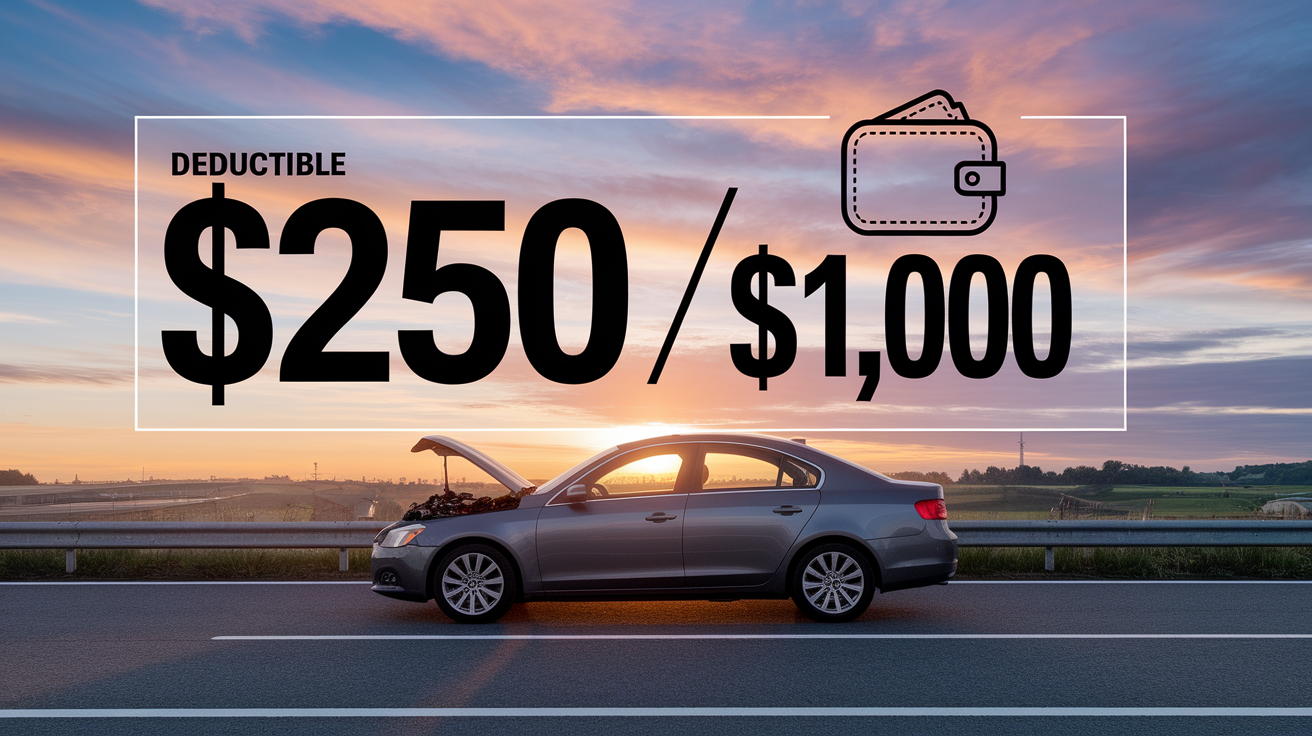
Your deductible is the amount you pay before your insurer contributes a dollar toward a covered claim. Choosing a $250 deductible means lower out of pocket cost when you file, but it raises your premium because the insurer expects to pay more on each claim. A $1,000 deductible cuts your premium by 10% to 25% on the comprehensive and collision portions, but it also means you’re responsible for the first $1,000 of every claim, which can sting if you file multiple times in a short period.
The premium versus deductible tradeoff rewards drivers who rarely file claims. Go years without a comprehensive or collision claim? The money saved by carrying a higher deductible adds up and exceeds the extra $500 or $750 you’d pay out of pocket when a claim finally happens. File a claim every year? A lower deductible spreads your cost more evenly across premiums and out of pocket expenses, though frequent claims will also drive your premium higher over time.
Five key points about deductibles and out of pocket cost:
- Comprehensive deductibles apply per claim, so two separate hail events in one year mean two deductibles.
- Glass claims sometimes carry a separate lower deductible or are waived entirely, making windshield repair or replacement cheaper than other comprehensive claims.
- Raising your deductible from $500 to $1,000 saves you money every year you don’t file, building a buffer in your bank account.
- If your emergency fund can comfortably cover a $1,000 surprise expense, choose the higher deductible and pocket the premium savings.
- When vehicle value minus deductible is very small (a $3,500 car with $1,000 deductible leaves only $2,500 maximum payout), the coverage delivers limited benefit.
Steps to Decide If You Need Starter or Comprehensive Insurance

A structured decision process prevents both overpaying for coverage you don’t need and under insuring a vehicle you can’t afford to replace. Start by gathering the facts: your car’s current market value, the cost of liability only versus full coverage from at least two insurers, your loan or lease requirements, and your available emergency savings. With those numbers in hand, you can apply the rules and thresholds that match your situation instead of guessing or buying coverage based on habit.
Comparing quotes across multiple insurers often reveals $200 to $600 annual price differences for identical coverage limits and deductibles. One company may specialize in high risk drivers and charge you more, while another offers bundling discounts or values your clean record differently. The effort to gather three personalized quotes takes less than an hour and directly answers whether you’re paying a competitive rate for the coverage you’re considering.
Decision checklist (follow these six steps):
- Determine your vehicle’s current market value using Kelley Blue Book, NADA, or recent comparable sales in your area.
- Calculate 10% of that value to establish the annual premium threshold where dropping comprehensive and collision makes financial sense.
- Verify whether your lender or leasing company requires comprehensive and collision coverage (check your loan or lease agreement or call the lender).
- Request quotes for liability only and for full coverage (with your preferred deductible) from at least two insurers.
- Subtract the liability only premium from the full coverage premium to isolate the annual cost of comprehensive and collision, then compare that cost to the 10% threshold and to your vehicle’s value minus deductible.
- Review your emergency fund balance and confirm you can cover a total vehicle loss (value minus any remaining loan balance) if you choose starter coverage, or confirm you can pay the deductible if you choose comprehensive and a claim occurs.
Final Words
Deciding between starter and comprehensive starts with who you are and what you drive. This post walked you through liability-only basics, what comprehensive protects against, cost differences, and practical examples to make the choice clearer.
Key rules to remember: lenders often require full coverage on financed cars. Use the 10% rule and the $3,000–$5,000 vehicle-value guideline to see if full coverage still makes sense.
If you’re still asking “do i need starter or comprehensive insurance”, follow the checklist, compare quotes, and weigh deductibles versus risk. You’ll land on the right fit.
FAQ
Q: When should you not get comprehensive insurance?
A: You should not get comprehensive insurance when your car’s value is low (about $3,000–$5,000), the premium exceeds roughly 10% of vehicle value, or you can comfortably self-insure likely losses.
Q: Is it worth getting fully comprehensive car insurance, and do I need both comprehensive and third party insurance?
A: Getting fully comprehensive car insurance is worth it when your car is new, financed, costly to repair, or at higher theft/weather risk; you generally don’t need a separate third-party policy because comprehensive usually includes liability.
Q: Is it better to have a $500 deductible or $1000?
A: Choosing a $500 or $1,000 deductible depends on your cash buffer and claim tolerance: $1,000 lowers premiums but raises out‑of‑pocket risk; choose $500 if you prefer smaller immediate costs.