
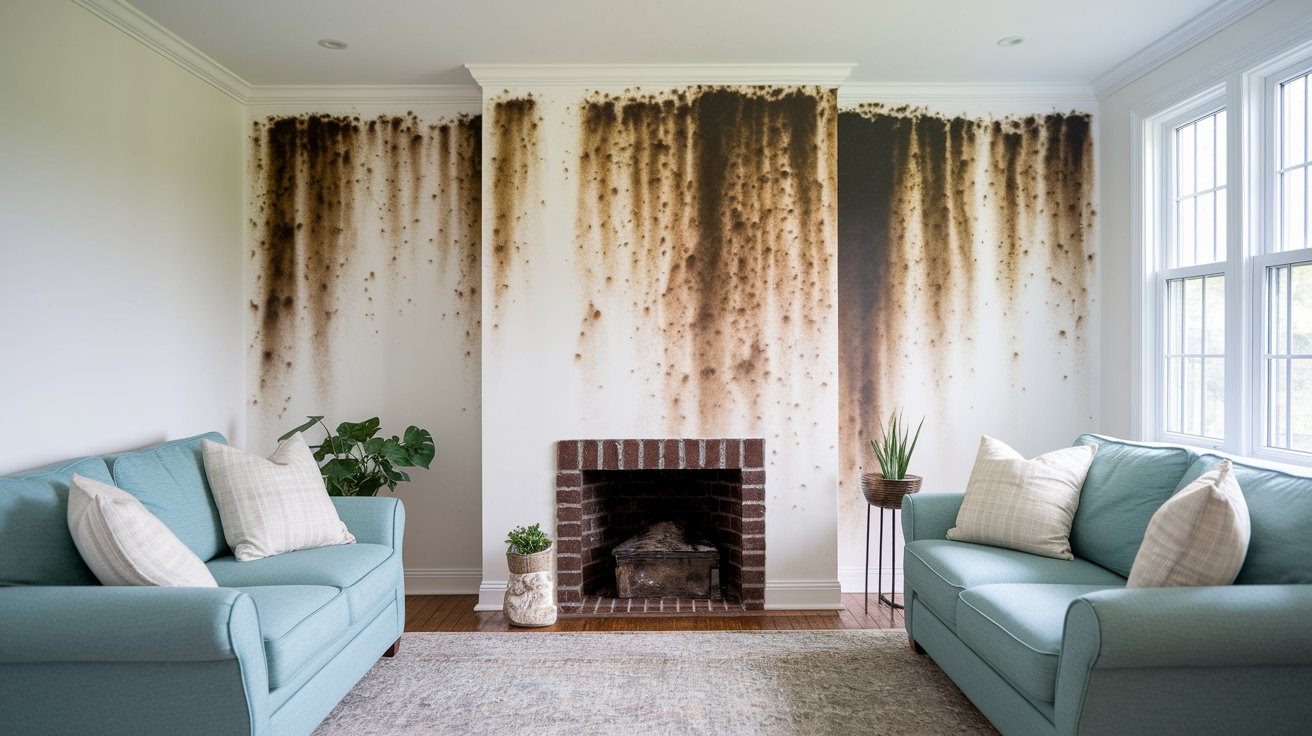


Think your homeowners policy will always cover mold?
Short answer: sometimes.
Insurers pay only when mold grows after a sudden, covered water event, a burst pipe, storm roof leak, or appliance failure, and they usually deny claims for long-term leaks, high indoor humidity, poor ventilation, or flood damage unless you bought extra protection.
Read on to learn what counts as sudden, what proof insurers want, typical coverage caps, and the smart questions to ask at renewal.
Mold Coverage Explained: When Homeowners Policies Pay for Mold Damage

Homeowners insurance covers mold damage only when it comes from a sudden, accidental event that’s already covered. The clearest example? A pipe bursts behind your bathroom wall on a Tuesday afternoon, water floods the space, and mold starts growing within days. If the water event itself is covered and the mold is a direct result, your policy will typically pay for cleanup up to whatever limit applies.
Mold from ongoing leaks, high humidity inside your home, poor ventilation, or flooding doesn’t make the cut. Insurers treat these situations as maintenance problems or excluded events, and claims get denied when the source was preventable or built up over time.
Most policies that do cover mold put caps on it, usually somewhere between $1,000 and $10,000. If your home needs serious remediation or you’re in a moisture heavy climate, you might need to buy a mold endorsement or higher limit to actually protect yourself.
Covered Mold Damage Scenarios Under Homeowners Insurance

Insurers look at every mold claim by piecing together what happened with the water. Adjusters want proof that the water intrusion was sudden and unexpected, not a slow drip you ignored for months. Time stamped photos, plumber invoices, and written notes about when you found the problem all help show that the loss fits the policy’s definition of “sudden and accidental.”
When the cause checks out, insurers usually approve cleanup for the mold that grew as a direct result. They may also cover the cost to repair or replace materials damaged by both the water and the mold. Your deductible and any mold sublimit still apply.
Common covered scenarios include:
- Sudden pipe rupture. A supply line cracks inside a wall and sends water into living areas, triggering mold growth within 48 hours.
- Storm created roof damage. High winds tear off shingles during a storm, rainwater enters the attic, and mold appears on ceiling joists and insulation.
- Accidental appliance discharge. A washing machine hose bursts and floods the laundry room, soaking drywall and subflooring that later develop mold.
- HVAC drain pan overflow. A clogged drain line causes the air handler pan to overflow suddenly, saturating the closet and adjacent rooms.
- Water heater failure. The tank splits open without warning, releasing dozens of gallons into the basement and creating conditions for rapid mold growth.
Excluded Mold Damage and Common Policy Limitations

Long term water intrusion is the biggest reason for mold claim denials. A dripping shower pan that leaks for six months, a roof with missing shingles you never fixed, or a basement that seeps moisture every spring all get classified as maintenance problems. Policies exclude damage from wear and tear, deferred maintenance, or conditions you knew about and didn’t fix.
Mold from high indoor humidity, condensation on windows, or poor ventilation in bathrooms and kitchens also falls outside coverage. Insurers say these conditions are preventable through routine home care. Running exhaust fans, using dehumidifiers, monitoring moisture levels. When adjusters find chronic dampness or evidence that mold existed before the claimed event, the claim typically gets rejected.
Flood related mold requires separate flood insurance through the National Flood Insurance Program or a private flood carrier. Standard homeowners policies don’t cover rising water, storm surge, or overland flooding, and any mold that grows after a flood event is excluded too. Same goes for mold from sewer or sump pump backup. That’s excluded unless you’ve purchased a water backup endorsement that explicitly adds this protection.
Final Words
We started by saying mold is covered only when it follows a sudden, accidental covered water event. The post showed how insurers check timing and cause, and gave covered examples like burst pipes and appliance failures.
We also explained what’s usually excluded: long-term leaks, humidity, flood-related mold, and damage from deferred maintenance. Many policies limit mold payouts, so extra coverage or endorsements may be needed.
If you’re still asking does homeowners insurance cover mold damage, remember it’s sometimes yes, often no. Check your policy, ask about sublimits or riders, and fix leaks quickly so you’re protected.
FAQ
Q: What is an example of a mold claim?
A: An example of a mold claim is when mold grows after a sudden pipe burst that soaked walls, and the homeowner files with the insurer for remediation and repairs, proving the water event was accidental and covered.
Q: What kills 100% of black mold?
A: Nothing reliably kills 100% of black mold during routine home treatments; professional remediation plus eliminating the moisture source and removing contaminated materials is the usual way to fully eliminate mold and spores.
Q: Does insurance pay if I have mold in my house?
A: Insurance pays for mold only when it’s caused by a sudden, accidental, covered event, like a burst pipe; mold from long-term leaks, humidity, or floods is usually excluded unless you have specific flood or add-on coverage.
Q: How long does it take for mold to spread in walls?
A: Mold can start growing within 24 to 48 hours on damp wall materials; noticeable spread through wall cavities often takes days to weeks, depending on how long moisture persists and promptness of repairs.