


Think your employer health plan covers everything?
Many people assume that, then face a surprise bill.
Group health coverage pools employees to lower premiums, but it also sets rules about who qualifies, what doctors you can use, and how much you pay.
Employers pick plan types, share premiums, and handle enrollment windows.
This guide explains the real benefits, typical costs, and how group plans work so you can pick the right option and avoid common mistakes.
Understanding How Group Health Coverage Works for Employers and Employees
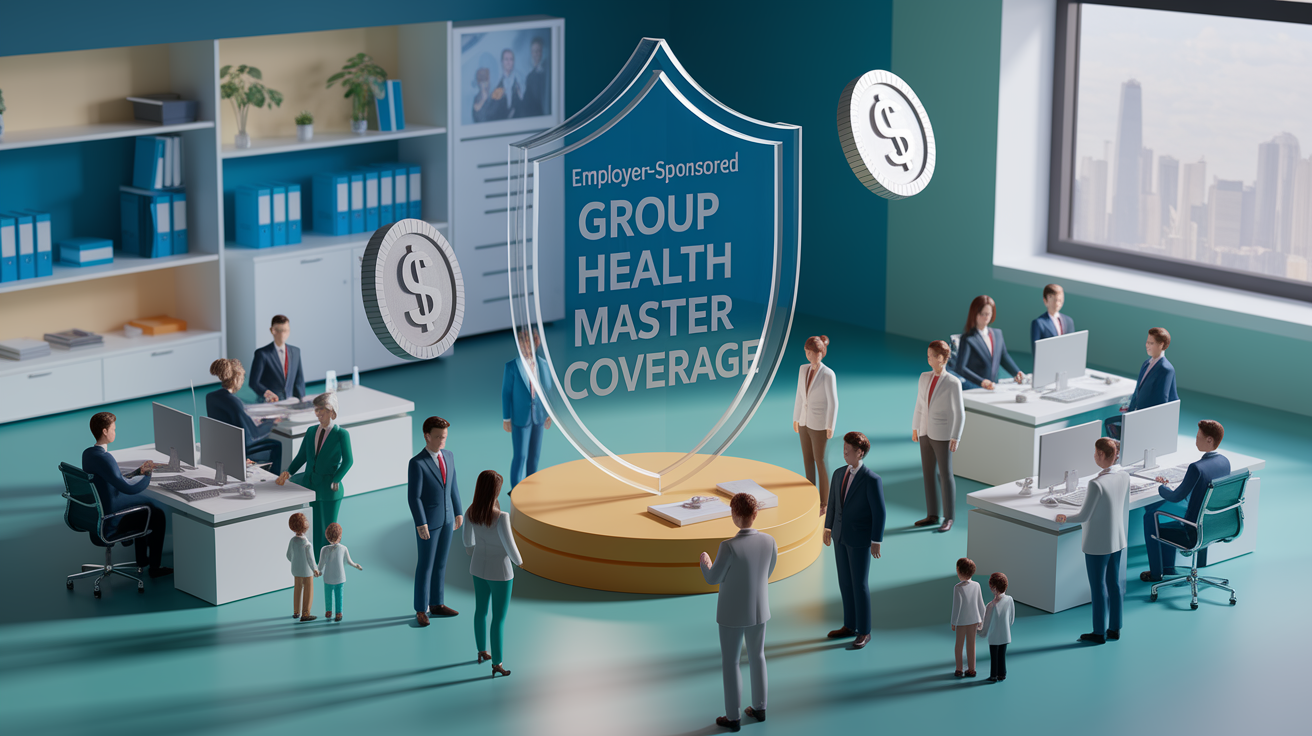
Group health coverage is employer-sponsored insurance that gives medical benefits to employees and their families. Unlike individual plans, group coverage pools risk across everyone enrolled. That usually means lower premiums and guaranteed issue: you can’t be turned down or charged more because of a pre-existing condition.
Employers hold the master policy. They negotiate rates and plan options with carriers, then offer coverage to employees who meet eligibility rules. Most carriers want at least 7 full-time employees before they’ll issue a policy. Small employers with fewer than 50 full-time workers can still qualify and may get tax breaks. Participation minimums usually sit around 70%, so enough employees need to enroll before the carrier will move forward.
For employers, this means picking plan types, deciding how much of the premium you’ll cover, managing enrollment windows, and handling payroll deductions. Premiums get split between the company and the employee. Employers often pay 70 to 90% of single coverage and 50 to 80% for family plans. When we first launched our group plan, we covered 80% of employee-only premiums and 60% of family, which kept costs manageable and participation strong. Employee contributions come out pre-tax through payroll, which cuts taxable income right away.
Employees enroll during open enrollment or after qualifying life events that trigger special windows. Once you’re in, you get an insurance card, file claims directly with the carrier, and use doctors in the plan’s network. Coverage often starts right when you enroll. Participation thresholds help keep premiums stable across the group.
Key pieces of group health coverage:
Eligibility and waiting periods: Employers can set a waiting period up to 90 days before coverage kicks in. Part-time and seasonal workers may or may not be included.
Premium sharing and payroll deductions: The employer picks up a percentage, and employee premiums come out pre-tax, lowering what you take home.
Provider networks: Plans include specific doctors and hospitals. Going out of network costs more or might not be covered at all.
Enrollment windows: Annual open enrollment for everyone. Special windows lasting 30 to 60 days after events like marriage, having a baby, or losing other coverage.
Plan Types and Benefit Design Choices Within Group Health Coverage
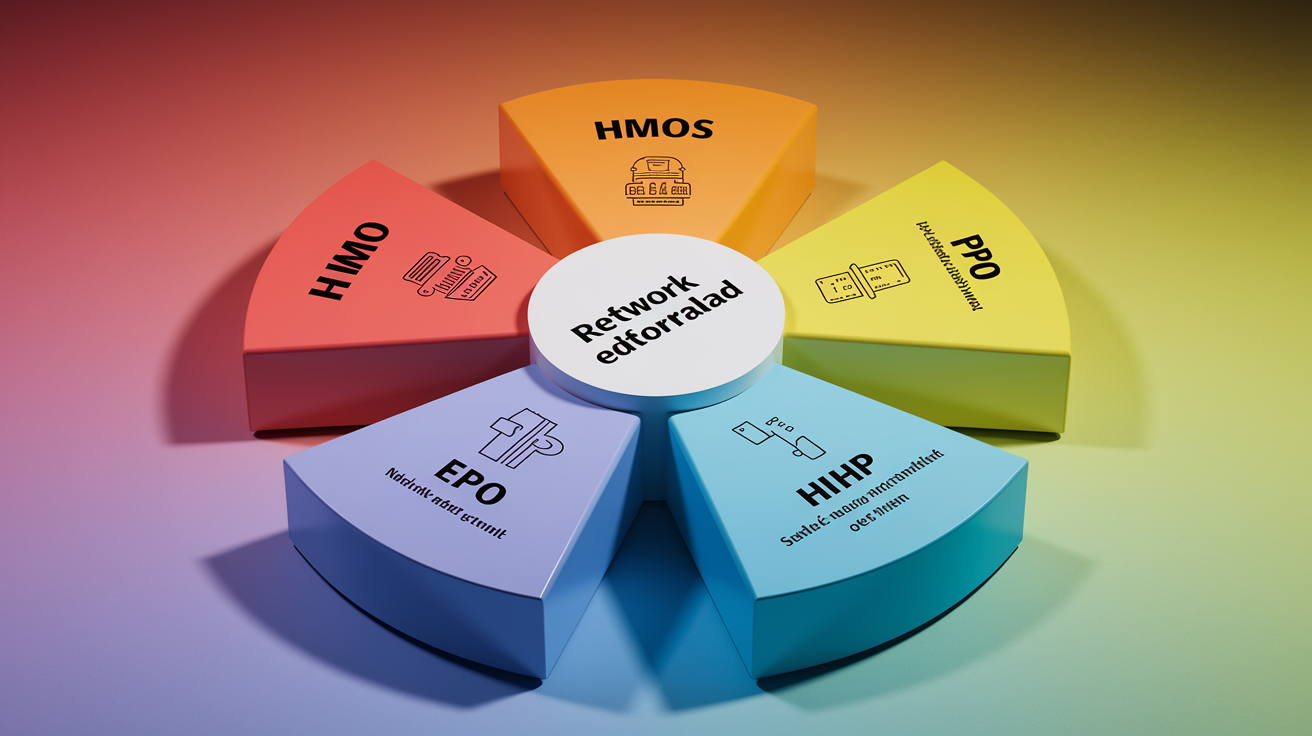
Employers pick from several plan types to balance cost and flexibility. HMOs offer lower premiums by keeping you in a tight network and requiring referrals to see specialists. PPOs cost more but let you see a wider range of doctors and hospitals, including some out of network at higher cost. EPOs sit in the middle: network-only care, no referrals needed. POS plans blend HMO and PPO features, requiring referrals for specialists but allowing limited out-of-network care.
High-Deductible Health Plans (HDHPs) have lower monthly premiums but higher deductibles and out-of-pocket caps. You can pair them with Health Savings Accounts to offset costs with tax-free money. Most group plans cover preventive care at no charge. That includes checkups, immunizations, maternity services, mental health treatment, telemedicine, and prescription drugs across multiple tiers.
The plan type you pick shapes how employees get care, what they pay at the doctor’s office, and whether they need approval to see a specialist. One of our employees loves the flexibility of our PPO because she travels for work and needs doctors in multiple states. Others prefer the lower copays of our HMO option.
| Plan Type | Key Features |
|---|---|
| HMO | Lower premiums, narrow network, referrals required, no out-of-network coverage except emergencies |
| PPO | Higher premiums, broad network, no referrals, partial out-of-network coverage at higher cost |
| EPO | Moderate premiums, network-only care, no referrals, no out-of-network coverage except emergencies |
| POS | Hybrid model, referrals for specialists, limited out-of-network benefits, moderate premiums |
| HDHP | Lowest premiums, high deductible and out-of-pocket maximum, HSA-eligible, preventive care fully covered |
Cost Structure of Group Health Coverage and Premium Contributions

Group health costs split between what the employer pays and what employees chip in. Most employers cover a bigger share to keep good people around. Typical employer contributions run 70 to 90% for single coverage and 50 to 80% for family plans, though percentages shift based on company size, industry, and location. Employee contributions get pulled from paychecks pre-tax, which lowers taxable wages and cuts the real cost to workers.
Beyond premiums, employees pay deductibles, copays for office visits and prescriptions, coinsurance for hospital stays and surgeries, and an annual out-of-pocket cap that stops total spending each plan year.
Plan type changes both premiums and how much you pay out of pocket. HMOs usually have the lowest premiums but tighter networks and referral rules. PPOs charge more each month but give you broader access and fewer hoops to jump through. HDHPs offer the lowest premiums but you’ll pay thousands before insurance starts covering non-preventive care. For 2024, HDHP thresholds started at a $1,600 deductible for individual coverage and $3,200 for family, with out-of-pocket caps at $8,050 and $16,100. Risk pooling across the employee group and guaranteed issue rules keep group premiums lower than what you’d pay buying coverage on your own. Small employers with 2 to 25 employees might qualify for a tax credit to help with costs.
Cost variables employers need to look at:
Monthly premiums: What the company and employee each pay per month.
Deductibles: The amount employees pay before insurance starts sharing costs, usually a few hundred to several thousand dollars.
Coinsurance rates: The percentage employees pay for covered services after the deductible, often 20% in network and higher out of network.
Pharmacy tiers: What you pay for generic, preferred brand, non-preferred brand, and specialty drugs. Can range from a few bucks to hundreds per prescription.
Eligibility Rules and Enrollment Windows for Group Health Coverage

Employers set eligibility rules that define which employees and dependents can join the plan, within legal and carrier limits. Waiting periods help manage paperwork and costs, but federal law caps the wait at 90 days from hire or eligibility date. Part-time employees, seasonal workers, and contractors may or may not be included. Some employers only cover full-time staff working 30 or more hours per week. Others go broader.
Dependents typically include spouses and kids up to age 26. Some plans allow domestic partners or stepchildren under certain conditions.
Enrollment happens during set windows to prevent people from gaming the system and to keep admin manageable. Annual open enrollment comes once per plan year, giving all eligible employees a shot to enroll, switch plans, or add dependents. Special enrollment gets triggered by qualifying life events: marriage, birth, adoption, losing other coverage, or moving somewhere that changes your plan options. These windows usually last 30 to 60 days from the event.
COBRA continuation lets employees and dependents who lose group coverage keep the same plan for a limited time, typically 18 months for job loss or reduced hours and up to 36 months for events like divorce or a dependent aging out. Carriers often require around 70% participation before they’ll issue a policy, to keep the risk pool balanced.
Enrollment event types:
Annual open enrollment: The window each year when all eligible employees can enroll or change their selections.
Special enrollment after qualifying events: Triggered by marriage, birth, adoption, losing other coverage, or change in residence. Lasts 30 to 60 days depending on the event and plan.
COBRA continuation: Departing employees and dependents can keep the group plan for 18 to 36 months by paying the full premium plus a small admin fee.
Legal and Regulatory Requirements Impacting Group Health Coverage

Employers offering group health coverage deal with a web of federal and state rules meant to protect employees and guarantee fair access. The ACA employer mandate requires employers with 50 or more full-time equivalent employees to offer affordable, minimum-value coverage or face penalties. Employers below that threshold aren’t subject to the mandate but can still offer plans and might qualify for tax credits.
Employers hit by the mandate must file annual reports with the IRS using Form 1095-C to document coverage offers and details for each full-time employee. ERISA governs most private-sector group health plans. It requires employers to provide a Summary Plan Description, keep formal plan documents, send legally required notices, and follow claims and appeals procedures that give employees a path to dispute coverage decisions.
COBRA rules require employers with 20 or more employees to let departing workers and their dependents keep group coverage for 18 to 36 months, depending on the event. Employers must notify plan administrators within 30 days of a qualifying event. The employee or dependent has 60 days to elect COBRA.
HIPAA portability rules stop group health plans from excluding coverage for pre-existing conditions and require plans to protect employee health information. Fully insured plans, where the employer pays premiums to a carrier that takes on all claims risk, also get regulated at the state level. Self-funded plans, where the employer pays claims directly, are governed mostly by ERISA and federal standards.
| Requirement | Key Rule | Impact on Employers |
|---|---|---|
| ACA Employer Mandate | 50+ FTE employers must offer affordable, minimum-value coverage or pay penalties | Must file Form 1095-C annually; design coverage that meets minimum value and affordability thresholds |
| ERISA Compliance | Employers must maintain plan documents, Summary Plan Description, and follow claims/appeals procedures | Ongoing admin work; fiduciary responsibility; potential legal exposure if documents or procedures fail |
| COBRA Continuation | Employers with 20+ employees must offer continuation coverage for 18 to 36 months; 60-day election period | Must track qualifying events, send timely notices, collect premiums, and maintain coverage through carrier |
Comparing Fully Insured vs Self-Funded Group Health Coverage Options

Employers can structure group health coverage as fully insured or self-funded. Each has different financial and admin implications.
Fully insured plans transfer all claims risk to a carrier in exchange for fixed monthly premiums. That gives cost predictability and simplifies what the employer has to do. The carrier handles claims, customer service, networks, and compliance.
Self-funded plans require the employer to pay claims directly from company funds. That exposes the employer to claims swings but can save money, give more flexibility in plan design, and provide detailed claims data for managing employee health. Many self-funded employers buy stop-loss insurance to cap catastrophic claims at individual and group levels, turning unpredictable big claims into manageable risk.
Level-funded plans mix features of both. You set a fixed monthly payment that covers estimated claims, admin fees, and stop-loss premiums. At year-end, you might get a refund if claims run low or owe more if claims exceed projections.
Carve-out and carve-in programs let employers separate specific services like pharmacy, mental health, or specialty drugs into standalone contracts with specialized vendors. That can improve cost control and outcomes but adds admin complexity.
| Model | Risk Level | Typical Employer Responsibility |
|---|---|---|
| Fully Insured | Low (carrier assumes all claims risk) | Pay fixed premiums; carrier handles claims, compliance, provider networks |
| Self-Funded | High (employer pays claims directly) | Pay claims as incurred; hire TPA or manage internally; purchase stop-loss; retain detailed claims data |
| Level-Funded | Moderate (fixed monthly payment with year-end settlement) | Pay monthly amount covering estimated claims and stop-loss; possible refund or additional cost at year-end |
| Stop-Loss Insurance | Caps catastrophic exposure in self-funded plans | Purchase individual and aggregate stop-loss coverage; manage claims up to attachment point; insurer covers excess |
Provider Networks and Access to Care Under Group Health Coverage

Provider networks define which doctors, hospitals, specialists, and facilities are available at in-network rates. The size and quality of these networks directly affect employee satisfaction and health outcomes.
Narrow network plans cut premiums by contracting with a smaller set of high-quality, cost-effective providers. Broad networks offer more choice but cost more each month. Employers should check that top local hospitals and most-used specialists are in the network, confirm that provider directories are current, and make sure employees can access telehealth and behavioral health providers within reasonable travel distances or virtually.
Out-of-network care is either not covered or reimbursed at much lower rates, leaving employees on the hook for balance billing and higher cost-sharing. Some plans offer limited out-of-network benefits for emergencies or when in-network providers aren’t available. But members should understand their plan’s rules before seeking care.
Telemedicine coverage has grown fast. Employees can consult doctors via video or phone for minor illnesses, follow-ups, and mental health counseling, often with lower copays than in-person visits. Mental health benefits must be covered at parity with medical and surgical benefits. That means copays, deductibles, and visit limits have to be comparable. One employee told us she finally started therapy because our plan covers virtual mental health visits at the same $20 copay as a regular doctor appointment.
Pharmacy Coverage and Prescription Drug Management in Group Health Coverage

Prescription drug formularies organize covered medications into tiers. Each tier carries different copays or coinsurance to push use of lower-cost generic or preferred brand drugs.
Tier 1 usually includes generics with the lowest copays. Tier 2 covers preferred brand medications at moderate copays. Tier 3 lists non-preferred brands at higher copays. Tier 4 or specialty tiers include high-cost medications like biologics, cancer treatments, and rare-disease drugs, often requiring coinsurance of 20 to 30% with big dollar amounts. Formularies get managed by pharmacy benefit managers (PBMs) or carriers and may be updated periodically. Members should check coverage before filling prescriptions.
Prior authorization controls costs by requiring doctor documentation and approval before certain medications are covered, especially for brand-name drugs with generic equivalents or high-cost specialty drugs. Utilization management tools include step therapy, which makes you try lower-cost medications before approving pricier options, and quantity limits that cap the number of pills or doses dispensed in a given period.
Specialty drug management programs often involve specialty pharmacies, patient support services, and clinical oversight to make sure complex medications are used safely and effectively.
Key pharmacy features:
Formulary tiers: Generic (Tier 1), preferred brand (Tier 2), non-preferred brand (Tier 3), and specialty drugs (Tier 4). Each tier has escalating copays or coinsurance.
Prior authorization: Doctor must submit clinical justification before coverage is approved for specific medications. This delays access but controls spending.
Specialty drug management: High-cost medications often require specialty pharmacy dispensing, adherence support, and clinical monitoring to manage safety and outcomes.
Supplemental Accounts That Pair With Group Health Coverage

Health Savings Accounts (HSAs) pair only with High-Deductible Health Plans and offer triple tax benefits. Contributions are tax-deductible, balances grow tax-free, and withdrawals for qualified medical expenses are tax-free.
For 2026, IRS contribution limits are $4,400 for individual coverage and $8,750 for family coverage, with an extra $1,000 catch-up contribution allowed for people age 55 and older. HSAs are employee-owned. Funds roll over year to year and the account stays with the employee even after leaving the employer. Employers, employees, and third parties can all contribute to an HSA. Unused balances can be invested for long-term growth.
Flexible Spending Accounts (FSAs) let employees set aside pre-tax dollars for qualified out-of-pocket medical expenses. But FSAs are employer-owned and subject to use-it-or-lose-it rules unless the employer adopts a grace period or limited rollover option. At termination, employees forfeit unused FSA funds unless they elect COBRA continuation.
Health Reimbursement Arrangements (HRAs) are 100% employer-funded and employer-owned accounts that reimburse employees for qualified expenses according to employer-defined rules. Employers control reimbursement caps, eligible expenses, and what happens to unused funds when an employee leaves.
Cafeteria plans (Section 125 plans) let employees pay for premiums and supplemental accounts with pre-tax payroll deductions, reducing taxable income and providing immediate savings.
| Account Type | Funding Source | Key Rules |
|---|---|---|
| HSA | Employer, employee, or third party | Employee-owned; requires HDHP; 2026 limits $4,400 individual / $8,750 family; funds roll over indefinitely; triple tax advantage |
| FSA | Employee (sometimes employer) | Employer-owned; use-it-or-lose-it unless grace period or rollover elected; forfeited at termination unless COBRA elected; IRS sets annual limits |
| HRA | 100% employer | Employer-owned; employer controls reimbursement rules, caps, and post-termination treatment; funds don’t roll over to employee upon exit |
| Cafeteria Plan (Section 125) | Employee via pre-tax payroll | Allows pre-tax premium and FSA contributions; reduces taxable income; employer administers plan document and elections |
Wellness, Prevention, and Population Health Features in Group Health Coverage

Wellness programs built into group health coverage push employees to adopt healthier behaviors, manage chronic conditions, and get preventive care before small health issues turn into expensive emergencies.
Employers often offer biometric screenings, health risk assessments, flu shots, smoking cessation programs, weight management support, and gym membership discounts as part of their benefit packages. Preventive care services like annual checkups, immunizations, mammograms, colonoscopies, and well-child visits are covered at 100% with no cost-sharing under ACA rules. That removes financial barriers to early detection and routine care.
Health incentives like premium discounts, HSA contributions, or gift cards reward employees who complete screenings, hit fitness goals, or participate in wellness challenges. This creates a culture of health and reduces long-term claims costs.
Population health features use aggregated claims data to identify high-risk groups, target interventions, and improve outcomes across the employee population. After analyzing our claims data, we launched a diabetes management program that cut ER visits by 15% and helped employees feel more supported.
Research shows that 92% of employees rate health benefits as one of the most important parts of their compensation package. Robust wellness programs boost recruitment, retention, morale, and productivity while lowering absenteeism and healthcare spending over time.
Claims, Appeals, and Administrative Processes in Group Health Coverage
When employees get care, providers submit claims to the insurance carrier or third-party administrator (TPA) for payment. The plan processes the claim against the employee’s coverage, deductible, and out-of-pocket spending.
Explanation of Benefits (EOB) statements get sent to the employee detailing what was billed, what the plan paid, and what the employee owes. This helps members track spending and spot billing errors.
If a claim gets denied or partially covered, employees can appeal the decision through a formal process outlined in the plan documents and Summary Plan Description. Appeals usually start with an internal review by the carrier or plan administrator, followed by an external independent review if the internal appeal gets denied.
Third-party administrators play a big role in self-funded plans by managing claims processing, customer service, provider networks, and compliance reporting on behalf of the employer.
Coordination of benefits rules determine which plan pays first when an employee or dependent is covered by multiple policies. For example, when both spouses have employer coverage or a child is covered under both parents’ plans. This prevents duplicate payments and makes sure claims are paid correctly.
Claims and appeals process steps:
File a claim: Provider submits claim to carrier or TPA. Employee receives EOB showing plan payment and patient responsibility.
Receive a decision: Carrier approves, partially covers, or denies the claim based on plan terms, medical necessity, and coverage exclusions.
Appeal if needed: If the decision is unfavorable, employee files an internal appeal with the carrier. If denied again, employee may request an external independent review.
Selecting Carriers, Brokers, and Vendors for Group Health Coverage
Choosing the right insurance carrier, broker, and vendors requires employers to evaluate networks, costs, service quality, and admin capabilities.
Insurance brokers and consultants help employers navigate the market, solicit quotes, compare plan designs, and negotiate contract terms, often at no direct cost because brokers get compensated by carriers through commissions.
A structured request for proposal (RFP) process lets employers collect comparable quotes and service commitments from multiple carriers, covering premiums, plan designs, pharmacy benefits, wellness programs, network adequacy, claims turnaround times, customer service responsiveness, and technology platforms.
Benefits benchmarking compares an employer’s plan costs, contribution strategies, and coverage features against peer organizations of similar size, industry, and geography to make sure you’re competitive and to spot opportunities to improve value.
Vendor contract negotiation should cover 12-month rate guarantees, carve-out or carve-in options for pharmacy or mental health services, admin fee structures, claims runout handling, termination and conversion rights, and data access and transparency. We negotiated a rate lock for two years and a pharmacy carve-out that saved us 12% on our largest cost driver.
Key carrier evaluation factors:
Network adequacy: Check access to top hospitals, specialists, telehealth, and behavioral health providers in all employee locations.
Premium competitiveness: Compare monthly rates for single and family coverage across plan types and calculate total cost including employer and employee shares.
Service quality and technology: Look at customer service responsiveness, digital enrollment platforms, mobile apps, and data reporting capabilities.
Financial stability and claims handling: Review carrier ratings, claims turnaround times, and appeals resolution rates to make sure they’re reliable and treat people fairly.
Implementation, Employee Communication, and Enrollment Technology for Group Health Coverage
Implementation starts with clear employee communication well before open enrollment. That includes distributing the Summary of Benefits and Coverage (SBC), plan comparison charts, FAQ documents, and personalized decision tools that help employees evaluate their options.
Employers should hold informational meetings, offer one-on-one consultations, and provide online resources that explain plan types, cost-sharing, networks, and supplemental accounts in plain language. Timing matters. Communication should start 60 to 90 days before open enrollment to give employees time to review options, ask questions, and make informed decisions.
Enrollment technology platforms streamline the process by integrating with payroll and HR systems, letting employees compare plans side by side, model out-of-pocket costs based on expected usage, and submit elections digitally. Many platforms include AI-powered recommendation tools that analyze an employee’s past claims, family size, preferred providers, and prescription needs to suggest the best-fit plan. Our new enrollment system cut our admin time in half and helped employees feel more confident about their choices.
Payroll deduction setup must be configured to collect employee premium contributions pre-tax through the cafeteria plan. Employers must coordinate with carriers to make sure billing, rosters, and coverage activation all happen on time at the start of the plan year.
Final Words
You saw how group health plans work for employers and employees: who qualifies, how premiums and tax treatment work, and how enrollment and participation rules shape coverage.
We also covered plan types, cost sharing, eligibility windows, legal requirements, networks, pharmacy management, supplemental accounts, claims, and vendor selection. Look for participation minimums, deductible structures, network access, and enrollment timelines.
With a clear checklist and a few good questions for brokers and carriers, you can set up group health coverage that fits your budget and protects your team. You’re in a better spot to decide with confidence.
FAQ
Q: What does a group health plan cover?
A: A group health plan covers medical and prescription benefits for employees and eligible dependents, typically including preventive care, doctor visits, hospital stays, maternity, mental health, and pharmacy—specifics depend on plan design and network.
Q: Is pancreatitis covered in health insurance?
A: Pancreatitis is usually covered as a medically necessary condition under health insurance, including ER care, hospitalization, imaging, and specialist visits; coverage varies by plan and some services may require prior authorization.
Q: Is migraine covered under health insurance?
A: Migraines are commonly covered for office visits, ER treatment, imaging, and both acute and preventive prescription drugs; coverage depends on formulary placement, prior authorization, step therapy, and network providers.
Q: What insurance plans cover Wegovy?
A: Insurance plans cover Wegovy inconsistently: some commercial and employer plans cover it for chronic weight management with BMI and comorbidity criteria plus prior authorization; many plans and Medicare often exclude routine weight-loss drugs.