


You might be surprised: after your insurer pays a claim, they’ll often go after the person who caused the damage to get that money back.
That process is called subrogation, your insurer “steps into your shoes” to recover costs from the at-fault party.
In this post we’ll simplify the recovery process step-by-step, explain how deductibles and legal fees are handled, and show what your role is.
Read on to learn what to expect, common pitfalls that slow or block recovery, and simple actions that protect your deductible.
Understanding the Insurance Subrogation Process Step-by-Step

Subrogation is your insurer’s legal right to “step into your shoes” and go after the at-fault party (or their insurer) after they’ve paid your claim. Your insurer becomes your stand-in. When someone else caused your loss, your insurer pays you first so you can get repairs done quickly, then chases down the responsible party to get that money back. The whole point? Shift the financial hit from your insurer (and really, all policyholders) back to whoever actually caused the damage.
Subrogation starts after three things line up: your insurer pays out on a valid claim, someone else is clearly at fault, and your insurer can prove that third party caused the loss. Say another driver rear-ends you at a stoplight. Your collision coverage pays for the repair right away. Your insurer then digs into the crash, confirms the other driver ran the light, and fires off a demand letter to that driver’s liability carrier. If the demand goes ignored or the other insurer pushes back on fault, your insurer might negotiate or file a lawsuit to claw back the repair cost. The entire process runs in the background while you get your car fixed or your property repaired.
Deductibles and subrogation work together in a pretty straightforward way. You pay your deductible upfront when the insurer settles your claim. If your insurer later recovers enough from the at-fault party, they’ll typically reimburse your deductible, but only after they recover their own costs first. If the recovery is partial or legal fees eat up most of the settlement, you might not see your deductible back. Or you may get only part of it.
The typical subrogation flow looks like this:
- Insurer pays your claim – You get compensation for repairs, medical bills, or property damage, minus your deductible.
- Insurer opens subrogation file – The claims team investigates liability and documents the at-fault party’s responsibility.
- Demand or lawsuit – The insurer sends a demand letter to the responsible party’s insurer or files a lawsuit if negotiations stall.
- Recovery or settlement – The at-fault party (or their insurer) pays the full amount, a reduced amount, or nothing, depending on evidence and negotiation.
- Distribution of recovered funds – Legal costs and insurer reimbursement come first. Any remaining money goes to refund your deductible or, in some policies, to you if recovery exceeds the insurer’s outlay.
Key Insurance Subrogation Concepts and Real-World Applications

When an insurer pays your claim and pursues subrogation, they’re exercising a legal right called “stepping into your shoes.” That phrase means the insurer inherits your right to sue the at-fault party. You already had the legal standing to demand compensation from whoever damaged your car, flooded your basement, or caused your injury. The moment your insurer pays, they take over that right, and any recovery goes to them first to offset what they paid out. This doctrine keeps premiums lower across the board because insurers can recoup losses instead of absorbing them entirely.
These rights pop up in everyday scenarios where a third party caused your loss. A fender-bender, a neighbor’s tree that crashes through your fence, a contractor’s faulty wiring that sparks a kitchen fire, or a workplace injury caused by a delivery driver. All of these can trigger subrogation. The key ingredient is always identifiable third-party fault combined with your insurer paying first.
Real-world subrogation looks like this:
- Auto collision – Your insurer pays collision damage after another driver t-bones you, then goes after that driver’s liability insurer.
- Water leak – Your homeowners policy covers damage when your upstairs neighbor’s washing machine hose bursts, and your insurer seeks recovery from the neighbor’s policy.
- Fire loss – A contractor’s blowtorch ignites your roof. Your insurer pays the rebuild and pursues the contractor’s general liability carrier.
- Injury with overlapping coverage – Your health insurer covers emergency room bills after a car crash, then asserts subrogation against the at-fault driver’s bodily injury liability to recover those costs.
Insurance Subrogation Claim Steps and Policyholder Responsibilities

Most policies include a cooperation clause that requires you to help the insurer pursue subrogation. In practice, that means giving a recorded statement, signing releases that allow the insurer to access medical or repair records, and turning over evidence like photos, receipts, or police reports. Insurers need your cooperation because they’re standing in for you. They can’t prosecute the claim without the facts you witnessed or the documents you hold. The clause is simple: you must assist, or the insurer can reduce or deny the subrogation recovery and potentially refuse to cover future claims.
Refusing to cooperate or ignoring requests for information can backfire. If your insurer can’t prove the at-fault party’s responsibility because you withheld a critical photo or missed a deposition, the recovery may fail. When recovery fails, the insurer may keep any deductible you paid and report the claim as an at-fault loss on your record, which can raise your premium. Worse, some policies allow the insurer to void coverage entirely if you materially breach the cooperation clause. It’s rare, but it happens when someone actively obstructs the process.
The speed at which subrogation moves often depends on how quickly you provide what the insurer requests. Delays in submitting a police report or medical bills push back the insurer’s demand timeline, which in turn delays any deductible refund. Clear, prompt responses keep the file moving and increase the odds of a full recovery.
Typical documentation requirements include:
- Police or accident report – Official record of the incident, fault findings, and involved parties.
- Receipts and invoices – Proof of repair costs, replacement purchases, or medical treatment bills.
- Photos or video – Visual evidence of damage, scene conditions, and vehicle positions.
- Witness contact information – Names, phone numbers, and statements from anyone who saw the incident.
- Signed authorization forms – Releases that let the insurer request records from repair shops, hospitals, or other insurers.
Subrogation Across Insurance Types: Auto, Health, Homeowners, and Workers’ Compensation

Auto insurance subrogation follows a predictable pattern. Your collision or comprehensive coverage pays for vehicle repairs or total loss value right away. Your insurer then investigates the crash, reviewing the police report, interviewing witnesses, and analyzing photos. Once fault is clear, your insurer sends a demand to the at-fault driver’s liability carrier. That carrier either accepts liability and pays, disputes fault and negotiates, or denies the claim and forces your insurer to file suit. If your insurer wins full recovery, you usually get your deductible back within 30 to 180 days. If the at-fault driver has no insurance or minimal coverage, recovery may be partial or zero, leaving you to absorb the deductible.
Health insurance subrogation works a bit differently because medical bills often involve multiple payers. Your health plan covers co-pays, deductibles, and treatment costs after an auto accident or slip and fall caused by someone else’s negligence. Later, when you settle a personal injury claim with the at-fault party, your health insurer asserts a lien against that settlement to recoup what they paid. This is especially common with private insurers and government programs like Medicaid or Medicare. Health subrogation can reduce your net settlement significantly. If your health plan paid $20,000 and you settle for $50,000, the insurer may claim $20,000, leaving you $30,000 (minus attorney fees). Negotiating these liens is standard practice, and many can be reduced by attorney fee offsets or statutory caps.
Homeowners insurance subrogation typically arises when a third party damages your property. A neighbor’s negligence causes a fire that spreads to your house, a plumber installs a defective valve that floods your basement, or a tree trimming company drops a branch through your roof. Your homeowners policy pays for repairs under your dwelling or personal property coverage, then your insurer pursues the responsible party’s general liability or homeowners policy. These cases can take longer because liability is often contested. Contractors blame manufacturers, manufacturers blame installers, and so on. Recovery depends on clear evidence that the third party breached a duty of care.
Workers’ compensation subrogation happens when an employee is injured on the job by someone other than the employer. For example, a delivery driver is hurt when a negligent motorist runs a red light, or a construction worker is injured by defective scaffolding supplied by a third party vendor. Workers’ comp pays medical bills and lost wages immediately, then the insurer goes after the at-fault driver or product manufacturer. In many states, the employee can also file a personal injury lawsuit against the third party, and any recovery is shared between the workers’ comp carrier (to reimburse benefits paid) and the employee (for pain, suffering, and excess damages).
Timelines, Statute of Limitations, and Recovery Expectations in Subrogation
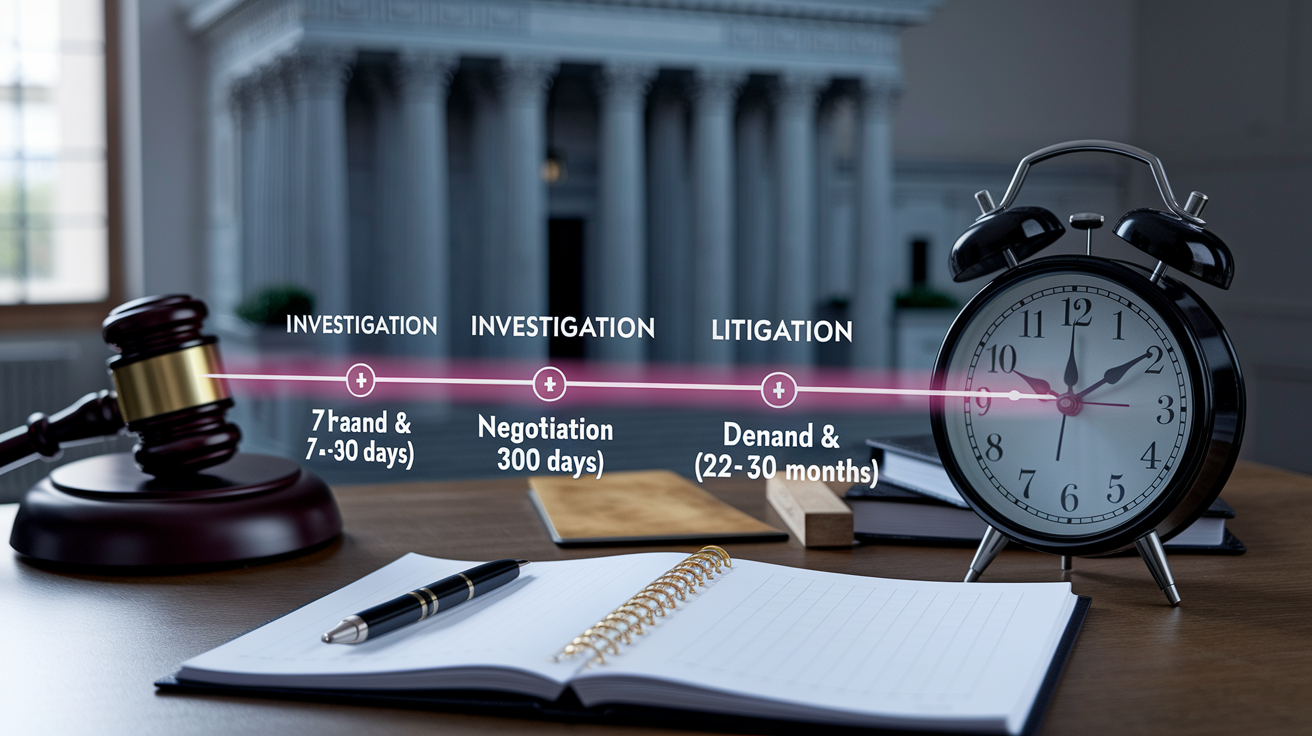
Subrogation rarely happens overnight. After your insurer pays your claim, the subrogation team opens a file and begins investigating fault. This initial review, gathering reports, interviewing witnesses, and confirming coverage, commonly takes 7 to 30 days. Once liability is confirmed, the insurer drafts and sends a demand letter to the at-fault party or their insurer, usually within 30 to 90 days after paying your claim. That demand outlines the loss amount, the evidence of fault, and a deadline for response. If the other side accepts liability quickly, the case may close within a few months. If they dispute fault, deny coverage, or ignore the demand, the process stretches into negotiation or litigation.
The statute of limitations sets a hard deadline for filing a lawsuit. In most states, subrogation claims must be brought within 2 to 6 years from the date of loss, depending on whether the claim sounds in contract, tort, or property damage. Some policies impose shorter internal deadlines. Once the statute expires, the insurer loses the right to sue, and any potential recovery is gone. That’s why insurers move quickly to preserve their rights, especially in contested cases.
Recoverable damages and priority rules shape what the insurer can collect and who gets paid first. The insurer can only recover what it actually paid: repair costs, medical bills, rental reimbursement. Not your deductible or future expenses unless those amounts were also paid out. When multiple parties have claims (for example, your auto insurer and your health insurer both paid bills after the same crash), state law and policy terms dictate the order of reimbursement. Legal fees and costs are typically deducted from any recovery before distribution, and those fees can range from 25% to 40% of the recovered amount.
| Phase | Typical Range | Notes |
|---|---|---|
| Claim Investigation | 7–30 days | Insurer reviews reports, estimates, and determines fault |
| Demand & Negotiation | 30–90 days (up to 12 months) | Demand letter sent; at-fault insurer responds; settlement talks begin |
| Litigation | 12–36+ months | If negotiation fails, insurer files suit; discovery and trial follow |
Deductibles, Reimbursements, and Settlement Impact During Subrogation

When your insurer recovers money from the at-fault party, the first dollars go to cover legal costs and the insurer’s own outlay. Only after the insurer is made whole does your deductible get reimbursed. For example, if your insurer paid $5,000 to repair your car and recovery is $5,000, the insurer keeps it all. If recovery is $5,500 and you had a $500 deductible, the insurer takes $5,000, and you receive the remaining $500. If recovery is only $4,000, the insurer keeps the full amount, and your deductible stays with you. Reimbursement timing varies. Some insurers cut a check within 30 days of recovery, others take several months to finalize accounting and close the file.
Subrogation liens can dramatically shrink personal injury settlements. Suppose you’re rear-ended, your health insurer pays $15,000 in medical bills, and you later settle with the at-fault driver’s carrier for $40,000. Before you see a dime, your health insurer asserts a $15,000 lien. If your attorney negotiated a 33% contingency fee ($13,200), you’re left with roughly $11,800 after paying both the lien and the fee. In cases where multiple insurers file liens (health, auto MedPay, workers’ comp), the combined deductions can consume most of the settlement, leaving little for pain, suffering, or lost wages.
Shared fault further reduces what the insurer recovers and what you get back. If you’re found 25% at fault for an accident, the at-fault party’s insurer will reduce any settlement by that percentage. A $10,000 subrogation claim becomes a $7,500 recovery after the 25% fault deduction. Legal fees then come off the top of that $7,500. At 30%, that’s $2,250 in fees, leaving $5,250 net. The insurer takes the $5,250 to offset the original $10,000 payout, and your deductible remains unpaid because the recovery didn’t cover the insurer’s full loss.
Key financial impacts of subrogation include:
- Deductible refunds delayed or denied – You may wait months or never see reimbursement if recovery is partial or fails.
- Settlement reductions – Health and auto subrogation liens can claim 30% to 50% or more of personal injury awards.
- Legal fee deductions – Contingency fees (25%–40%) reduce gross recovery before anyone is reimbursed.
- Shared fault discounts – Comparative negligence cuts the total recoverable amount proportionally, shrinking both insurer and insured reimbursements.
Comparative Fault, Defenses, and Legal Challenges in Subrogation Claims

Comparative negligence rules allow the at-fault party to argue that you share some blame for the loss, which reduces the amount they owe. In a rear-end collision where you were texting and slowed suddenly, the other driver’s insurer might claim you’re 20% responsible. If the total damage is $10,000, they offer only $8,000. Your insurer can accept that reduced settlement or fight it in court, but either way, shared fault cuts into recovery. Contributory negligence, still used in a handful of states, is harsher. If you’re even 1% at fault, the at-fault party owes nothing. That rule can kill subrogation claims entirely when any evidence of mutual fault exists.
Insurers pursuing subrogation face common defenses from the at-fault party or their carrier. Procedural mistakes (failing to give proper notice, missing deadlines, or not documenting expenses) can invalidate a claim. The at-fault party may also argue that your insurer didn’t actually pay the claimed amount, that the damages were pre-existing, that another party is truly responsible, or that a contractual waiver bars recovery. When these defenses succeed, the insurer recovers nothing, and you absorb the deductible and any uncovered loss.
When negotiations break down or the at-fault party denies liability outright, insurers file lawsuits to protect their subrogation rights before the statute of limitations expires. Litigation is expensive and slow. Discovery, depositions, motions, and trial can stretch 12 to 36 months or longer. Insurers weigh the cost of a lawsuit against the likely recovery. Small claims under a few thousand dollars are often written off rather than litigated. Larger claims, especially those with clear liability and ample insurance coverage, proceed to court when settlement fails.
Example Reduction Scenario
Imagine your insurer paid $10,000 to repair your car after a crash. Investigation shows you were 25% at fault for speeding in a construction zone. The at-fault driver’s insurer agrees to pay only 75% of the damage: $7,500. Your insurer hires outside counsel on a 30% contingency, which costs $2,250. After legal fees, the net recovery is $5,250. Your insurer keeps that amount to offset the original $10,000 payout. You had a $1,000 deductible, but because the recovery didn’t cover the insurer’s full loss, your deductible isn’t refunded, leaving you $1,000 out of pocket even though the insurer recovered more than half of what it paid.
Waivers, Anti-Subrogation Rules, and Contractual Limits on Recovery

A waiver of subrogation is a contract clause that bars an insurer from pursuing recovery against a specific party. These clauses are common in commercial leases, construction contracts, and vendor agreements. For example, a landlord’s lease might require the tenant’s insurer to waive subrogation against the landlord for fire damage. That means even if the landlord’s negligence caused the fire, the tenant’s insurer can’t sue the landlord to recover the payout. Waivers protect business relationships and streamline insurance arrangements, but they shift the financial burden back to the insurer (and ultimately all policyholders through premiums).
The anti-subrogation doctrine is a legal rule that prevents an insurer from going after its own insured. If the at-fault party is also a named insured or additional insured on the same policy, the insurer can’t sue them. For instance, if a homeowners policy covers both spouses and one spouse accidentally causes a fire, the insurer pays the claim but can’t pursue the negligent spouse for reimbursement. The doctrine exists to prevent insurers from undermining the coverage they sold.
Common contractual and legal barriers to subrogation include:
- Waiver of subrogation clauses – Explicit contract language that prohibits the insurer from pursuing certain parties.
- Anti-subrogation doctrine – Bars recovery against parties insured under the same policy.
- Exclusions and policy limits – Insurers can’t recover amounts excluded from coverage or beyond policy limits, even if legally owed.
Best Practices to Support a Smooth Subrogation Process

Strong documentation is the foundation of every successful subrogation claim. The insurer needs clear proof that the third party caused the loss and that the costs you claimed are accurate. Photos of the accident scene, damaged property, and vehicle positions tell the story visually. Receipts, repair estimates, and medical bills establish the financial impact. Police reports and witness statements provide independent verification of fault. The more evidence you preserve immediately after the loss, the easier it is for your insurer to build a solid demand and recover quickly.
Mistakes in the hours and days after a loss can derail recovery. Admitting fault at the scene (even a casual “I’m sorry, I didn’t see you”) can be interpreted as liability and used against your insurer’s subrogation claim. Discarding damaged items before the insurer inspects them eliminates physical evidence. Failing to call the police means no official report exists. Waiting weeks to report the claim allows memories to fade and evidence to disappear. Every misstep gives the at-fault party’s insurer ammunition to dispute liability and reduce or deny the subrogation demand.
Five best practices to support insurer recovery:
- Report the claim immediately – Contact your insurer within 24 hours, even if damage seems minor.
- Take photos and video – Capture the scene, all vehicles, property damage, and any visible injuries before anything is moved or repaired.
- Obtain a police or incident report – Request an official report for accidents, theft, vandalism, or any event involving a third party.
- Preserve all receipts and estimates – Keep copies of repair invoices, medical bills, rental car charges, and any expense related to the loss.
- Cooperate fully and promptly – Respond to insurer requests for statements, documents, and authorizations without delay. Silence or refusal can void subrogation rights and future coverage.
Final Words
You saw the subrogation flow in action: an insurer pays a claim, steps into your shoes, investigates fault, then seeks repayment through demands, negotiation, or court. The post walked through step-by-step mechanics, timelines, policyholder duties, line-by-line differences, deductible refunds, common defenses, and practical tips to protect recovery.
If you still wonder how does insurance subrogation work, keep this simple rule: cooperate, document everything, and ask your insurer about timing. Do that and the process will be clearer and more likely to end well.
FAQ
Q: What are the steps in the process of subrogation?
A: The steps in the process of subrogation are insurer pays the claim, investigates fault, issues a demand, negotiates with the at‑fault party (or files suit), then distributes recovered funds after costs and deductible adjustments.
Q: How long does subrogation usually take?
A: Subrogation usually takes an initial investigation of about 7–30 days, a demand and negotiation phase of 30–90 days, and, if needed, negotiation or litigation that can run several months up to 1–36 months.
Q: What happens if you don’t pay subrogation?
A: If you don’t pay subrogation, the insurer can pursue you for reimbursement, withhold deductible refunds, place a lien, file a lawsuit, or send the debt to collections, potentially costing you more.
Q: Why would an insurance company choose to subrogate?
A: An insurance company chooses to subrogate to recover money it paid on your claim, hold the at‑fault party responsible, lower overall costs (which helps keep premiums steadier), and protect your recovery rights.