



Is travel insurance worth it, or just another fee that eats into your trip budget?
Short answer: it depends on the money at risk and how far from home you’ll be.
If you’ve prepaid $1,000 or more in nonrefundable costs, you’re traveling abroad to places with limited medical care, or you’d struggle to cover a $2,000 emergency, travel insurance usually makes sense.
If your flights and hotels are refundable and your exposure is small, you can often skip it.
This post walks you through the break-even math, medical and evacuation risks, and simple rules to pick what fits your trip.
Deciding When Travel Insurance Is Worth It Based on Your Trip Risk

The break-even math is pretty straightforward. For a $3,000 prepaid nonrefundable trip, you’re looking at roughly 4% to 10% in travel insurance costs, so around $120 to $300. If there’s a 5% chance you’ll need to cancel, your expected loss sits at $150. At that probability, insurance premiums near $150 make sense just for financial hedging. The real question is whether your specific trip crosses that threshold when you factor in medical and evacuation risk on top of cancellation probability. A young couple with fully refundable flights and hotel bookings? They’re facing almost no expected loss. A family with $5,000 in nonrefundable cruise deposits and an elderly parent at home? Much higher risk.
Actual medical emergencies add another layer. Medicare won’t cover overseas medical costs, and emergency evacuation from a remote area can run $50,000 to $200,000 or more. For international travelers heading to regions with limited local care, the potential downside is severe enough that even a small probability justifies coverage. The closer you get to combining high prepaid costs, health uncertainty, and distant destinations, the faster the expected value calculation shifts in favor of buying insurance.
Consider your financial cushion, too. If a $2,000 loss wouldn’t derail your budget and you’re comfortable absorbing that risk, you can reasonably skip insurance on moderately priced trips. But if losing that amount would cause stress or hardship, insurance serves as a financial firewall even when the pure probability calculation is close.
Travel insurance is generally worth it when:
- Your total prepaid, nonrefundable trip cost is $1,000 or more and you can’t comfortably absorb that loss.
- You’re traveling internationally, especially to remote regions or areas with limited local medical infrastructure.
- You or a travel companion have health concerns, pre-existing conditions, or are over age 60.
- Your trip involves high risk activities like scuba, skiing, or hiking at altitude that your regular health insurance excludes.
- You lack emergency savings or credit reserves to cover out-of-pocket medical bills or last minute rebookings.
Travel insurance often isn’t worth it if your trip has low total cost (under $500 nonrefundable exposure), your flights and lodging are fully refundable, and you already hold a premium credit card that provides comparable trip cancellation limits (often $5,000 to $10,000 per person), baggage protection, and limited medical or evacuation coverage. In those cases, your effective coverage overlap is high, your downside is small, and paying 4% to 10% of a modest trip cost delivers minimal incremental value.
Understanding Travel Insurance Coverage Types and Their Real Value
Travel insurance bundles a mix of protections that range from highly valuable to rarely used. The most financially critical benefits cover low probability, high cost events: emergency medical care abroad, evacuation by air ambulance, and reimbursement of large prepaid deposits when you can’t take the trip. Secondary benefits like baggage delay or missed connection reimbursements rarely exceed a few hundred dollars. Knowing which coverage types actually match your exposure helps you avoid paying for features you don’t need or relying on caps that fall short when you file a claim.
Typical policy limits set the ceiling for what you can recover. Emergency medical benefits commonly range from $50,000 to $1,000,000 depending on the plan tier. Medical evacuation limits usually fall between $100,000 and $500,000, enough to cover a helicopter or air ambulance flight from a remote area to a major hospital. Baggage protection typically caps at $500 to $3,000 total per person, with strict per item limits of $200 to $500 for electronics, jewelry, or cameras. These caps matter when you’re carrying a laptop and camera gear worth several thousand dollars.
Trip cancellation and interruption benefits reimburse your prepaid, nonrefundable costs when you cancel for a covered reason before departure or need to return home mid trip. Covered reasons usually include serious illness or death of you or a close family member, employer layoff, jury duty, tour operator bankruptcy, or certain natural disasters and severe weather events. Policies typically define “family member” narrowly: spouse, child, parent, sibling. Check whether your policy includes domestic partners, in-laws, or extended family if that matters to your situation.
“Cancel For Any Reason” (CFAR) is an upgrade available on some policies that lets you cancel even without a covered reason, but it comes with strict rules. You generally must buy CFAR within 10 to 21 days of your initial trip deposit, and it usually reimburses only 50% to 75% of your prepaid costs, not 100%. You also need to cancel at least 48 hours before departure to qualify. CFAR premiums often add 25% to 50% to your base policy cost, making it expensive insurance for flexibility.
Trip Cancellation and Interruption
Trip cancellation reimburses prepaid, nonrefundable expenses if you can’t take the trip at all. Covered reasons include sudden illness or injury, death of you or a close family member, job loss due to layoff, jury duty, home damage from fire or flood, and tour operator or airline bankruptcy. Severe weather that prevents departure and missed connections caused by accidents or airline strikes (when you have connecting flights booked) also count. Most policies require medical documentation, death certificates, layoff notices, or other proof of the triggering event before approving claims.
Trip interruption pays the unused portion of your trip plus the cost of returning home early when a covered event happens mid trip. If you prepaid a 10 day trip and return on day 3 due to a family emergency, you can recover the nonrefundable value of the 7 unused days plus the emergency change fee for the return flight. This benefit complements trip cancellation by covering events that happen after you’ve started traveling: illness or injury that makes it unsafe to continue, death of a family member back home, or serious damage to your primary residence that requires immediate attention.
Natural disasters and terrorism have narrow coverage windows. Policies typically cover only trips where a natural disaster or terrorist attack hits your departure city or a scheduled destination within a specific window (often 7 to 30 days before departure) and only if your tour operator doesn’t substitute an alternate itinerary. Travel booked after a government warning or State Department advisory is usually excluded. War, civil unrest, and most pandemics or communicable disease outbreaks are also excluded unless you buy a specialized rider.
Emergency Medical and Evacuation Coverage
Emergency medical coverage pays for hospital, doctor, and prescription drug expenses when you fall ill or get injured abroad. Standard health insurance often excludes care received outside the U.S., and Medicare explicitly does not cover medical services in foreign countries. Without travel insurance, you’ll pay the full bill upfront and may face charges of $5,000 to $50,000 or more for serious conditions requiring hospitalization, surgery, or specialist care. Common policy limits range from $50,000 to $1,000,000, with higher limits available on premium plans.
Emergency medical evacuation pays to transport you from a remote area or inadequate local facility to the nearest hospital capable of treating your condition. This might mean a helicopter ride from a mountain lodge to a city hospital, or a long distance air ambulance transfer from a small island to a regional trauma center. Private medical transport can easily cost $50,000 to $200,000 or more depending on distance, mode of transport, and urgency. Policies typically cover evacuation to the nearest appropriate facility, not automatic repatriation to your home country unless medically necessary. Don’t assume evacuation means a flight home.
Many travel medical plans operate as secondary coverage, meaning they pay only after your primary health insurance (if any) has paid its share. Primary travel medical policies pay first without requiring coordination of benefits, which speeds up claims and avoids complications when your domestic health plan doesn’t cover overseas care. If you have limited or no international coverage through your existing health insurance, a primary travel medical policy is often more valuable than a secondary one.
Baggage, Theft, and Personal Effects Protection
Baggage coverage reimburses you for lost, stolen, or damaged personal belongings during your trip. Policies set both a total limit per person (commonly $500 to $3,000) and strict per item caps (often $200 to $500). If you’re carrying a $1,200 laptop and a $900 camera, typical per item limits mean you’ll recover at most $400 to $1,000 total even if both are stolen. High value electronics and jewelry usually hit these caps quickly, so read the schedule of limits carefully.
Airlines have separate liability limits for checked baggage under international treaties (often around $1,700 per passenger) and lower amounts for domestic flights. Travel insurance baggage benefits are designed to supplement airline compensation, not replace it. Your homeowners or renters insurance often covers personal property worldwide, but your deductible applies. For example, a $1,000 deductible means a $700 tablet loss won’t trigger any payout from your homeowners policy, but a travel policy with a $0 to $250 deductible may cover most or all of that loss.
To file a successful claim, you need proof of ownership (receipts, photos, serial numbers) and a police report filed promptly after the theft or loss. Take photos of high value items before you leave, save purchase receipts, and record serial numbers. If something is stolen, go to the local police station the same day and get a written report. Without this documentation, insurers routinely deny baggage and theft claims.
Travel Delays and Missed Connections
Travel delay benefits reimburse reasonable out of pocket expenses when your departure or connection is delayed for a qualifying period, typically 6 to 12 hours or more. Covered expenses usually include meals, lodging, and essential purchases (toiletries, change of clothes) necessitated by the delay. Typical per day limits range from $100 to $300 per person, so this coverage rarely offsets major losses but helps recover small annoyances.
Missed connection coverage applies when you miss a connecting flight or cruise departure due to a delay of the first leg. For example, your inbound flight lands late and you miss the connecting international flight, or bad weather delays your flight and you miss your cruise ship’s departure. The policy will reimburse the cost of catching up to your trip (a last minute flight to the next port, hotel expenses while you wait) or the nonrefundable portion of the trip you couldn’t complete. This benefit requires that both segments be part of the same itinerary and that the delay be caused by a covered reason (carrier delay, weather, mechanical breakdown), not your own late arrival at the airport.
The six coverage types that usually offer the greatest financial payoff are:
- Emergency medical coverage with limits of at least $100,000 for international trips, especially when your existing health insurance excludes overseas care.
- Medical evacuation coverage with limits of $100,000 to $500,000 when traveling to remote destinations or regions with limited local medical facilities.
- Trip cancellation protection when your total prepaid, nonrefundable trip costs exceed $1,000 and you face measurable cancellation risk due to health, work instability, or family concerns.
- Trip interruption protection for expensive multi component trips (cruises, tours, international flights plus lodging) where returning home early would forfeit thousands of dollars.
- Baggage and personal effects coverage only if your homeowners or renters policy has a high deductible and you’re carrying expensive gear beyond typical per item caps.
- “Cancel For Any Reason” (CFAR) riders when flexibility is critical, you’re booking far in advance, and you’re willing to accept 50% to 75% reimbursement at a 25% to 50% premium increase.
Comparing Travel Insurance Costs and Premium Factors

Travel insurance premiums are calculated as a percentage of your total prepaid trip cost, modified by factors like traveler age, destination risk, trip duration, and optional add ons. Standard comprehensive policies typically cost 4% to 10% of your nonrefundable trip cost. For a $3,000 trip, expect to pay roughly $120 to $300 for a single trip policy. Annual multi trip plans cost a flat fee, commonly $100 to $600 per year, and cover unlimited trips up to a specified maximum duration per trip (often 30 to 60 days). If you take three or more trips per year with similar total costs, an annual plan usually costs less than buying separate single trip policies.
Age is the biggest driver of premium variation. Children under 18 are often included at no extra cost or a minimal fee when traveling with an insured adult. Premiums rise gradually through your 30s and 40s, then increase sharply after age 50. Travelers over 70 face substantially higher premiums, often double or triple the rate for a 40 year old on the same trip, and some insurers cap medical or evacuation benefits or decline coverage entirely for travelers above a certain age. If you’re older, compare quotes across multiple insurers and read the fine print on age based benefit reductions.
Destination risk and trip duration also influence cost. Trips to countries with high medical costs (Japan, Switzerland, Scandinavia) or regions with elevated security risks, frequent natural disasters, or limited medical infrastructure typically trigger higher premiums. A two week European vacation will cost more to insure than a long weekend in a nearby country, both because the trip cost is higher and because the exposure window is longer. Deductibles range from $0 to $500. Choosing a higher deductible lowers your premium but increases your out of pocket cost when you file a claim.
| Factor | Impact on Premium | Typical Range |
|---|---|---|
| Age | Premiums rise sharply after age 50; seniors often pay double or more | Children free to $50; adults 30 to 50 baseline; 70+ can add 100% to 200% |
| Trip Cost | Premium calculated as 4% to 10% of total prepaid, nonrefundable expenses | $500 trip around $20 to $50; $5,000 trip around $200 to $500 |
| Destination Risk | Higher cost or higher risk countries increase premium | +10% to 30% for remote, high medical cost, or elevated risk destinations |
| Optional Add-Ons | CFAR adds around 25% to 50%; adventure sports riders add around $20 to $100 | CFAR: base premium × 1.25 to 1.5; sports: flat $20 to $100 per trip |
Annual multi trip plans become more cost effective than single trip policies when you take three or more insured trips in a year. For example, if single trip policies for three $2,000 trips each cost $100, you’d spend $300 total. An annual plan covering the same trips might cost $250 to $400 and would also cover any additional short trips at no extra charge. Annual plans are particularly attractive for frequent business travelers or retirees who take multiple international vacations, but make sure the per trip duration limit (commonly 30 to 60 days) matches your longest planned trip.
Claims, Exclusions, and Common Denial Reasons in Travel Insurance

Industry wide claim approval rates vary by insurer and claim type but typically fall in the range of 60% to 90% for straightforward claims that meet all policy requirements. Approval is highest for clearly documented, unambiguous events: a medical emergency with hospital records, a tour operator bankruptcy announcement, or a flight cancellation confirmed by the airline. Denial rates rise when claims involve excluded activities, lack required documentation, or fall outside the policy’s purchase timing rules or covered reason lists.
Medical and evacuation claims require proof of treatment, receipts, diagnosis codes, and often a letter from the treating physician explaining medical necessity. Trip cancellation claims need documentation of the triggering event: a doctor’s note confirming you or a family member was too ill to travel, a death certificate, a layoff letter from your employer on company letterhead, or official notice of jury duty. Insurers deny claims when documentation is incomplete, when the claimed event doesn’t match a covered reason, or when you didn’t notify the insurer promptly (many policies require notification within 24 to 72 hours of the triggering event).
The most common claim denial reasons are:
- Failure to purchase the policy within the required time window for pre-existing condition waivers, CFAR eligibility, or tour operator bankruptcy coverage. Buying too late locks you out of key benefits.
- Excluded activities or adventure sports (scuba diving, skiing off piste, mountaineering, bungee jumping) that were not covered by the base policy and for which you did not buy an additional rider.
- Pre-existing medical conditions that were not disclosed at purchase or that were not eligible for waiver because the policy was bought too late or the traveler was not medically stable at purchase.
- Lack of supporting documentation such as police reports for theft, receipts and serial numbers for lost electronics, or medical records and bills for emergency treatment.
- Travel to destinations against government warnings or State Department advisories (Level 3 or 4 travel advisories often void coverage).
- Elective cancellations or cancellations for reasons not listed in the policy’s covered reason schedule, when CFAR was not purchased.
- Claims filed after the policy’s specified deadline, or failure to notify the insurer within the required notification window.
To maximize your approval chances, gather documentation in real time and follow these four steps. First, report the claim to your insurer immediately, within 24 to 72 hours if possible, using the emergency assistance hotline or claims portal, even if you don’t yet have all your paperwork. Second, save every receipt, boarding pass, delay notice, medical bill, police report, and confirmation email related to the claim. Photograph or scan documents on your phone as backup. Third, get written statements from airlines, hotels, tour operators, or medical providers confirming the event and its impact on your trip. Fourth, submit your claim with a clear timeline and copies of all supporting documents, organized by category (medical, cancellation, baggage), and keep a complete copy for your own records. Insurers approve well documented claims quickly. Incomplete submissions trigger delays and denials.
Alternatives to Travel Insurance and When They Provide Enough Protection
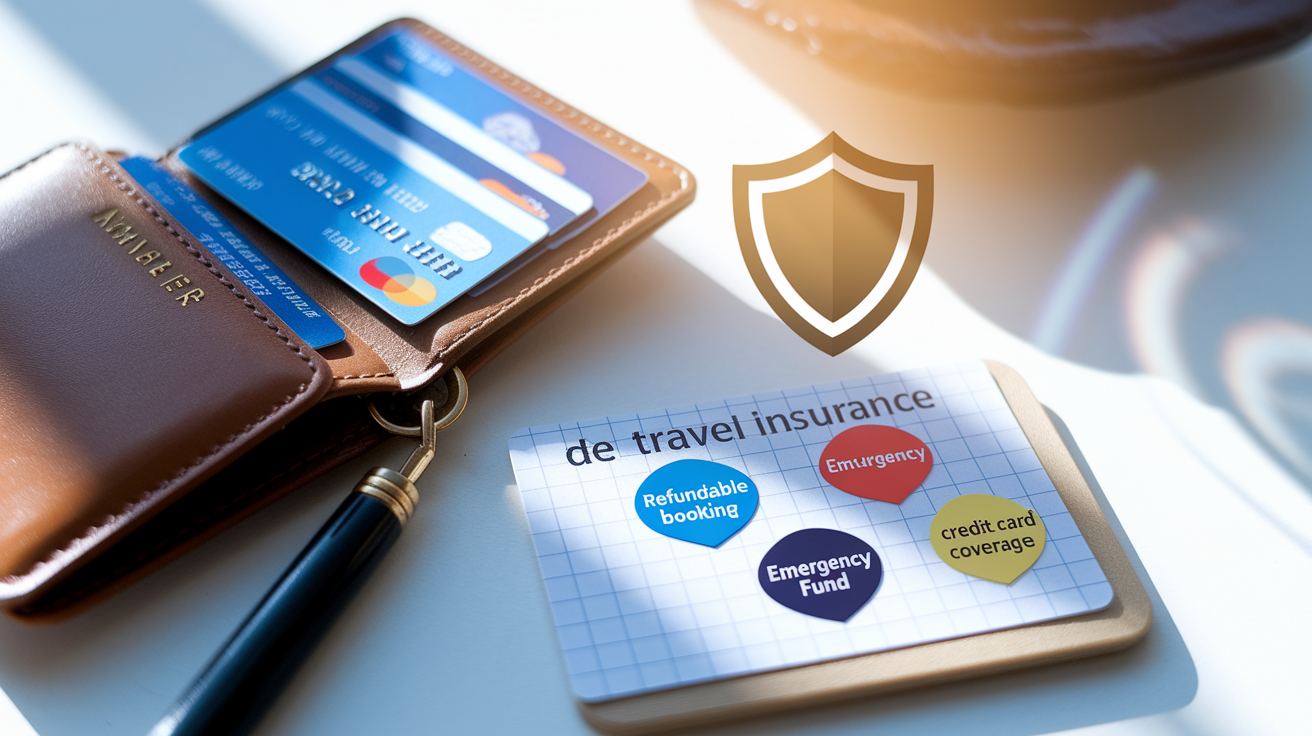
Many premium credit cards include built in travel protections that can reduce or eliminate the need for separate travel insurance, especially on shorter domestic trips or when your total prepaid costs are modest. Common credit card benefits include trip cancellation and interruption coverage (often with limits of $5,000 to $10,000 per person per trip), baggage delay reimbursement, lost luggage coverage, and rental car collision damage waivers. Some cards also offer limited emergency medical or evacuation benefits, typically capped at $50,000 to $100,000. These protections apply only when you pay for the trip (or specific trip components) with the card, and coverage is usually secondary, meaning the card pays after your primary insurance.
Credit card protections generally fall short of comprehensive travel insurance in three key areas. First, medical and evacuation limits are often too low for remote international travel where a helicopter evacuation could cost $150,000 or more. Second, trip cancellation coverage may not include all the covered reasons a dedicated policy offers. For example, many cards exclude tour operator bankruptcy, jury duty, or family member illness unless it’s an immediate family member. Third, baggage and personal effects limits are typically modest (often $500 to $1,500 per trip) with low per item caps, leaving expensive electronics and jewelry underinsured.
Refundable bookings and emergency fund self insurance work well for low cost trips and travelers with financial flexibility. If you book fully refundable airfare and hotel rooms, your cancellation risk drops to near zero, and the primary value of travel insurance becomes medical and evacuation coverage. For a domestic trip with $600 in nonrefundable costs, you could skip insurance and set aside the $30 to $60 premium in an emergency fund to cover the potential loss yourself. This approach makes sense when you’re comfortable absorbing the downside and your existing health insurance covers domestic travel.
Credit card protections compared to dedicated travel insurance:
- Trip cancellation and interruption: cards typically $5,000 to $10,000 limit, secondary coverage, fewer covered reasons. Travel insurance typically up to full trip cost, primary coverage, broader covered reason lists.
- Medical coverage: cards often $0 to $50,000, limited to emergency care. Travel insurance $50,000 to $1,000,000, includes routine and emergency care abroad.
- Evacuation: cards $50,000 to $100,000 (rare, not all cards). Travel insurance $100,000 to $500,000 standard.
- Baggage: cards $500 to $1,500 total, low per item caps. Travel insurance $1,000 to $3,000 total, similar per item caps but easier claims.
- CFAR: cards never offer. Travel insurance offers as upgrade for 25% to 50% premium increase.
When refundable fares, strong credit card protections, or a healthy emergency fund cover your downside, skip travel insurance. A fully refundable $1,200 trip with modest medical exposure and a premium credit card offering $10,000 trip cancellation coverage and $100,000 evacuation leaves little gap to insure. Similarly, a $400 weekend getaway with minimal health risk and no valuable items in checked bags rarely justifies a $20 to $40 premium. The break even shifts when nonrefundable deposits climb above $1,000 to $2,000, when you’re traveling internationally to areas with expensive or limited medical care, or when your card’s coverage limits fall short of realistic evacuation or medical costs.
Final Words
Most travelers find travel insurance worth it when prepaid trip costs climb above $1,000, they’re heading overseas without health coverage, or medical evacuation risk is real.
Compare what you stand to lose against the 4%–10% premium cost. That math usually tilts toward buying coverage for international trips, older travelers, and anyone without a solid emergency fund.
For weekend getaways with refundable bookings and strong credit-card protections, you can often skip the policy. When the stakes are higher, though, coverage closes the gap between a fixable problem and a financial disaster you handle alone.
FAQ
Q: Do you really need travel insurance?
A: You really need travel insurance when your trip has high nonrefundable costs, involves international or remote travel, you lack an emergency fund, or you face health risks—otherwise refundable bookings and card protections may suffice.
Q: What are the disadvantages of travel insurance?
A: The disadvantages of travel insurance are cost, coverage gaps, and claim denials; some policies, especially CFAR (cancel for any reason), are costly, can exclude pre-existing conditions, cap item payouts, or duplicate card benefits.
Q: Does Chase Sapphire have trip insurance?
A: Chase Sapphire does offer trip insurance on many cards, providing trip cancellation/interruption, delay, and baggage protections; coverage limits and whether it’s primary or secondary vary—check your card’s Guide to Benefits for exact terms.
Q: Is norovirus covered by travel insurance?
A: Norovirus is covered by travel insurance when it meets policy conditions: medical expenses during travel usually qualify, and pre-trip cancellation may be allowed with a doctor’s note—coverage and proof requirements vary by policy.