
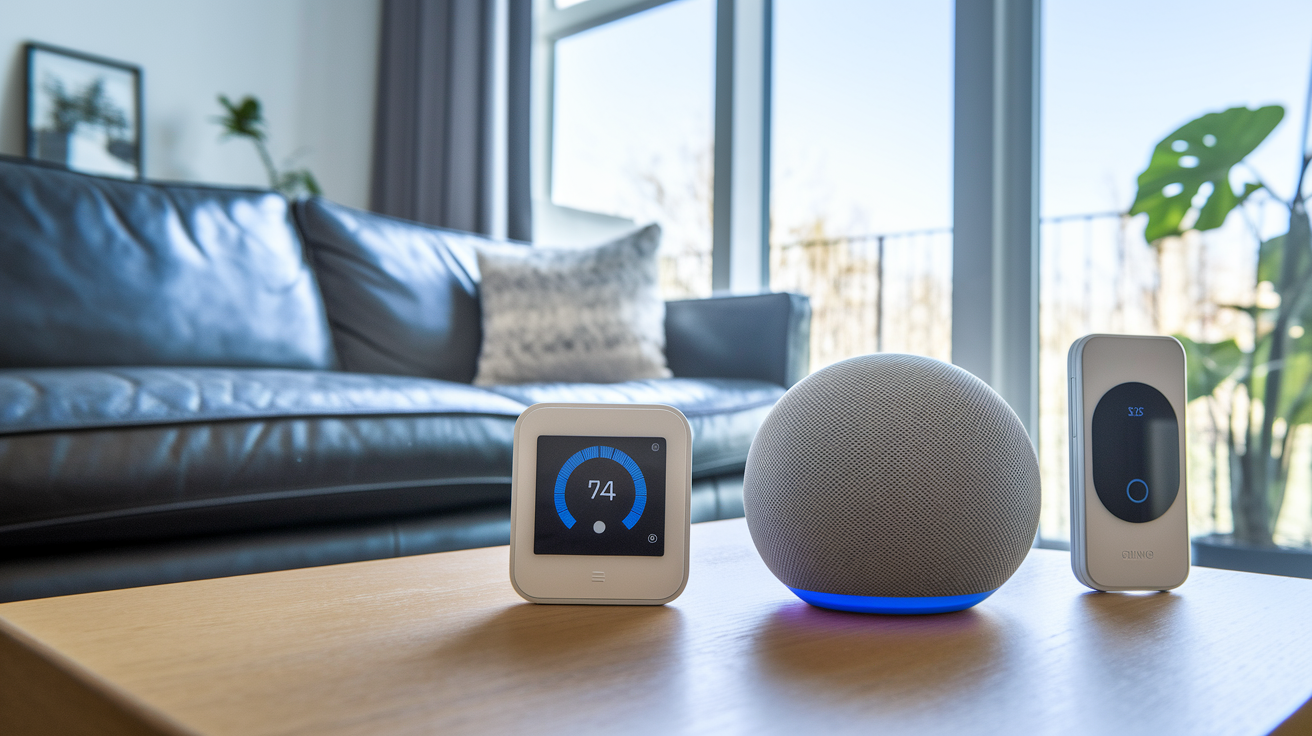


What if your house finally understood you the first time?
In 2026 smart home tech stopped being a hobby and started doing useful work around your life.
The biggest shifts are on-device AI that links multi-step commands, Matter compatibility so different brands actually play nice, and local machine learning that cuts lag and keeps more of your data private.
The payoff: faster responses, simpler setup, better privacy, and thermostats that can shave 8–15% off your energy bill.
Here’s a clear guide to what’s new, what matters, and what to buy or avoid.
Key Innovations Defining the Newest Smart Home Technology in 2026

The newest smart home technology boils down to three big shifts: AI assistants that actually understand you the first time and chain multiple actions together, Matter compatibility that finally lets different brands talk to each other without a bunch of separate hubs, and on-device machine learning that cuts lag and keeps more of your data private. Devices that launched between September 2025 and March 2026 treat local processing as the norm instead of a premium feature, which means cameras, speakers, and thermostats can analyze what’s happening without bouncing every little thing off a cloud server halfway across the country.
Smart speakers and displays now come with four to eight microphones and sip only one to five watts on standby. Security cameras stretch up to 4K, and battery models can run three to twelve months before you need to charge them. Thermostats priced from ninety nine to two hundred forty nine dollars claim they’ll shave eight to fifteen percent off your energy bill through smarter schedules and tie ins with utility programs that reward you for cutting back during peak hours. Smart locks at ninety nine to two hundred ninety nine dollars unlock automatically when you walk up, using ultra wideband to measure how close your phone is. Matter makes it so one hub can coordinate Amazon, Google, and Apple gear without forcing you to juggle different apps or firmware updates for each brand.
Subscription costs still add up, usually three to thirty dollars per month depending on how many cameras you want storing video in the cloud and whether you bundle services. Manufacturers are also pushing modular designs. Vacuum robots add mop attachments, outdoor robots swap snow blades for lawn mower decks, and lighting switches integrate programmable Matter buttons that trigger entire scenes with one press. All of this moves home automation from hobby territory into something most people can actually use without a manual.
Top developments shaping the newest smart home technology:
- AI driven multi step routines that interpret conversational commands and link actions across devices without you needing to code anything
- 4K security cameras with local analytics cutting down false alerts and cloud bandwidth while keeping enough detail to identify packages and visitors
- Matter compatibility on locks, bulbs, switches, and hubs making cross platform pairing simple and killing off the need for brand specific bridges
- Advanced thermostats with utility grid integration shifting HVAC loads to off peak hours and earning you demand response credits
- New smart speakers priced forty nine to two hundred ninety nine dollars offering faster wake word detection and lower standby power through on device processing
- Improved home robotics from two hundred ninety nine to fourteen hundred ninety nine dollars and beyond featuring AI mapping, obstacle removal arms, and modular attachment platforms for year round outdoor tasks
Cutting-Edge Smart Speakers and Displays Driving the Latest Smart Home Technology

Smart speakers and displays released in the last six to twelve months care more about microphone count and local processing power than giant speaker drivers. Models at the forty nine to ninety nine dollar level typically pack four microphones, while devices pushing two hundred ninety nine dollars use six to eight mics in beamforming arrays that can pick out your voice even when music’s cranked up. Standby power has dropped to one to five watts across most product lines because of new sleep modes that keep the microphone awake without running every amplifier and screen LED at full blast.
Voice assistants now handle more language processing steps right on the device before asking the cloud for help, which shaves noticeable lag out of simple commands. “Turn off the living room lights” fires in under a second when the speaker can verify the request locally and send only the final instruction to your bulbs over Matter or Zigbee. Screens range from five to fifteen inches. Higher resolution panels show up on models built for video calls and recipe following where clarity actually matters, and most displays include ambient light sensors that dim the interface overnight and brighten it in sunny kitchens.
AI native design means speakers understand multi step instructions without you building explicit routines. “Play jazz in the kitchen and turn on the entryway light” triggers two actions in one breath, and machine learning models adapt to how you phrase things so you rarely have to repeat yourself. Integration with Amazon, Google, and Apple ecosystems determines which assistant answers, but Matter compatibility lets the same speaker control bulbs and locks regardless of which platform they came from, narrowing the compatibility gap that used to lock you into a single vendor. Battery powered portable speakers add the flexibility to move automation between rooms, though they trade always listening standby for button wake to stretch runtime beyond eight hours.
| Device Type | Typical Price | Key AI Feature | Ecosystem Support | Standby Power |
|---|---|---|---|---|
| Entry Smart Speaker | $49–$99 | On device wake word; cloud NLP | Single ecosystem (Alexa or Google) | 2–3 W |
| Mid Tier Speaker with Display | $129–$199 | Multi step routines; local scene triggers | Matter + primary assistant | 3–5 W |
| Premium Smart Display | $229–$299 | On device ML inference; adaptive brightness | Matter + Apple HomeKit or Google Home | 4–5 W (display active); 1–2 W (screen off) |
| Portable Battery Speaker | $79–$149 | Button wake AI; multi room sync | Primary ecosystem + Bluetooth | 0 W standby (manual wake); 8–12 hour runtime |
| Hub Integrated Display | $199–$299 | Local automation controller; no cloud dependency | Matter, Zigbee, Z‑Wave bridging | 3–5 W |
Breakthroughs in Smart Security Systems and Cameras Within Newest Smart Home Tech

Security cameras shipping in early 2026 deliver 1080p as the floor and 4K in models above one hundred fifty dollars. Battery powered doorbells and spotlight cams claim three to twelve months of runtime depending on how much motion they see and whether you turn on always on preview streams. Local analytics now run on the camera’s own processor, tagging people, packages, vehicles, and pets without uploading every frame to the cloud. This cuts bandwidth, protects privacy, and reduces false alerts by letting the device toss out shadows and tree branch motion before pinging your phone. Subscription plans for cloud storage still run three to fifteen dollars per camera per month, but several vendors offer models with microSD slots or built in eMMC memory that record continuously for a week without any recurring fee.
Floodlight cameras add dual LED arrays and customizable detection zones so you can ignore sidewalk traffic while monitoring your driveway. Edge AI tells the difference between a delivery truck and a neighbor walking a dog well enough to send different notifications. Smart locks have picked up ultra wideband ranging alongside NFC and Bluetooth, letting the lock measure your phone’s distance within centimeters and unlock the door as you step onto the porch. No fumbling with an app or reaching for a key. Dual camera doorbells capture a head to toe visitor view plus a downward angled package zone, and some models integrate 3D facial recognition that cross references stored profiles for instant friend or stranger classification.
Encryption has tightened across product lines. Several lock manufacturers advertise FIPS capable modes, and camera vendors default to end to end encrypted streams between the device and your app so even the manufacturer’s cloud relay can’t decrypt the video. Professional monitoring integrations now pair real time Ring or similar app alerts with smoke, carbon monoxide, and intrusion sensors, promising faster dispatch and fewer false positives through multi sensor correlation. If motion and a door sensor trip at the same time, confidence rises enough to trigger an alarm, while motion alone might just log the event.
Privacy and detection improvements transforming security tech:
- On device person and package detection that analyzes frames locally and uploads only tagged clips, cutting cloud storage costs and limiting third party access to raw footage
- Customizable activity zones drawn in the mobile app to ignore street traffic, neighboring driveways, or tree branches that used to cause nuisance alerts
- End to end encrypted video streams ensuring the manufacturer and cloud relay can’t view footage even during transmission and storage
- Ultra wideband and dual camera lock systems that confirm identity through precise distance measurement and simultaneous face plus package monitoring, lowering the risk of tailgating or porch theft
The Latest Smart Thermostats, HVAC Integrations and Energy-Saving Technology

Thermostats priced ninety nine to two hundred forty nine dollars now ship with AI driven scheduling that learns your weekday and weekend patterns within two weeks, then adjusts heating and cooling to cut runtime during empty hours while keeping the house comfortable when you return. Manufacturers advertise typical savings around eight to fifteen percent on heating and cooling bills, though actual results depend on insulation quality, HVAC efficiency, and how aggressively you let the system shift temperatures when nobody’s home. Higher end models integrate with utility demand response programs, automatically bumping the cooling set point up two or three degrees during peak afternoon load and earning you credits or rebates that offset the device cost within a year or two.
Energy dashboards pull data from smart meters and individual circuits if you add panel level monitors, showing real time kilowatt consumption and comparing your usage against neighborhood averages or prior billing cycles. Some thermostats coordinate with smart vents to direct airflow only to occupied rooms, though vent systems add another hundred to three hundred dollars in hardware and need compatible HVAC ducting. When you pair with programmable lighting and motorized shades, the thermostat can delay morning heat until the sun warms south facing rooms, then close shades in the afternoon to block solar gain, stacking energy savings beyond what the HVAC unit does alone.
Smart shades and switches round out the energy control stack. Shades priced from one hundred forty nine to three hundred ninety nine dollars per window automate based on sunrise, indoor temperature, or manual app schedules. Switches at nine to fifty nine dollars replace legacy dimmers with Matter compatible controls that dim LED bulbs smoothly and respond to voice or app commands. Together these devices create a closed loop: the thermostat calls for less cooling, the shades lower to block afternoon sun, the lights dim in empty rooms, and the energy monitor confirms the drop in real time power draw.
Energy automation examples shaping modern smart homes:
- Peak hour load shifting that pre cools the home by two degrees before the utility’s high rate window, then coasts on thermal mass during expensive afternoon hours
- Utility demand response enrollment triggering automatic temperature adjustments during grid stress events in exchange for bill credits or rebates
- Adaptive occupancy schedules learned through motion sensors and phone presence, making sure HVAC and lighting run only when rooms are in use
- Solar integrated time of use automation charging batteries or running appliances during midday solar production and cutting evening grid draw
- Multi sensor coordination between thermostats, shades, and air quality monitors to optimize ventilation, heating, and lighting as a unified system instead of independent devices
The Newest Smart Lighting, Shades, and Adaptive Ambiance Technology
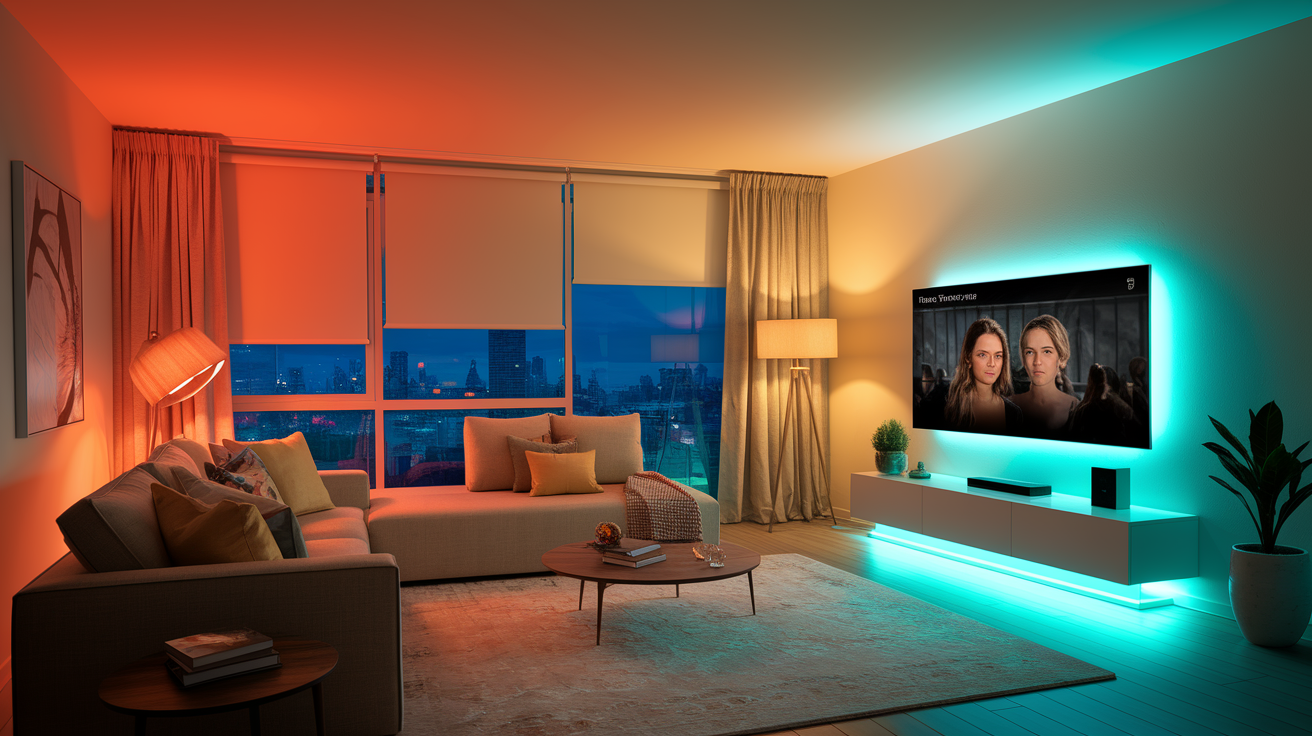
Smart bulbs and switches released in the last year lean into Matter compatibility and dynamic color engines that shift from warm amber at bedtime to cool daylight during morning work sessions, all controllable through a single app or voice command no matter if you run Amazon, Google, or Apple ecosystems. Bulbs priced nine to thirty five dollars offer sixteen million color combinations and tunable white ranges from two thousand to six thousand Kelvin. Switches at fifteen to fifty nine dollars retrofit existing fixtures and add dimming, scheduling, and scene triggers without replacing every bulb in the house. Low latency local control means tapping a physical switch or saying “Lights on” yields instant response because the command routes through a nearby hub or directly to the bulb over Thread instead of bouncing to a distant cloud server.
Motorized shades and blinds integrate with lighting systems to create adaptive ambiance. Morning routines open shades and warm the bulbs to simulate sunrise, midday scenes close south facing shades and raise light output in home offices, and evening modes lower shades and shift to amber tones that reduce blue light exposure before sleep. Some lighting products add audio sync, pulsing color in time with music playback from integrated speakers, though this feature leans toward entertainment instead of daily automation. Phosphor blends in recent LED releases improve color rendering, making whites appear crisper and skin tones more natural compared to earlier generations that often cast a greenish or clinical hue.
Scene based control bundles multiple actions into one command. “Movie time” dims overhead lights to twenty percent, closes blackout shades, and turns on bias lighting behind the television, all triggered by a button press, scheduled time, or voice phrase. The shift to local processing and Matter interoperability means these scenes fire reliably even when internet connectivity drops because the hub or primary controller stores the logic on device and talks directly with bulbs and shades over low power mesh networks. Outdoor smart lighting adds motion activated path lights and schedule driven landscape accents, with bulbs rated for temperature extremes and weather exposure while keeping the same app based control as indoor fixtures.
Advanced Smart Locks, Access Control, and Presence Automation
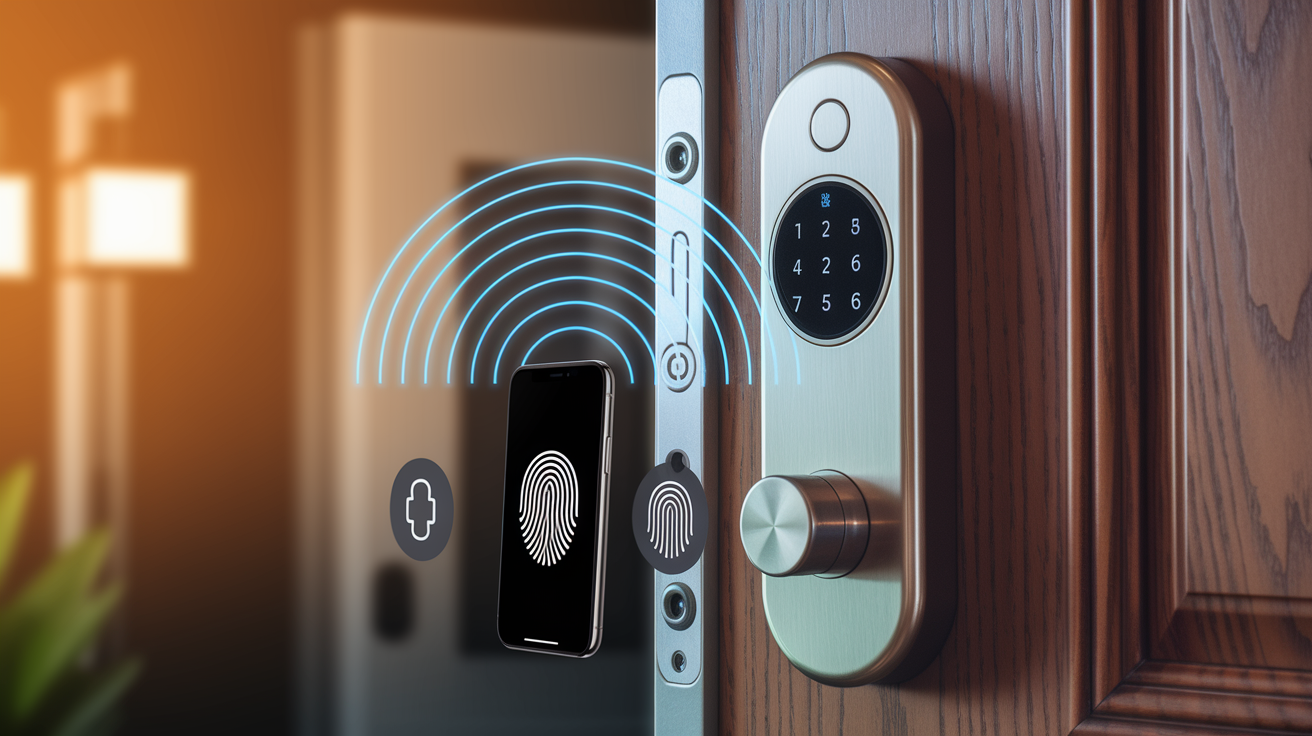
Smart locks priced ninety nine to two hundred ninety nine dollars now detect your phone’s proximity using ultra wideband or Bluetooth ranging, unlocking the door automatically as you step onto the porch and re locking when you walk away. No app tap, no fumbling for keys. NFC backup lets you unlock with a tap from a phone, watch, or key fob when the battery runs low or when you lend temporary access to a guest who doesn’t have the app installed. Multi factor authentication options layer biometric fingerprint scans, numeric PIN pads, and physical keys so you can choose convenience for daily use and require higher security when arming vacation mode or granting service provider access.
Battery life improvements mean many locks run twelve to eighteen months on four AA batteries, and low battery warnings arrive weeks before the lock stops responding, giving you plenty of time to swap cells without getting locked out. Matter compatibility lets these locks integrate with Amazon, Google, and Apple ecosystems at the same time, so anyone in the household can unlock through their preferred assistant or app. Presence based automations can trigger entryway lights, disarm security systems, and adjust the thermostat the moment the lock registers an authorized unlock. Some models add FIPS grade encryption modules for buyers who want government level security standards, though most consumer setups rely on AES 128 or AES 256 encryption that balances strong protection with low processing overhead.
Installation stays straightforward on standard deadbolt bores. Most locks replace only the interior hardware and reuse the existing exterior cylinder and strike plate, so renters can install and remove the device without permanent modification. Remote access through a hub or bridge lets you issue time limited codes for contractors, cleaners, or Airbnb guests, and audit logs record every unlock with a timestamp and user ID, useful for tracking after school arrivals or confirming service appointments.
Improved authentication and unlocking methods reshaping access control:
- Ultra wideband ranging for hands free unlock measuring phone distance to within centimeters so the lock opens as you reach the door and avoids accidental triggers from the sidewalk
- NFC tap to unlock as a low power backup enabling access via phone, watch, or dedicated fob when Bluetooth is disabled or battery life is critical
- Layered credential options combining PIN codes, fingerprint readers, and traditional keys so you can downgrade security for speed during daily entry and upgrade requirements for guests or extended absences
- Matter native integration allowing the same lock to respond to Alexa, Google Assistant, Siri, and third party home automation platforms without parallel account setups or conflicting firmware
Next-Generation Smart Home Hubs, Controllers, and Matter Interoperability
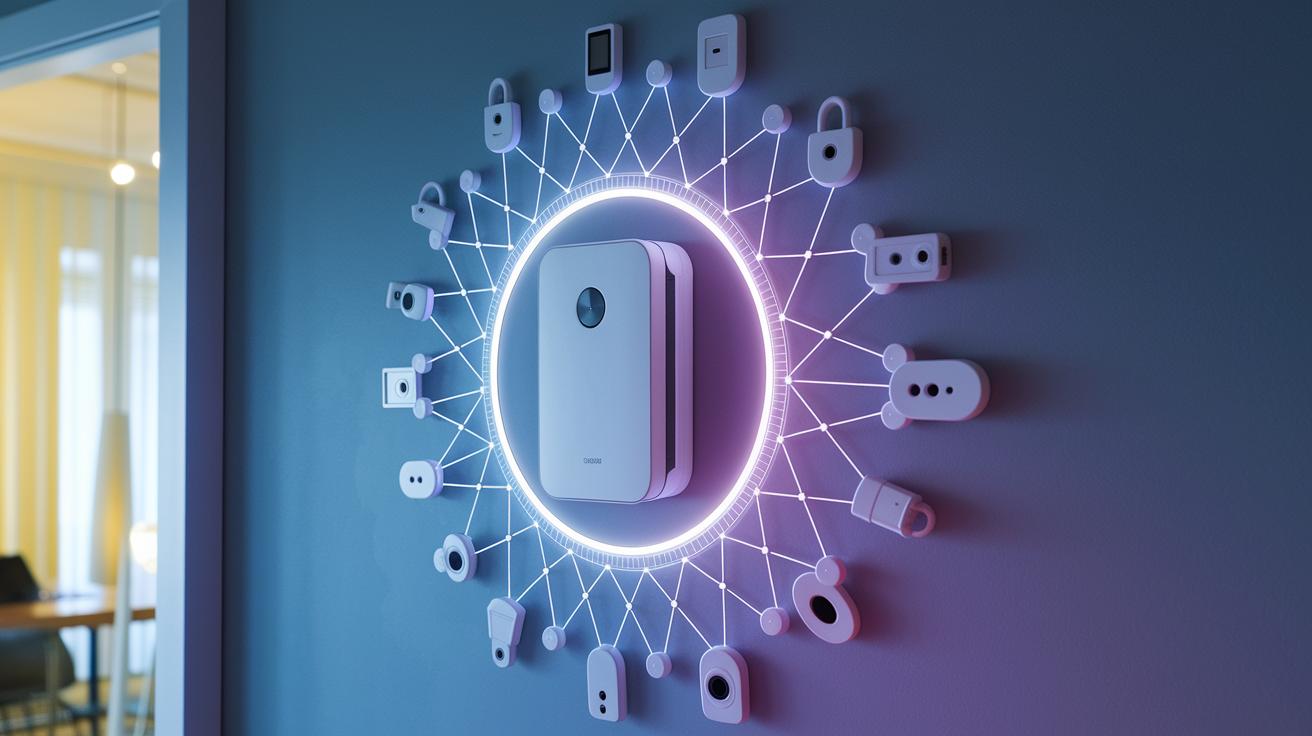
Smart home hubs priced one hundred forty nine to three hundred forty nine dollars centralize automation logic and provide local control that survives internet outages, a critical upgrade for security systems and climate controls that shouldn’t depend on cloud availability. These hubs bridge legacy Zigbee and Z Wave devices into the Matter ecosystem, so older sensors, switches, and dimmers gain cross platform compatibility without replacement. Local processing reduces the latency that used to frustrate voice commands routed through distant servers. Panel mount controllers with touchscreens offer wall mounted interfaces for lighting scenes, thermostat adjustments, and security arming, replacing scattered switches with a single control point per floor or zone.
Battery backup and cellular failover options add resilience. If power drops or the ISP connection fails, the hub keeps running critical automations and can alert your phone over LTE, making sure locks, cameras, and alarms stay functional during storms or outages. Device limits vary by hub. Entry models support thirty to fifty devices, and professional grade controllers handle two hundred or more, enough for whole home installations that include every bulb, outlet, and sensor. Setup has simplified to QR code scanning and automatic device discovery, and firmware updates now push over the air without manual intervention, cutting the maintenance burden that used to scare off non technical users.
Matter and Thread Advancements
Matter’s rollout between late 2025 and early 2026 killed off most proprietary communication protocols for new devices, letting a single app control locks, lights, thermostats, and cameras from different manufacturers without juggling brand specific hubs or cloud accounts. Thread operates as the low power mesh network underneath Matter, routing commands between devices with almost zero latency and self healing topology that reroutes traffic when one node fails or moves out of range. The combination means adding a new bulb or sensor requires scanning a Matter code, and the device joins the network within seconds, automatically appearing in Amazon Alexa, Google Home, and Apple Home at the same time. No firmware flashing, no account linking, no compatibility charts.
| Protocol | Range | Power Use | Best Device Types | Notes |
|---|---|---|---|---|
| Matter over Thread | 30–100 ft per hop; mesh extends range | Very low (coin cell battery lasts years) | Sensors, switches, locks, bulbs | Cross platform standard; self healing mesh; low latency |
| Zigbee | 30–100 ft per hop; mesh network | Low | Legacy sensors, dimmers, plugs | Requires hub for bridging to Matter; proven reliability |
| Z Wave | 100+ ft per hop; mesh network | Low to medium | Locks, garage openers, outlets | Less 2.4 GHz interference; hub needed for Matter integration |
| Wi-Fi | Depends on router (50–150 ft typical) | Medium to high | Cameras, displays, high bandwidth devices | Direct cloud/local IP control; Matter support varies by device |
AI-Driven Robotics, Appliances, and Home Assistants Transforming Modern Homes
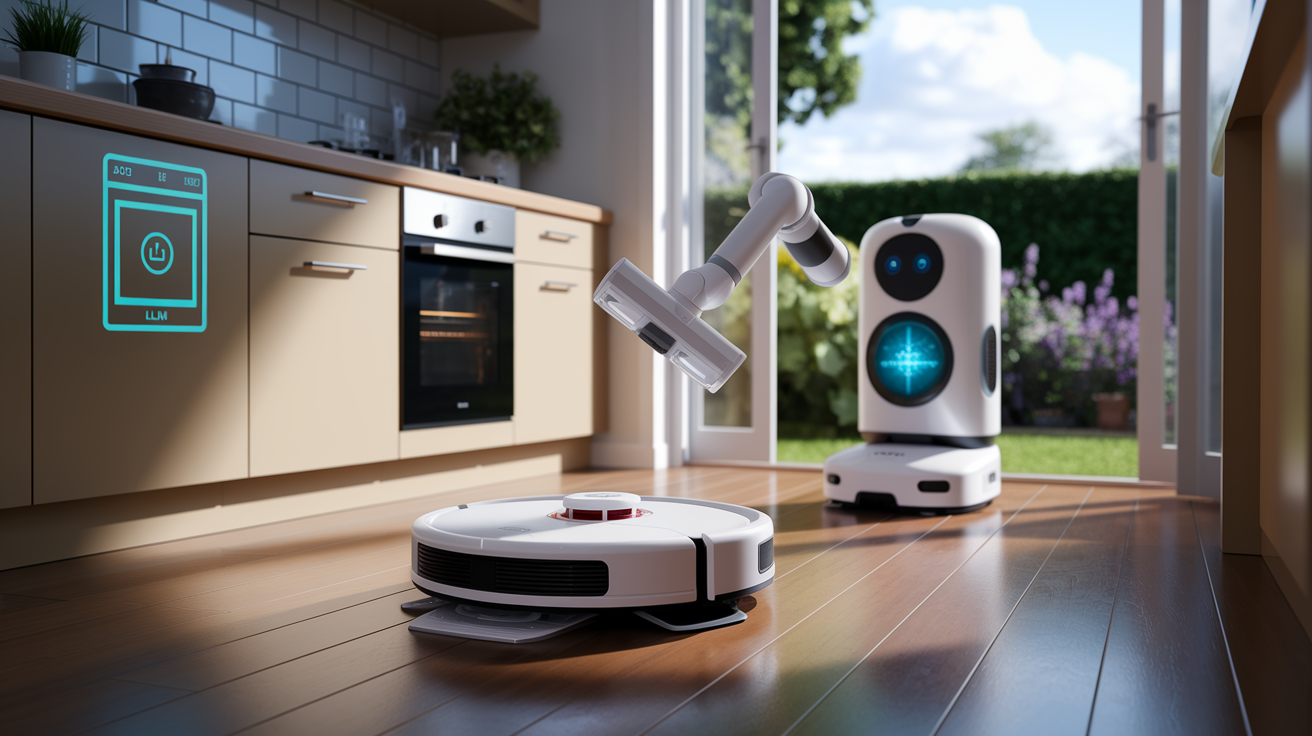
Robotic vacuums and mops priced two hundred ninety nine to fourteen hundred ninety nine dollars now navigate using AI powered cameras and lidar that build floor plans within the first cleaning run, remember room names, and dodge obstacles like charging cables or pet bowls without manual boundary strips. High end models add robotic arms that lift lightweight stuff like shoes, toys, or small boxes out of the cleaning path and place them on nearby furniture, then go back to finish vacuuming the cleared area. Multi function platforms combine vacuum, mop, and air purification modules on a single robot base, with swappable attachments for seasonal tasks and app control that schedules each function separately.
Outdoor robots have expanded beyond lawn mowing to include snow clearing, leaf blowing, and gutter flushing through modular attachment systems. One base unit accepts interchangeable heads, and GPS navigation plus boundary free mapping get rid of the buried wire perimeters that older mowers needed. Solar charging panels extend runtime during long summer days, and weather resistant enclosures let the robot dock outdoors year round without garage storage. Kitchen appliances embed large language models that accept conversational commands. “Preheat the oven to three seventy five and remind me in ten minutes” or “Start the dishwasher on the sanitize cycle after midnight,” and they sync with recipe apps to automate multi step cooking sequences.
Smart refrigerators track expiration dates, suggest recipes based on current inventory, and reorder staples through connected grocery services. Washing machines adjust cycle length and detergent dosing by analyzing load weight and fabric types via internal sensors. Modular designs like the SwitchBot K20+ combine air purification, humidification, and scent diffusion in one chassis, letting you reconfigure the device’s function by swapping cartridges instead of buying separate appliances. Voice integration ties these systems into broader home automation. Telling the assistant “Start my morning routine” can brew coffee, toast bread, and warm the bathroom floor at the same time.
Capabilities driving the latest home robotics and smart appliances:
- AI mapping and room recognition that learns floor plans within one or two cleaning cycles and accepts voice commands like “Vacuum the kitchen” without manual zone drawing
- Obstacle removal robotic arms lifting shoes, cables, and lightweight clutter to clear the cleaning path and resume vacuuming without you stepping in
- Modular attachment platforms letting one outdoor robot mow in summer, clear snow in winter, and blow leaves in fall by swapping heads in under a minute
- LLM powered appliance control accepting natural language cooking or cleaning instructions and running multi step sequences with minimal user input
- Integrated multi function modules that combine air purification, humidification, scent diffusion, or vacuum mop sweep in a single device to cut appliance clutter and streamline app management
Privacy, Security and Local Processing in the Newest Smart Home Technology

On device processing has shifted from premium feature to baseline expectation. Cameras analyze motion and tag people, packages, and vehicles without uploading raw footage. Voice assistants run wake word detection and simple commands entirely on the speaker’s chipset, and thermostats execute scheduling logic locally so they keep adjusting temperature even when the internet drops. This architectural change reduces cloud dependency, cuts bandwidth consumption, and limits the window where third parties, including the device manufacturer, can access your data. End to end encryption now ships as the default setting on many camera and doorbell models, making sure video streams stay encrypted from the lens through the cloud relay to your phone so even the vendor’s own servers can’t decrypt the footage in transit.
Subscription trade offs still exist. Free tiers often limit cloud storage to twenty four or seventy two hours of rolling history and cap the number of cameras you can connect, while paid plans extend retention to thirty or sixty days and unlock advanced features like facial recognition or custom activity zones. Some vendors skip subscriptions completely by including microSD slots or built in eMMC storage for continuous local recording, though you lose remote access to footage if the camera is stolen or destroyed before you pull the card. Local inference also improves accuracy by letting devices learn your specific environment. A camera trained on your driveway recognizes your car and ignores passing traffic more reliably than a generic cloud model analyzing frames from millions of homes.
User control over data collection has become a selling point, with settings that disable cloud uploads altogether, anonymize usage telemetrics, or delete voice recordings right after processing. Multi factor authentication, biometric login, and audit logs add layers of account security, making it harder for unauthorized users to access cameras, locks, or climate controls even if they get your password.
Privacy and security best practices embedded in modern smart home devices:
- Local voice and video analytics processing commands and motion detection on device to cut cloud round trips and third party data exposure
- End to end encrypted camera streams making sure manufacturers and cloud relays can’t decrypt video during transmission or storage
- User configurable cloud opt outs letting devices operate entirely offline for owners who care more about privacy than remote access and cloud backups
- Audit logs and multi factor authentication tracking every device access with timestamps and requiring biometric or PIN confirmation for sensitive controls like lock commands or security disarm
Costs, Subscriptions, and ROI for Adopting the Newest Smart Home Technology

Initial hardware costs for smart home adoption split into three common tiers depending on coverage goals and feature expectations. A starter setup, one smart speaker, one security camera, two smart bulbs, and one smart plug, runs three hundred to five hundred dollars and introduces voice control, basic monitoring, and automated lighting without needing a dedicated hub or pro installation. Mid tier systems expand to six to ten devices, usually adding a smart display, two to three cameras, a thermostat, four to six bulbs or switches, and a smart lock, with total hardware costs ranging seven hundred to fifteen hundred dollars and an optional hub priced one hundred forty nine to three hundred forty nine dollars for local automation and better interoperability.
Premium whole home setups go past two thousand dollars and include ten or more devices. Multi room speakers and displays, four to eight cameras covering perimeter and interior zones, a professional grade thermostat, motorized shades, a robot vacuum, and a central hub managing local routines and cross protocol bridging. Subscription fees layer onto hardware costs. Camera cloud storage commonly runs three to fifteen dollars per camera per month or five to thirty dollars per month for multi device bundles, and some vendors offer free basic plans that store the last day of clips with limited resolution or feature access.
Energy savings provide measurable return over time. Thermostats advertising eight to fifteen percent heating and cooling reductions can cut fifty to one hundred fifty dollars per year off utility bills in moderate climates, paying back the device cost within two to three years. Participation in demand response programs adds rebates or credits that speed up ROI. Smart lighting and shades contribute smaller but cumulative savings by cutting wasted runtime and blocking solar heat gain, while security and convenience features deliver value that varies by household. Warranties usually span one to three years, and most devices get firmware updates for at least two to four years after purchase, though long term support varies by manufacturer and product line.
| Tier | Typical Device Count | Estimated Cost | Notes |
|---|---|---|---|
| Starter | 3–5 devices | $300–$500 | Smart speaker, 1 camera, 2 bulbs, 1 plug; no hub required; minimal subscription; good for testing automation or single room focus |
| Mid Tier | 6–10 devices | $700–$1,500 | Smart display, 2–3 cameras, thermostat, 4–6 bulbs/switches, smart lock; optional hub $149–$349; multi camera subscription $5–$30/month; measurable energy savings |
| Premium Whole Home | 10+ devices | $2,000+ | Multi room speakers/displays, 4–8 cameras, professional thermostat, motorized shades, robot vacuum, central hub; pro installation optional; subscription bundle recommended; long term ROI from energy/security value |
Final Words
You just read a practical tour of this year’s biggest jumps: AI-native speakers and assistants, Matter-driven interoperability, sharper 4K cameras and on-device privacy, smarter thermostats and energy dashboards, improved locks and presence automations, plus robot helpers and cost breakdowns.
Next, focus on three checks: device compatibility (Matter or your hub), privacy and local processing, and the total subscription cost over a year.
Now you’re ready to pick the pieces that fit your home. The newest smart home technology is more capable and easier to live with than ever.
FAQ
Q: What are the latest trends in smart home technology and what is the new home technology in 2026?
A: The latest trends in smart home technology and new 2026 features are AI-native assistants, Matter cross-brand support, on-device ML, 4K edge cameras, advanced thermostats with 8–15% savings, and better robotics.
Q: What is the best smart home device system?
A: The best smart home device system depends on your priorities: favor Matter-first setups for widest compatibility; choose Apple for privacy, Google for search and AI, or Amazon for device variety and routines.
Q: What are the 4 smart devices?
A: The four smart devices commonly referenced are a smart speaker/display, security camera or doorbell, smart thermostat/energy controller, and a smart lock—covering convenience, security, energy savings, and access control.