


Struggling to offer health insurance without a benefits team?
The small business health options program (SHOP) is the simple marketplace created by the Affordable Care Act to let small employers shop group plans in one place.
It helps businesses with about 1–50 full-time employees compare metal tiers, set employer contributions, and enroll year-round.
This post breaks down who qualifies, what plan types cover, how enrollment and effective dates work, and the tax-credit and subsidy rules you should check before you sign up.
Comprehensive Overview of the Small Business Health Options Program (SHOP)

The Small Business Health Options Program (most people just call it SHOP) came out of the Affordable Care Act to help small employers offer group health insurance without wrestling through carrier negotiations alone. Big companies have entire benefits departments. Small businesses don’t. SHOP gives you a single place to browse plans from private insurers, compare metal tiers, and pick contribution levels that match your budget and hiring needs.
SHOP works for businesses with roughly 1 to 50 full-time equivalent employees, though some states stretch that definition to 100. Full-time means employees averaging 30 or more hours per week. Once you finish enrollment, coverage usually starts the first of the next month. Most carriers use a 15th-of-the-month cutoff to lock in that effective date. SHOP enrollment runs year-round, so you don’t wait for a narrow window to start offering benefits. That’s useful when you’re growing fast or bringing on mid-year hires.
One big difference between SHOP and the individual marketplace is how premium subsidies work. If you offer affordable, minimum-value coverage through SHOP, your employees generally can’t claim premium tax credits on the individual marketplace, even if they find something cheaper there. That rule ties employees to employer coverage once it meets affordability and minimum-value tests. SHOP plans use the same metal-tier labels (Bronze, Silver, Gold, Platinum), and many carriers also offer standalone dental and vision, so you can bundle benefits the way bigger groups do.
What makes SHOP distinct
Year-round enrollment: you can apply and launch coverage any month.
Choice models: offer one plan, multiple plans at the same tier, or a full range and let employees pick.
Contribution flexibility: you decide the percentage or dollar amount you’ll pay toward premiums.
Tax-credit linkage: enrolling through SHOP is typically required if you want to claim the Small Business Health Care Tax Credit.
Eligibility Rules for Employers and Employees in the SHOP Program

Eligibility starts with a head count. Most states cover businesses with 1 to 50 full-time employees. A few states classify small groups as up to 100 employees. The count includes only employees working an average of 30 or more hours per week (full-time equivalent, or FTE). Part-time and seasonal workers contribute to FTE totals for tax-credit purposes, but you don’t always have to offer them coverage unless their combined hours cross that 30-hour-per-week average. To calculate FTEs, add up total hours worked by part-timers in a month, then divide by 120. Three part-timers each working 10 hours a week (120 hours total per month) equal 1 FTE.
Once you’ve figured out the eligible population, SHOP has two more employer requirements. First, you need a physical worksite (office, shop, any place where employees regularly report) in the same state where you’re buying the plan. This stops a business headquartered in one state from shopping for cheaper rates or different carrier options in another state. Second, many SHOP plans or carriers require at least 70% of eligible employees to enroll. This participation threshold helps the insurer keep a balanced risk pool. Employees who already have other qualifying coverage (spouse’s plan, Medicare, Medicaid, TRICARE) are usually excluded from the denominator, so you don’t count someone who formally waives coverage with proof of other insurance.
Dependent coverage under SHOP follows the same standards as other ACA-compliant plans. You must offer coverage to the employee’s spouse or domestic partner (where recognized) and any children under 26. You aren’t required to pay dependent premiums, only the employee’s share. But offering dependent coverage makes the plan more attractive and can help meet hiring expectations from workers with families.
| Requirement | What It Means | Common State Variation |
|---|---|---|
| Employer Size | 1 to 50 full-time employees (30+ hours per week average) | Some states extend “small group” to 100 employees |
| Participation Threshold | At least 70% of eligible employees must enroll (excluding valid waivers) | Individual carriers or states may adjust the threshold; verify with your insurer |
| Physical Worksite | Business must have a location in the state where the plan is purchased | Multi-state businesses need separate state plans or national carrier footprints |
SHOP Plan Types, Coverage Levels, and Key Benefits for Small Employers
SHOP plans use the same metal-tier framework as individual marketplace plans: Bronze, Silver, Gold, and Platinum. They’re ranked by how much of total medical costs the plan is expected to cover. Bronze plans generally cover about 60% of allowed costs, leaving the employee responsible for the other 40% through deductibles, copays, and coinsurance. Platinum covers about 90%, offering the lowest out-of-pocket costs when care is used but the highest monthly premiums. Each tier must meet ACA’s minimum essential coverage standards (hospitalization, preventive care, prescription drugs, emergency services, maternity and newborn care, mental health and substance-use services, lab tests, pediatric services including dental and vision for children, and rehabilitative services). Minimum value requires the plan to cover at least 60% of the cost of benefits. Bronze tiers typically sit right at that 60% threshold.
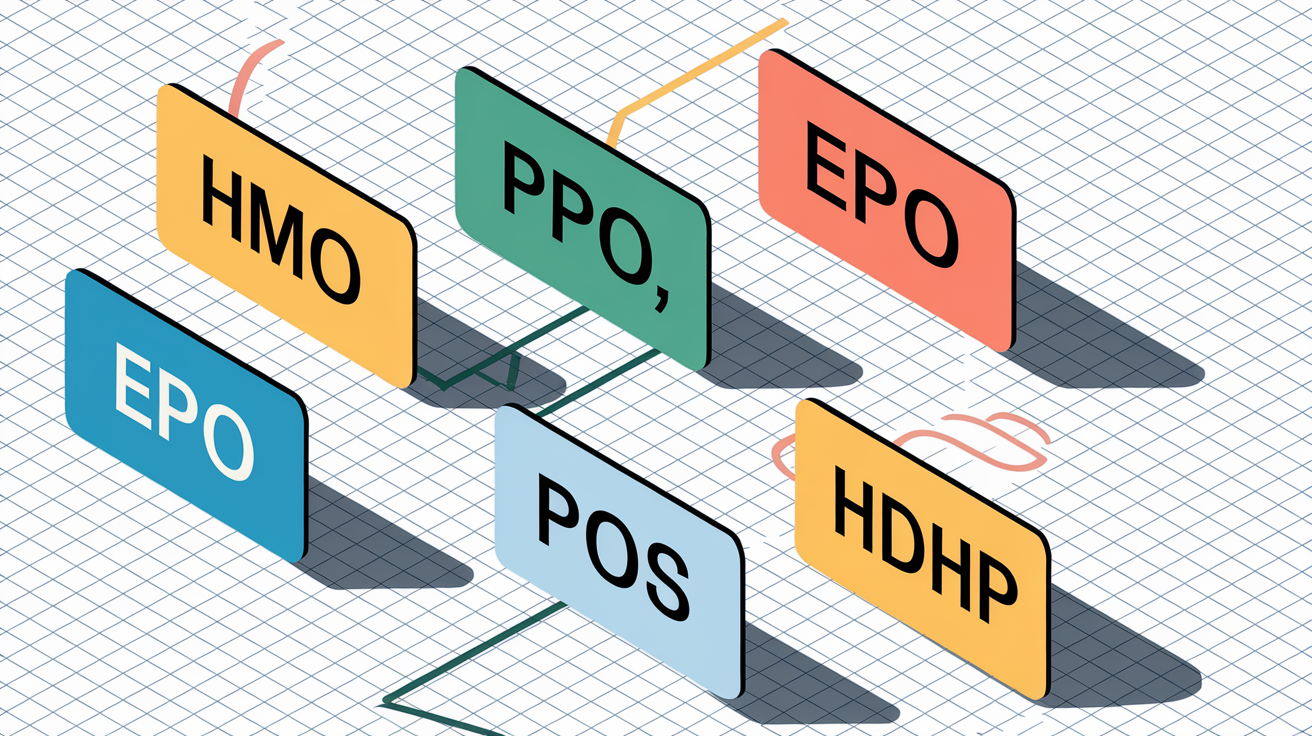
Inside each metal tier, you’ll usually find multiple plan types organized by network structure. HMO plans typically offer lower premiums and fixed copays but require a primary-care physician and referrals to see specialists. Coverage is limited to in-network providers except for emergencies. PPO plans cost more each month but let employees see any provider without referrals, including out-of-network doctors at higher out-of-pocket rates. EPO plans sit between HMO and PPO: no referrals needed, but all care must stay in-network to be covered. POS plans require a PCP and referrals like an HMO but do provide some out-of-network coverage at higher cost. HDHP options pair high deductibles with low premiums and are often compatible with Health Savings Accounts, letting employees save pre-tax dollars for medical expenses. Many SHOP carriers also offer dental and vision plans as separate add-ons, so you can bundle a fuller benefits package without rolling those costs into the medical premium.
Common SHOP plan categories and trade-offs
HMO: lower premiums, lower deductible, fixed copays, primary-care coordination, in-network only except emergencies.
PPO: greater provider choice, no referrals, out-of-network coverage available, higher premiums and higher deductibles.
EPO: in-network only, no referrals needed, lower premiums than PPO, higher immediate out-of-pocket costs.
POS: PCP referrals required, out-of-network coverage possible at higher cost, sits between HMO and PPO.
HDHP: low monthly premium, high upfront deductible, often paired with an HSA for tax-advantaged savings. Best for employees who anticipate low utilization or want to bank funds.
Understanding SHOP Enrollment Mechanics and Effective Dates

Enrolling in SHOP is straightforward, though exact steps vary slightly depending on whether your state runs its own SHOP platform or uses the federal system. You’ll start by gathering basic business information: legal business name, federal tax ID, physical worksite address, employee count, and payroll schedule. Then you create an employer account on the SHOP portal or work with a SHOP-registered agent or broker who can handle the application on your behalf. Many small employers find brokers helpful because they can compare multiple carriers, explain plan design, and assist with ongoing enrollment tasks at no direct cost to the employer.
Once your account is set up, you provide an employee roster including names, birthdates, and full-time or part-time status. The system or broker presents available plans from insurers operating in your area, broken down by metal tier and plan type. You select the plan or plans you want to offer and decide how much of the premium you’ll cover. Many employers pay 50% to 100% of the employee-only premium and a lower percentage of dependent coverage. After you finalize your choices, each employee receives enrollment materials and a deadline to either enroll or formally waive coverage. When the participation threshold is met, the insurer processes the group, invoices the employer for the first month’s premium, and coverage becomes effective.
The typical effective-date rule is simple: if you complete enrollment and payment by the 15th of the month, coverage starts on the 1st of the following month. If you miss the 15th cutoff, the effective date usually shifts to the 1st of the month after that. This timing gives the insurer about two weeks to process enrollment files, generate member ID cards, and set up billing. Some carriers have tighter cutoffs (like the 10th) or slightly more flexible ones, so verify the specific date with your broker or the insurer once you’ve chosen a plan.
Steps to enroll in SHOP
- Confirm eligibility: verify that your business has 1 to 50 full-time employees (or up to 100 in applicable states) and a worksite in the state where you’ll purchase coverage.
- Collect employee data: prepare a roster with names, birthdates, hire dates, hours worked, and dependent information.
- Compare plans and set contributions: review available carriers and metal tiers; decide your employer contribution percentage or dollar amount for employee and dependent premiums.
- Submit application and enroll employees: complete the SHOP application (directly or through a broker), distribute enrollment materials to employees, and collect signed waivers from anyone declining coverage with proof of other insurance.
Cost Factors, Employer Contributions, and Premium Structures in SHOP

SHOP premiums are built from several rating factors that differ from individual marketplace pricing. Insurers use the employee’s age, the plan’s metal tier, the geographic rating area (usually county or multi-county zone), and tobacco use if state law permits tobacco surcharges. Small-group plans don’t consider health status or pre-existing conditions when setting rates. Community rating rules mean everyone in the same age band, location, and plan pays the same base premium before any employer contribution is applied. This protects employees with chronic conditions from being priced out and makes budgeting simpler for employers. Adding a new hire won’t trigger a mid-year rate spike based on that person’s health.
Employer contributions shape the final cost employees see. You can choose a percentage model (like covering 75% of employee-only premiums and 50% of dependent premiums) or a defined dollar amount per employee or per coverage tier. A flat percentage is more common because it scales automatically when premiums rise at renewal, keeping your share proportional. The contribution you select also determines affordability for ACA purposes. If your contribution leaves the employee paying more than a set percentage of their household income for self-only coverage (9.96% for plans starting in 2026), the coverage may be deemed unaffordable. That could expose you to penalties if you’re an applicable large employer or allow the employee to seek marketplace subsidies if they’re not already locked out by the minimum-value test.
Employee premium costs vary by plan design. A 30-year-old enrolling in a Bronze HMO in a low-cost county might pay $200 per month after a 70% employer contribution. The same employee choosing a Gold PPO in a high-cost urban area could pay $400 per month with the same contribution percentage. Family coverage premiums multiply quickly as you add a spouse and children, so many employees weigh whether covering dependents through the employer plan makes sense compared to a spouse’s employer plan or, in rare affordable cases, the individual marketplace. You’ll often see higher earners select richer plans and lower earners gravitate toward Bronze or catastrophic-style HDHPs to keep monthly deductions low.
Key levers that drive SHOP premium costs
Employee age: older employees generate higher premiums, subject to a 3:1 age-rating cap (a 64-year-old can be charged no more than three times what a 21-year-old pays).
Geographic location: rating areas reflect local medical costs; urban hospitals and specialist-heavy regions typically drive higher premiums than rural areas.
Metal tier and plan type: Bronze plans cost less per month but shift more expense to the employee at the point of care; Platinum plans do the reverse; network breadth (PPO vs. HMO) also affects price.
Employer contribution strategy: a higher employer share lowers what employees pay, improving recruitment and retention but raising your monthly benefits expense; a lower share does the opposite.
Small Business Health Care Tax Credit Eligibility and Savings Potential

The Small Business Health Care Tax Credit was created to offset premium costs for qualifying small employers. To be eligible, your business must have fewer than 25 full-time equivalent employees, pay average annual wages of roughly $56,000 or less per FTE (indexed to inflation and may adjust yearly), and cover at least 50% of each enrolled employee’s premium for employee-only coverage. The credit reaches its maximum (up to 50% of your premium contributions for taxable businesses and up to 35% for tax-exempt organizations) when your workforce has 10 or fewer FTEs and average wages below about $28,000. As FTE count or average wages rise above those thresholds, the credit percentage phases down on a sliding scale, eventually reaching zero once you hit 25 FTEs or the wage cap.
Claiming the credit generally requires purchasing coverage through the SHOP marketplace, not directly from an insurer or through a private exchange. You’ll need to calculate your FTE count by adding up full-time employees (those working 30+ hours per week) and then adding part-time hours divided by 120 to get an FTE total. Average wages are calculated by dividing total annual wages paid (excluding owner and family-member wages) by your FTE count. If you clear both thresholds, you file IRS Form 8941 with your business tax return, reporting the premiums you paid and the credit amount. Tax-exempt employers claim the credit against payroll taxes rather than income taxes.
Documentation is straightforward but must be thorough. Keep payroll records showing hours worked and wages paid, premium invoices from your SHOP insurer, proof of your SHOP enrollment (account confirmation or policy documents), and your FTE and wage calculations. The IRS may ask for these records during an audit. Having them organized speeds resolution. The credit is available for two consecutive tax years, so you can claim it in year one and year two of offering SHOP coverage, but not beyond that window. Some very small employers (sole proprietors with no employees, or partnerships where only the partners are covered) don’t qualify because the credit applies only to premiums paid on behalf of employees, not owners.
| Eligibility Factor | Threshold or Requirement | Credit Percentage Available |
|---|---|---|
| Full-Time Equivalent (FTE) Employees | Fewer than 25 FTEs; maximum credit at 10 or fewer FTEs | Phases down as FTE count rises above 10, reaching zero at 25 FTEs |
| Average Annual Wages | $56,000 or less per FTE (inflation-adjusted); maximum credit below around $28,000 | Phases down as wages rise above $28,000, reaching zero around $56,000 |
| Employer Premium Contribution | Must pay at least 50% of employee-only premium for enrolled workers | Up to 50% of contributions for taxable employers; up to 35% for tax-exempt employers |
Differences Between SHOP Coverage and Individual Marketplace Plans

The most immediate difference is who purchases the plan. SHOP coverage is bought and administered by the employer, with premium contributions split between the business and enrolled employees. Individual marketplace plans are purchased directly by consumers shopping on their own. That changes how premiums are paid (payroll deduction for SHOP versus direct billing for individual), how plan selection works (employer curates or limits choices in SHOP; individual buyers see every available plan), and who handles enrollment paperwork (HR or a benefits broker for SHOP; the individual or a marketplace navigator for individual plans).
Subsidy eligibility creates a sharp dividing line. Employees offered affordable, minimum-value coverage through a SHOP plan can’t claim premium tax credits or cost-sharing reductions on the individual marketplace, even if they find a cheaper plan there or prefer a different network. Affordable means the employee’s share of self-only premium is below a set percentage of household income (9.96% for 2026), and minimum value means the plan covers at least 60% of the cost of benefits. Once those two tests are met, the employee is locked out of marketplace subsidies and must either take the employer coverage or go uninsured (or pay full price for an off-marketplace individual plan). This rule prevents double-dipping: employers get a tax benefit for offering coverage, and employees get group pricing and payroll-deduction convenience, so marketplace subsidies aren’t layered on top.
Group pricing under SHOP often differs from individual pricing even when the same insurer offers both. Small-group rates use a slightly different risk pool and rating methodology, and many states apply different regulatory rules to small-group products than to individual products. Employers also gain access to plan designs not available on the individual market, and vice versa. Some insurers offer richer networks or more flexibility in one market than the other. Administratively, SHOP plans require you to manage enrollment, track eligibility changes (new hires, terminations, life events), coordinate billing, and ensure compliance with participation and contribution rules. Individual plans place all those tasks on the individual policyholder.
Key distinctions between SHOP and individual marketplace plans
Subsidies: employees with affordable, minimum-value employer SHOP coverage can’t claim individual marketplace premium tax credits; individual buyers without employer coverage may qualify for subsidies based on income.
Group vs. individual pricing: SHOP rates reflect small-group community rating and the employer’s overall employee demographics; individual marketplace rates reflect personal age, location, and tobacco use without employer pooling.
Administrative responsibility: employers handle SHOP enrollment, billing, changes, and compliance; individual marketplace buyers manage their own applications, payments, and renewals directly with the marketplace or insurer.
State Variations and Availability of SHOP Programs
SHOP is available through either the federally-facilitated platform (HealthCare.gov) or a state-run marketplace, depending on where your business is located. States that operate their own exchanges (like California with Covered California, New York with NY State of Health, and Washington with Washington Healthplanfinder) administer SHOP enrollment, carrier relationships, and customer support independently. States using the federal platform rely on HealthCare.gov for the application portal and plan display, though local insurers still set rates and design plans according to state insurance laws. The experience and available features can differ. Some state exchanges offer more robust online comparison tools or mobile-friendly enrollment, while federal SHOP users often work through brokers because the online self-service tools are more limited.
Eligibility thresholds vary by state. Most states define small groups as 1 to 50 employees, but a few extend the definition to 100 employees, allowing mid-sized businesses to access SHOP. Some states also impose stricter participation requirements or contribution minimums than federal rules, so you’ll need to confirm your state’s specific standards before assuming you qualify. Carrier participation also varies widely. Rural areas or less-populous states may have only one or two insurers offering SHOP plans, while metro regions often see four or more carriers competing. When insurer footprints don’t cover every county in a state, you may find that SHOP is available in your city but not in a neighboring rural county, or vice versa.
Multi-state employers face a worksite rule. You must purchase SHOP coverage in the state where your primary worksite is located, and the plan’s network typically only covers employees working in that state unless you choose a carrier with a multi-state provider network. If you have employees in multiple states, you’ll either need separate SHOP plans in each state, a national-network plan that covers multiple states, or an alternative like a professional employer organization that can pool across state lines. The worksite requirement prevents businesses from forum-shopping for cheaper rates in a different state while keeping employees located elsewhere.
Factors that create state-to-state variation in SHOP
Marketplace platform: state-run exchanges versus federally-facilitated platform (HealthCare.gov) lead to different user interfaces, broker tools, and customer-support channels.
Small-group size limits: most states cap at 50 employees; a few allow up to 100, expanding SHOP access to mid-sized businesses.
Carrier and plan availability: insurer participation and county-level service areas vary; some states have robust competition, others have limited carrier options, especially in rural regions.
Administrative and Compliance Requirements for SHOP Employers

Offering SHOP coverage triggers compliance obligations that start with providing minimum essential coverage. Minimum essential coverage under the ACA includes hospitalization, emergency services, preventive care, prescription drugs, maternity care, mental health and substance-use services, pediatric services (including dental and vision for children under 19), lab tests, and rehabilitative services. Every SHOP plan meets these standards by design, so you won’t accidentally pick a plan that falls short. But you’re still responsible for confirming that plan documents match what you promised employees during enrollment.
Affordability rules apply if your business crosses into applicable large employer status (50 or more full-time or FTE employees) because the employer shared responsibility provisions require you to offer affordable, minimum-value coverage to all full-time workers. For 2026, affordable means the employee’s share of the lowest-cost self-only plan you offer can’t exceed 9.96% of the employee’s household income. Since you rarely know an employee’s household income, the IRS offers three safe harbors: W-2 wages, rate of pay, or the federal poverty line. Most employers use the W-2 safe harbor, looking at Box 1 wages and confirming the employee’s annual premium doesn’t exceed 9.96% of that figure. If your plan fails the affordability test and a full-time employee receives a marketplace subsidy instead, you may face a penalty.
Tracking full-time status and FTE counts is an ongoing task. You’ll calculate hours each month using payroll data, identify employees averaging 30 or more hours per week, and offer them coverage within the plan’s eligibility waiting period (commonly the first of the month after 60 days of employment). When someone’s hours drop below full-time or they terminate, you process a qualifying life event to end coverage, usually effective the last day of the month of termination. Administrative systems (benefits software or an HR platform) can automate much of this tracking, flagging employees who approach the full-time threshold and generating reports for year-end compliance filings like IRS Forms 1094-C and 1095-C if you’re an applicable large employer.
Strategies for Managing Costs and Designing an Attractive Benefits Package

Cost management starts with plan design. Offering a high-deductible health plan alongside a traditional PPO or HMO gives employees a lower-premium option if they’re healthy or prefer to save money up front. Pairing the HDHP with an employer contribution to a Health Savings Account sweetens the deal. Many employers seed HSAs with $500 to $1,000 per year, which employees can use tax-free for qualified medical expenses. That employer contribution often costs less than the premium difference between an HDHP and a richer plan, so you reduce total benefits spend while still offering meaningful support.
Raising deductibles or increasing employee premium contributions will cut your monthly costs, but those moves can hurt morale and recruitment if they push too much financial risk onto workers. A more balanced tactic is to offer two plans: one with a higher employer contribution and lower deductible, one with a lower employer share and higher deductible. Let employees choose based on their health needs and budget. Wellness programs can indirectly reduce claims by encouraging preventive care, healthier habits, and early intervention, though measurable ROI typically takes two to three years. Simple steps like flu-shot clinics, gym membership discounts, or tobacco-cessation programs cost little and show employees you’re invested in their long-term health.
Broker negotiation and shopping at renewal also matter. If your participation rate is strong and your claims experience is favorable, your broker may be able to negotiate a lower rate increase or a richer plan at the same price. Switching carriers is always an option (SHOP makes it easy to compare multiple insurers each year), but be mindful of network disruption. Employees who’ve built relationships with specific doctors or specialists may resist a switch if it forces them onto a new network. Level-funded plans, where you pay a fixed monthly amount that includes estimated claims, stop-loss insurance, and admin fees, can offer savings and potential year-end surplus refunds if claims run low. They require stable cash flow and tolerance for some claims variability month to month.
Tactics that lower SHOP costs without sacrificing coverage quality
HDHP + HSA pairing: lower monthly premiums for employees and the employer, plus tax-advantaged savings; best when paired with employer HSA contributions to offset the higher deductible.
Tiered networks: plans that steer employees to preferred providers or narrow networks typically charge lower premiums while still covering essential services.
Wellness incentives: reward employees for completing health screenings, flu shots, or fitness goals; modest costs can improve long-term claims experience.
Annual carrier shopping: compare all available SHOP carriers at renewal; rate changes and plan design updates can create new opportunities for savings or richer benefits at the same cost.
Final Words
In this guide we covered what SHOP does, who qualifies, plan tiers and types, enrollment timing, cost drivers, tax credits, and how rules change by state.
Next steps: confirm full-time equivalent counts, compare plan types and metal tiers, set an employer contribution approach, and gather enrollment documents and payroll setup.
Use those checks to evaluate the small business health options program and build an affordable, competitive benefits package for your team. You’ll have clearer choices and fewer surprises.
FAQ
Q: What is the primary purpose of the small business health options program?
A: The primary purpose of the Small Business Health Options Program is to let small employers offer group health coverage through a marketplace, simplifying plan choice, employer contributions, and access to tax credits for eligible employers.
Q: What is the best health insurance for small business owners?
A: The most suitable health insurance for small business owners depends on company size, budget, and employee needs; common options are SHOP group plans, off-exchange small-group plans, or HDHPs paired with HSAs.
Q: Can LLC write off health insurance?
A: An LLC can write off health insurance, but rules depend on tax status: sole proprietors use the self-employed health insurance deduction, partnerships and S corporations follow different payroll and reporting rules—ask a tax advisor.
Q: What is the 98% offer method?
A: The 98% offer method is an ACA option where an employer offers health coverage to at least 98% of full-time employees, letting it simplify affordability calculations and some reporting steps for the year.