



Think state minimum insurance will save you if you crash?
It often won’t.
Liability protects other people, not you, and a serious wreck can leave a new driver paying tens of thousands out of pocket.
This post breaks starter car insurance into plain parts—liability, collision, comprehensive, UM/UIM, and medical cover—so you can see what each does, how deductibles and limits change cost, and which basic choices make sense for a new driver on a tight budget.
Read on to build protection that matches your risks, not just the cheapest option.
Essential Starter Coverage Explained for New Drivers
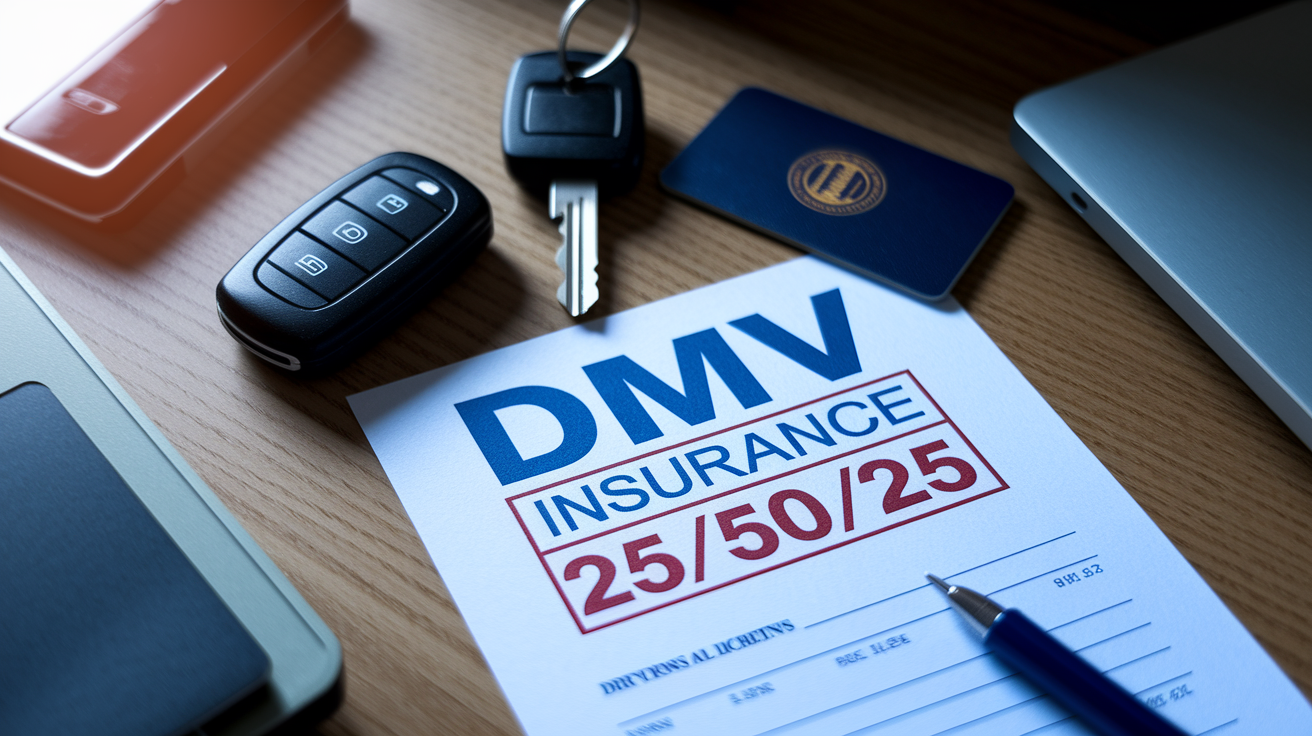
Almost every state makes you carry liability insurance before you can legally get behind the wheel. Virginia’s the odd one out, it lets drivers skip insurance if they pay an uninsured motor vehicle fee, but you’ve still got to prove you can cover costs after any wreck. Minimum coverage usually shows up as numbers like 15/30/5, 25/50/25, or 50/100/50. First number? That’s bodily injury per person in thousands. Second is total bodily injury per accident. Third covers property damage you cause. So 25/50/25 means your insurer pays up to $25,000 for one person’s injuries, $50,000 total for everyone hurt in the crash, and $25,000 to fix whatever you smashed.
Liability does one thing: it protects other people when you mess up, not you. Cause a crash that hurts someone or wrecks their car? Your liability coverage handles their medical bills, lost paychecks, and repair costs up to your limits. Minimum policies typically run new drivers between $500 and $2,000 a year. Cheapest legal option you’ll find.
A starter policy legally includes:
- Bodily injury liability
- Property damage liability
- Uninsured/underinsured motorist protection (some states require it)
- Personal injury protection or medical payments (mandatory in no fault states)
- State proof of financial responsibility paperwork
- Accident reporting rules and how fast you need to notify your insurer
Buying just the bare minimum saves cash now but leaves you dangerously exposed. If you cause an accident that racks up $100,000 in medical bills and you’re carrying 25/50/25, you’re personally on the hook for that extra $75,000. New drivers with assets to protect or who spend lots of time in heavy traffic should think hard about limits above the state floor.
Coverage Types for Affordable Starter Car Insurance

Coverage types are the separate buckets in your policy that pay for specific losses. Each one works on its own. One pays for injuries you cause to others, another fixes your vehicle, a third covers medical bills no matter who’s at fault. Knowing what each does helps you build a starter policy that checks the legal boxes, keeps your lender happy, and protects you without paying for stuff you don’t need.
Liability Coverage
Liability splits into bodily injury and property damage. Bodily injury liability kicks in when you hurt someone else in a crash you caused. It covers their medical costs, rehab, lost income, and sometimes legal bills if they sue. Property damage liability pays to fix or replace someone else’s car, fence, building, whatever you damaged. Common limits are 25/50/25 (cheaper state minimums in lots of places), 50/100/50 (moderate protection), and 100/300/100 (stronger coverage if you’ve got assets worth protecting). Numbers are in thousands, so 50/100/50 means $50,000 per injured person, $100,000 total per accident for bodily injury, and $50,000 for property damage.
Collision Coverage
Collision fixes or replaces your vehicle after you hit another car, a guardrail, a tree, or roll it. Doesn’t matter whose fault it was. You pay your deductible first, then the insurer covers the rest. Typical deductibles are $250, $500, or $1,000. Lenders and leasing companies almost always make you carry collision because they need to protect their stake in the vehicle. Once your car’s paid off or its value drops to a couple thousand dollars, you can ditch collision and pocket the savings.
Comprehensive Coverage
Comprehensive handles damage from stuff other than collisions. Theft, vandalism, fire, hail, floods, falling branches, animal strikes. Someone smashes your window and grabs your stereo? Deer runs into your car? Comprehensive pays to fix or replace it minus your deductible (again, usually $250, $500, or $1,000). Like collision, lenders typically require it until you’ve satisfied the loan or lease. It’s often bundled with collision because buying both together costs less than getting each separately.
UM/UIM Protection
Uninsured motorist (UM) and underinsured motorist (UIM) coverage protects you when the driver who hit you has no insurance or limits too low to cover your bills and vehicle damage. About one in eight drivers nationwide has no coverage, so UM/UIM fills a massive gap. Uninsured driver hits you and causes $40,000 in injuries? Your UM coverage (up to your limits) pays those costs instead of forcing you to sue someone who probably can’t pay anyway. Lots of states require or strongly push UM/UIM, and it’s one of the best deals in any starter policy.
Medical Payments / PIP
Personal injury protection (PIP) and medical payments (MedPay) both cover medical expenses for you and your passengers after a crash, no matter who caused it. PIP goes further. It usually includes lost wages, funeral costs, and sometimes childcare or household help during recovery. PIP is mandatory in no fault states like Florida, Michigan, and New Jersey, where your own insurance pays your medical bills before anyone can file a lawsuit. MedPay is simpler and optional in most states. It just reimburses medical and funeral expenses up to your limit (common choices are $1,000, $5,000, or $10,000).
How Deductibles and Limits Shape Starter Car Insurance Costs

A deductible is what you pay out of pocket before your insurer covers a claim. You’ve got a $500 deductible on collision and your repair runs $3,000? You pay the first $500, insurer pays $2,500. Common levels are $250, $500, and $1,000. Higher deductible means lower premium because you’re shouldering more of the risk. Bump a collision or comprehensive deductible from $500 to $1,000 and you’ll usually trim those premiums by 10 to 25 percent, depending on your insurer and where you live.
Trade off is simple. Lower premiums, higher out of pocket costs when you file a claim. A new driver who can comfortably cover a $1,000 repair from savings will enjoy the premium discount. A driver living paycheck to paycheck might get crushed by that sudden expense and should stick with $250 or $500, even if the premium’s higher.
| Limit Level | Typical Use Case | Risk Exposure Summary |
|---|---|---|
| State minimum (e.g., 25/50/25) | Lowest legal cost, older paid off vehicle, tight budget | You’re personally liable for anything above the limits. A serious crash can lead to wage garnishment or asset seizure. |
| Moderate (50/100/50 or 100/300/50) | Newer vehicle or moderate assets, balanced protection | Covers most common accidents. Still leaves some personal exposure in multi victim or catastrophic crashes. |
| Higher (100/300/100 or 250/500/100) | Significant assets, high value vehicle, or high traffic area | Minimal personal exposure. Protects home equity, savings, and future wages from lawsuits. |
Beginners should pick limits based on two things: what your vehicle’s worth and what personal assets you need to shield. You’re driving a financed $25,000 car and you’ve got $15,000 in savings? Carrying only state minimums puts both at risk. Go for at least 50/100/50 liability and add collision and comprehensive with a $500 or $1,000 deductible. Car’s worth less than $3,000 and you don’t have much saved? You might skip collision and comprehensive entirely, but keep liability limits high enough to cover realistic accident costs where you drive.
Typical Starter Car Insurance Costs for New and Young Drivers

Starter premiums swing wildly based on age, location, driving record, and what you drive. Teen drivers aged 16 to 19 pay the most. Full coverage (liability, collision, comprehensive, UM/UIM) typically runs $3,500 to $8,000 per year because insurers see them as the highest risk group. Young adults 20 to 24 see lower but still elevated costs, usually $2,000 to $4,000 annually for full coverage. New drivers who start at 25 or older (people who moved from a city with public transit or delayed getting licensed) pay roughly $1,200 to $2,500 per year for full coverage, similar to experienced drivers with clean records.
Minimum liability only policies cost way less across all ages, usually $500 to $2,000 per year. A 19 year old in a rural state might pay $600 annually for 25/50/25 liability. Same driver in an urban area with high accident rates and expensive repairs could pay $1,800. The gap between minimum and full coverage often doubles or triples the premium, but full coverage protects both your car and your financial future.
Key factors driving these cost differences:
- Vehicle type: sports cars, luxury models, and vehicles with high theft rates cost more to insure than sedans like a Honda Civic or Toyota Camry.
- Location: urban zip codes with heavy traffic, high crime, and pricey repair shops lead to higher premiums than rural areas.
- Driving record: even one speeding ticket or minor fender bender can jack a new driver’s premium by 20 to 40 percent for three years.
- Credit based insurance score: in most states, insurers use your credit history to predict claim likelihood. Poor credit can spike premiums significantly.
New drivers should use these ranges to set a realistic budget and compare quotes from multiple insurers. A quote that seems high in one state might be average in another, and small tweaks to coverage limits or deductibles can shift the annual cost by hundreds.
Starter Policy Packages and What They Include

Starter packages bundle coverage types and limits into pre designed tiers that simplify buying for first timers. Insurers and agents usually present three or four package levels, each balancing cost against protection. Understanding these helps you avoid under insuring yourself or wasting money.
Minimum Legal Package
This package includes only what the law demands: bodily injury and property damage liability at your state’s minimum limits, often 25/50/25. No collision, no comprehensive, no medical payments, and sometimes no UM/UIM unless your state mandates it. Common features:
- Liability limits: 25/50/25 (or your state minimum)
- No coverage for your own vehicle damage or theft
- Lowest possible premium, typically $500 to $1,500 per year for new drivers
- Best for: older vehicles worth under $2,000, drivers with no assets to protect, very tight budgets
Major downside is complete personal exposure. Total your car? You pay to replace it. Injure someone beyond $25,000? You’re liable for the rest out of pocket.
Basic Starter Package
This mid tier package raises liability limits and adds protection for your own vehicle. Often called “basic full coverage” and it’s the sweet spot for most new drivers with financed or leased cars. Typical components:
- Liability limits: 50/100/50 (or state minimum if higher)
- Uninsured/underinsured motorist coverage included
- Collision and comprehensive with a $1,000 deductible
- Annual cost: varies widely, often $1,800 to $4,000 depending on age and location
This meets lender requirements while keeping premiums manageable. Higher deductible cuts the monthly bill, and 50/100/50 liability offers meaningful protection in most accidents.
Value Full Coverage Package
This package maximizes protection without stepping into luxury or umbrella territory. It’s designed for drivers who want strong coverage and can afford the premium. Key features:
- Liability limits: 100/300/100
- UM/UIM coverage matching liability limits
- Personal injury protection or medical payments ($5,000 to $10,000)
- Collision and comprehensive with a $500 deductible
- Optional: gap insurance if the vehicle is financed and worth less than the loan balance
Annual costs range from $2,500 to $6,000 or more for young drivers, but the lower deductible and higher limits reduce financial stress after a crash.
Choosing a package depends on your car’s value and your financial risk tolerance. You drive a $5,000 used car and have $20,000 saved? Basic Starter with a $1,000 deductible makes sense. Financed a $30,000 new car and carrying student loans? Value Full Coverage protects both the vehicle and your future income from lawsuits.
Practical Ways to Lower Starter Insurance Premiums

New and young drivers face the highest costs, but targeted discounts and smart choices can trim premiums by hundreds or even thousands per year. Insurers offer discounts to reward behavior that lowers risk, and most let you stack multiple discounts on one policy.
Proven discount opportunities:
- Good student discount: 15 to 20 percent savings if you maintain a B average or higher in high school or college. Requires proof of grades each semester.
- Defensive driving course discount: 10 to 25 percent off after completing an approved driver safety course, often needs renewal every three years.
- Multi policy or bundling discount: 10 to 25 percent when you combine auto with renters, homeowners, or life insurance from the same company.
- Multi car discount: 10 to 20 percent if you insure more than one vehicle on the same policy, common when a young driver joins a parent’s plan.
- Telematics or usage based discount: 20 to 30 percent for drivers who use an app or plug in device to monitor safe driving habits like smooth braking, low mileage, and no late night trips.
- Anti theft and safety equipment discount: 5 to 15 percent for vehicles with factory alarms, GPS tracking, or advanced safety features like automatic emergency braking.
Telematics programs are especially valuable for young drivers who know they drive carefully but get penalized by age based stats. You install an app on your phone or plug a device into your car’s diagnostic port, and the insurer tracks things like hard braking, rapid acceleration, speed, and time of day. After a trial period (often 90 days), your discount gets calculated based on your actual driving. Drivers who avoid sudden stops and don’t drive late at night can earn discounts near 30 percent.
Beyond discounts, practical cost cutters include raising your deductible from $500 to $1,000 (saves 10 to 25 percent on collision and comprehensive), avoiding high performance or luxury vehicles (a used Honda Civic costs way less to insure than a Mustang), and shopping quotes from at least three insurers before buying (prices for identical coverage can vary by $1,000 or more). Even small changes stack up. A good student discount, a telematics discount, and a higher deductible together can cut a $3,500 annual premium to under $2,500.
Choosing the Right Starter Coverage for Your Situation

Balancing affordability and protection means understanding your personal financial exposure and the realistic costs of an accident where you live. A 22 year old with no savings and a $3,000 car faces different risks than a 30 year old with $40,000 in home equity and a financed $28,000 SUV. The former can justify minimum liability and no collision. The latter needs strong liability limits, full collision and comprehensive, and possibly gap insurance.
Start by asking two questions: What can I afford to lose without financial hardship? What am I legally or contractually required to carry? If you financed or leased your vehicle, your lender will mandate collision and comprehensive with a maximum deductible, often $1,000. Own your car outright? You can drop those coverages once the vehicle’s value falls below two to three times the annual cost of the coverage. For example, if collision and comprehensive together cost $600 per year and your car’s worth $1,500, you’re near the break even point where self insuring makes sense.
Quick numeric rules for new drivers:
- Aim for liability limits of at least 50/100/50 if your budget allows. 100/300/100 is better if you have significant assets or high income potential.
- Match your UM/UIM limits to your liability limits so you’re protected at the same level as the protection you give others.
- Choose a $500 deductible if you have less than $2,000 in emergency savings. Choose $1,000 if you can cover that amount comfortably.
- Consider dropping collision and comprehensive when your vehicle’s actual cash value is less than two to three times the annual premium for those coverages.
Modify or upgrade your coverage at least once a year, ideally at renewal, and immediately after major life events. Moving to a new state, buying a home, getting married, or starting a business all change your risk profile and may require higher liability limits or additional endorsements. Similarly, if your income drops or you switch to a lower value vehicle, reducing coverage can free up cash without leaving you dangerously exposed.
Final Words
You now know what starter car insurance coverage looks like: the legal basics, core coverage types, how deductibles and limits change costs, typical price ranges, starter packages, and practical ways to lower your premium.
Next, check your state’s minimums, compare a few quotes, and match limits to your savings and car value. A quick review each year or after big life changes keeps you from being underinsured.
Choose a starter car insurance coverage mix that fits your budget and gives you real protection — you’ve got this.
FAQ
Q: What is the best car insurance for beginners?
A: The best car insurance for beginners is a policy that meets state liability minimums, adds UM/UIM and collision if your car is valuable or financed, and balances price with discounts and claims service.
Q: Is it better to have a $500 deductible or $1000?
A: Choosing a $500 versus $1,000 deductible depends on your budget and risk. A $1,000 deductible lowers premiums more (roughly 10–25%) but raises your out‑of‑pocket cost after a claim.
Q: Should I get full coverage on my first car?
A: Getting full coverage on your first car makes sense if it’s financed, new, or worth several thousand dollars; it protects repairs and gap risk. Skip it if the car’s value is low compared with premiums.
Q: Is $300 a month bad for insurance?
A: A $300 monthly insurance payment equals about $3,600 yearly and can be high for adults but normal for teen or full‑coverage drivers. Compare coverages, limits, deductibles, and available discounts to judge value.