



Think commercial insurance is a luxury only big companies need?
For most small businesses, that idea can be costly.
Starter commercial insurance bundles the core protections, like liability, property, and business interruption, into an affordable package.
It’s aimed at sole proprietors, small shops, and service providers who want solid protection without extra bells.
This post explains what starter policies cover, typical costs, and the simple steps to pick the right one.
Core Explanation of Starter Commercial Insurance for Small Business
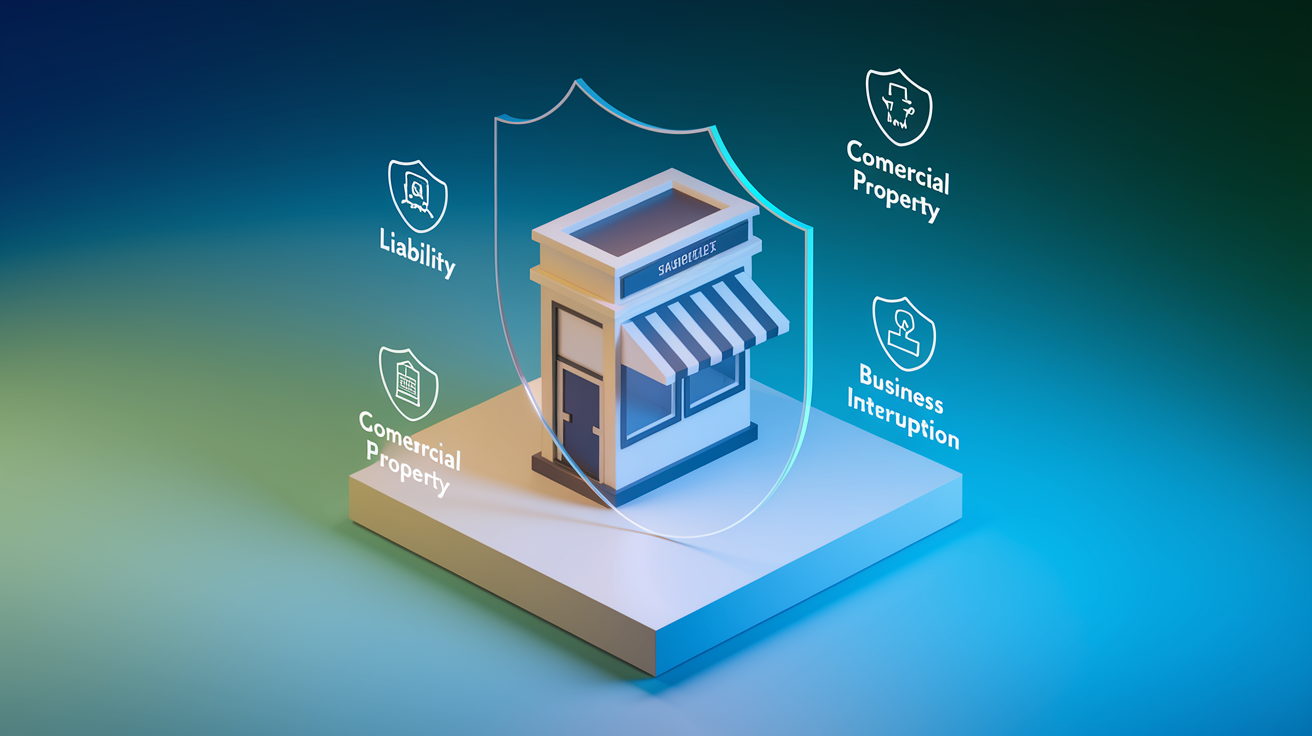
Starter commercial insurance is a streamlined bundle built to protect new and small businesses from the risks that show up most often: third-party injuries, property damage, lost income after something breaks or burns. A lot of small businesses grab a Business Owner’s Policy (BOP), which wraps general liability and commercial property coverage together for less than you’d pay buying them separately. These packages usually throw in business interruption coverage too, which replaces lost income and covers your bills when you can’t operate because of covered property damage.
Small operations work well with starter policies. We’re talking sole proprietors, consultants, home-based setups, small retailers, service providers. People with limited revenue, maybe no employees, pretty straightforward day-to-day work. They start here because these packages cover the stuff that could actually wreck you financially: lawsuits from customer injuries, damage to your business property, losing the ability to earn money after a fire or theft. And even though most states don’t legally require commercial insurance, landlords and clients and lenders? They want proof of coverage before they’ll sign anything.
Starter commercial insurance covers everyday risks without getting tangled up in endorsements or specialty lines built for big or high-hazard operations. A basic BOP protects your physical assets and your legal liability. One policy, one premium, multiple exposures handled.
What’s usually included in standard starter bundles:
- General liability: bodily injury and property damage claims from customers or third parties
- Commercial property: buildings, equipment, inventory, furniture
- Business interruption: lost income and operating expenses during covered shutdowns
- Basic advertising injury: libel, slander, copyright claims tied to your marketing
Main Types of Starter Commercial Insurance Coverage

Understanding the categories helps you spot gaps and avoid paying for stuff you don’t need. Each type answers a specific question: who gets paid, for what event, under which circumstances. Know these boundaries and you can actually compare policies instead of just nodding along.
General liability insurance covers bodily injury and property damage claims from third parties. Customers who slip on your floor, vendors whose gear you accidentally wreck, pedestrians hurt by your work. It also covers personal and advertising injury: libel, slander, wrongful eviction, copyright problems. General liability doesn’t cover your own injuries, your employees’ injuries, or damage to your own stuff. Typical limits run $1,000,000 per occurrence (the max paid on a single claim) and $2,000,000 aggregate (the max paid for all claims during the policy period, usually one year). Without general liability, a single slip and fall lawsuit could drain your business account and force you to sell assets just to settle.
Commercial property insurance protects the physical location and what’s inside. Your building if you own it, leasehold improvements if you rent, business personal property like furniture, computers, inventory, tools. It covers fire, theft, vandalism, wind damage. Doesn’t cover flood (you need a separate National Flood Insurance Program policy for that) or wear and tear. If a fire destroys your retail shop, commercial property coverage pays to repair the building and replace inventory, up to your policy limit minus your deductible. Most small business property policies carry deductibles between $500 and $2,500. You pick a coverage limit based on what it’d cost to replace your assets.
Business interruption insurance (sometimes called business income coverage) replaces lost revenue and covers ongoing expenses when a covered property loss shuts you down temporarily. Rent, utilities, payroll. If a storm damages your office and you’re closed for three weeks, business interruption pays the income you would’ve earned and helps cover fixed costs so you don’t fall behind. This coverage only kicks in if the shutdown stems from a covered property claim. Not from a pandemic, supply chain mess, or market downturn.
| Coverage Type | What It Protects |
|---|---|
| General Liability | Third-party bodily injury, property damage, and advertising injury claims |
| Commercial Property | Buildings, equipment, inventory, and furniture from fire, theft, and covered perils |
| Business Interruption | Lost income and operating expenses during covered shutdowns |
Typical Cost Ranges for Starter Policies

Small businesses often pay between $500 and $2,000 annually for starter commercial insurance, but prices swing pretty wide depending on industry, location, payroll, claims history. A solo consultant with no employees and low revenue might pay $300 to $800 per year for general liability and basic professional liability. A small retail shop with inventory and foot traffic could pay $900 to $2,400 annually for a BOP. Higher risk industries like construction or food service routinely hit $5,000 per year or more when you add workers’ comp and extra liability limits.
General liability alone can start as low as $21 per month for very low risk operations, with average monthly costs around $45 for the typical small business. A BOP, which bundles general liability and commercial property, often costs less than buying the two policies separately. Monthly BOP premiums in lower cost states can range from $35 to $75, depending on coverage limits, deductibles, and what your business actually does.
Several things drive the final premium. Insurers look at your industry classification code, revenue projections, square footage, number of employees, claims history, and the coverage limits and deductibles you pick. A business with higher revenue or more employees presents more exposure, so premiums go up. Choosing a $2,000,000 aggregate limit instead of $1,000,000 raises the premium. Raising your deductible from $500 to $2,500 lowers it.
Top cost factors:
- Coverage limits (per occurrence and aggregate): higher limits mean higher premiums
- Deductible level: higher deductibles reduce premium but increase out of pocket cost at claim time
- Industry risk profile: construction, restaurants, and auto repair pay more than consulting or online retail
How to Choose the Right Insurance Provider

Picking the right insurer matters just as much as picking the right coverage. An affordable premium only helps if the carrier pays claims promptly and treats policyholders fairly when things get stressful. Insurers with strong financial ratings are more likely to stay solvent and honor claims, even during widespread disasters or economic downturns. Check financial strength ratings through agencies like A.M. Best or Standard & Poor’s, and research complaint ratios and closed complaint data on the National Association of Insurance Commissioners (NAIC) website.
Claims handling reputation separates good insurers from frustrating ones. Read reviews from other small business owners, ask for references, confirm that the carrier offers direct claims reporting (online or by phone) and assigns dedicated adjusters. Some insurers specialize in small business policies and offer online quote tools, instant binding, fast certificate of insurance issuance, often within 24 hours. Others require detailed underwriting and longer timelines but might offer broader coverage or better pricing for complex risks.
Bundled discounts and multi policy savings can cut total insurance costs by 5% to 25%. Carriers that write both commercial and personal lines may offer discounts if you also insure your home or auto with them. Some also reward businesses with no claims history, safety programs, or alarm systems with lower premiums.
Steps to compare providers:
- Verify financial strength ratings on A.M. Best or the NAIC website
- Request written quotes from at least three insurers or brokers
- Compare not only premium but also coverage limits, deductibles, exclusions, endorsements
- Read online reviews and check complaint ratios for claims service quality
- Confirm availability of required certificates of insurance and same day binding if needed
Affordable Starter Commercial Insurance Options
Budget conscious small businesses can find low cost commercial insurance by focusing on streamlined products, higher deductibles, and bundles. Insurers that specialize in small businesses (both traditional carriers and newer online first providers) offer simplified applications, instant quotes, competitive pricing for low risk industries like consulting, retail, online services. A BOP is often the most affordable choice because it combines general liability and commercial property into a single policy with a single premium, eliminating duplicate administrative fees and underwriting costs.
Low risk classifications and clean claims histories qualify for the lowest rates. If your business operates from a home office, has no employees, and serves clients remotely, you’ll typically pay less than a storefront retailer with foot traffic and inventory. Businesses that implement documented safety protocols (well lit premises, hazard warnings, product testing, employee training) can negotiate lower premiums or qualify for insurer discounts.
Raising your deductible is one of the fastest ways to lower your premium. Moving from a $500 deductible to $1,000 or $2,500 can reduce your annual cost significantly, though it means you’ll pay more out of pocket if you file a claim. Paying the annual premium in full instead of monthly installments also unlocks discounts, as insurers avoid the administrative cost and default risk of billing cycles.
What makes a policy more affordable:
- Choosing a BOP instead of separate general liability and property policies
- Raising the deductible to $1,000 or higher
- Maintaining a clean claims history and documenting safety measures
- Removing unnecessary endorsements or coverages that don’t match your actual risks
Industry-Specific Starter Insurance Recommendations

Different industries face different risks, so the right starter insurance package changes by business type. Retailers need strong property coverage to protect inventory and theft protection for merchandise, plus general liability for slip and fall claims from customers. A small retail shop should grab a BOP with contents coverage that matches inventory value and consider adding product liability if selling goods that could cause injury or property damage.
Consultants, designers, other professional services providers need professional liability (errors and omissions) insurance more than property coverage, especially if they work from home or a shared office. A solo marketing consultant might start with $1,000,000 in general liability and $1,000,000 in professional liability, with annual premiums typically between $300 and $1,200. Adding cyber liability makes sense if the consultant handles client data or performs online work, since data breaches can trigger notification costs, credit monitoring, public relations expenses.
Home based businesses and e-commerce operations face unique exposures. Standard homeowners insurance excludes business activities, so even a home based freelancer needs at least a general liability policy. E-commerce sellers should add product liability and cyber coverage, as shipping defective products or suffering a website breach can generate claims that exceed personal savings. Contractors, tradespeople, and businesses with employees must add workers’ comp in almost every state, plus inland marine coverage (also called tool and equipment floaters) to protect tools, ladders, materials stored on job sites or in vehicles.
| Industry | Key Coverage | Why It Matters |
|---|---|---|
| Retail / Brick-and-Mortar | BOP (property + liability), product liability | Protects inventory, handles customer injuries, and covers defective product claims |
| Consultants / Professional Services | General liability, professional liability (E&O), cyber liability | Covers advice related lawsuits, data breaches, and third party claims |
| Contractors / Trades | General liability, workers’ comp, inland marine (tools), commercial auto | High bodily injury risk, employee injuries, tool theft, and vehicle liability |
Step-by-Step Guide to Buying Starter Commercial Insurance
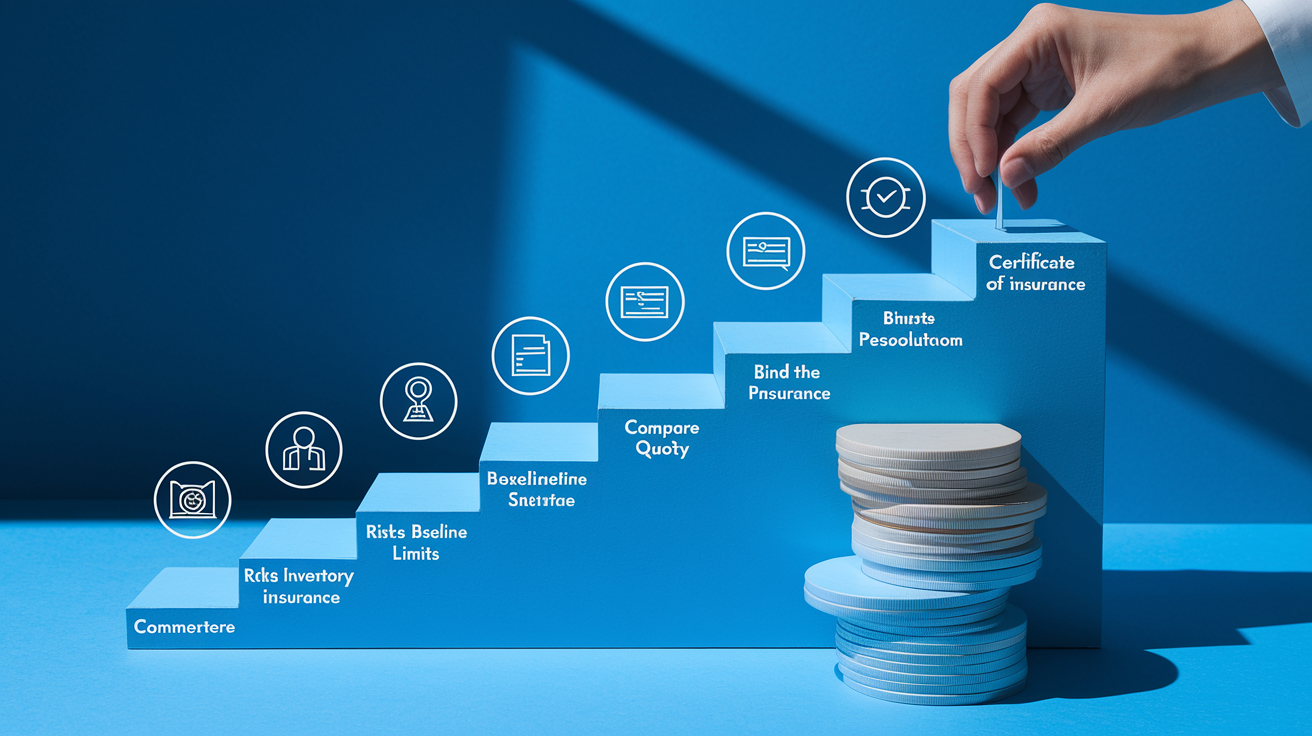
Buying commercial insurance starts with understanding what you’re protecting and what could go wrong. List your business premises, equipment, inventory, vehicles, employees, customer interactions. Identify any state required coverages (workers’ comp if you have employees, commercial auto if you own or lease vehicles) and any coverage your landlord, lender, or clients demand before signing contracts.
Gather the documents insurers need to quote accurately: your business name, address, Employer Identification Number (EIN) or Social Security Number (for sole proprietors), industry classification code (NAICS or SIC), annual revenue, projected revenue, payroll totals by job classification, number of full and part time employees, vehicle VINs and driver lists, lease or mortgage information, a list of equipment with estimated values. If your business has been operating for more than a year or two, insurers may also request loss runs (a record of claims filed in the prior three to five years).
Purchasing process:
- Inventory your risks: premises, employees, tools, vehicles, data, customers
- Identify required coverages (workers’ comp, commercial auto) and recommended coverages (general liability, property)
- Decide baseline limits. Start with at least $1,000,000 general liability; consider $2,000,000 aggregate for higher exposure
- Request written quotes from at least three carriers or brokers, including at least one online first provider
- Compare premiums, limits, deductibles, exclusions, endorsements, claims service reputation
- Provide final documentation (revenue, payroll, loss runs) to bind the policy and request a certificate of insurance (COI) if needed
After you purchase, confirm the effective date and review the policy documents carefully. Check that the coverage limits, deductibles, and named insured match your expectations. Verify that endorsements or exclusions align with what you discussed during the quote process. If your landlord, a client, or a lender requires a certificate of insurance, most insurers can issue it within 24 hours. Keep detailed records of all policies, renewal dates, coverage changes, and reassess your insurance annually or after major business changes like hiring employees, adding a new location, launching a new product line, or significantly increasing revenue.
Final Words
Start by listing your biggest risks, like property damage, customer injuries, or a shutdown that stops income.
We covered what starter coverages usually include (BOP, general liability, property, business interruption), typical costs, and how to choose an insurer.
You also saw affordable options, industry-specific recommendations, and a clear step-by-step buying process.
Use those steps to compare quotes and pick starter commercial insurance for small business that fits your budget and risk. You’ll have practical protection and room to grow.
FAQ
Q: How much is commercial insurance for a small business? How much is $1,000,000 liability insurance a month?
A: Commercial insurance for a small business typically costs $500–$2,000 per year; a $1,000,000 liability policy often runs about $30–$200 per month, depending on industry, location, and risk factors.
Q: Do I need an LLC to get commercial insurance?
A: You don’t need an LLC to get commercial insurance. Insurers sell policies to sole proprietors and partnerships; an LLC mainly affects legal protection and sometimes premiums, so check with your carrier and advisor.
Q: What is the best insurance for small business owners?
A: The best insurance for small business owners is often a Business Owner’s Policy (BOP). It bundles general liability, property, and business interruption, giving starter-level protection at a usually lower combined cost.