


Think your landlord’s insurance will replace your laptop after a break-in? Think again.
A starter renters insurance policy protects your stuff, helps pay for a hotel if your place is unlivable, and covers legal costs if someone gets hurt in your apartment.
This post explains what a starter renters insurance policy usually covers and doesn’t, suggests simple limits and deductible choices for first-time renters, and points out when you need add-ons for pricey items.
Read on to avoid surprises and pick coverage that fits your budget.
Key Basics of a Starter Renters Insurance Policy

A starter renters insurance policy protects your stuff and covers your liability when things go wrong. First-time renters need this because your landlord’s insurance? It only covers the building. Not your laptop, your couch, or that expensive espresso machine you just bought. If there’s a fire, a burst pipe, or someone breaks in and steals your TV, renters insurance replaces what you lost. Most landlords won’t even let you move in without proof of coverage, so it’s both protection and a lease checkbox.
Here’s what you’re actually buying. Personal property coverage pays to replace your belongings after a covered loss. Liability coverage protects you if someone gets hurt in your place or you accidentally flood your neighbor’s apartment. Additional living expenses coverage pays for a hotel and meals if your apartment becomes unlivable because of something like a kitchen fire or major leak. Personal property limits usually range from $10,000 to $250,000, but most first-timers pick somewhere between $15,000 and $30,000. That’s enough to cover basic furniture ($2,000), a laptop ($1,500), and clothing ($3,000), which gets you to about $6,500 as a baseline. Liability starts at $100,000, which is what most leases require. Loss of use can run anywhere from $3,000 to $200,000, kicking in when repairs leave your unit unlivable.
Starter policies cover the usual suspects:
- Fire and smoke damage
- Theft of personal property
- Water damage from burst pipes or plumbing failures
- Electrical malfunctions that fry your belongings
- Wind and hail damage to your possessions
But here’s what they don’t cover: floods, earthquakes, damage from neglect, or anything you did on purpose. High-value items like expensive jewelry, musical instruments, or collectibles often hit policy sub-limits, meaning you need separate endorsements if you want full protection. Understanding what’s excluded keeps you from getting blindsided when you file a claim.
Understanding Perils and Supplemental Protections in Starter Renters Policies

Named perils are the specific disasters your policy will actually pay for. Knowing which ones are listed tells you when coverage applies and when you’re on your own.
Most starter policies work on a “named perils” basis, covering only the events spelled out in your contract. That list usually includes smoke damage, plumbing disasters like burst pipes, electrical malfunctions, lightning strikes, and windstorms or hail. If one of those things wrecks your stuff, your insurer pays to replace or repair it, up to your limits. Some policies offer “open perils” or “all-risk” coverage, which flips things around and covers everything except what’s specifically excluded. But those aren’t common in budget-friendly starter plans. For first-time renters, named-perils is usually simpler and cheaper, as long as you know what’s covered.
Medical payments coverage is a small add-on that handles minor injuries to guests. If a friend trips on your rug and needs stitches, this pays their medical bills regardless of fault. Limits are low, usually $1,000 to $5,000 per person, and the whole point is to settle things quickly without lawyers getting involved.
Legal liability protection is different. This one kicks in when you’re legally responsible for someone’s injury or property damage. If a guest gets seriously hurt in your apartment and decides to sue, or your overflowing bathtub ruins your downstairs neighbor’s furniture, liability coverage pays for legal defense, court judgments, and settlements up to your limit. Medical payments handle small stuff fast. Liability coverage handles big, fault-based claims that could wreck your finances.
Recommended Coverage Limits for a Starter Renters Insurance Policy

Most first-time renters need between $15,000 and $30,000 in personal property coverage. That’s enough to replace basic furniture, electronics, clothing, kitchenware, and small appliances. To figure out your number, do a quick inventory. List big items like your bed, couch, TV, laptop, bike, and kitchen table. Then add smaller categories like clothes, shoes, linens, and dishes. If your total replacement cost is around $6,500 (pretty typical for someone renting their first place), you might pick $15,000 in coverage to leave room for stuff you forgot or undervalued. If you own more furniture, a nice TV, a desktop computer, and a well-stocked wardrobe, lean toward $20,000 or $30,000.
Liability coverage starts at $100,000 in most starter policies, and that minimum is often written into your lease. If your landlord’s lease specifies a minimum liability limit (commonly $100,000 or $300,000), you have to meet or beat it to satisfy the lease. Even if your lease doesn’t say, $100,000 is a smart floor because one serious injury or water-damage claim can easily blow past smaller limits. If you host parties, have a dog, or live in a multi-unit building where one plumbing mistake could flood several apartments below you, think about bumping liability to $300,000 or adding an umbrella policy for broader protection.
High-value items like jewelry, vintage instruments, expensive electronics, or collectibles often hit policy sub-limits. Those are caps on how much the insurer will pay for specific categories. Your policy might include $30,000 in total personal property coverage but limit jewelry claims to $1,500 or electronics to $2,500. If your engagement ring is worth $3,000 or your gaming PC costs $4,000, you need a scheduled personal property endorsement to cover the full value. Endorsements list the item, its appraised value, and sometimes require a photo or receipt. They bump your premium slightly but eliminate sub-limit surprises.
| Coverage Type | Typical Starter Limit | When to Increase |
|---|---|---|
| Personal Property | $15,000–$30,000 | You own expensive furniture, multiple electronics, or a large wardrobe |
| Liability | $100,000 | Landlord requires higher limit, you have a dog, or you host frequently |
| Loss of Use | $3,000–$10,000 | Your area has high hotel costs or you expect long displacement after a claim |
| High-Value Items | Sub-limits ($1,000–$2,500) | You own jewelry, instruments, art, or electronics worth more than the sub-limit |
Understanding Costs and Pricing for Starter Renters Policies

Starter renters insurance is cheap. Some policies start as low as $5 per month. The average monthly cost reported by one major platform was $16 as of January 2026. For most first-time renters, a basic policy with $15,000 to $30,000 in personal property coverage and $100,000 in liability runs between $10 and $20 per month, depending on where you live and which insurer you pick. That makes renters insurance cheaper than most streaming subscriptions and way less than one month of car insurance.
Your premium gets shaped by several things. Your apartment’s location matters (crime rates, weather risks, proximity to fire stations). Your credit score plays a role too. Insurers in most states use credit-based insurance scores to predict claims risk, and higher scores typically lower your rate. Your chosen deductible matters (higher deductibles reduce monthly premiums). Your coverage limits matter (more coverage costs more). Your claims history can raise rates if you’ve filed a bunch of claims before. Your landlord’s building features also factor in. Apartments with smoke alarms, sprinkler systems, or security systems often qualify for small discounts. All these things combine to create your personalized rate, which is why two renters in the same building can pay different amounts.
Most insurers give you flexible payment options. You can pay month-to-month, quarterly, or annually. Paying the full annual premium upfront often saves you up to 5 percent compared to spreading payments across the year. If cash flow is tight, month-to-month works fine. But if you can afford to pay once a year, you’ll spend less overall. Some insurers also toss in autopay discounts or paperless billing discounts that shave a few more dollars off your annual cost.
Six ways beginners can cut costs quickly:
- Pick the right coverage limits. Buying more than you need raises premiums for no reason.
- Raise your deductible from $250 to $500 or $1,000 to lower your monthly premium.
- Bundle renters insurance with car insurance or other policies for a multi-policy discount (often 10 to 25 percent).
- Keep a clean claims history. Avoid filing small claims you can afford to pay yourself.
- Install security devices like deadbolts, smoke detectors, or a monitored alarm system.
- Pay annually instead of monthly to capture the pay-in-full discount.
Deductibles and How They Affect a Starter Renters Insurance Policy

A deductible is what you pay out-of-pocket before insurance coverage kicks in after a covered loss. Common deductible options for starter renters policies range from $250 to $1,000. If you file a claim for $3,000 in stolen electronics and your deductible is $500, your insurer pays $2,500 and you pay the first $500. Picking a higher deductible lowers your monthly premium because you’re agreeing to shoulder more financial risk yourself. Picking a lower deductible raises your premium but reduces what you’ll owe if you file a claim. The deductible you select shows up on your policy declarations page, the summary document that lists your coverage limits, premium, and key policy details.
When deciding on a deductible, think about how much cash you could comfortably pay after an unexpected loss. If a fire destroyed your apartment tomorrow, could you afford to pay $1,000 before insurance covers the rest? If yes, a $1,000 deductible will save you money every month. If $1,000 would be a financial strain, a $250 or $500 deductible is safer, even though your premium will be slightly higher. Your deductible is a trade-off between monthly savings and claim-time costs. Pick the balance that fits your budget and risk tolerance.
Four situations where specific deductible choices make sense:
- Pick a $250 deductible if you have limited savings and want the lowest possible out-of-pocket expense after a loss.
- Pick a $500 deductible if you can afford moderate out-of-pocket costs and want to balance premium savings with claim affordability.
- Pick a $1,000 deductible if you have an emergency fund and care most about the lowest monthly premium.
- Revisit your deductible annually. If your financial situation improves, raising your deductible can lower your ongoing costs.
Add-Ons and Optional Protections for a Starter Renters Policy

Most starter renters policies pay claims on an actual cash value (ACV) basis. That means the insurer subtracts depreciation from the replacement cost of your damaged or stolen items. If your three-year-old laptop originally cost $1,500 but is now worth $800 after depreciation, an ACV policy pays you $800 (minus your deductible). A replacement cost endorsement is an optional add-on that changes the payout to the full cost of buying a new item today, without subtracting depreciation. So you’d receive $1,500 for a new laptop instead of $800 for the depreciated value. Replacement cost coverage typically adds a few dollars to your monthly premium but makes a huge difference when you file a claim, especially for furniture, electronics, and appliances that lose value quickly.
Scheduled personal property (also called a floater or endorsement) covers specific high-value items at their full appraised value, beyond the policy’s standard sub-limits. If your engagement ring is worth $4,000 but your policy caps jewelry payouts at $1,500, scheduling the ring lists it separately on your policy and guarantees full coverage for that item. Same goes for expensive electronics (a $3,000 camera), musical instruments (a $5,000 vintage guitar), or collectibles (rare sneakers, art prints). Scheduling an item usually requires a recent appraisal, receipt, or photo, and adds a small amount to your premium based on the item’s value.
Some insurers offer identity theft protection as an optional add-on. This covers expenses related to restoring your identity after fraud, like legal fees, notary costs, credit monitoring, and lost wages if you have to take time off work to resolve the theft. Other optional coverages include water backup coverage (which pays for damage caused by sewer or drain backups, a common exclusion in standard policies), earthquake coverage, and accidental damage protection (which covers drops, spills, and other accidents not caused by a named peril).
Five common optional add-ons for starter renters policies:
- Replacement cost coverage (pays full replacement value instead of depreciated actual cash value)
- Scheduled personal property (covers high-value items like jewelry, cameras, instruments, and bikes at full appraised value)
- Water backup coverage (covers damage from sewer or sump pump failures)
- Identity theft restoration (covers costs to repair credit and restore identity after fraud)
- Accidental damage protection (covers drops, spills, and other non-named-peril accidents)
How to Buy a Starter Renters Insurance Policy Quickly
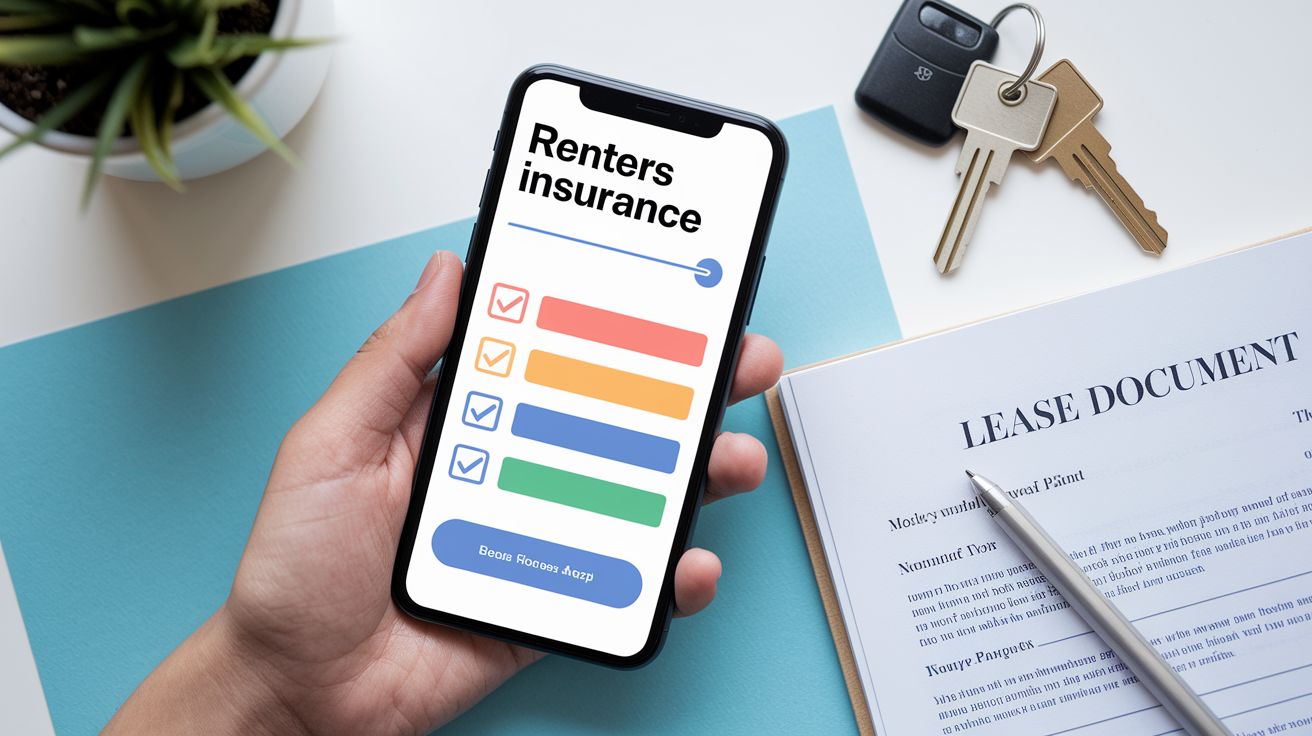
Buying before you move in is the smartest timing choice for a starter renters policy. Many leases require proof of insurance before you can pick up your keys, and even if your landlord doesn’t require it, coverage should start the day your lease begins so you’re protected from day one. Waiting until after you move in leaves a gap where fire, theft, or water damage could destroy your belongings with no coverage in place. Most insurers let you set your policy effective date to match your lease start date, so you can buy a week or two in advance and still have coverage activate exactly when you need it.
Your policy effective date is the day coverage begins. Most insurers let you choose that date during the purchase process. There are usually no waiting periods for renters insurance. As soon as the policy is active, you’re covered. Some insurers issue a temporary proof of insurance called a binder immediately after purchase. You can send that to your landlord while you wait for the full policy documents. The binder confirms that coverage is in place and often includes the landlord’s name as an “interested party,” which satisfies lease requirements and gives your landlord automatic notification if you cancel the policy.
Six steps to buy a starter renters insurance policy quickly:
-
Estimate the value of your belongings by listing major items (furniture, electronics, clothing, kitchen items) and adding up rough replacement costs. Aim for a total between $15,000 and $30,000 for most first-time renters.
-
Get quotes online from at least three insurers. Many platforms give you a quote in about 90 seconds by asking your address, desired coverage limits, and deductible preference.
-
Compare coverage details, not just price. Check what perils are covered, confirm liability limits meet your lease requirements, and review exclusions and sub-limits for high-value items.
-
Ask about discounts. Bundle with car insurance, ask for a paid-in-full discount, or mention security features in your building to lower your rate.
-
Choose your effective date to match your lease start. Select the first day of your lease so coverage is active the moment you have keys.
-
Download proof of insurance immediately. Most insurers provide a certificate of insurance as a PDF you can email to your landlord, often listing the landlord as an interested party at no extra cost.
Roommates, Sublets, and Special Situations in Starter Renters Insurance

A standard starter renters policy covers only the named insured (the person listed on the policy) and their personal property. If you share an apartment with a roommate, your policy won’t cover your roommate’s belongings. And your roommate’s policy won’t cover yours. Each roommate typically needs their own separate renters insurance policy to protect their individual possessions and provide their own liability coverage. Some insurers let you add a spouse or domestic partner to a single policy, which can save money. But that option isn’t available for unrelated roommates.
Short-term renters, students, and people on month-to-month leases may need flexible coverage that matches their living situation. Many insurers offer month-to-month renters insurance policies with no long-term commitment. Those work well if you’re subletting for a few months, renting a furnished apartment temporarily, or living in student housing with an uncertain end date. Students living in dorms may already have some coverage under their parents’ homeowners insurance, but that coverage is often limited and doesn’t include full liability protection. Check with your parents’ insurer and consider a standalone student renters policy if you live off-campus or own expensive electronics and furniture.
If you sublet your apartment while traveling or moving temporarily, your renters insurance may not cover the subletter’s belongings or liability. And the subletter’s actions could affect your coverage. Some policies exclude coverage during sublet periods, so read your policy or ask your insurer before you hand over your keys. Similarly, if you run a small business from your apartment (freelance design work, tutoring, or selling products online), your standard renters policy may not cover business equipment or liability related to business activities. You may need a separate business policy or endorsement.
Four special-case scenarios where coverage rules change:
- Roommates: Each roommate needs their own policy. One policy doesn’t cover multiple unrelated people.
- Students in dorms: Parents’ homeowners insurance may offer limited coverage, but a standalone student policy is safer for off-campus living.
- Sublets: Standard policies may exclude coverage during sublet periods. Confirm with your insurer before subletting.
- Home-based businesses: Renters insurance doesn’t cover business equipment or liability. Ask about business endorsements or separate policies.
Common Exclusions and Gaps in Starter Renters Insurance Policies
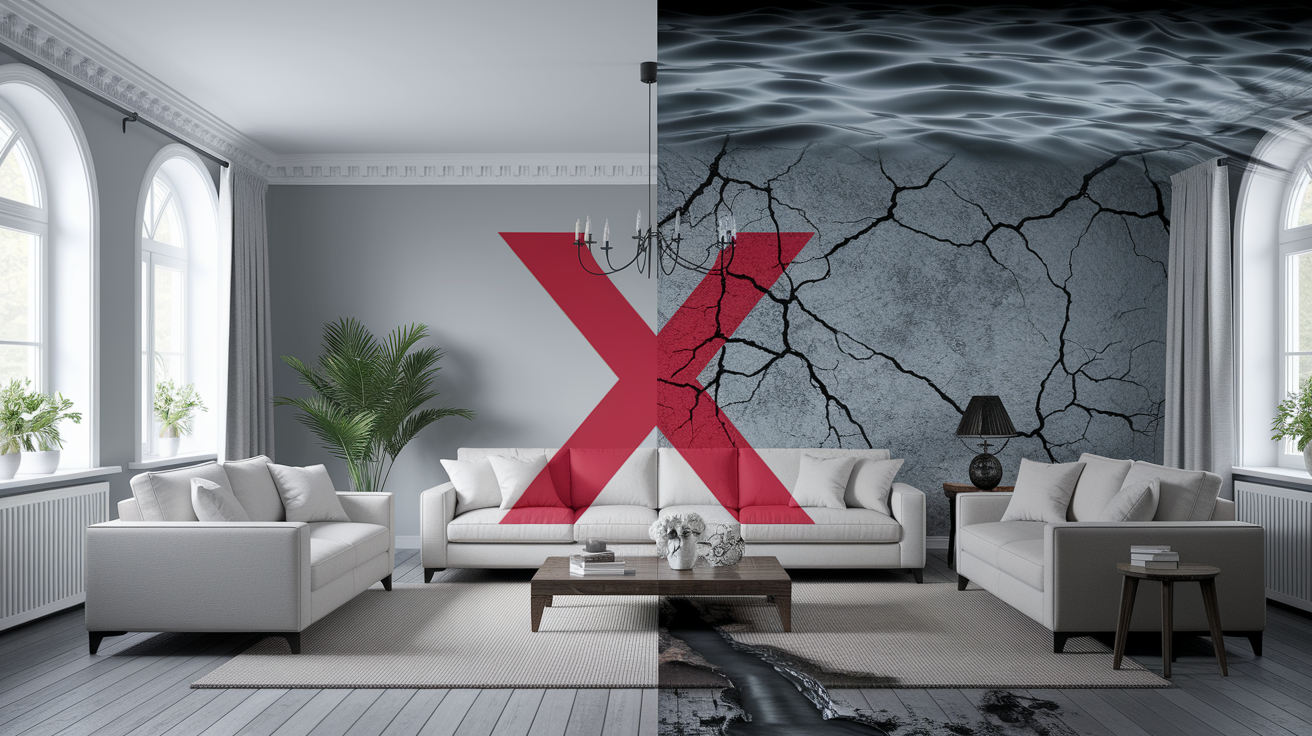
Floods are excluded from nearly all standard renters policies. If a river overflows, a storm surge floods your building, or heavy rain causes widespread water damage, your renters insurance won’t cover your belongings. Flood coverage requires a separate flood insurance policy, often purchased through the National Flood Insurance Program (NFIP) or a private flood insurer. If you live in a flood-prone area (near a river, coast, or low-lying zone), check flood maps and consider adding flood insurance to close that gap.
Earthquakes, sewage backups, and infestations are also excluded from most starter policies. If an earthquake damages your apartment and your belongings, you need separate earthquake coverage (available as an endorsement or standalone policy in high-risk states like California). Sewage backups (when water from a sewer or drain floods your unit and damages your property) require a water backup endorsement. Infestations like bedbugs, rodents, or termites are considered maintenance issues, not sudden covered events. So damage or expenses from pest problems aren’t covered. Damage caused by your own negligence or intentional acts is also excluded. If you leave a window open during a rainstorm and rain ruins your furniture, the insurer will likely deny the claim.
Five common exclusions to watch in starter renters insurance policies:
- Flood damage (requires separate flood insurance through NFIP or private insurer)
- Earthquake damage (requires separate earthquake coverage or endorsement)
- Sewage or water backup (requires water backup endorsement)
- Damage from infestations like bedbugs, rodents, or mold caused by neglect
- High-value items above sub-limits (jewelry, art, instruments need scheduled coverage)
Starter Renters Insurance Claims: What to Expect
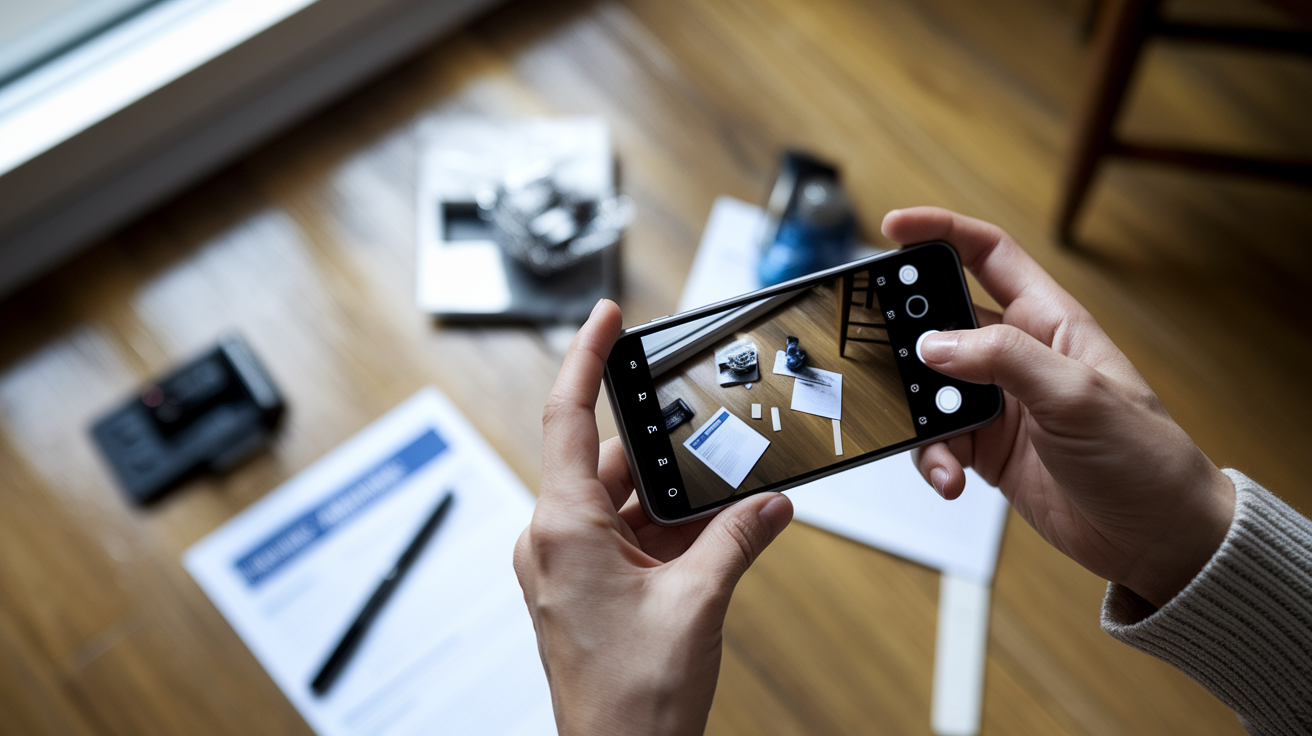
Filing a renters insurance claim starts the moment you discover a covered loss. Your first step is to document the damage or theft with photos, videos, and a written list of what was lost or damaged. Take pictures of the scene, the damaged items, and any related evidence (like a burst pipe that caused water damage or a broken window where a thief entered). If anything was stolen, file a police report and get a copy of the report number. Your insurer will ask for it. The more documentation you provide upfront, the faster your claim moves and the less back-and-forth you’ll have with the adjuster.
After documenting the loss, contact your insurer to file the claim. Many insurers offer app-based claims filing. You upload photos, submit your inventory list, and track claim status in real time. Claims data from March 2026 shows that many renters claims are processed quickly, sometimes within a few days, especially for straightforward losses like theft or fire. Your insurer will assign an adjuster who reviews your documentation, verifies coverage, and determines the payout amount. You may need to complete a proof of loss form. That’s a sworn statement listing each damaged or stolen item, its value, and the amount you’re claiming. Keep receipts, serial numbers, and old photos of your belongings in cloud storage or a safe deposit box so you can prove ownership and value after a loss.
If your claim is denied (because the loss was caused by an excluded peril, exceeded a sub-limit, or fell below your deductible), you can appeal the decision by providing additional evidence or asking for a supervisor review. Common denial reasons include failing to report the loss promptly, not providing enough documentation, or the damage being caused by an excluded event like flood or neglect. Understanding your policy’s exclusions and limits before you file helps you avoid surprises and prepares you to appeal if necessary.
| Step | Required Action |
|---|---|
| 1. Document the Loss | Take photos and videos of damage; make a written list of lost or damaged items; file a police report if theft occurred |
| 2. File the Claim | Contact your insurer by phone, app, or online portal; provide your policy number, loss date, and initial documentation |
| 3. Submit Proof of Loss | Complete the proof of loss form listing each item, its value, and your claim amount; attach receipts, serial numbers, or photos if available |
| 4. Adjuster Review | Insurer assigns an adjuster who verifies coverage, reviews your documentation, and may inspect the damage in person or via submitted photos |
| 5. Claim Decision and Payment | Insurer approves or denies the claim; if approved, you receive a check or direct deposit minus your deductible; if denied, you can appeal with additional evidence |
Final Words
You now know what a starter policy covers: personal property, liability, and loss of use, and how perils, limits, deductibles, and add-ons change your protection.
Next steps: make a quick inventory, pick sensible limits (often $15,000-30,000 for belongings and $100,000 liability), compare online quotes, and buy before move-in so coverage starts on time.
A starter renters insurance policy can be affordable and really help if the unexpected happens. It’s a small step that pays off, giving you more security and less worry.
FAQ
Does renters insurance start immediately?
Renters insurance does not always start immediately. Most policies begin on the effective date you choose during the application, which can be the same day or a future date that matches your lease start. Some insurers offer same-day coverage if you complete the purchase before a certain time, while others may have a short waiting period before coverage activates.
What does basic renters insurance cover?
Basic renters insurance covers your personal belongings (like furniture, clothes, and electronics), liability protection if someone gets hurt in your rental, and additional living expenses if you can’t live in your place due to a covered event like a fire. It typically protects against named perils such as theft, fire, smoke damage, and water damage from burst pipes, but excludes flood and earthquake.
How much is a $500,000 renters insurance policy?
A $500,000 renters insurance policy refers to the liability coverage limit, not the personal property amount. This high liability level costs more than a basic policy and typically adds $50 to $150 annually to your premium, depending on your location, deductible, and insurer. Most first-time renters start with $100,000 liability coverage, which is significantly less expensive.
How much is $100,000 renters insurance a month?
$100,000 renters insurance refers to liability coverage, not the total policy cost. A starter renters policy with $100,000 liability, $15,000 to $30,000 in personal property coverage, and a standard deductible typically costs around $16 per month as of 2026. Your actual rate depends on your location, credit score, coverage limits, and deductible choice.
What is the difference between named perils and open perils coverage?
Named perils coverage protects your belongings only against specific events listed in your policy, such as fire, theft, and windstorms. Open perils (also called all-risk) coverage protects against anything not specifically excluded, offering broader protection. Most starter renters policies use named perils because it keeps costs low while covering the most common risks first-time renters face.
Do I need a separate renters insurance policy if I have a roommate?
You need a separate renters insurance policy if you have a roommate because standard policies only cover the named insured person’s belongings and liability. Your roommate’s items are not covered under your policy, and you’re not protected for their liability risks. Each roommate should purchase their own policy to ensure full protection for their belongings and personal liability.
Can I add high-value items like jewelry to a starter renters policy?
You can add high-value items like jewelry to a starter renters policy through scheduled personal property endorsements or riders. Basic policies often have sub-limits (typically $1,000 to $2,500) for jewelry, electronics, and collectibles, so items worth more than that need additional scheduled coverage. You’ll usually need an appraisal or receipt to add expensive items.
How do I figure out how much personal property coverage I need?
You figure out how much personal property coverage you need by creating an inventory of your belongings and estimating their replacement cost. Walk through each room, photograph items, and add up values for furniture, electronics, clothing, kitchenware, and other possessions. Most first-time renters need between $15,000 and $30,000 in coverage, but your actual needs depend on what you own.
What is the difference between replacement cost and actual cash value coverage?
Replacement cost coverage pays to replace your damaged items with new ones at today’s prices, while actual cash value coverage subtracts depreciation and pays what your used items were worth at the time of loss. A five-year-old laptop might cost $400 to replace, but actual cash value might only pay $150. Replacement cost costs more but provides better protection.
Will my renters insurance cover me if my apartment floods?
Renters insurance will not cover you if your apartment floods from outside water sources like heavy rain, rivers, or storm surge. Standard policies exclude flood damage, which requires a separate flood insurance policy through the National Flood Insurance Program or a private insurer. Your renters policy does cover water damage from burst pipes, overflowing appliances, and other internal sources.
What happens if I need to file a claim on my starter renters policy?
When you need to file a claim on your starter renters policy, you document the damage with photos and receipts, contact your insurer to start the claim, and submit a proof of loss form detailing what was damaged or stolen. An adjuster reviews your claim and documentation, then the insurer approves payment minus your deductible or denies the claim if it’s not covered.
Can I cancel my renters insurance policy if I move out early?
You can cancel your renters insurance policy if you move out early, and most insurers will refund the unused portion of your premium if you paid in advance. Contact your insurer before your move-out date to request cancellation effective on the day you leave. Some policies are month-to-month, making it easier to stop coverage without penalty when your lease ends unexpectedly.