



Think a basic business liability policy covers everything that can go wrong?
Not even close.
A basic business liability policy, often called commercial general liability or CGL, protects your business from third‑party claims for bodily injury, property damage, personal and advertising injury, medical payments, and legal defense.
This post breaks those pieces down in plain language, shows the common gaps to watch for, and points out the limits or add‑ons you should check when you buy or renew.
Core Coverages Included in a Basic Business Liability Policy

A basic business liability policy (you’ll hear it called commercial general liability or CGL) protects your business when customers, clients, or other outsiders claim your operations, products, or employees caused them harm or wrecked their property. This coverage is the financial backbone of small business risk management. It pays for legal defense, settlements, medical bills, and judgments when your business gets held legally responsible for bodily injury or property damage during everyday operations.
Third-party bodily injury coverage kicks in when someone outside your company gets hurt because of your business. A customer trips over cables at your office and fractures an ankle? That generates a claim. The policy covers medical costs, legal fees, and damages if you’re found at fault. Third-party property damage coverage pays when your work or employees break, stain, or destroy someone else’s stuff. Think a cleaning crew accidentally damaging a client’s antique table, or a landscaper’s equipment scratching a homeowner’s driveway.
Personal and advertising injury coverage protects against claims involving reputational harm like slander or wrongful eviction. It also covers alleged misuse of copyrighted images or trademarks in your marketing. Medical payments coverage is a “no‑fault” component that pays immediate, limited medical bills for minor injuries that happen on your premises, regardless of who was at fault. Often helps prevent small incidents from turning into lawsuits.
- Bodily injury
- Third‑party property damage
- Personal injury
- Advertising injury
- Medical payments (no‑fault)
- Legal defense costs included
Understanding Business Liability Bodily Injury and Property Damage Coverage
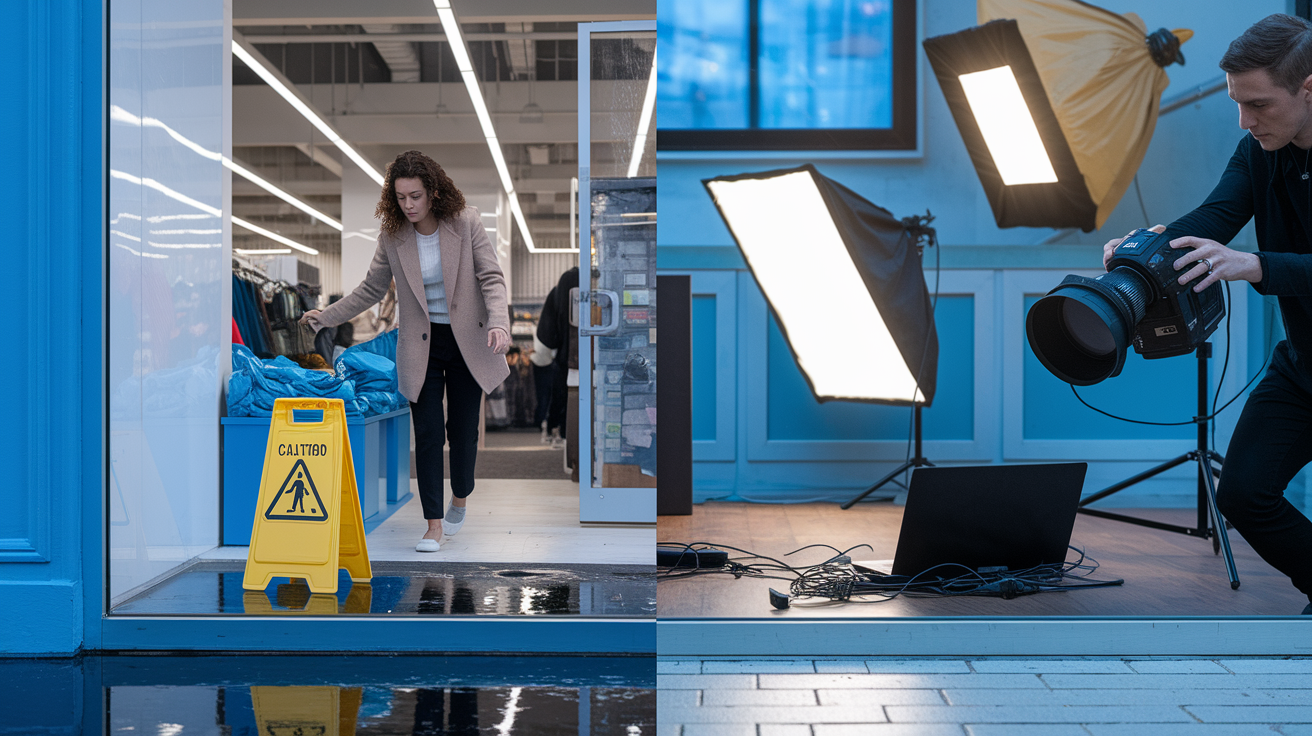
Bodily injury coverage responds when someone outside your workforce gets injured because of your business activities or negligence. Negligence here means you didn’t exercise reasonable care, creating a condition or action that led to harm. Someone slips on a wet floor you didn’t mark. Or a product you sold malfunctions and injures the buyer. The policy pays the injured party’s medical bills, lost wages, legal fees if they sue, and any court award or settlement up to your policy limit. Common bodily injury claims? Slip‑and‑fall accidents at your storefront, injuries from defective merchandise, or harm from work your employees performed at a customer’s location.
Third-party property damage coverage protects you when your business operations or products damage someone else’s belongings, buildings, or equipment. A contractor accidentally breaks a client’s expensive laptop during an installation. That triggers this coverage. So does a photographer whose lighting rig falls and dents venue property. It’s critical to understand this coverage applies only to damage you cause to other people’s property. It doesn’t cover loss or damage to your own business equipment, inventory, or office contents. Those require separate commercial property insurance or a business owner’s policy.
- Slip‑and‑fall accidents
- Damage to client equipment
- Damage to rented space
- Injuries caused by operations
- Key exclusions (your own property, employee injuries, intentional damage)
Personal and Advertising Injury Coverage Within a Business Liability Policy

Personal injury coverage in a liability policy doesn’t mean physical harm. Instead, it covers non‑physical offenses like slander (spoken defamation), libel (written defamation), wrongful eviction, or invasion of privacy. Advertising injury covers unintentional mistakes in your marketing materials. Using someone else’s copyrighted photo without permission, infringing a competitor’s trademark in an ad, or misappropriating another business’s advertising idea. These claims can pop up fast. An employee posts an accusatory statement on social media that damages a competitor’s reputation. Or your website designer inadvertently copies a stock image that wasn’t properly licensed.
In the real world, these claims often surface during competitive disputes or customer disagreements. A small accounting firm might face a slander claim after an owner publicly questions a former client’s financial practices. A local retailer could be sued for copyright infringement if its holiday ad uses an image pulled from an unlicensed source. Because legal defense for reputational and intellectual property claims can be expensive even when you win, advertising injury coverage provides both defense costs and any settlement or judgment up to the policy limit. Gives small businesses protection against risks they may not anticipate until a cease and desist letter or lawsuit arrives.
Medical Payments Coverage and Why It’s Included in Basic Liability Policies

Medical payments coverage is a small, voluntary payment mechanism built into most general liability policies to handle minor injuries without waiting for a fault determination. If a visitor or customer gets hurt on your premises (say, a client bumps their head on a low doorframe at your office), the policy will pay their immediate medical bills up to a sublimit, commonly around $5,000 per person, regardless of whether your business was negligent. This no‑fault approach helps preserve goodwill and often prevents the injured party from hiring an attorney and filing a formal bodily injury claim.
The sublimit is intentionally modest because medical payments are designed for quick resolution of small incidents, not catastrophic injuries. A customer who needs stitches after cutting a hand on a defective product display would see their emergency room bill covered under medical payments. A serious fracture requiring surgery and rehabilitation would exceed the sublimit and trigger the bodily injury portion of the policy.
- Immediate medical help
- Reduces legal escalation
- Typical dollar sublimits ($5,000 per person is a common cap)
Legal Defense Costs and How Business Liability Policies Handle Them

One of the most valuable features of a business liability policy is the insurer’s duty to defend you against covered claims. When a customer, client, or third party files a lawsuit alleging bodily injury or property damage, the insurer appoints and pays for a defense attorney, investigates the claim, and manages settlement negotiations or trial preparation. Many commercial general liability policies provide defense outside the limits. That means the insurer pays legal fees and court costs separately without reducing the dollar amount available to pay judgments or settlements. A $1,000,000 liability limit remains fully available for damages even if defense costs reach $50,000 or more.
Supplemental payments are written into most GL policies and cover expenses tied directly to your cooperation in the defense. Things like travel to depositions or trials. Some policies specify a per‑diem allowance, for instance, up to $250 per day to compensate you for lost business earnings when you’re required to attend court or give testimony. They may also pay post‑judgment interest that accrues while an appeal is pending.
| Defense Feature | Description |
|---|---|
| Defense provided | Insurer appoints attorney, manages litigation, and pays legal fees for covered claims |
| Defense inside vs outside limits | Many GL policies pay defense separately (outside limits), leaving full liability limit for damages |
| Supplemental payments | Cover loss of earnings (up to daily cap), post‑judgment interest, and certain litigation expenses |
| Claim handling obligations | Policyholder must report claims promptly and cooperate fully with investigation and defense |
Policy Limits: Per-Occurrence vs Aggregate Limits Explained

A business liability policy sets two key dollar caps: the per-occurrence limit and the general aggregate limit. The per-occurrence limit is the maximum the insurer will pay for all damages and covered costs arising from a single event or claim. If your limit is $1,000,000 per occurrence and a customer suffers a serious injury that results in a $750,000 settlement, that one claim uses $750,000 of your per‑occurrence limit. The general aggregate limit is the total maximum the insurer will pay for all covered claims during the policy period, typically one year. A common example is a $2,000,000 aggregate paired with the $1,000,000 per‑occurrence limit.
Once your aggregate limit is exhausted, the policy stops paying, even if new claims arise before the policy renews. A business that faces three separate slip‑and‑fall lawsuits in one year, each settling for $700,000, would hit its $2,000,000 aggregate after the third claim and have no coverage remaining until renewal. Choosing appropriate limits depends on your industry risk, contract requirements, and the assets you need to protect. Construction trades, event venues, and manufacturers often carry higher limits than home‑based consultants because their operations expose more people and property to potential harm.
- Per-occurrence (caps payment for each individual incident)
- Aggregate (caps total payments across all claims in the policy year)
- How industry risk affects limit selection (higher risk operations typically require $1M or more per occurrence, plus an umbrella policy for catastrophic claims)
What a Basic Business Liability Policy Does Not Cover

General liability insurance isn’t a catch‑all. It focuses narrowly on third‑party bodily injury and property damage claims arising from business operations, leaving several major risk categories unprotected. The most critical exclusion is employee injuries and illnesses. If a worker gets hurt on the job, that claim falls under workers’ compensation insurance, which is required by law in most states and covers medical treatment, lost wages, and disability benefits for employees. A business liability policy will deny any claim filed by your own staff for work‑related harm. So a separate workers’ comp policy is essential the moment you hire your first employee or contractor classified as an employee under state law.
Automobile accidents are another large gap. If you or an employee cause a collision while driving for business purposes, general liability excludes the claim. You need commercial auto insurance (or hired and non‑owned auto coverage if you don’t own vehicles) to protect against vehicle‑related bodily injury and property damage. Theft, fire, or damage to your own business property (computers, inventory, tools, office furniture) aren’t covered. Those losses require commercial property insurance, which can be purchased separately or bundled in a business owner’s policy.
Professional mistakes and errors in the services you provide are excluded from general liability coverage. If a consultant gives faulty advice that costs a client money, or an accountant makes a filing error that triggers penalties, those claims require professional liability insurance, also called errors and omissions (E&O) coverage. Cyber incidents involving data breaches, hacking, ransomware, or exposure of personally identifiable information are also excluded. Businesses that store customer data or accept credit cards need cyber liability insurance. Finally, intentional harmful acts by the business owner or employees, most pollution exposures, and employment‑related claims like wrongful termination or harassment aren’t covered under a basic GL policy and demand their own specialized coverage or endorsements.
- Employee injuries (covered by workers’ compensation)
- Auto accidents (covered by commercial auto insurance)
- Theft of your own property (covered by commercial property or BOP)
- Professional errors (covered by professional liability / E&O)
- Cyber/PII incidents (covered by cyber liability insurance)
- Intentional acts (excluded entirely, no coverage available for deliberate harm)
Products and Completed Operations Coverage in Liability Policies
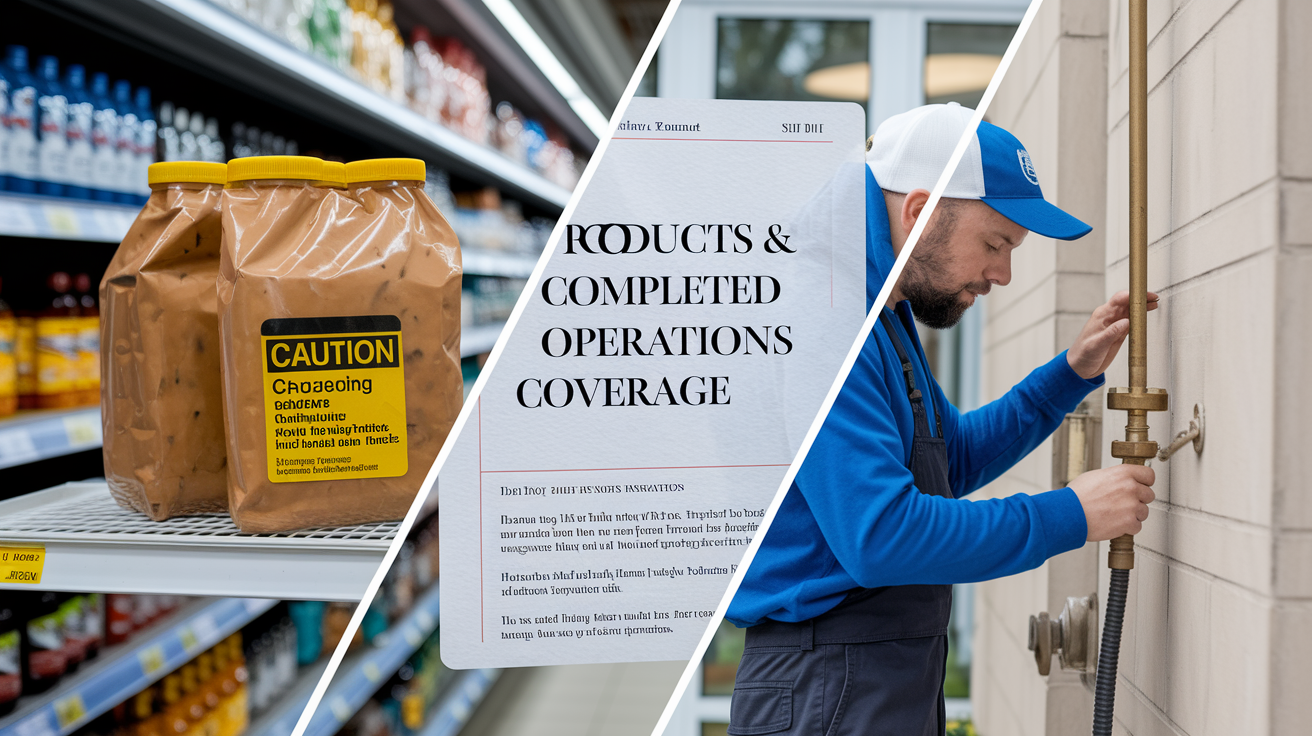
Products and completed operations coverage is a core component of general liability insurance that extends protection beyond your immediate work site and active operations. Products coverage responds when an item you manufactured, sold, distributed, or repaired causes bodily injury or property damage after the customer takes possession. A food product that causes illness. A defective tool that injures a buyer. Or faulty electronics that spark a fire in a customer’s home. All trigger this coverage. The claim may surface weeks, months, or even years after the sale, but as long as the policy was in force when the injury or damage occurred (or under certain “claims‑made” forms, when the claim was reported), coverage applies up to your policy limit.
Completed operations coverage protects you from claims arising after you finish a job and leave the premises. A plumber installs a water heater. Three months later it leaks and floods the customer’s basement, causing thousands of dollars in damage. A painter completes work on a commercial building. A year later the client alleges the paint caused indoor air‑quality problems and sues for property damage and tenant health complaints. Both scenarios fall under completed operations, and the timeline for these claims can stretch well beyond the original project date, especially in construction and manufacturing, where defects may take time to show up and state statutes of limitations vary.
Contractual Liability, Additional Insureds, and Certificates of Insurance

Many business liability policies include limited contractual liability coverage, which protects you when you sign a contract that requires you to assume or share the liability of another party. Common in service agreements, venue leases, and subcontracts. For example, a photographer renting event space may sign a lease requiring them to indemnify the landlord for certain bodily injury claims arising from the photographer’s use of the property. If a guest trips over the photographer’s equipment, the contractual liability provision helps cover the landlord’s exposure under that indemnification clause. However, coverage is narrow and applies only to liability you would have faced even without the contract (the policy won’t cover liability you assume that goes beyond your own negligence).
An additional insured endorsement extends a portion of your liability coverage to another party named in the endorsement, typically a client, landlord, or general contractor. The additional insured gains the right to make a claim under your policy for covered incidents tied to your work or operations, and they receive legal defense if they’re sued alongside you. This endorsement is frequently required in construction, event services, and consulting contracts, allowing the hiring party to rely on your insurance as a first line of defense before their own policies are triggered.
A certificate of insurance (COI) is a one‑ or two‑page document your insurer issues to prove you carry coverage and to show your policy limits, effective dates, and any additional insureds or special endorsements. Landlords, clients, and licensing authorities routinely request certificates before allowing you to begin work, sign a lease, or bid on a project. The certificate itself doesn’t alter your coverage. It’s evidence, not a contract. But it satisfies the other party’s due‑diligence requirement and confirms that your policy meets their minimum insurance standards.
- Purpose of additional insured (extends limited defense and indemnity to a third party for your operations)
- Common contract requirements (clients and landlords often require $1,000,000 minimum coverage and additional insured status)
- Certificate features (shows limits, coverage types, policy period, cancellation notice terms)
- Coverage limitations (additional insured protection typically applies only to liability arising from your work, not the additional insured’s own negligence)
Claims: Reporting, Process, and Real Claim Examples
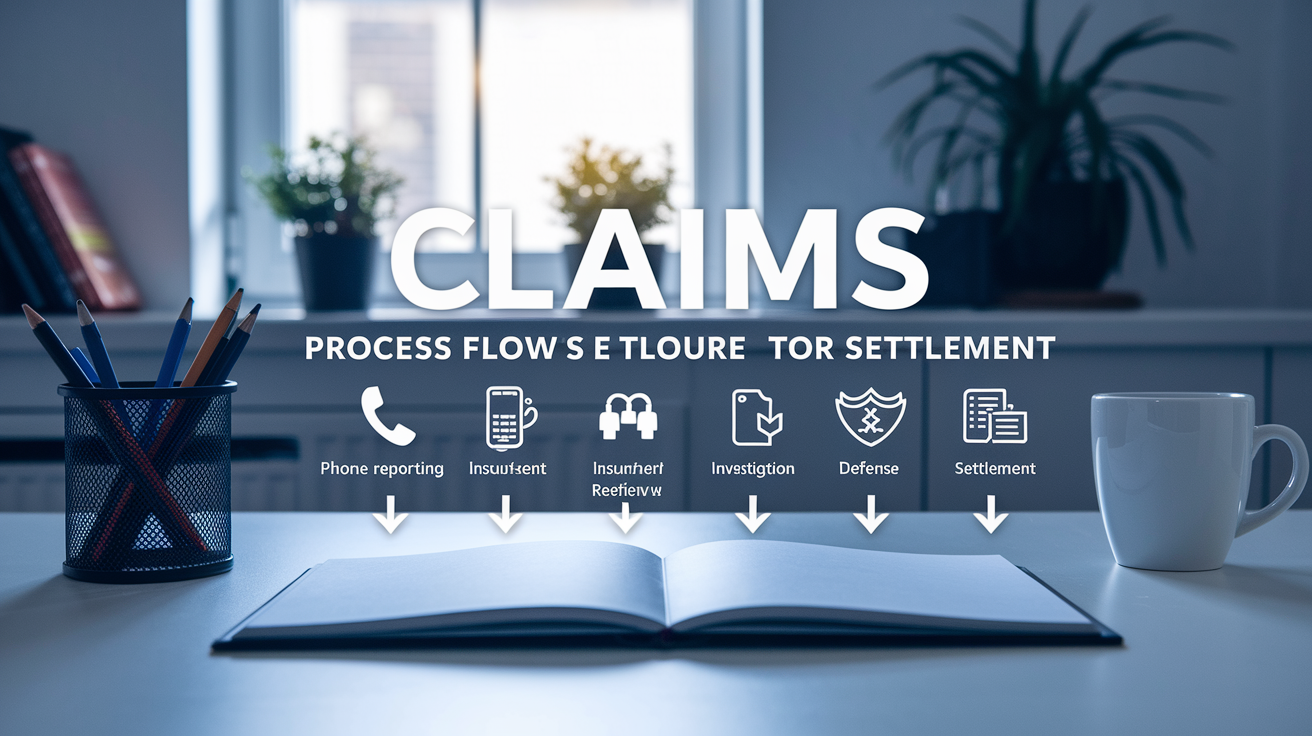
Most insurers provide 24/7 online or telephone claim reporting, and prompt notification is a policy requirement. Waiting too long to report can jeopardize coverage. As soon as you become aware of an incident that could result in a claim, even if no lawsuit has been filed, you should notify your insurer and provide all relevant details: date, location, injured parties, witnesses, photos, and any incident reports or correspondence.
Once you report the claim, the insurer assigns a claims adjuster or representative who investigates the facts, reviews the policy to determine coverage, and opens a claim file. The adjuster will contact witnesses, request documentation like contracts or maintenance logs, and assess the validity and value of the claim. If the claim is covered and a lawsuit is filed, the insurer appoints a defense attorney who specializes in liability law. The attorney works on your behalf to negotiate a settlement or defend you at trial. Real examples? A customer slip‑and‑fall in a retail store that settled for medical costs and lost wages. A technology consultant who damaged a client’s server and faced both data‑recovery costs and business‑interruption claims. And a product manufacturer whose defective component caused a fire, resulting in a six‑figure property damage settlement.
- Prompt reporting (notify your insurer immediately when an incident or claim notice is received)
- Insurer review (adjuster investigates, confirms coverage, and estimates claim reserves)
- Investigation (gather evidence, interview witnesses, evaluate liability and damages)
- Defense & negotiation (appoint attorney if lawsuit is filed, attempt settlement discussions)
- Settlement or closure (if liability and damages are clear, settle within policy limits, if claim is denied or resolved, close the file and document the outcome)
Comparing Basic Business Liability to a Business Owner’s Policy (BOP)
A stand‑alone commercial general liability policy covers only third‑party bodily injury, property damage, personal injury, and advertising injury claims. A business owner’s policy bundles that same general liability coverage with commercial property insurance (covering your building contents, inventory, and equipment against fire, theft, and other perils) and business income insurance (reimbursing lost profits and ongoing expenses if a covered property loss forces you to close temporarily). For many small businesses (retail shops, offices, restaurants, light manufacturing), a BOP is both more comprehensive and more cost‑effective than buying separate liability and property policies, often including discounts of up to five percent when coverages are packaged.
BOPs can also be customized with optional endorsements for equipment breakdown, spoilage, employee dishonesty, and other risks, giving you a more complete risk‑management solution in a single policy. However, a BOP isn’t available to every business. Insurers typically restrict BOPs to low‑ to moderate‑risk operations with limited revenue and employee counts, and they exclude high‑hazard industries like auto repair, bars, and large contractors. If your business doesn’t qualify for a BOP or you don’t need property coverage because you work from home or a client’s location, a stand‑alone general liability policy remains the right choice.
Final Words
You now have the essentials: what general liability does, how it covers third‑party bodily injury and property damage, what personal and advertising injury means, and why medical payments and defense costs matter.
If you’re asking what does a basic business liability policy cover, the short answer is: costs for injuries or damage your business causes to others, plus related legal expenses.
Check limits and exclusions, consider a BOP if you need property bundled, and review coverage at renewal. Do that and you’ll have clearer, practical protection.
FAQ
Q: What does a standard business liability insurance policy cover?
A: A standard business liability insurance policy covers third-party bodily injury and property damage, personal and advertising injury, limited medical payments (no-fault), and defense costs for covered claims.
Q: How much is a $1,000,000 general liability policy?
A: A $1,000,000 general liability policy typically costs about $300–$3,000 per year, depending on industry risk, location, payroll or revenue, and claims history; get quotes to compare.
Q: What is not covered by a liability policy?
A: A liability policy does not cover employee injuries (workers’ comp), your own property damage, auto accidents, professional mistakes (E&O), cyber or data breaches, theft, intentional acts, or pollution unless endorsed.
Q: What is the best general liability insurance for small businesses?
A: The best general liability insurance for small businesses is one that matches your risk profile and budget; look for core coverage, adequate limits (commonly $1M/$2M), clear defense terms, and multiple quotes.