



Think life insurance is only for homeowners and big families?
Starter life insurance proves that’s not true.
It’s a low-cost policy that pays a death benefit (a lump sum to your beneficiaries) if you die while it’s active.
It mainly covers funeral bills, small debts, and short-term income gaps—not lifetime support or college funds.
In this post you’ll learn exactly what starter plans pay for, common limits and exclusions, optional add-ons to watch for, and when a starter policy is the smart first step.
Overview of Starter Life Insurance Coverage

Starter life insurance is entry-level death benefit coverage built for first-time buyers who need affordable, straightforward protection without the complexity of permanent plans or extensive medical underwriting. These policies typically provide a fixed death benefit (commonly between $5,000 and $50,000) to your named beneficiaries if you pass away while the policy’s active. The core purpose? Cover immediate financial obligations like funeral expenses, outstanding debts, or short-term income replacement, rather than long-term wealth building or estate planning.
Most starter policies use simplified underwriting. You answer a few basic health questions instead of undergoing a full medical exam. This makes approval faster and more accessible for people who might have minor health issues or just want to skip the exam process. The death benefit gets paid out as a lump sum to your beneficiaries, who can use the money for any purpose: medical bills, mortgage payments, childcare, or everyday living expenses during a difficult transition.
Because these policies focus on essential protection rather than cash value accumulation or investment features, they keep premiums low and terms simple. Here’s what you can expect:
- A death benefit paid to your beneficiaries if you pass away during the policy term
- Simplified or guaranteed-issue underwriting with minimal or no medical exams
- Coverage for death from natural causes, accidents, and approved illnesses
- Optional add-ons like accidental death enhancements or accelerated benefits for terminal illness
Coverage Details and Included Benefits

Starter life insurance policies cover the primary risk: death. If you pass away from natural causes (heart disease, cancer, stroke, or other illnesses), the policy pays the full death benefit to your beneficiaries, typically after any applicable waiting period has passed. Accidental death is also covered. If you die in a car crash, fall, drowning, or other accident, your beneficiaries receive the payout. Some starter plans include a small accidental death enhancement that doubles the benefit if death occurs due to a covered accident, though this feature’s less common in the most basic policies.
Many insurers also offer optional riders that expand what the policy covers beyond the standard death benefit. These add-ons increase your premium slightly but can provide valuable flexibility if you face a serious health crisis before you die. For example, an accelerated death benefit rider lets you access a portion of the death benefit early if you’re diagnosed with a terminal illness and have a limited life expectancy. Other common optional features:
- Accidental death and dismemberment (AD&D) rider, which pays an additional benefit for accidental death or serious injury like loss of a limb
- Waiver of premium rider, which suspends premium payments if you become totally disabled and can’t work
- Child or spouse rider, which adds a small amount of coverage for other family members under your main policy
- Long-term care acceleration rider, which allows you to use part of the death benefit to pay for nursing home or assisted living costs
- Guaranteed insurability rider, which lets you buy more coverage later without answering new health questions
The exact benefits and add-ons available depend on the insurer and the specific product you choose. Not all starter policies include these options. Some guaranteed-issue plans have fewer customization choices to keep the underwriting process simple and the approval guaranteed.
Costs, Eligibility, and Application Requirements

Starter life insurance premiums get calculated based on your age, gender, health status, tobacco use, and the amount of coverage you select. Younger applicants in good health pay the lowest rates (often as little as $5 to $20 per month for $10,000 to $25,000 of coverage), while older applicants or those who smoke can expect higher monthly costs. Because many starter policies use simplified underwriting, the insurer asks a short list of yes-or-no health questions rather than requiring a full physical exam or blood work. This speeds up approval but also means the per-dollar cost of coverage is usually higher than fully underwritten term policies.
Eligibility rules vary by insurer, but most starter plans are available to applicants between ages 18 and 65, with some guaranteed-issue options extending to age 70 or 75. If you choose a guaranteed-issue policy, you typically won’t be denied coverage regardless of your health, but these plans often have graded benefits for the first two or three years. The full death benefit only applies if you die from an accident during that waiting period. Non-accidental deaths within the graded period may result in a return of premiums paid plus interest, rather than the full face amount.
| Age Range | Typical Monthly Cost | Underwriting Type |
|---|---|---|
| 18–35 | $5–$20 | Simplified (few health questions) |
| 36–50 | $15–$40 | Simplified or guaranteed issue |
| 51–65 | $30–$80+ | Guaranteed issue or limited underwriting |
| 66–75 | $50–$150+ | Guaranteed issue (often graded benefits) |
Limitations and Common Exclusions

Starter life insurance policies don’t pay out in every situation. Understanding the exclusions helps you set realistic expectations. The most common exclusion? The suicide clause, which typically applies for the first two years after the policy goes into effect. If you die by suicide within that contestability period, the insurer usually returns the premiums you paid rather than paying the full death benefit. This clause exists to prevent people from purchasing coverage with the intent to end their lives shortly after approval. Death resulting from illegal activities (such as committing a felony or participating in drug trafficking) is also commonly excluded, as is death caused by war or acts of terrorism in some policies.
Many starter policies, especially guaranteed-issue plans, include a waiting or graded benefit period. During the first one to three years, non-accidental deaths may result in only a partial payout or a return of premiums paid plus interest. Say you purchase a guaranteed-issue policy with a two-year graded period and die from a heart attack in month eighteen. Your beneficiaries might receive only the premiums paid back rather than the full $25,000 face amount. Accidental deaths are usually exempt from this limitation and pay the full benefit immediately. The graded period protects the insurer from adverse selection: people buying coverage specifically because they know their health is declining.
Starter policies also have payout limitations tied to policy maintenance. If you stop paying premiums and the policy lapses, there’s no death benefit, even if you die shortly after the lapse date. Term policies expire at the end of the coverage period, so if you outlive a 20-year term, you receive nothing back unless you purchased a return-of-premium rider. Unlike permanent policies, starter term plans don’t build cash value, so there’s no loan option or surrender value if you decide to cancel early. These limitations keep costs low but mean the policy only pays if you die during the active coverage period.
Who Should Choose a Starter Life Insurance Policy
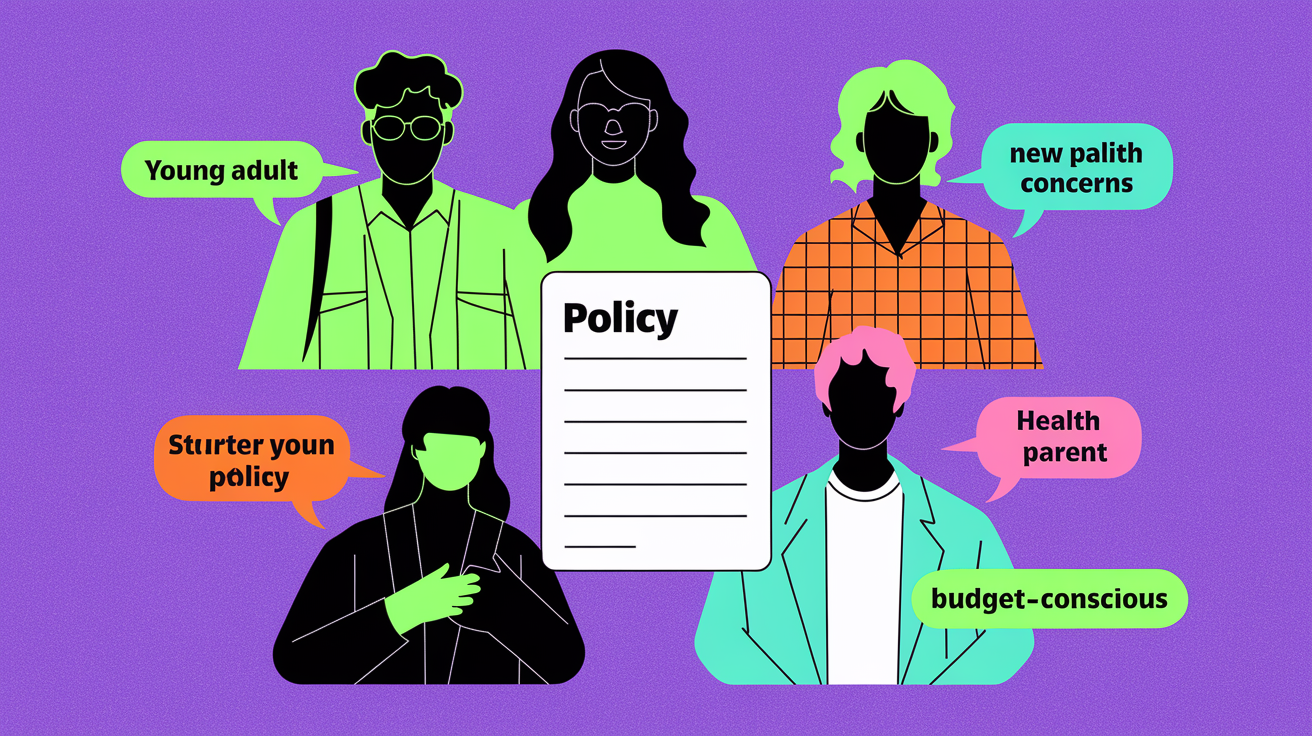
Starter life insurance is built for people who need immediate, affordable protection without the complexity or cost of larger policies. It works well if your primary goal is to cover final expenses (funeral costs, outstanding medical bills, small debts) or to provide a modest financial cushion for your family during a difficult transition. Because the coverage amounts are relatively low, these policies aren’t intended to replace decades of lost income or fund college educations, but they do offer peace of mind for people just beginning to build financial security.
Common buyer profiles who benefit most from starter policies:
- Young adults in their 20s or early 30s who want basic coverage at the lowest possible cost
- New parents who need temporary protection while they save for a larger term policy
- Individuals with health issues who may not qualify for traditional underwriting but can access guaranteed-issue options
- People on tight budgets who can’t afford the premiums on a standard $250,000 or $500,000 term policy
If your financial responsibilities grow (you buy a home, have more children, or take on significant debt), a starter policy may no longer be sufficient. At that point, you can either convert the policy to a permanent plan (if the conversion feature’s included), purchase additional coverage, or replace the starter policy with a higher-amount term policy. Reviewing your coverage every few years or after major life events helps ensure the death benefit still matches your family’s needs.
Comparison: Starter Life Insurance vs. Standard Life Insurance

Starter policies and standard life insurance products serve different purposes. Choosing between them depends on your coverage needs, budget, and willingness to go through underwriting. The primary difference is coverage amount: starter policies cap out around $50,000, while standard term policies commonly offer $100,000 to $1,000,000 or more. Standard policies also include more customization options (longer term lengths, more rider choices, and the ability to convert to permanent coverage) but require more thorough underwriting, including medical exams and detailed health histories.
| Feature | Starter Policy | Standard Policy |
|---|---|---|
| Coverage Amount | $5,000–$50,000 | $100,000–$1,000,000+ |
| Underwriting | Simplified or guaranteed issue | Full medical exam and health questions |
| Approval Speed | Days to weeks | Weeks to a month |
| Monthly Premium | $5–$80+ | $15–$200+ (varies by coverage amount) |
| Common Riders | Limited; may include AD&D or waiver of premium | Wide range: conversion, return of premium, child rider, long-term care |
| Cash Value | No | No (term) or Yes (whole/universal) |
Starter policies fit best when you need quick approval, have a limited budget, or only need to cover basic final expenses and small debts. They’re also a good stepping stone if you’re young and healthy but not ready to commit to a larger premium. Standard policies make more sense when you’re responsible for a mortgage, dependents, or significant income replacement needs, and you’re willing to undergo a medical exam in exchange for better per-dollar pricing and higher coverage limits. If you start with a basic policy and later decide you need more protection, many insurers allow you to add coverage or switch to a larger plan without restarting the contestability clock, as long as you act within the policy’s conversion window.
Final Words
You’ve seen the essentials: what starter life insurance is for, typical coverage ranges, key limits, and how costs and underwriting work.
We covered included benefits and common exclusions, who these plans fit, and how starter and standard policies differ. You know the trade-offs: cheaper and simpler versus higher limits and full underwriting.
If you’re asking what does starter life insurance cover, it usually pays a fixed death benefit for natural causes and accidents, with a few small add-ons possible. It’s a practical first step. Get basic protection now, then review as your needs grow.
FAQ
Q: What does Colonial Penn give you for $9.95 a month?
A: Colonial Penn gives you a guaranteed-issue whole life policy with a modest fixed death benefit, level monthly premium, and simplified acceptance aimed at older buyers; exact benefit and price depend on age and plan.
Q: What is the $10,000 death benefit?
A: The $10,000 death benefit is the fixed payout your beneficiaries receive when the insured dies, meant to cover funeral costs, medical bills, or short-term expenses; payouts can be reduced by loans or policy conditions.
Q: Will life insurance pay out for cirrhosis?
A: Life insurance will pay a claim for cirrhosis-related death if the policy covers that cause, the claim isn’t within a contestability or suicide waiting period, and the application was truthful about the insured’s health.
Q: How much does a $100,000 life insurance policy cost per month?
A: The cost of a $100,000 life policy per month varies by age, health, and policy type; roughly a healthy 30-year-old might pay $10–$25, while a 50-year-old could pay $75–$200 or more.