


What if your insurance only helps after a disaster hits?
Catastrophic health insurance does exactly that.
It offers very low monthly premiums but very high deductibles, so the plan mainly protects you from truly large medical bills.
You still get free preventive care and a few primary care visits before the deductible, but routine costs are usually yours until you reach the threshold.
This post will explain how these plans work, who can enroll, what to expect to pay, and when a catastrophic plan makes sense.
Clear Breakdown of Catastrophic Health Insurance and How It Works

Catastrophic health insurance is a specialized type of marketplace coverage that protects you against worst-case medical scenarios while keeping monthly premiums as low as possible. These plans come with extremely high deductibles, often ranging from $7,000 to $9,450 or more for an individual, but they charge the lowest monthly premiums you’ll find through the Health Insurance Marketplace. Here’s the basic idea: you pay very little each month, but you’ll cover nearly all routine healthcare costs out of pocket until you hit your annual deductible. Once you reach that deductible, catastrophic plans typically cover 100% of all remaining essential health benefits for the rest of the year. That’s when the protection really kicks in, keeping you from facing unlimited medical expenses that could wreck your finances.
Even with a high deductible before most coverage starts, catastrophic plans still include important preventive care at no cost. All federally mandated preventive services, like annual checkups, vaccinations, cancer screenings, chronic condition screenings, and contraceptive care, must be covered without you paying anything or meeting your deductible first. Catastrophic health insurance plans also typically allow at least three primary care visits per year before you’ve met your deductible, giving you limited access to a doctor for minor concerns without paying the full cost yourself. This structure makes catastrophic insurance work like a safety net. It keeps you from facing unlimited bills in a true emergency while offering basic preventive and primary care access along the way.
Coverage kicks in fully once you’ve paid your deductible. From that point forward the plan covers all essential health benefits at no additional cost to you. Hospital stays, surgeries, specialist visits, emergency services, prescription drugs, mental health care, maternity care. All of it. Because the deductible sits so close to the federal out-of-pocket maximum, hitting that threshold usually means you’ve experienced a serious medical event. The plan is there to catch you when that happens.
Core features of catastrophic health insurance plans:
- Low premium costs: Monthly payments are the lowest available in the marketplace, often between $60 and $200 depending on age and location
- High deductibles: Annual deductibles typically range from $7,000 to over $9,000, meaning you pay nearly all non-preventive care costs until that amount is reached
- Preventive care at no cost: All required preventive services and screenings are fully covered before the deductible, with no copays or out-of-pocket charges
- Major medical protection: After meeting the deductible, the plan pays 100% of covered essential health benefits for the remainder of the plan year
Eligibility Requirements for Catastrophic Health Insurance Coverage

Not everyone can enroll in catastrophic health insurance. Eligibility gets tightly controlled by federal rules, and these plans are generally available only to two groups: young adults under 30 years old, and individuals of any age who qualify for a federally recognized hardship or affordability exemption. If you’re under 30, you can buy a catastrophic plan during Open Enrollment without needing any extra documentation. If you’re 30 or older, you’ll need to apply for and receive a hardship exemption certificate or an affordability exemption before you can enroll.
The affordability exemption applies when the cheapest marketplace plan or employer coverage available to you costs more than 7.97% of your household income. In that situation, you may qualify to buy catastrophic coverage even if you’re over 30. Hardship exemptions cover a broader set of difficult life circumstances, situations where the federal government recognizes that standard marketplace coverage is financially out of reach or just not practical.
Common qualifying hardship exemptions include:
- Homelessness: You’re currently homeless or recently experienced homelessness
- Eviction or foreclosure: You received an eviction or foreclosure notice within the past six months
- Utility shut-off notice: You received a shut-off notice from a utility company for non-payment
- Domestic violence: You’re a recent survivor of domestic violence or spousal abuse
- Death of a close family member: A family member died recently, and you’re responsible for funeral or estate costs
- Bankruptcy or substantial debt: You filed for bankruptcy in the past six months, or you have substantial unpaid medical debt from the last two years
Cost Structure of Catastrophic Health Insurance and Deductible Amounts

The defining feature of catastrophic health insurance is its cost structure: extremely low monthly premiums paired with very high annual deductibles and out-of-pocket maximums. In 2024, individual deductibles for catastrophic plans typically align with or approach the federal out-of-pocket maximum, set at around $9,450 for individual coverage. For family plans, the deductible can reach approximately $18,900. These deductible amounts mean you’ll pay the full cost of nearly all non-preventive medical care until you’ve spent that full amount out of your own pocket. Doctor visits, lab tests, imaging, prescriptions, specialist consultations. All of it comes out of pocket first.
Monthly premiums for catastrophic plans are the lowest available through the Health Insurance Marketplace, but the exact cost depends heavily on your age, where you live, and which insurer offers the plan. Younger enrollees see the lowest premiums. A 27-year-old might pay an average of around $80 to $120 per month, while a 40-year-old could pay closer to $150 to $200, and a 50-year-old might see premiums in the range of $200 to $260 or higher. These figures vary by state and local market conditions, but the pattern holds. Catastrophic premiums are significantly lower than Bronze, Silver, Gold, or Platinum plans for the same person.
Once you meet your deductible, catastrophic plans cover 100% of all remaining covered healthcare costs for the rest of the plan year. No copays, no coinsurance, no additional bills once you’ve hit that threshold. This all-or-nothing structure is what gives catastrophic insurance its name. It’s truly designed for catastrophic, high-dollar medical events rather than routine care.
| Age | Typical Monthly Premium | Typical Deductible |
|---|---|---|
| 27 | $80 – $120 | $8,000 – $9,450 |
| 40 | $150 – $200 | $8,500 – $9,450 |
| 50 | $200 – $260 | $9,000 – $9,450 |
Coverage Details of Catastrophic Health Insurance Plans
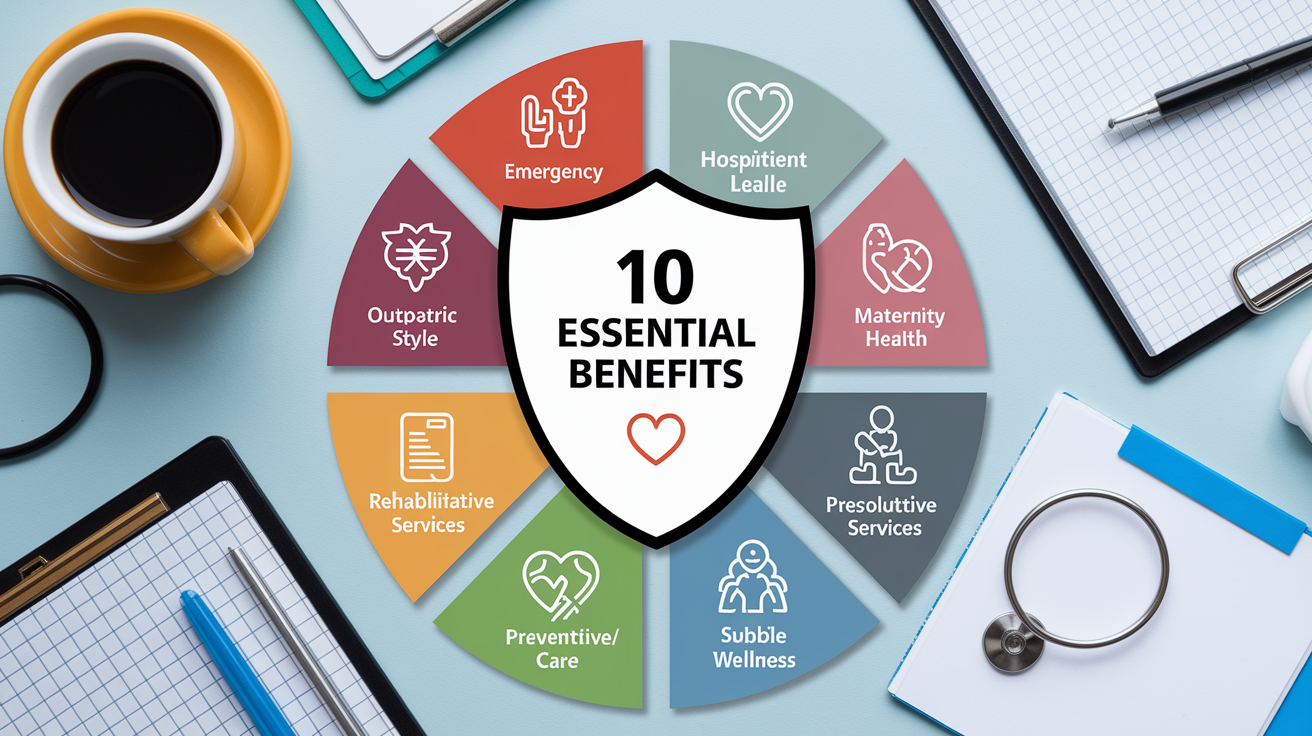
Catastrophic health insurance plans are required to cover the same 10 essential health benefits mandated by the Affordable Care Act for all marketplace plans. Your plan must include coverage for emergency services, hospitalization, outpatient care, maternity and newborn care, mental health and substance use treatment, prescription drugs, rehabilitative services, lab tests, preventive and wellness services, and pediatric care including dental and vision. The difference between catastrophic coverage and other marketplace plans isn’t what gets covered. It’s when the coverage begins to pay.
All preventive care benefits are covered at no cost to you, regardless of whether you’ve met your deductible. This includes annual wellness visits, immunizations, screenings for conditions like diabetes and high blood pressure, cancer screenings such as mammograms and colonoscopies, and birth control. Catastrophic plans also typically allow at least three primary care visits per year before you meet your deductible, though you may still be responsible for a portion of the visit cost depending on the plan’s specific structure. These limited pre-deductible visits give you some access to a doctor for non-emergency concerns without facing the full cost of care.
Key coverage features of catastrophic health insurance:
- Preventive care at no cost: Annual checkups, vaccines, cancer screenings, and other preventive services are fully covered with no deductible or copay
- Limited primary care visits: At least three primary care appointments per year are available before meeting the deductible
- Emergency services: Emergency room visits and urgent care are covered benefits, though you’ll pay the full cost until your deductible is met
- Essential health benefits: All 10 ACA-required benefit categories are included, from hospital stays to prescription drugs to maternity care
- Full coverage after deductible: Once you meet the annual deductible, the plan pays 100% of all covered services for the rest of the year
Limitations of Catastrophic Health Insurance Coverage

The biggest limitation of catastrophic health insurance is straightforward. You’ll pay nearly the full cost of all non-preventive medical care until you’ve met your deductible. For someone managing a chronic condition like diabetes, asthma, high blood pressure, or arthritis, or anyone who needs regular specialist visits, ongoing prescriptions, or frequent monitoring, catastrophic plans can quickly become more expensive than a Bronze or Silver plan with a lower deductible. If you spend $500 per month on medications and doctor visits, you’ll be paying that out of pocket under a catastrophic plan until you’ve reached your $9,000 deductible, which could take all year or never happen at all.
Catastrophic plans are also not eligible for premium tax credits or cost-sharing reductions, even if your income would otherwise qualify you for those subsidies. This means you’ll pay the full monthly premium with no financial assistance, and you won’t receive help reducing your deductible or out-of-pocket costs the way you would with a Silver plan. For many people, especially those earning between 100% and 400% of the federal poverty level, a subsidized Bronze or Silver plan ends up costing less overall than an unsubsidized catastrophic plan, even though the catastrophic premium looks lower on paper. Check your subsidy eligibility before assuming catastrophic is the cheapest option.
Comparing Catastrophic Health Insurance to Standard Marketplace Plans

Catastrophic health insurance sits outside the traditional metal tier structure of Bronze, Silver, Gold, and Platinum marketplace plans, but it’s still useful to compare how it stacks up. The metal tiers are based on how much of your total healthcare costs the plan is expected to cover. Bronze covers about 60%, Silver covers 70%, Gold covers 80%, and Platinum covers 90%. Catastrophic plans don’t fit neatly into this model because they cover almost nothing until the deductible is met, then they cover 100%. In practice, catastrophic plans cover a smaller share of total costs than even Bronze plans for most people, unless you hit a true medical emergency.
Catastrophic vs. Bronze Plans
Bronze plans typically have monthly premiums that are higher than catastrophic plans but lower than Silver or Gold options. Deductibles for Bronze plans usually range from $5,000 to $7,500 for individuals, which is still high but notably lower than the $8,000 to $9,450 deductibles common in catastrophic coverage. Bronze plans also offer more predictable cost-sharing. Many include copays for doctor visits and prescriptions before you meet the deductible, and they cover 60% of your costs after the deductible is met (you pay 40%). For someone who expects to use a moderate amount of care, say a few doctor visits, one or two prescriptions, maybe some lab work, a Bronze plan often delivers better value than catastrophic, even with the higher premium. Bronze plans are also eligible for subsidies if your income qualifies, which can make them cheaper than catastrophic coverage.
Catastrophic vs. Silver Plans
Silver plans have higher monthly premiums than both catastrophic and Bronze options, but they come with significantly lower deductibles, often in the $3,000 to $5,000 range, and they cover 70% of your healthcare costs once the deductible is met (you pay 30%). The real advantage of Silver plans, though, is access to cost-sharing reductions if your income is between 100% and 250% of the federal poverty level. With cost-sharing reductions, your deductible can drop to as low as $500 to $1,000, and your out-of-pocket maximum can be reduced by thousands of dollars. For anyone eligible for these reductions, a Silver plan will almost always be cheaper and more useful than a catastrophic plan, even though the premium is higher. Over half of marketplace enrollees end up with net premiums of $50 per month or less after subsidies, and 94% receive some form of financial assistance. If you qualify for subsidies, Silver is usually the better choice.
| Plan Type | Premium Level | Deductible Level | Eligibility for Subsidies |
|---|---|---|---|
| Catastrophic | Lowest | Very High ($8,000–$9,450) | No |
| Bronze | Low to Moderate | High ($5,000–$7,500) | Yes |
| Silver | Moderate | Moderate ($3,000–$5,000) | Yes (including cost-sharing reductions) |
Pros and Cons of Catastrophic Health Insurance

Catastrophic health insurance offers a specific trade-off: the lowest possible monthly cost in exchange for very high out-of-pocket expenses if you need care. Whether that trade-off makes sense depends entirely on your health, your budget, and your tolerance for financial risk. Here’s a simple breakdown of what works and what doesn’t.
Pros of catastrophic health insurance:
- Lowest monthly premiums: These plans cost less per month than any other marketplace option, leaving more room in your budget for rent, food, student loans, or savings
- Protection from major medical bills: If you’re in a serious accident, need emergency surgery, or face a sudden illness, the plan caps your total annual costs and covers everything after the deductible
- Preventive care at no cost: Annual checkups, vaccines, screenings, and other preventive services are fully covered with no out-of-pocket charges
- Limited pre-deductible primary care: At least three doctor visits per year are available before you meet the deductible, giving you some access to care for minor concerns
Cons of catastrophic health insurance:
- Extremely high deductibles: Deductibles of $8,000 to $9,450 mean you’ll pay nearly all medical costs yourself unless you face a true catastrophic event
- No subsidy eligibility: Premium tax credits and cost-sharing reductions can’t be applied to catastrophic plans, so you pay the full premium with no financial assistance
- Limited usefulness for moderate healthcare needs: If you need a few specialist visits, regular prescriptions, or ongoing monitoring, the out-of-pocket costs can quickly exceed what you’d pay with a Bronze or Silver plan
- Not HSA-compatible: Catastrophic plans don’t qualify as high-deductible health plans (HDHPs) for Health Savings Account contributions, so you can’t pair them with tax-advantaged savings
Who Should Consider Catastrophic Health Insurance?

Catastrophic health insurance makes the most sense for a narrow set of people: young, healthy adults who rarely use medical services, have limited budgets, and want protection against worst-case scenarios without paying much each month. If you’re under 30, in good health, don’t take regular medications, and can afford to cover a $9,000 deductible in an emergency (or can at least handle the monthly payment plan from a hospital bill), catastrophic coverage may be a reasonable choice. The low premium frees up money for other priorities, and the plan ensures you won’t face unlimited medical bills if something serious happens.
Catastrophic insurance is also a practical option for people over 30 who qualify for a hardship or affordability exemption and genuinely can’t afford a Bronze or Silver plan, even with subsidies. If you’re facing homelessness, recovering from a recent financial disaster, or living in an area where standard plans are prohibitively expensive, catastrophic coverage at least provides a safety net. But if you have any ongoing health needs, even something as simple as a prescription for high blood pressure, you’ll likely spend more out of pocket with a catastrophic plan than you would with a subsidized Bronze or Silver option.
Ideal candidates for catastrophic health insurance:
- Young adults under 30 who are in good health, rarely see a doctor, and want the lowest possible monthly cost
- Budget-limited individuals who can’t afford standard marketplace plans and qualify for a hardship or affordability exemption
- Healthy people with emergency savings who can absorb a large deductible if something unexpected happens and prefer paying less each month
Enrollment Rules and How to Sign Up for Catastrophic Health Insurance

You can enroll in catastrophic health insurance during the annual Open Enrollment period, which typically runs from November 1 through mid-January (exact dates vary slightly by year). Outside of Open Enrollment, you can only sign up for a catastrophic plan if you experience a qualifying life event that triggers a Special Enrollment Period. Events like losing other health coverage, moving to a new state, getting married, having a baby, or receiving a hardship exemption. If you’re over 30, you’ll need to apply for and receive a hardship or affordability exemption before you can enroll, even during Open Enrollment.
Catastrophic plans are available through Healthcare.gov (the federal marketplace) and state-run marketplaces in states that operate their own exchanges. In 2024, approximately 59,000 people enrolled in catastrophic plans on public exchanges, making them the least common plan type. Plan availability, premiums, and specific deductible amounts vary by location and insurer, so it’s worth comparing all your options, including Bronze and Silver plans, before committing.
To enroll in a catastrophic health insurance plan:
- Check your eligibility: Confirm you’re under age 30 or have received a hardship or affordability exemption
- Create a marketplace account: Go to Healthcare.gov or your state marketplace and create or log into your account during Open Enrollment or a Special Enrollment Period
- Compare plans: Review available catastrophic plans alongside Bronze and Silver options to see which offers the best value for your situation
- Complete enrollment: Select your plan, confirm your coverage start date, and set up your first premium payment
Final Words
You read a clear, practical guide to catastrophic health insurance: what it is, how the high deductible and low premium trade-off works, what’s covered before and after the deductible, who qualifies, and how it compares to Bronze and Silver plans.
Next steps: check your eligibility, compare premiums and deductibles, and decide based on your health needs and budget. Enroll during Open Enrollment or after a qualifying event.
If you still ask what is catastrophic health insurance, it’s a low-cost option for mostly healthy people who want protection from big medical bills. Worth checking for the right fit.
FAQ
Q: What are the downsides of getting a catastrophic plan? Does catastrophic insurance cover surgery?
A: The downsides of a catastrophic plan are very high deductibles, limited routine care coverage, no subsidy eligibility, and poor fit for chronic needs. Surgery is covered only after you meet the full deductible.
Q: Why can’t I buy catastrophic health insurance?
A: You can’t buy catastrophic health insurance unless you qualify: it’s generally only for people under 30 or anyone with a hardship or affordability exemption (homelessness, eviction, unaffordable cheapest plan, and similar).
Q: Does insurance cover bipolar disorder?
A: Insurance covers bipolar disorder as a mental health condition under essential health benefits, but check plan limits, prior authorization, and cost-sharing; catastrophic plans cover treatment only after the deductible, so costs can be high.