


Did you know your hospital bill can be twice as high simply because your doctor isn’t in-network?
Health insurance networks are really provider agreements that set who gets paid what.
When you see an in-network doctor the insurer already negotiated prices, so your copays and coinsurance are lower.
Go out-of-network and you can face higher deductibles, surprise balance bills, or no coverage at all.
This article explains how those contracts affect what you pay and what to check before you choose a plan.
Core Explanation of Health Insurance Networks

A health insurance network is basically a lineup of doctors, hospitals, specialists, labs, imaging centers, and other healthcare providers who’ve signed contracts with an insurance company to deliver care at pre-negotiated rates. When you stick with a provider inside your plan’s network, you’ll typically pay less because the insurer has already hammered out pricing for things like office visits, surgeries, lab work, and prescriptions. Think of it as a curated list of providers who agreed to discount their rates in exchange for tapping into the insurer’s member base.
Networks exist because insurers can negotiate volume discounts. Representing thousands or even millions of members gives them serious leverage to lock in lower prices. For you, staying in-network means predictable copays, lower coinsurance, and coverage that works according to your plan’s stated benefits. Step outside the network and you’re often looking at higher bills, surprise charges, or sometimes no coverage at all.
Most health insurance networks include:
Primary care physicians (family doctors, internists, pediatricians)
Specialists (cardiologists, dermatologists, orthopedists, psychiatrists, physical therapists)
Hospitals and surgical centers (inpatient and outpatient facilities)
Ancillary providers (labs, imaging centers, pharmacies, urgent care clinics)
In-Network vs. Out-of-Network Care

In-network care happens when you visit a provider who’s got a contract with your insurer. That contract sets the “allowed amount” for each service, and your plan’s benefits (copays, deductibles, coinsurance) apply just like they’re written in your policy. You pay your share, the insurer pays theirs, and the provider accepts that negotiated rate as payment in full.
Out-of-network care means seeing a provider who has no contract with your insurer. The provider can bill you their full charge, which might be way higher than what the insurer considers reasonable. Some plans will cover a chunk of out-of-network costs, usually at a higher deductible and coinsurance rate. Other plans, especially HMOs and EPOs, offer zero coverage for out-of-network care except in true emergencies. You’re stuck with the entire bill. The table below breaks down the typical differences:
| In-Network | Out-of-Network | Typical Impact on Costs |
|---|---|---|
| Provider accepts negotiated rate | Provider bills full charge | Out-of-network bills can be 2x to 3x higher or more |
| Plan benefits apply (copays, deductible, coinsurance) | Plan may pay reduced benefit or none at all | You pay higher share or entire cost |
| No balance billing (in most cases) | Balance billing is possible | You may owe the difference between insurer payment and provider charge |
Cost Impact of Health Insurance Networks

Using in-network providers cuts down what you pay when you walk into a clinic or hospital. Your copay for a primary care visit might be $20 in-network but $150 out-of-network if your plan even covers it. Your deductible (the amount you pay before the insurer starts kicking in) is often lower for in-network care. Some plans have a separate, higher deductible just for out-of-network services.
Coinsurance follows the same logic. If your plan charges 20% coinsurance in-network and 40% out-of-network, a $1,000 MRI costs you $200 in-network and $400 out-of-network, plus whatever deductible you haven’t met yet. Balance billing (when an out-of-network provider bills you for the gap between their charge and what the insurer paid) can tack on hundreds or thousands more, especially for surgery or hospital stays.
Here are five common cost differences you’ll see between in-network and out-of-network care:
Primary care visit: $20 to $50 copay in-network versus $100 to $200 full charge (or higher coinsurance) out-of-network
Specialist visit: $30 to $75 copay in-network versus $150 to $300+ out-of-network
Lab work: $10 to $50 in-network copay or coinsurance versus full lab fee (often $200 to $600) out-of-network
MRI or CT scan: 10% to 20% coinsurance on $800 to $1,200 negotiated rate in-network versus 40%+ coinsurance on $2,000 to $4,000 billed charge out-of-network
Hospital admission: In-network deductible plus coinsurance on negotiated daily rate versus full hospital charges (can exceed $10,000 per day) with limited or no insurer contribution out-of-network
Types of Health Insurance Networks (HMO, PPO, EPO)
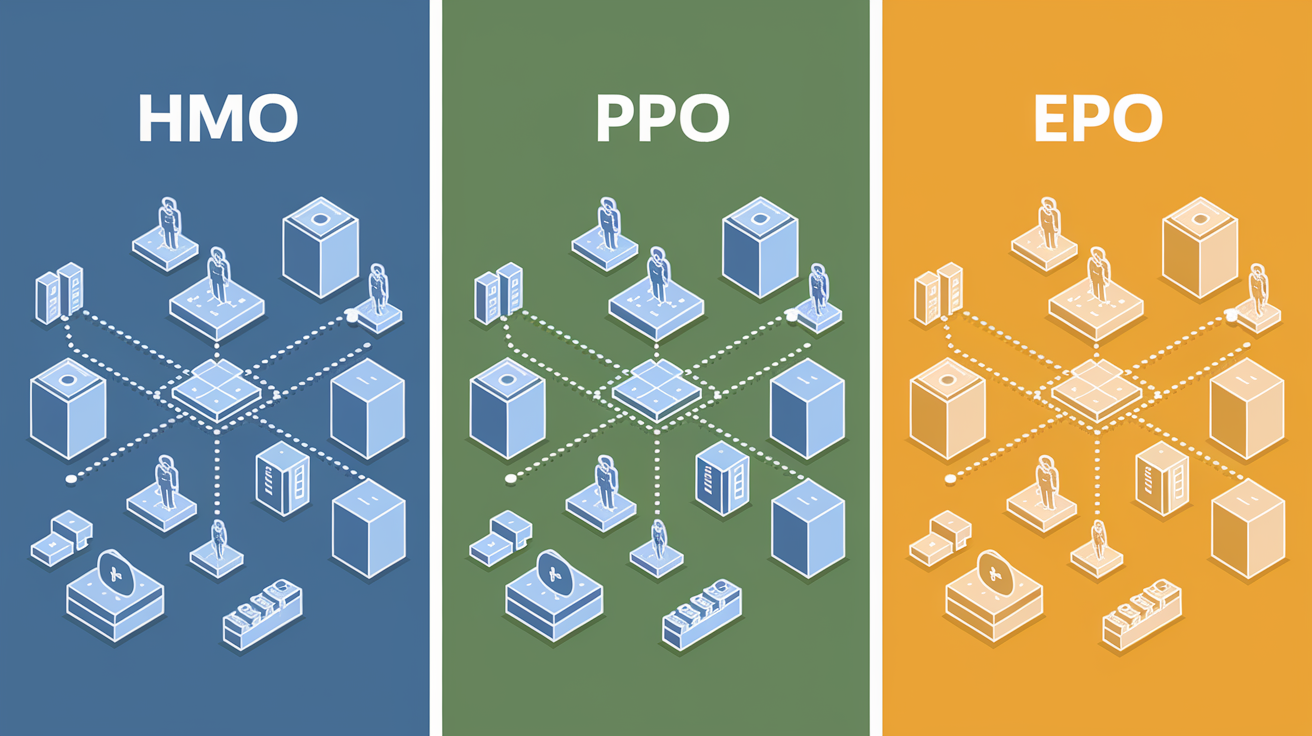
Different plan types use different network rules. That changes how much freedom you have to see out-of-network providers and how much you’ll pay when you do. The three most common structures are HMO, PPO, and EPO. Each one balances cost, access, and flexibility in its own way.
HMO (Health Maintenance Organization)
An HMO requires you to pick a primary care physician who coordinates your care and hands out referrals to specialists. You’ve got to stay in-network for all non-emergency care. Out-of-network visits typically aren’t covered, so you’re on the hook for the full cost. HMO premiums are often lower than PPO premiums because the plan controls costs through tighter provider networks and that referral requirement. Emergency care is covered even if the hospital or doctor is out-of-network.
PPO (Preferred Provider Organization)
A PPO gives you more room to move. You can see any provider without a referral, and the plan provides partial coverage for out-of-network care. You’ll still pay higher deductibles, coinsurance, and possibly balance bills. In-network providers cost less, but you’re not locked in. That’s handy if you travel a lot or want access to specialists outside the network. PPO premiums and deductibles usually run higher than HMO plans.
EPO (Exclusive Provider Organization)
An EPO lands somewhere between HMO and PPO. You don’t need referrals to see specialists, but the plan only covers in-network care except in emergencies. If you wander out-of-network for routine or elective care, you pay the full bill. EPOs offer lower premiums than PPOs and easier specialist access than HMOs, but zero out-of-network coverage outside true emergencies.
Why Health Insurance Networks Matter

Networks decide which doctors you can afford to see, how much you’ll spend on care, and whether you can keep seeing your current providers after you enroll. A plan with a low premium but a narrow network might actually cost you more if none of your preferred doctors or the nearest hospital is in-network. Checking the network before you buy (and again at renewal) prevents surprise bills and makes sure you’ve got access to the specialists, facilities, and routine care you actually need.
Networks also affect how quickly you can land an appointment. Narrow networks might have fewer providers in your area, which means longer wait times or farther drives. Broad networks give you more options but often come with higher premiums.
When you’re sizing up a health insurance network, look at these four things:
Provider availability: Does the network include your current doctors, preferred hospital, and specialists you might need (cardiologist, orthopedist, mental health provider)?
Geographic access: Are in-network providers near your home, work, or places you travel regularly?
Facility contracts: Is the hospital or surgery center in-network, and are the doctors who work there also contracted? Not all doctors at an in-network hospital are automatically in-network.
Referral and prior authorization rules: Does the plan require a primary care physician referral or insurer approval before you see a specialist or schedule certain procedures?
Final Words
A health insurance network shapes your out-of-pocket costs, your choice of doctors, and how easily you access care. Whether you’re comparing an HMO that keeps you in-network or a PPO that offers flexibility, understanding how networks work helps you avoid surprise bills and find providers you trust.
Check your plan’s directory before scheduling appointments. Confirm your preferred doctors and hospitals are still in-network at renewal. Small steps like these keep your coverage working the way you expect it to, without the sticker shock that comes from accidentally going out-of-network.
FAQ
Q: How do I know my health insurance network?
A: You know your health insurance network by checking your insurer’s online provider directory, calling member services, or asking your doctor’s office if they accept your plan; double-check plan name and effective dates.
Q: Is a gallbladder stone covered in health insurance?
A: A gallbladder stone is usually covered by health insurance when treatment is medically necessary; coverage typically includes imaging, hospital care, and surgery (cholecystectomy), but preauthorization and copays vary by plan.
Q: Does medical insurance cover diabetes?
A: Medical insurance typically covers diabetes care, including doctor visits, lab tests, insulin or other medications, glucose meters and supplies, and education programs; coverage details, formularies, and cost-sharing differ by plan.
Q: Is osteoporosis covered by insurance?
A: Osteoporosis is usually covered for diagnosis and treatment, including bone density scans, specialist visits, and prescription medications, but coverage limits, prior authorization, and copays vary; check benefits and medical necessity rules.