


Think starter insurance will save you money long-term? Think again.
Starter policies meet state minimums but often leave you on the hook for repairs, medical bills, and lawsuits.
This post shows the clear timing signals, like buying or financing a newer car, adding a teen or spouse, moving states, a much longer commute, or living in areas with lots of uninsured drivers, that should prompt an upgrade.
Read on to learn which changes can wait until renewal and which need immediate coverage.
Key Moments That Signal It’s Time to Upgrade From Starter Insurance

Starter insurance is basically the legal minimum. State-required liability coverage that keeps you on the road but doesn’t protect much else. Your car? Your medical bills after a crash? Not covered. If you’re still running with a starter policy, certain life changes should make you stop and reconsider what you’re actually protected against.
Common triggers include buying a newer car, getting married, adding someone to your household who drives, moving across state lines, or suddenly commuting an hour each way instead of ten minutes. You might also need better coverage if you’re parking in sketchy areas, living somewhere with tons of uninsured drivers, or realizing you’ve got zero help if you need a rental car or get stranded on the side of the highway. These situations stretch your exposure way beyond what minimum coverage was built to handle.
Check your auto insurance at least once a year. Make sure it still lines up with your actual risk and what you own. Some changes can’t wait. Finance or lease a car? You’ll need full coverage from day one. Other stuff can wait until renewal, but waiting too long leaves you vulnerable to losses that could drain your savings or bury you in debt.
- Financed or leased vehicle → add collision and comprehensive now
- Car worth more than $5,000 to $10,000 → think about adding collision and comprehensive
- High percentage of uninsured drivers in your area → bump up uninsured/underinsured motorist limits
- Added a spouse, partner, or teen to your household → update your policy with all drivers listed
- Moved to another state → confirm your coverage meets the new requirements
- No roadside or rental coverage but you drive a lot or take road trips → add those endorsements
- Dependents who rely on your car daily → raise liability limits and add medical coverage
- Can’t afford to replace your car or cover a deductible after a crash → keep full coverage
Understanding Starter Insurance Limits and Why They Become Too Low

A typical starter policy offers only what your state requires. Often that’s something like 25/50/25: $25,000 per person for bodily injury, $50,000 per accident, and $25,000 for property damage. Send three people to the hospital or total a brand-new SUV in a crash you caused, and those limits disappear fast. Everything beyond that? That’s coming from you. Your savings, your home equity, your future paychecks.
Starter policies also skip almost every type of protection for your own stuff. They won’t cover your car if you crash it, someone steals it, hail dents it, or you hit a deer. You won’t get help paying for a rental while yours is being fixed. And if an uninsured driver totals your car and vanishes? You’re stuck. In ZIP codes where 20% or more of drivers have no insurance, that gap turns into a real problem.
| Coverage Type | Included in Starter? | Risk of Relying on Minimum Coverage |
|---|---|---|
| Collision (damage to your car) | No | You cover the full repair or replacement yourself after any at-fault crash |
| Comprehensive (theft, vandalism, weather, animal strikes) | No | Replacing a stolen or totaled car means paying cash or taking out a new loan with nothing to trade in |
| Uninsured/Underinsured Motorist | Sometimes, at state minimums | If an uninsured driver totals your car, you get little or nothing back even if they’re at fault |
Comparing Starter Insurance vs. Upgraded Coverage Options
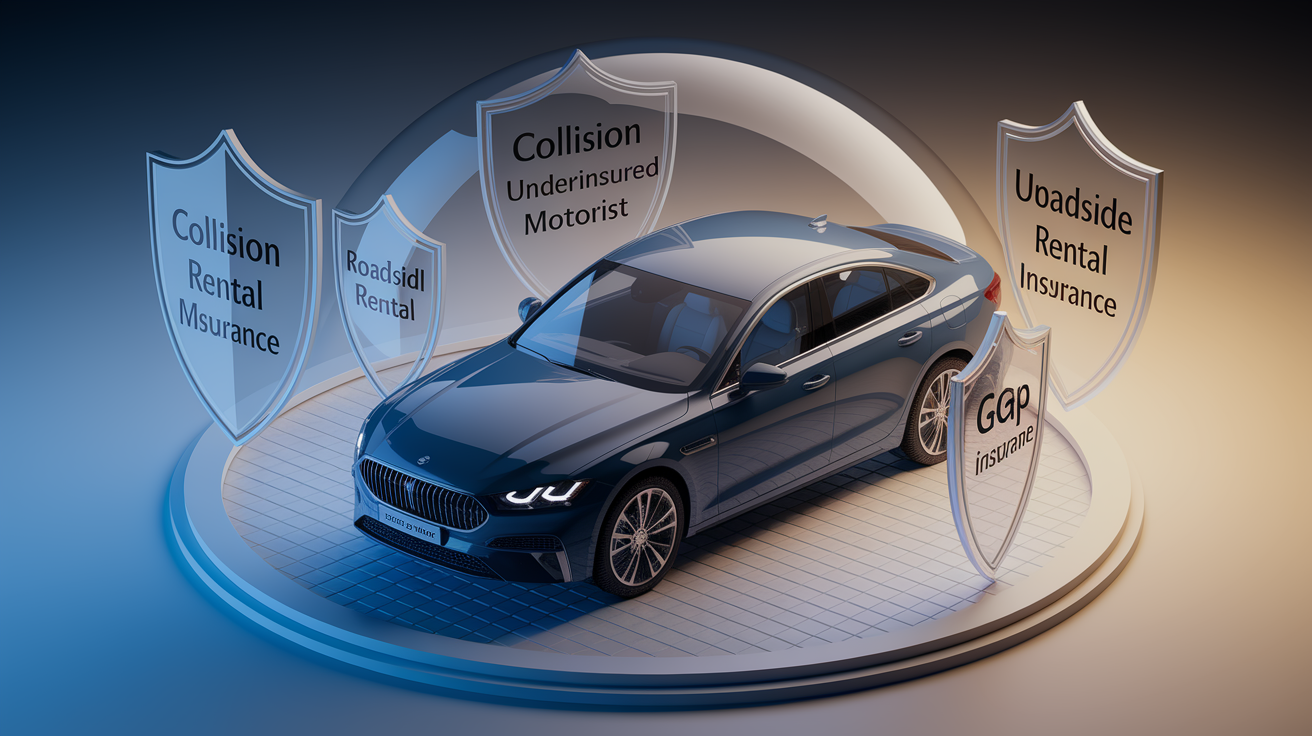
Upgrading means adding protections for your own vehicle, your medical costs, and your household when the other driver can’t pay or won’t. Most people add collision, comprehensive, uninsured/underinsured motorist coverage, and maybe a few extras like rental reimbursement, roadside help, or gap insurance.
Collision Coverage
Collision pays to fix or replace your car after a crash, no matter who caused it. It’s worth having when you own a newer car, you’re still paying off a loan, or you’re leasing. Deductibles usually run from $250 to $2,000. Higher deductible means lower premium.
Comprehensive Coverage
Comprehensive handles non-crash damage. Theft, vandalism, fire, hail, flooding, hitting a deer. If you park on the street in a high-theft area or drive through deer country, comprehensive stops one bad night from wiping you out financially. Like collision, you pick your deductible when you buy it.
Uninsured/Underinsured Motorist Coverage
This protects you when the at-fault driver has no insurance or not enough of it. In states where 15% to 25% of drivers are uninsured, this coverage becomes critical. It can cover your medical bills, lost income, and car repairs when the person who hit you can’t.
Cost-Effective Add-Ons (Roadside, Rental, Gap Insurance)
Roadside assistance runs about $10 to $30 a year and covers towing, flat tires, lockouts, dead batteries. Rental reimbursement pays for a rental while your car’s in the shop, usually $20 to $50 annually for $30 to $50 a day. Gap insurance covers the difference between what you owe on a financed or leased car and what it’s actually worth if it gets totaled. Super important in the first few years when depreciation outpaces what you’re paying down on the loan.
Adding collision and comprehensive together typically bumps your annual premium by $200 to $1,000. Most people pay an extra $300 to $600 per year depending on the car’s age, value, and driving record. Choosing a $1,000 deductible instead of $500 can cut that premium by 10% to 25%.
Clear Signs It’s Time to Move Beyond Starter Insurance

Some moments create immediate, obvious reasons to upgrade. Others quietly raise your exposure until something happens and you realize the gap was there all along.
Major Life or Vehicle Changes
Buying a new or newer used car is one of the clearest signals. If the vehicle is worth more than a few thousand dollars, a starter policy leaves you exposed with no way to recover. Most experts say keep full coverage for the first three to five years after you buy a car, when its value still justifies the premium. Finance or lease it? The lender or lessor will require collision and comprehensive from day one, and they’ll often want gap insurance to protect their stake in the loan.
Getting married creates a natural moment to combine policies and extend coverage to both people. Adding your spouse as a listed driver makes sure they’re covered when they drive your car, and bundling can cut premiums. Kids, even babies who won’t drive for years, are a reason to raise your uninsured/underinsured motorist limits to protect them as passengers, pedestrians, or future teen drivers. Adding a teen driver to your policy is legally required in most states once they get a license, and their higher risk usually justifies raising liability limits to protect what your household owns.
Moving to another state requires an immediate update because each state sets its own minimums. What was legal where you used to live might fall short of the new state’s rules, creating a gap that can void your coverage or trigger fines. A big commute change, like going from a 10-mile round trip to a 50-mile one-way drive, puts you on the road more and raises claim probability, making collision and comprehensive more worth the cost.
Risk-Based Warning Signs
If you park regularly in a high-theft area or a neighborhood where vandalism happens a lot, comprehensive becomes essential. A stolen car replaced out of your own pocket can wipe out months of savings. Starter policies give you zero help. Driving frequently in high-risk zones like dense city traffic, areas with lots of accidents, or places with severe weather raises the odds you’ll file a claim and makes upgraded coverage easier to justify.
Living in a ZIP code with lots of uninsured drivers shifts the burden onto your own policy. If your uninsured/underinsured motorist limits match the state minimum, a serious accident caused by an uninsured driver can leave you with huge medical bills and no way to recover. Using your car for any kind of business, whether that’s rideshare, delivery, or sales calls, often requires a commercial endorsement or higher liability limits because personal policies exclude business use. Long-distance travel for work or family also raises exposure. Having rental reimbursement means you’re not stuck paying $60 to $100 a day out of pocket while your car sits in a shop 500 miles from home.
Cost–Benefit Framework for Upgrading Beyond Starter Insurance

The decision comes down to three things: the value of what you’re protecting, the cost of the coverage, and whether you can handle a loss out of pocket. A $600 annual premium increase feels steep until you compare it to the $12,000 it costs to replace your car or the $80,000 liability verdict from a serious crash.
Vehicle value is the clearest benchmark. Car worth $5,000 or less and you’ve got enough savings to replace it? Dropping collision and comprehensive might make sense. Worth $8,000 or more? The annual premium is usually cheap compared to the risk of total loss. Deductible choice shifts the math too. Raising your deductible from $500 to $1,000 can cut your collision and comprehensive premium by 10% to 25%, but only if you can comfortably cover the higher out-of-pocket cost after a claim.
Your household exposure matters. Multiple drivers, a teen with a fresh license, a long commute, frequent city parking. All of that raises the chance you’ll file a claim. In those situations, the break-even point shifts. You’re more likely to file within the policy term, making upgraded coverage better value. On the other hand, if you drive fewer than 5,000 miles a year, park in a secure garage, and live in a low-risk area, you can sometimes justify staying on a starter policy longer.
- Vehicle value ÷ annual upgrade cost = payback period (less than 5 years? keep coverage)
- Annual premium more than 10% of vehicle value + vehicle value under $4,000 = consider dropping collision/comprehensive
- Emergency savings equal to or greater than your deductible plus one month of expenses = financially ready for a higher deductible
- Liquid assets or net worth increasing a lot = time to raise liability limits to protect what you own
- Financed or leased vehicle = lender requires full coverage no matter what
Financial Readiness and Timing the Upgrade From Starter Insurance

Upgrading isn’t just about risk. It’s also about whether your budget can handle the higher premium without strain. Financial readiness usually shows up when your income goes up, your emergency fund grows, or your credit score improves enough to unlock better rates. Recent raise? Paid off other debts? Built up three to six months of expenses in savings? You’re in a better spot to afford the $300 to $600 annual increase that full coverage typically costs.
Asset growth is another clear signal. As your net worth rises through home equity, retirement accounts, or other investments, you’ve got more to lose in a lawsuit. Raising your liability limits from the state minimum to $100,000/$300,000 or higher protects what you’ve built. Better credit can also lower your premium, making it easier to afford better coverage without a steep budget hit. Most insurers re-rate your policy at renewal based on your current credit, so a jump in your score can create a good window to upgrade.
- Household income increased by 15% or more in the past year
- Emergency fund now covers at least three months of expenses plus a $1,000 deductible
- Credit score improved by 50+ points since your last renewal
- Next policy renewal is within 30 to 60 days, creating a natural decision point
How to Move Beyond Starter Insurance Without Creating Coverage Gaps

Upgrading usually happens through riders or endorsements added to your existing policy, not by switching to an entirely new contract. A rider is a formal change that adjusts your coverage limits, adds protections like collision or comprehensive, or attaches extras like roadside help or rental reimbursement. Most insurers can process these changes right away or schedule them for your next renewal.
Before you add anything, get quotes from at least two other insurers to make sure you’re getting competitive pricing. Loyalty doesn’t always save you money. Switching companies at renewal can cut costs by 5% to 20% depending on discounts and underwriting changes. Once you’ve compared, contact your current insurer or agent to discuss the specific endorsements you need, whether that’s raising liability limits, adding collision and comprehensive, or bundling policies to unlock multi-policy discounts.
- Compare quotes from at least three insurers, including your current one, and request identical coverage limits and deductibles for a real comparison
- Contact your insurer or agent and spell out exactly what you want: raise liability to 100/300/100, add collision with a $1,000 deductible, add comprehensive, include rental reimbursement at $30 per day
- Share any documents they need, like proof of a new car purchase, marriage certificate, or lender requirements for financed or leased vehicles
- Confirm the effective date. Some changes start immediately, others at the next renewal, and some require rewriting the policy mid-term
- Double-check that your new coverage meets or beats your state’s minimums if you’ve moved or if the law changed
- Ask about bundling discounts, good-driver discounts, or paperless billing credits that can offset what the upgrade costs
Switching insurers entirely? Keep continuous coverage by making sure your new policy starts the same day your old one ends. Even a one-day gap can trigger higher rates, lapse penalties, and loss of good-driver status. If your car is financed or leased, notify your lender right away with proof of the updated coverage to avoid force-placed insurance, which costs way more and barely protects anything.
Final Words
If you just bought a financed car, added a new driver, moved states, or started driving much farther, those are the exact moments this post flags as upgrade triggers. Starter insurance usually means state-minimum liability, and we showed the common gaps: collision, comprehensive, UM/UIM, roadside, and rental coverage.
We walked through timing rules, cost‑versus‑benefit checks, and practical steps to upgrade without a gap.
Use the quick checks to decide when to upgrade from starter insurance — you’ll sleep easier knowing you picked the right protection.
FAQ
Q: Is osteoporosis covered by insurance?
A: Osteoporosis coverage depends on your health plan. Most plans cover bone density tests, doctor visits, and some prescription treatments; check your benefits, drug formulary, prior authorization rules, and out‑of‑pocket costs.
Q: What is the 80% rule for homeowners insurance?
A: The 80% rule for homeowners insurance means you should insure your home for at least 80% of its replacement cost to avoid a coinsurance penalty; underinsuring can significantly reduce partial‑loss payouts.
Q: At what age should you drop collision coverage?
A: You should consider dropping collision when your car’s value is low compared with premiums—commonly when the vehicle is worth under $5,000–$10,000 or annual collision premium exceeds about 10% of vehicle value.
Q: Which insurance company has the most complaints?
A: The insurer with the most complaints changes by year and state. Check the NAIC complaint index and your state insurance department for complaint rates per market share rather than raw counts.